
Teams today run on multiple tools. Your dev team works in Jira, your sales team lives in Salesforce, and your support agents rely on Zendesk or ServiceNow.
The problem: data gets stuck in each of these platforms. Without synchronization, teams pass information around manually through emails or phone calls, or share credentials just so another team can see what’s going on. That approach doesn’t scale, and it introduces errors and security risks at every step.
Real-time data synchronization solves this by keeping information flowing between systems automatically, the moment something changes.
This post covers what real-time data synchronization actually is, the different types, practical use cases, the challenges you’ll run into, and how tools like Exalate make the whole thing reliable and secure.
Key Takeaways
- Real-time data synchronization keeps data consistent across systems the moment changes happen, eliminating manual handoffs and outdated information.
- One-way syncs work best for migrations and reporting consolidation; two-way syncs keep collaborative workflows aligned across teams.
- Event-driven architectures outperform polling-based approaches for genuine real-time responsiveness.
- Common use cases include ticket escalation, MSP environments with SLA obligations, cross-company collaboration, and data consolidation for reporting.
- Conflict resolution, latency management, and hybrid system connectivity are the biggest challenges to plan for.
- Choosing the right tool means evaluating sync speed, scripting flexibility, security posture, and support for your specific platforms.

What is Data Synchronization?
Data synchronization is the process of keeping data accurate and consistent across two or more systems. When something gets created, updated, or deleted in one system, the connected system reflects that change.
Example: a customer raises a high-priority ticket in Zendesk. With data synchronization in place, a Bug is automatically created in the development team’s Jira instance. Statuses, comments, priorities, and attachments are all exchanged based on predefined sync rules. Every change in Zendesk gets reflected in Jira and vice versa.
Synchronization can happen between all kinds of sources: mobile devices, data warehouses, ERPs, legacy systems, or standalone apps. Here, we’re focused on synchronization between business applications like CRMs, ITSM platforms, and project management tools.
What is Real-time Data Synchronization?
Real-time data synchronization is the continuous exchange of data between systems where changes in one system are immediately reflected in others.
The keyword is immediately. Users in connected systems always see the most current information without refreshing their screens or waiting for a scheduled job to run.
For some scenarios, batch sync is fine. A retailer syncing sales data from multiple stores to a central database every night doesn’t need real-time updates. But for time-sensitive workflows, real-time sync is non-negotiable.
Incident management, financial transactions, order processing, and cross-team collaboration all break down when data arrives late. A 15-minute SLA on incident acknowledgment doesn’t wait for the next batch cycle.
What is Data Consolidation?
Data consolidation is the process of merging records from multiple systems into a single, unified view. Where data synchronization keeps data current across systems, consolidation is about bringing it together.
Example: a company running Jira, ServiceNow, and Salesforce separately might consolidate data from all 3 into a reporting dashboard. Each system contributes its records, and the consolidated view shows the full picture without anyone logging into 3 different tools.
This is especially useful before a migration (pulling data from old tools into one place before switching), after an acquisition (merging records from a company you’ve brought in), or for cross-team reporting (giving leadership visibility across all active systems). Exalate has a dedicated data consolidation use case built for exactly this.
Real-time vs. Near-real-time vs. Batch Synchronization
These terms get used interchangeably, but they mean different things.
- Real-time synchronization propagates changes within milliseconds to a few seconds. The source system pushes data to the destination as soon as a change event occurs. Financial trading platforms and emergency response systems typically operate at this level.
- Near-real-time synchronization introduces a small, controlled delay, usually seconds to a few minutes. Changes are detected as they happen, but may be queued briefly for batching efficiency or conflict resolution before being applied. Most enterprise integration tools, including Exalate, operate in this range. For practical purposes, it feels instantaneous to end users.
- Batch synchronization collects changes over a defined period (hourly, nightly, weekly) and processes them all at once. Good for high-volume, low-urgency transfers like nightly data warehouse updates or end-of-day financial reconciliation.
The right choice depends on your workflow. If a support agent needs to see a dev team’s status update within seconds, near-real-time is essential. If you’re aggregating monthly reports, batch sync is more practical and less taxing on your systems.
How Real-time Data Sync Works: Event-driven vs. Polling
Real-time synchronization relies on one of 2 architectures: event-driven or polling-based.
- Event-driven synchronization relies on triggers. When a record is created, updated, or deleted, the source system fires an event (typically a webhook). The integration platform listens for these events and immediately processes the change. Data only moves when something actually changes, so there’s no wasted processing on “nothing happened” checks.
- Polling-based synchronization works on a schedule. The integration platform checks the source system at regular intervals to see if anything has changed. Simpler to implement, but it adds latency equal to the polling interval and puts more load on the source system’s API.
- Most mature integration platforms use a hybrid approach: event-driven triggers for primary change detection, with polling as a safety net to catch anything the event system missed. Exalate uses an event-driven architecture with retry mechanisms that ensure nothing gets lost during network interruptions.
When evaluating tools, ask how they detect changes. Pure polling at 5-minute intervals isn’t real-time sync. True real-time requires event-driven processing.
Types of Real-time Data Synchronization
One-way Real-time Data Sync
Data flows in a single direction from the source system to the destination. You control what gets transferred through your sync rules.
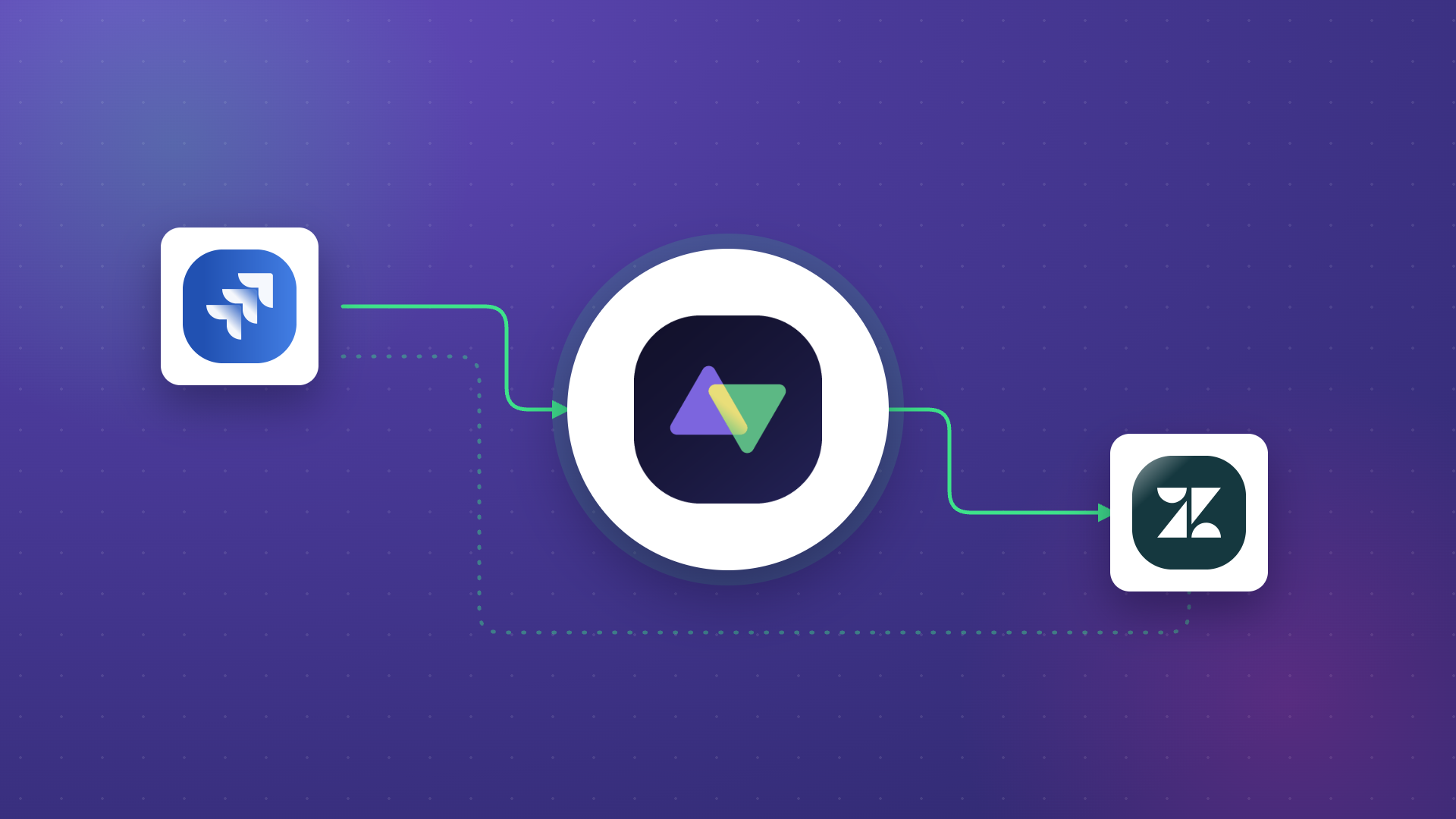
For instance, you might sync work item summaries, statuses, descriptions, comments, and attachments from Jira to ServiceNow, with nothing flowing back. All updates in Jira are instantly reflected in ServiceNow.
One-way syncs are the best fit for live migrations between systems, like Jira to Azure DevOps, or for consolidating data from multiple sources into a single reporting platform.
Two-way Real-time Data Sync
Data flows in both directions simultaneously. Changes, insertions, deletions, and field updates in either system are immediately reflected in the connected one.
For example, when a ServiceNow incident is created, a Bug opens in Azure DevOps. Statuses, priorities, urgencies, and comments stay in sync. Any change triggered on either side immediately updates the other based on your rules.
Two-way sync is what you need when both teams actively work on the same data. Support agents update ticket statuses in Zendesk while developers update Bug resolutions in Jira. Both sides see the latest information without switching platforms.

There’s no more like, “Oh, you created a ticket at your end, but we didn’t see the ticket at our end.”.
– CARLOS ALMEIDA
VP OF ENGINEERING SPK AND ASSOCIATES
The important thing about real-time sync, whether one-way or two-way, is that it keeps your existing workflows intact. Each team works in their own platform and gets the data they need without switching tools.
Why Real-time Data Synchronization Matters
Faster Incident Resolution
When a support ticket is escalated to development, the support agent sees the developer’s progress in real time. In incident management, order tracking, or financial account updates, both customers and internal teams always see the current status.
Better Decisions from Current Data
Business decisions are only as good as the data behind them. Waiting 24 hours for a batch sync to surface a trending product defect means a full day of avoidable churn. Real-time updates give leaders access to the latest metrics when they actually need them.
Less Manual Work, Fewer Errors
Manual data transfer is error-prone and pulls people away from actual work. Automated real-time sync removes copy-paste errors and reduces rework. When you factor in the security risk of sharing credentials across teams just for visibility, automated sync becomes even more important.
SLA Compliance for MSPs and Service Providers
For MSPs, SLAs often include response time commitments measured in minutes. A 15-minute SLA on incident acknowledgment requires real-time visibility into incoming tickets. Hourly batch sync would guarantee SLA breaches.
Cross-company Collaboration Without Shared Access
Real-time sync lets organizations collaborate with external partners and clients without granting direct access to internal systems. Each side controls what they share and what they receive independently, keeping data current without compromising security boundaries.
Practical Use Cases For Real-Time Data Synchronization
Data Consolidation and Reporting
Case: Task-level data from multiple ITSM and project management systems needs to be consolidated in a single platform. This happens often after mergers and acquisitions, or when management needs a unified view across business units for reporting.
Solution: Set up one-way real-time syncs from multiple source systems (ServiceNow, Freshservice, Azure DevOps, Zendesk) into a single destination like Jira. Work logs, statuses, priorities, and custom metrics flow in real time. Management gets a live view of operations without asking each team for manual reports.
Real-world application: You can sync data from different cross-functional Jira projects into a single Jira instance, giving stakeholders a live reporting view without disrupting any team’s workflow.
Customer Ticket Escalation
Case: Customer tickets arriving in a support platform need to be escalated to another system for resolution, whether to L2 support, development, IT operations, or external providers.
Solution: Configure real-time sync rules that route tickets automatically based on custom logic. When a ticket meets specific criteria (high priority, specific category, VIP customer), it’s created in the destination system immediately. Comments, status changes, and attachments flow back and forth.
Real-world application: Qualco syncs change requests, incidents, and support-to-development entities in real time. When a customer raises a change request in Jira Service Management, it’s escalated immediately to the dev team working in Azure DevOps.
A few specific patterns fit here:
- Multi-destination incident routing. Incidents arrive in ServiceNow and get routed automatically to Jira, Azure DevOps, or Freshservice based on conditions you define, like category, geography, or affected service.
- End-to-end service desk orchestration. Connect multiple service desks (JSM, Zendesk, Freshdesk, Freshservice) to route tickets from L1 to L2 to L3 automatically and in real time, without buying expensive extra agent seats.
- Support-to-development handoff. When a customer reports a bug in JSM, it gets passed to the dev team in Jira Software. The dev team updates the status in Jira, and the JSM status updates automatically. Support agents have real-time visibility into resolution progress without switching tools.
- Multiple tickets, single work item. Real-time data synchronization lets you connect multiple Zendesk instances to a single Jira instance. When multiple customers report the same problem, a single Jira work item handles the fix. When the developer resolves it, all connected Zendesk tickets update simultaneously.
MSP Environments
Case: An MSP provides helpdesk outsourcing with SLAs that include monetary obligations. A high-priority incident in a customer’s ServiceNow instance needs to reach the MSP’s Jira queue within 15 minutes.
Solution: Real-time sync between the customer’s ServiceNow and the MSP’s Jira ensures the incident appears within seconds. The MSP starts working on it while the customer gets status updates throughout resolution.
Real-world application: Learn how SPK and Associates uses real-time data sync to keep their customers’ instances aligned, resulting in better onboarding and stronger client relationships.
Cross-company DevOps Collaboration
Case: Two organizations are co-developing a product. Company A’s team works in Jira, and Company B works in Azure DevOps. Both need visibility into each other’s progress without giving access to internal systems.
Solution: Two-way real-time sync between Jira and Azure DevOps shares work item summaries, statuses, comments, and priorities across the organizational boundary. Each side independently controls what data they send and receive. Sensitive internal fields like cost estimates or internal notes are excluded automatically.
This is common in technology partnerships, outsourced development arrangements, and post-acquisition scenarios where teams need to collaborate before systems are consolidated.
CRM-to-Development Feedback Loop
Case: Product feedback, feature requests, and escalated bugs need to flow from the sales team in Salesforce to the dev team in Jira. The sales team needs real-time visibility into development progress for renewal conversations.
Solution: Two-way real-time sync between Salesforce and Jira. When a Salesforce case is flagged for development, a Jira work item is created with the relevant context. Status updates and resolution notes sync back to Salesforce automatically.
Real-world application: Customer success managers can report back to a client without pinging the dev team. Both sides stay in their preferred tool while working from the same data.
Challenges of Real-time Data Sync
- Scalability under growing data volumes. A solution that handles 50 synced items a day might buckle under 5,000. Look for platforms with queue-based processing and asynchronous transport layers that absorb volume spikes without bottlenecking.
- Latency and its business impact. Even small delays can have outsized consequences in time-sensitive workflows. The architecture behind the sync tool, event-driven vs. polling, directly determines how much latency you’ll experience.
- Conflict resolution when both sides change simultaneously. In two-way syncs, both systems can update the same field at once. Without proper conflict resolution rules, you get data overwrites or inconsistent states. The best tools let you define strategies per field: last-write-wins, source-system-priority, or custom logic based on field type or user role.
- Network outages and system downtime. Systems go down, and networks fail. Look for platforms with built-in retry mechanisms, transactional sync queues, and the ability to process backlogged changes in sequence once systems recover.
- Security during real-time data transfer. Syncing sensitive data requires encryption in transit (TLS 1.2/1.3 minimum), token-based authentication, role-based access controls, and compliance with GDPR. This gets especially important in cross-company syncs where data crosses organizational boundaries.
- Hybrid and multi-cloud complexity. Connecting cloud apps with legacy systems or on-premise platforms introduces architectural challenges. Tools that support multiple deployment options (cloud, on-premise, Docker) handle these scenarios better than cloud-only platforms.
Data consistency across systems with different schemas. A “priority” in ServiceNow doesn’t map 1:1 to a “priority” in Jira. Script-based mapping with conditional logic and data transformation support is essential for maintaining consistency across heterogeneous systems.
Build vs. Buy: Getting Real-time Sync Right
Building Your Own Sync Solution
Custom integration sounds straightforward at first. Two systems, one API each, some glue code in the middle. In practice, you end up maintaining authentication, rate limiting, error recovery, data transformation, conflict resolution, retry logic, and security, all while keeping up with API changes on both ends. The ongoing maintenance cost typically exceeds the initial build cost within the first year.
We didn’t go down the road of developing a solution ourselves purely due to resource limitation because if we developed it, we’d have to maintain it and make regular improvements.
– MICHAEL FOWLER, ENGINEERING LEAD
QUORUM CYBER
For cross-company integrations, you’d also need to build the entire trust and access control framework from scratch, something commercial platforms already provide.
Native Data Sync Options
Most SaaS platforms offer built-in integrations. These are convenient for simple use cases but limited in scope: fixed field mappings, no custom logic, limited platform support, and often one-way only.
They fall short when you need advanced field mapping, conditional routing, two-way sync with conflict resolution, or cross-company data exchange with independent access controls.
Third-party Data Sync Tools
Third-party platforms range from no-code, template-based tools (fine for simple use cases) to script-based solutions (flexible enough for complex enterprise workflows).
If your requirements involve advanced data mapping, conditional sync rules, cross-company security controls, and edge cases that templates can’t handle, a script-based platform like Exalate gives you full control without the maintenance burden of a custom build.
How to Choose the Right Real-time Data Synchronization Tool
- Sync speed and architecture. Verify the tool actually uses event-driven processing, not just polling at short intervals. Ask about the underlying architecture before committing. Not all tools in the market offer genuine real-time capabilities.
- Scripting flexibility and data mapping. Script-based solutions let you define exactly how data maps between systems, including conditional logic, field transformations, and dynamic routing. Real-world sync requirements almost always involve edge cases that templates can’t handle.
- Security by design. Prioritize tools with encryption in transit, role-based access controls, and token-based authentication built into the platform. Check for relevant certifications and review the vendor’s security documentation before evaluating features.
- Independent sync control. In cross-company integrations, each organization should control what data they send and receive independently. One side shouldn’t be able to override the other’s configuration.
- Platform coverage and extensibility. The tool should support your current connectors and the ones you’re likely to add. Look for native connectors for your core systems and custom connector support (REST API-based) for niche or proprietary platforms.
- AI-assisted configuration. Modern platforms increasingly offer AI tools that generate sync scripts from natural language descriptions. Exalate’s Aida does exactly this, producing Groovy sync configurations based on what you describe, which you then review and refine.
Case study: Learn why 60% of Quorum Cyber’s customers want to use Exalate for service desk integration.
Exalate: A Real-time Data Synchronization Tool
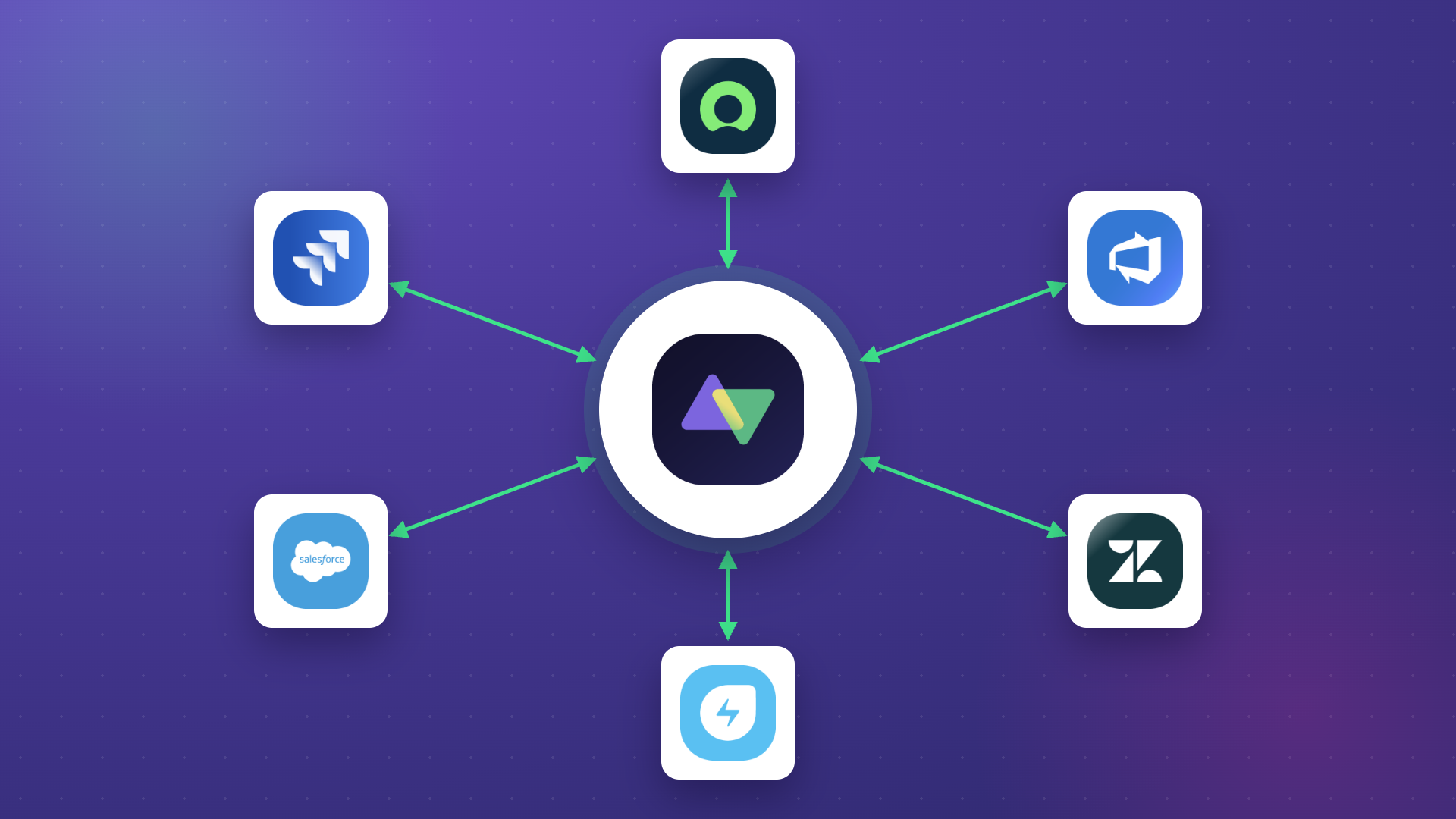
Exalate supports real-time data synchronization between Jira, Salesforce, ServiceNow, Zendesk, Azure DevOps (Cloud and Server), GitHub, Freshservice, Freshdesk, Asana, and more. For platforms not on that list, Exalate supports custom REST API connectors.
Each side of a sync operates autonomously. In a two-way connection, both organizations define their own rules for what data they send and receive. The other party can’t override or access these settings, which matters a lot for cross-company integrations where data governance and trust boundaries are non-negotiable.
How Exalate’s Transport Layer Enables Real-time Sync
At the core of Exalate’s real-time capability is a custom-built transport layer. Here’s what that means in practice:
- Low latency through optimized delivery. The transport layer is purpose-built for fast data transfer, without the overhead of generic middleware.
- Asynchronous communication. Connected systems don’t wait for each other to process data. A slow response on one side doesn’t block the other.
- Built-in retry and fault tolerance. Network interruptions and API rate limits are inevitable. Exalate queues changes in order and applies them in sequence once connectivity is restored.
- Event-driven change detection. Changes in one system trigger immediate updates in the other, without relying on polling intervals.
- Integrated security. Encryption protocols, JWT-based authentication, and access controls are built directly into the transport layer, not added on top of it.
Exalate also includes Aida, an AI-powered scripting assistant. You describe your sync requirements in plain language, Aida generates the corresponding Groovy script, and you review it before publishing. This cuts implementation time significantly, especially for teams without deep scripting experience.
The Exalate managed service offering just sat nicely with us because it takes the burden of setting up, managing, and owning the infrastructure away from us and effectively does it on our behalf.
– MICHAEL FOWLER, ENGINEERING LEAD
QUORUM CYBER
What’s Next
Real-time data synchronization is no longer a nice-to-have. For teams collaborating across platforms, managing SLA-bound escalations, or making decisions based on live data, it’s a requirement.
If your teams are manually passing data between systems, or if you’ve got SLA obligations that require immediate visibility across platforms, real-time data synchronization is worth exploring.
Start your free trial for Exalate to figure out how it works and fits your use case. You can discuss your use case with us directly. Or browse the docs to ask Aida your questions.
Frequently Asked Questions
What platforms does Exalate support for real-time data synchronization?
Jira Cloud, ServiceNow, Salesforce, Zendesk, Azure DevOps (Cloud and Server), GitHub, Freshservice, Freshdesk, Asana, and Jira Service Management. Custom REST API connectors extend support to proprietary and niche tools.
How does Exalate handle conflicts in two-way real-time sync?
Through Exalate’s scripting engine, you can define conflict resolution rules based on your business logic. You can set last-write-wins, source-priority, or custom rules per field. For example, ServiceNow owns the “priority” field while Jira owns “status.” This prevents overwrites and keeps data consistent.
What happens to synced data during network outages or system downtime?
Exalate uses transactional sync queues that track every change in order. When a system goes down or a network interruption occurs, pending changes are queued. Once connectivity is restored, they’re applied in the correct sequence. Nothing is lost or applied out of order.
How does Exalate ensure security during cross-company real-time sync?
Each organization controls its sync configuration independently. You define what data you send and receive through your own rules, and the other party can’t override your settings. Data in transit is encrypted using TLS 1.2/1.3, authentication uses JWT tokens, and role-based access controls govern who can modify sync configurations.
What’s the difference between real-time and near-real-time data synchronization?
Real-time sync propagates changes within milliseconds, typically used for financial trading or emergency response. Near-real-time introduces a small delay (seconds to a few minutes) for queuing and conflict resolution. Exalate operates in the near-real-time range, which feels instantaneous for most enterprise workflows.
Can Exalate sync custom fields and complex data types?
Yes. Exalate’s Groovy-based scripting engine gives you full control over field mappings, including custom fields, multi-select fields, nested objects, attachments, and comments. You can apply conditional logic (sync only comments tagged “external”) and data transformations (map ServiceNow priority values to Jira equivalents).
How does Aida help with setting up real-time synchronization in Exalate?
Describe what you want in plain language, and Aida generates the script. You review and refine it manually. This reduces implementation time and lowers the technical barrier for teams without deep scripting experience.
Is Exalate suitable for MSPs managing multiple client integrations?
Yes. Each client connection operates independently with its own sync rules, so one client’s configuration doesn’t affect another’s. Real-time sync keeps SLA compliance across all client relationships, and the managed service option offloads infrastructure management to Exalate entirely.
How does real-time data sync with Exalate differ from native integrations?
Native integrations are convenient for simple use cases but typically offer fixed field mappings, no custom logic, one-way sync only, and limited platform coverage. Exalate adds two-way real-time sync, granular field-level control, script-based conditional logic, cross-company security controls, and support for 10+ platforms plus custom connectors.
Recommended Reading:
- Point-to-Point Integration: Explore the Strengths and Pitfalls
- Exploring the Working Principles of Service Desk Integration
- Service Integration and Management (SIAM): The Complete Guide
- Jira ServiceNow Integration: How to Connect Jira and ServiceNow in 6 Steps
- ITSM Integration: Simplify Your IT Services Like Never Before
- Automated Integration: A Key to Scalable and Agile Business Operations