Point-to-point integration connects two applications directly, with no middleware between them. It works well for 2 or 3 systems with stable requirements, but once you add more systems, each new one would require its own connection to every platform it communicates with, increasing maintenance costs.
The appeal is to connect two systems directly, move data between them, and get on with your work. But simplicity at the start doesn’t always mean simplicity down the road.
This guide covers how point-to-point integration works, when it makes sense, when it doesn’t, and what alternatives exist for organizations that need more than a handful of direct connections.
Key Takeaways
- Point-to-point integration connects two systems directly without intermediaries, making it ideal for small-scale, low-complexity use cases.
- Data transformation, format mapping, and protocol alignment are essential steps in every P2P integration, regardless of scale.
- P2P integration works best when you have a limited scope, need speed, are connecting legacy systems, or require low-latency data exchange.
- Alternatives like hub-and-spoke, ESB, iPaaS, API-led integration, and event-driven architectures offer better scalability at the cost of higher upfront complexity.
- Tools like Exalate simplify point-to-point integration with bidirectional sync, AI-assisted configuration through Aida, and support for platforms.
- Choosing the right integration model depends on the number of systems involved, performance requirements, security needs, and long-term growth plans.

What is Point-to-Point Integration?
Point-to-point integration (also called peer-to-peer integration or P2P integration) is the process of connecting two separate software applications or systems directly to exchange data and communicate without intermediaries.
It typically involves a one-to-one connection between two endpoints. In the technology domain, these endpoints are usually software applications, databases, or hardware devices.
Unlike more structured approaches such as hub-and-spoke or middleware-based integration, P2P integration establishes a direct link between individual systems. System A talks to System B without any central routing layer, message broker, or shared bus.
At its core, point-to-point integration involves creating a dedicated link between specific systems to exchange data tailored to their unique requirements. If you want to connect three systems, you need to create three separate connections, one for each pair. You must ensure that each connection transfers only the specific data you wish to exchange.
It’s worth noting that point-to-point integration is sometimes confused with “star integration.” The two are related but not identical.
Star integration is a pattern in which multiple point-to-point connections fan out from a single system, forming a star-like topology. Point-to-point is the connection method; star integration is one possible shape of the resulting network.
How Does Point-to-Point Integration Work?
Every direct connection between two systems functions differently depending on the platforms involved, the data being exchanged, and the protocols in use. But the general mechanics follow a consistent pattern.
Establishing the Connection
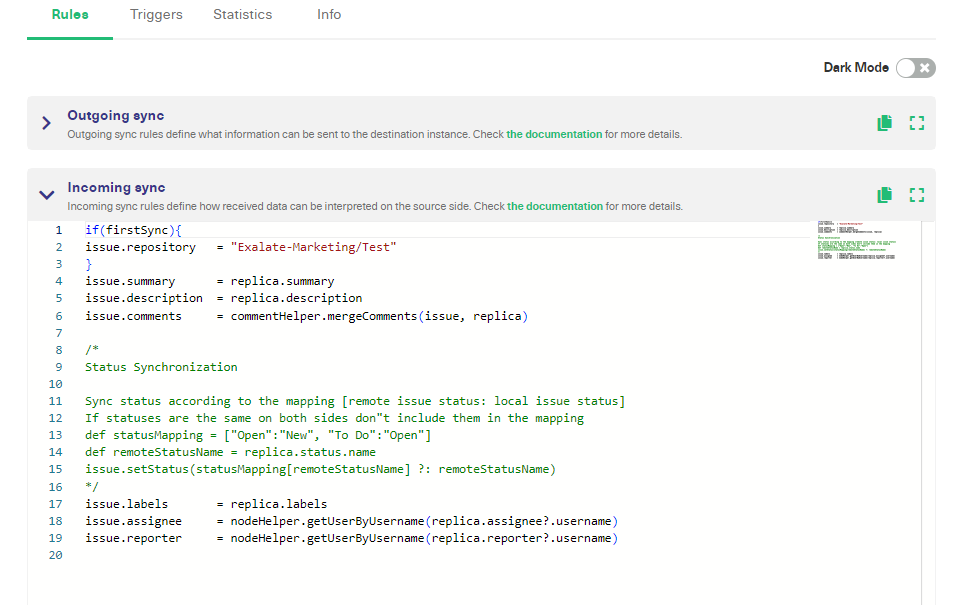
To make point-to-point integration work, developers typically use the connecting system’s APIs or write a custom program from scratch.
The most common API types used in P2P integration are REST (Representational State Transfer) and SOAP (Simple Object Access Protocol). REST APIs are lightweight and use standard HTTP methods, making them the default choice for most modern integrations.
SOAP APIs are more rigid but offer built-in error handling and remain common in enterprise environments such as financial services and healthcare.
Once the systems are connected through these APIs or custom code, data can flow between them. The direct connection reduces the complexity of routing data through a central hub, a common practice in other integration approaches.
Data Transformation and Mapping
The systems you want to connect almost always use different data formats, data structures, and protocols. To ensure things work smoothly, it’s necessary to transform and map this data appropriately.
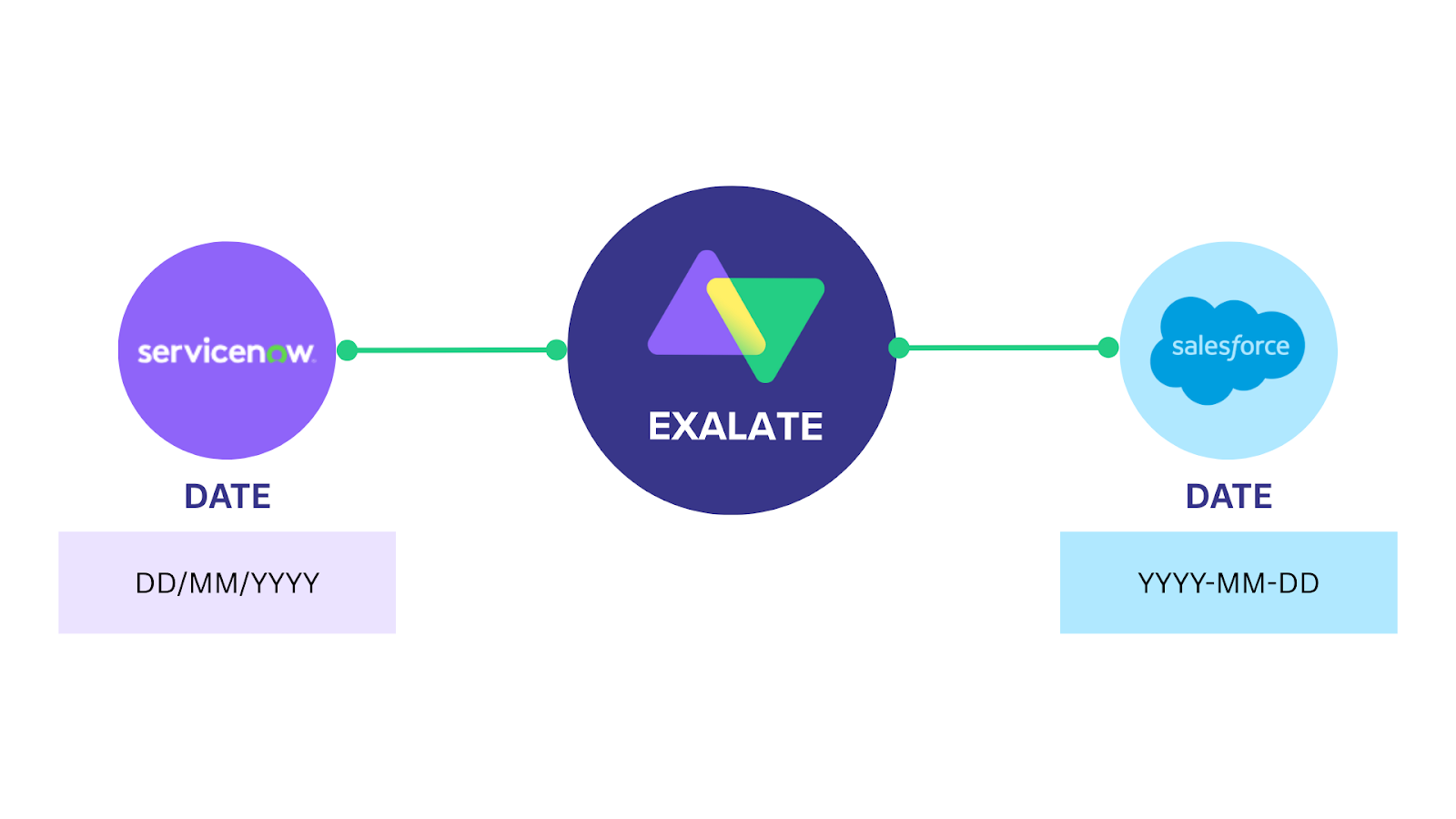
For example, if one system uses the “DD/MM/YYYY” date format, while the other expects “YYYY-MM-DD”, the point-to-point integration must convert the data to the proper format to ensure compatibility.
This can involve converting data from one format to another (say, JSON to XML), aligning data structures, and handling any necessary translations. This step ensures that data sent from one system is correctly understood and processed by the other system.
Message Queuing and Delivery
Sometimes, point-to-point integrations involve putting messages in queues to manage the data flow. These messages are inserted into a queue when dispatched from a sender. They are accepted based on the queue order at the receiving end.
You can thus ensure the correct order of message delivery and prevent any data loss through this queuing mechanism. This is particularly important for high-volume integrations where both systems may not always be available simultaneously.
Security in Transit
As with any other integration framework, security must be your primary focus while dealing with P2P integrations.
Each direct connection must be individually secured using encryption (TLS 1.2/1.3), authentication (API tokens, JWTs, OAuth), and authorization controls.
Since there’s no central platform managing access, the responsibility falls on each connection to enforce its own security posture.
For organizations operating in regulated industries such as healthcare or finance, this per-connection security model can be both a strength (granular control) and a weakness (increased surface area to manage).
Main Characteristics of Point-to-Point Integration
Point-to-point integration, while relatively simple, has distinct characteristics that define its functionality and limitations.
- Direct Connection: The two platforms are linked directly, allowing data to flow between them without intermediaries. There is no message broker, no middleware, and no routing engine in between. This makes the data path short and predictable.
- Simple Data Transfer: The direct connection makes point-to-point integration ideal for straightforward data exchange, with minimal transformation or complex logic. If you need to sync a handful of fields between two systems, P2P handles it well without the overhead of a full integration platform.
- Tight Coupling: Each system in a P2P integration is directly dependent on the other. If System A changes its API endpoint, data structure, or authentication method, System B’s connection breaks. This tight coupling means that changes in one system almost always require corresponding updates in the other, which increases maintenance effort over time.
- Limited Scalability: As more systems are added to the integration, the number of connections grows according to the formula n(n-1)/2, where n is the number of systems. For 5 systems, that’s 10 connections. For 20 systems, you’re looking at 190 connections. This exponential growth is what leads to the so-called “spaghetti architecture,” where the web of connections becomes nearly impossible to manage.
- Low Overhead: Point-to-point integration is easy to configure because it requires minimal resources since there’s no middleware or complex infrastructure involved. For a single connection, the total cost of ownership is typically lower than any alternative.
- Custom Configurations: Each system needs its own communication setup, requiring unique configurations for each connection. There’s no reusability, meaning the integration logic built for System A to System B can’t be repurposed for System A to System C without significant rework.
- Maintenance Difficulty: Since each connection has to be managed individually, this introduces more complexity in troubleshooting and ongoing support. When something breaks, you’re debugging one specific connection rather than checking a unified view of all integrations.
In short, point-to-point integration works well for small setups but becomes cumbersome and hard to maintain as the number of systems increases.
Distinguishing Point-to-Point Integration from Other Approaches
| Approach | How systems connect | Best fit | Where it strains |
| Point-to-point | One direct link per pair of systems | 2 or 3 systems, low latency, tight control over each link | Connections multiply with every system you add |
| Hub-and-spoke | Every system connects to a central hub | Many systems sharing the same data | The hub is a single point of failure, and setup takes longer |
| ESB | A central bus routes messages between systems | Large enterprises with complex routing rules | Difficult to implement and maintain |
| iPaaS | A cloud platform hosts the integrations | Teams that want prebuilt connectors without running infrastructure | Vendor dependency, and cost depends on the pricing model |
Hub-and-Spoke Model
In a hub-and-spoke model, a central hub serves as an intermediary among multiple endpoints. All systems connect to the hub, which is responsible for routing and data transformation. This model is highly scalable and a fit for large enterprises with diverse integration requirements.
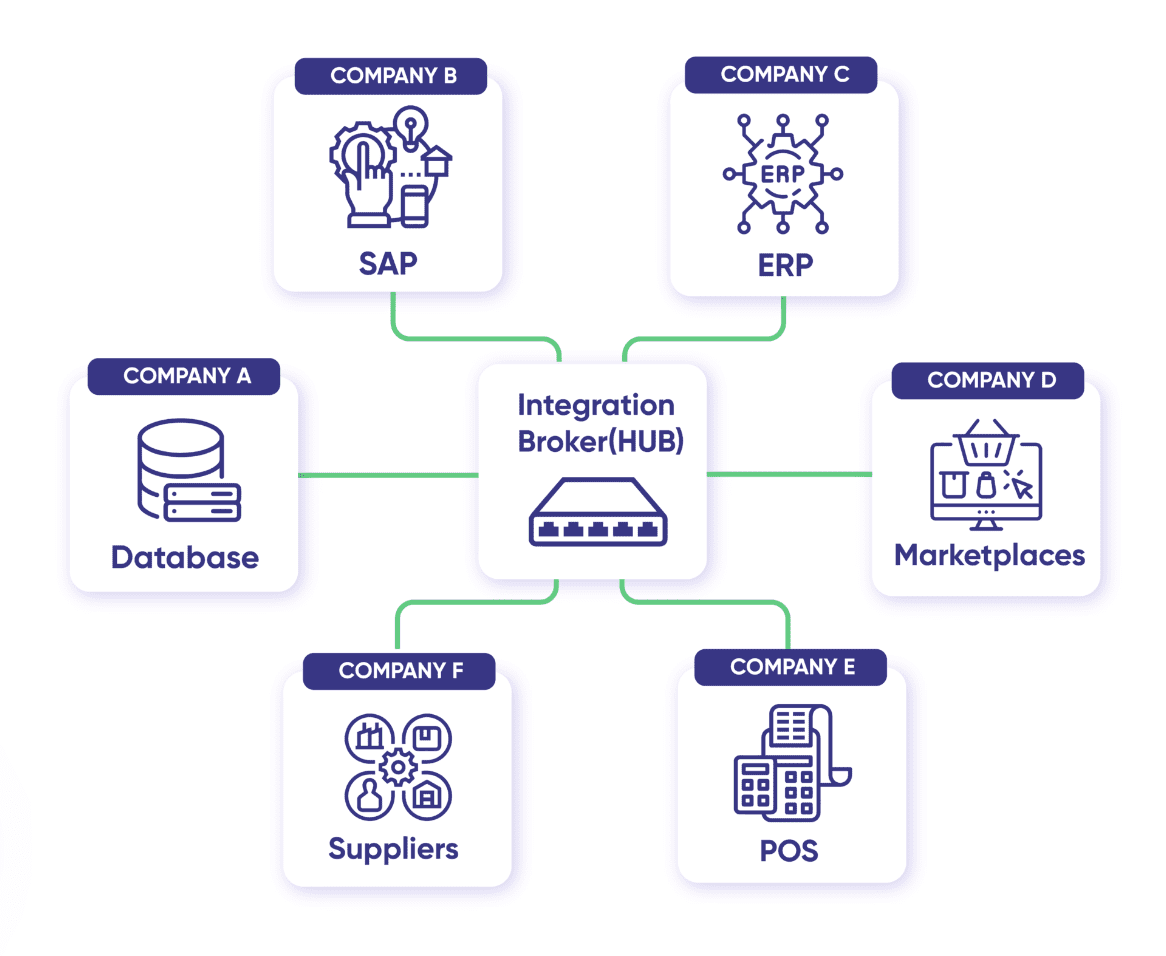
However, the central hub can become a single point of failure. If it goes down, all connected systems lose their ability to communicate. Setup and maintenance are also more complex because of the hub’s role in managing all communication.
Enterprise Service Bus (ESB)
An ESB acts as a message broker that handles communication between various systems. It offers features like message queuing, transformation, and routing. It supports complex routing and transformation scenarios and excels at orchestrating workflows across many systems.
However, implementing and maintaining ESBs can be resource-intensive, and they aren’t suitable for simple integration needs. ESBs also tend to introduce latency because every message passes through the bus before reaching its destination.
iPaaS (Integration Platform as a Service)
iPaaS simplifies the integration of cloud and on-premise applications through a cloud-hosted platform. It reduces the complexity of managing individual connections and allows for easy scaling as new systems are added. Most iPaaS solutions offer pre-built connectors and low-code or no-code interfaces, making them accessible to non-technical users.
The tradeoff: iPaaS can become expensive as usage grows, and you’re reliant on the vendor’s connector library for platform support.
API-Led Integration
API-led integration organizes integrations into reusable layers:
- system APIs (connecting to individual applications),
- process APIs (orchestrating business logic),
- and experience APIs (serving specific use cases or consumers).
This layered approach promotes modularity and reduces duplication, and it is well-suited for organizations with large numbers of interconnected systems that need to reuse integration logic across teams. The initial investment in API design and governance is higher than P2P, but the long-term maintenance cost is typically lower.
Event-Driven Architecture
Event-driven architecture decouples systems by using events as the primary communication mechanism. Instead of one system directly calling another, a system publishes an event (for example, “new customer created”), and any interested system subscribes to that event and reacts accordingly.
This approach provides high resilience because the sender doesn’t need to know who’s listening. It’s ideal for real-time processing scenarios but requires a solid event infrastructure (like Kafka or RabbitMQ) and careful event schema management.
From P2P to a Meshed Network
What sets point-to-point integration apart from all of these is its simplicity and directness. An organic evolution of a point-to-point connection can be a meshed integration.
In a meshed network, any system can connect with any other system based on specific requirements. Multiple point-to-point connections create a mesh where each link handles communication between two systems.
Though point-to-point integration can seem simple at the outset, it’s also versatile and can be particularly useful in certain situations.
Ways to Build a Point-to-Point Integration
| Method | How it works | Fits | Watch out for |
| Custom code | A developer writes the link between both systems | One-off integrations with unusual requirements | Everything depends on the person who wrote it |
| Direct API calls | One system calls the other’s API | Cloud apps with documented APIs | Rate limits and API changes |
| Webhooks | One system pushes events to the other | Event-driven updates | Retries and ordering are yours to handle |
| File transfer (SFTP, AS2) | Files move on a schedule | Batch exchange with partners | Delay between runs |
| Sync platform | A tool manages both sides of the link | Ticket, work item, and record sync between tools | The connectors need to cover your systems |
When is Point-to-Point Integration the Right Choice?
To help you understand when to opt for point-to-point integration, let’s explore some common scenarios where this approach makes sense.
The Integration Scope is Limited and Specific
When you have relatively simple integration needs involving only a few applications, point-to-point integration is an excellent choice.
For small and medium-sized businesses with straightforward needs, this approach can be both efficient and cost-effective. If you’re connecting two or three systems and don’t expect that number to change significantly, P2P avoids the overhead of setting up a full integration platform.
You Need an Integration Solution Quickly
In situations where you need a rapid integration solution for a short-term project or temporary data exchange needs, point-to-point integration offers a quick path forward. Setting up direct connections between endpoints is faster than configuring a complex integration architecture.
Once your project is complete, you can easily dismantle the point-to-point connections without disrupting the existing infrastructure. This makes P2P a solid option for proof-of-concept integrations or time-bound collaborations.
One Side Uses a Legacy System
Many companies still rely on legacy systems that lack modern integration capabilities. A point-to-point integration can help you connect your legacy systems to newer applications. You can incorporate them into your modern workflows and data exchange requirements without a complete system overhaul.
Legacy systems often have limited or outdated APIs, making them poor candidates for middleware-based approaches that expect standardized interfaces. A custom P2P connection built specifically for that legacy system’s constraints can be the most practical route.
Performance is a Top Requirement
Point-to-point integration is the ideal approach for speedy, low-latency integrations. Direct links between your systems help you avoid network hops and potential bottlenecks that can arise from more complex integration architectures.
This can be crucial for real-time data processing needs, such as financial transactions or industrial control systems, where delays are unacceptable. Every additional layer in an integration architecture adds latency, and P2P keeps the layer count to an absolute minimum.
You Value Compliance and Granular Security Control
Industries like healthcare have stringent regulatory requirements for data security and privacy. Integrating your systems with a P2P connection allows you to implement precise security measures and compliance controls directly with the involved systems.
ISO-certified platforms like Exalate support this with encrypted data exchange, role-based access controls, and JWT-based authentication on every connection.
Mergers and Migrations
You can also implement point-to-point integration for mergers and acquisitions between the acquiring company and the child company. Both sides can merge their multiple Jira platforms into a single service desk to ensure work items are transferred correctly.
Acquired teams also tend to keep their old tools for a while, and some take up to a year to migrate. So a point-to-point integration solution can also help them with gradual migration to the new system or instance.
When Should You Avoid Point-to-Point Integration?
Knowing when not to use P2P integration is just as important as knowing when to use it.
- You’re connecting more than five systems. Once you cross the threshold of 4-5 connected systems, the number of individual connections grows rapidly. The maintenance burden alone makes a centralized approach more cost-effective.
- Your integration needs change frequently. If you’re regularly adding new systems, changing data mappings, or adjusting sync logic, the per-connection maintenance model of P2P becomes a bottleneck. Every change has to be implemented and tested on each individual connection.
- You need a unified view across all integrations. P2P connections are isolated by nature. If your organization needs visibility into the health, performance, and data flow across all integrations from a single place, a middleware or iPaaS solution is a better fit.
- Multiple teams need to manage integrations. Without a shared platform, each P2P connection often ends up owned by the developer who built it. If that person leaves, the institutional knowledge about how the connection works goes with them. This is a common source of technical debt in organizations with large numbers of P2P integrations.
- You’re operating at enterprise scale. Large organizations with dozens of applications across departments will inevitably hit the scalability wall. At that point, the total cost of maintaining P2P connections (developer time, debugging, documentation, security patching) exceeds the cost of adopting a purpose-built integration platform.
What are the Benefits of Point-to-Point Integration?
While it’s not a one-size-fits-all solution, point-to-point integration offers clear benefits when used in the right situation.
- Fast Data Exchange: P2P integration enables rapid data exchange between systems, as there is no need for intermediaries or complex middleware. Data travels the shortest possible path from source to destination, resulting in lower latency and faster processing. For use cases like syncing work items between Jira and ServiceNow, this directness translates into near-real-time updates.
- Lower Setup Complexity: With fewer components involved, point-to-point solutions are often easier to set up and maintain initially. There’s no middleware to configure, no hub to provision, and no bus to manage. For a single integration between two platforms, you can go from planning to production in a fraction of the time required by more complex architectures.
- Lower Initial Cost: Since point-to-point integration doesn’t involve large middleware infrastructures, setup costs are lower. This is especially advantageous for smaller businesses with limited budgets or for teams that need to prove the value of an integration before committing to a larger platform investment.
- Fastest Time to Deploy: For quick, small-scale integration needs, point-to-point setups are the fastest to deploy. They require minimal overhead and can deliver the necessary functionality quickly. If a business requirement demands that two systems start exchanging data this week, P2P is often the only realistic option.
- Granular Control: Because each connection is independent, you have full control over what data flows, how it’s transformed, and what security measures apply. There’s no shared configuration that could accidentally affect other integrations. This per-connection autonomy is valuable in scenarios where different integrations have vastly different requirements.
- Fast Data Exchange: P2P integration offers rapid data exchange between systems since there is no need for additional intermediaries or complex middleware. Data travels the shortest possible path, from source to destination, which means lower latency and faster processing. For use cases like syncing work items between Jira and ServiceNow, this directness translates to near real-time updates.
- Lower Setup Complexity: With fewer components involved, point-to-point solutions are often easier to set up and maintain initially. There’s no middleware to configure, no hub to provision, and no bus to manage. For a single integration between two platforms, you can go from planning to production in a fraction of the time required by more complex architectures.
- Lower Initial Cost: Since point-to-point integration doesn’t involve large middleware infrastructures, setup costs are lower. This is especially advantageous for smaller businesses with limited budgets or for teams that need to prove the value of an integration before committing to a larger platform investment.
- Fastest Time to Deploy: For quick, small-scale integration needs, point-to-point setups are the fastest to deploy. They require minimal overhead and can deliver the necessary functionality quickly. If a business requirement demands that two systems start exchanging data this week, P2P is often the only realistic option.
- Granular Control: Because each connection is independent, you have full control over what data flows, how it’s transformed, and what security measures apply. There’s no shared configuration that could accidentally affect other integrations. This per-connection autonomy is valuable in scenarios where different integrations have vastly different requirements.

Calculate time and money savings from automated bidirectional sync.
Point-to-Point Integration Challenges
Before exploring this integration approach, let’s explore some potential challenges and factors to keep in mind.
- Complexity Over Time: As your organization grows, you will add newer applications. These applications need to be connected with each other. Maintaining and managing these connections, ensuring they work correctly, and keeping them updated as system changes occur becomes increasingly challenging.
- Tight Coupling and Fragility: In P2P integration, systems are directly dependent on each other’s APIs, data structures, and protocols. When one system pushes an API update or renames a field, every connected integration can break. This tight coupling makes the overall integration landscape fragile and sensitive to change.
- Monitoring Complexity: Monitoring the health and performance of multiple direct connections can be more demanding than overseeing a unified integration platform. Each connection needs its own monitoring, alerting, and logging setup. Without a single place to check the status of all integrations, troubleshooting becomes a manual process of checking each connection individually.
- Vendor Lock-in: Point-to-point integrations can involve vendor-specific protocols and APIs. This can lead to vendor lock-in, where switching platforms or vendors without major disruptions becomes challenging. Also, as vendors update their systems, it becomes challenging to ensure compatibility and keep up with vendor changes.
- Lack of Reusability: Integration logic built for one P2P connection can’t easily be reused for another. The data mapping, transformation rules, and error handling you build for a Jira-to-ServiceNow connection won’t help you when you need to connect Jira to Salesforce. Every new connection starts from scratch.
- Documentation and Knowledge Transfer: Without proper documentation and knowledge transfer between new team members and the existing developers who created the point-to-point integrations, maintaining P2P connections can be risky. If the person who built the integration leaves the organization, the knowledge of how it works often leaves with them.
Since point-to-point integrations require developers to spend considerable time writing code to implement direct connections, many companies are looking for tools that simplify the process.
Exalate for Point-to-Point Integration
Exalate is an integration platform that facilitates point-to-point connections between diverse systems, enabling organizations to connect, synchronize, and collaborate efficiently.
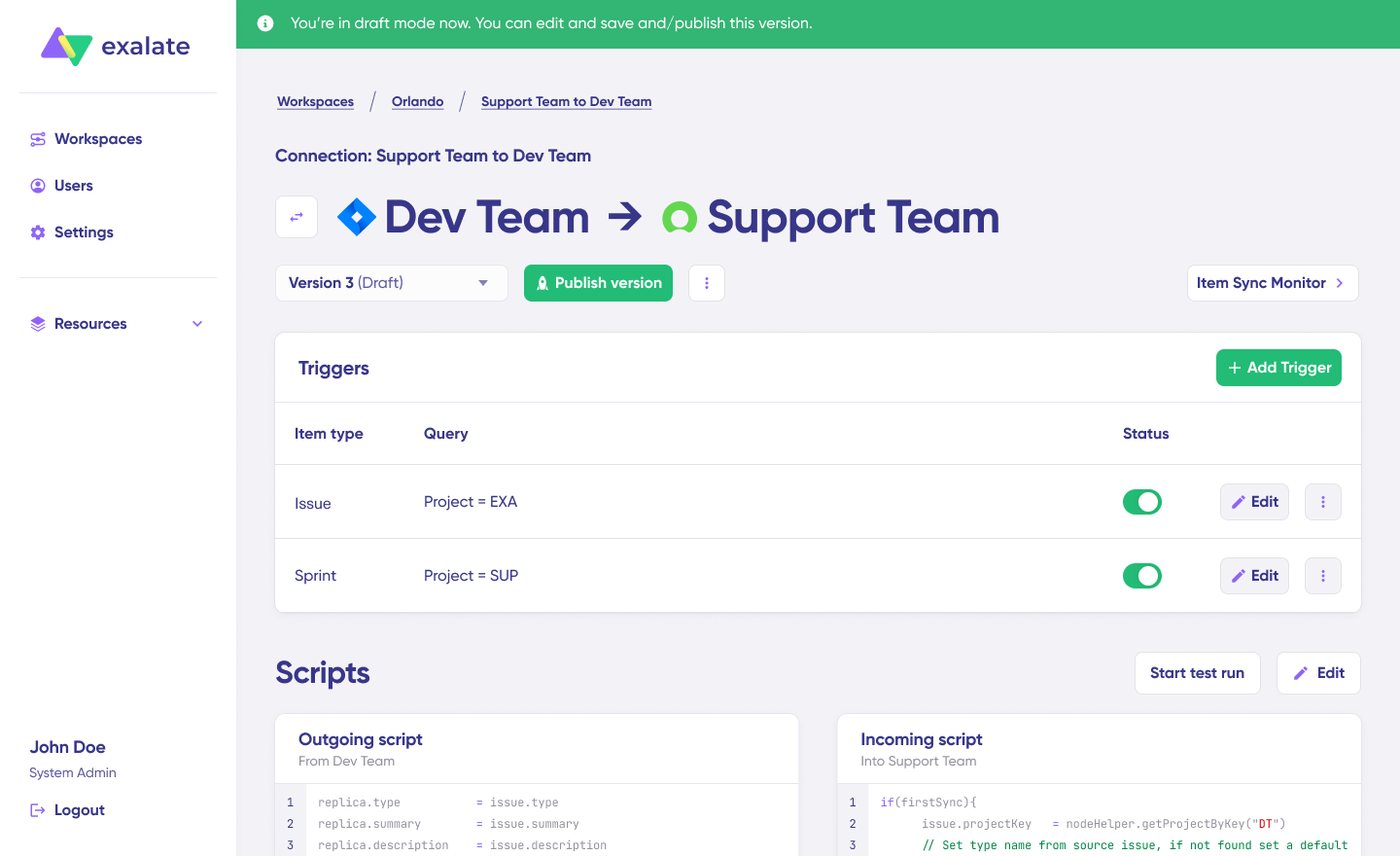
If your organization wants to connect with another department, team, or company, you can create a peer-to-peer (P2P) connection. Your team decides what it sends and receives, and the other team does the same, so neither can override the other’s rules. This fits cross-company setups, such as an MSP syncing with a client’s ServiceNow instance.
Exalate supports bidirectional synchronization with applications such as Jira, Azure DevOps (Cloud and Server), Salesforce, ServiceNow, Zendesk, GitHub, Freshservice, Freshdesk, and Asana. Custom connectors can also be developed for additional platforms or internal tools that aren’t natively supported.
Key Features of Exalate for Point-to-Point Integrations
- Bidirectional Synchronization: Exalate enables bidirectional sync, ensuring changes in one system are reflected in the connected system. This two-way communication streamlines processes and keeps information up-to-date across connected platforms. Whether you’re syncing work items from Jira to ServiceNow incidents or Salesforce cases to Zendesk tickets, both sides stay current.
- Customizable Field Mapping and Sync Rules: Exalate provides tailored integrations with customizable mapping features through its Groovy-based scripting engine. You get to define exactly how data is transferred between systems, including field mapping, data transformation, conditional logic, and filtering. This level of control means you can build integrations that match your exact workflow requirements rather than adapting your processes to fit the tool.
- AI-Assisted Configuration with Aida: Exalate supports AI-assisted integration through Aida AI, an AI scripting assistant available directly within the Exalate platform. Instead of writing Groovy scripts from scratch, you describe your sync requirements in plain language, and Aida generates the configuration for you. Aida analyzes your existing sync rules and connector setup to produce scripts tailored to your specific integration context. You retain full control to review, modify, or discard any suggestion before applying it.
- Security and Compliance Built-In: Exalate is ISO 2700 certified and prioritizes security in every integration. Data is encrypted in transit using TLS 1.2/1.3, authentication is handled via JWT-based tokens, and role-based access control lets you manage who can configure and monitor integrations. Each side of a connection maintains independent control over what data is shared, so your internal data stays private unless you explicitly choose to share it. Full details are available at the Exalate Trust Center.
- Scales Across Business Environments: Exalate caters to a range of integration needs, from a startup connecting two tools to a multinational corporation managing dozens of cross-company syncs. Its architecture handles the complexities of diverse business environments, making it a versatile solution for companies of all sizes.
Exalate for MSPs is an extension of the P2P Exalate offering that helps MSPs and MSSPs implement end-to-end integrations with their partners, vendors, or customers.
What are Some Point-to-Point Integration Use Cases?
Here are real-world applications of point-to-point connections, broken down by case, solution, and how they play out in practice.
Case 1: Cross-Departmental Collaboration
Case: A company’s IT department uses ServiceNow, while the customer support team uses Freshdesk. They need to share specific customer support tickets and incident details without duplicating data or switching between platforms.
Solution: Connect the two platforms via a point-to-point integration to enable direct synchronization between them. IT can view Freshdesk tickets from ServiceNow, and support agents can view ServiceNow requests, changes, and incidents in Freshdesk.
Real-World Application: A mid-sized SaaS company sets up this integration to route high-priority support tickets from Freshdesk to ServiceNow. When the IT team updates the incident status or adds a resolution note in ServiceNow, the support agent sees the update in Freshdesk without any manual data entry. This is a common pattern in the customer support workflow sync, where real-time visibility and fast implementation are critical.
Case 2: Cross-Company Integration
Case: A company works closely with a specific vendor who uses a different platform for tracking work. The company needs to share relevant bug reports or tickets with the vendor’s system without giving the vendor direct access to internal tools.
Solution: Set up a point-to-point integration between the two platforms with independent control on each side. Each party configures what data they share and receive, ensuring sensitive internal information stays private.
Real-World Application: Company A uses Jira, while Company B uses Freshdesk. A Jira to Freshdesk integration bridges the communication gap between development and vendor support teams. When a developer in Jira marks a work item as “in progress,” the vendor’s Freshdesk ticket updates automatically. When the vendor adds a comment with additional context, it appears in Jira without anyone needing to copy it over. This ensures a smooth flow of information between the two platforms without adding unnecessary complexity or compromising either party’s data.
Case 3: MSP Integration
Case: An MSP manages IT services for multiple clients, each using different platforms to track work items and incidents. They need to share specific tickets with these external clients in real time while keeping each client’s data isolated from the others.
Solution: Set up individual point-to-point connections between the MSP’s platform and each client’s system. Each connection has independent sync rules tailored to that specific client relationship.
Real-World Application: An MSP uses Freshservice as its central ITSM platform. Client A runs Jira, Client B uses ServiceNow, and Client C uses Zendesk. The MSP sets up three separate Exalate connections, one for each client. Tickets and entities from each client flow into Freshservice, and once updates are available, the MSP’s IT team shares them back to the relevant client. Each connection is configured independently, so Client A’s data never crosses into Client B’s integration. This is a core pattern in outsourced IT service management.
Case 4: Multi-Platform Integration
Case: A distributed team working across different tools (e.g., Jira for project management, ServiceNow for ITSM, and Zendesk for customer support) needs to synchronize work statuses and escalate items between platforms based on severity.
Solution: Set up point-to-point integrations between each pair of systems with trigger-based routing logic that determines where items go based on their attributes.
Real-World Application: A support ticket is raised in Zendesk and is routed automatically based on severity and priority. High-priority tickets are routed to Jira as work items for the development team, while low-priority tickets are routed to ServiceNow as incidents or problems for the IT operations team. When either team updates the status, the original Zendesk ticket reflects the change so the support agent can keep the customer informed.
Case 5: Development and Project Management Sync
Case: A product team uses Asana for project planning and task management, while the engineering team works in GitHub for code and issue tracking. Feature requests and bug reports need to flow between both tools without manual handoffs.
Solution: A point-to-point integration between Asana and GitHub syncs tasks and issues bidirectionally. When a product manager creates a task in Asana tagged as “engineering,” it automatically appears as an issue in GitHub. When the engineer closes the issue, the Asana task updates to reflect completion.
Real-World Application: A startup with a 15-person product team uses this integration to eliminate their weekly sync meeting. Product managers create and prioritize tasks in Asana, developers work in GitHub, and both teams have full visibility into the current status without context switching between tools. Platforms like Exalate support this with Asana and GitHub connectors, including custom field mapping for priority levels, labels, and assignees.
Creating Connected Networks with Point-to-Point Integration
At Exalate, the vision is a global network of connected companies. Picture this: a company has its point-to-point connection network with various other apps for specific jobs. This company wants to connect with other companies or teams, each having its own individual point-to-point networks.
It’s a challenge because these individual networks are spread out, with no shared control, and there is a need to ensure that every part of each network connects to the required endpoint.
Connecting these fragmented point-to-point (or meshed) networks and building a global network takes innovation and teamwork. With Exalate, you have a partner on that journey.
Book a demo with one of our integration engineers to see Exalate in action.
Conclusion
Point-to-point integration remains a powerful solution for organizations seeking efficient and direct connections between their systems. Its simplicity, speed, and low initial cost make it the right choice for small-scale integrations, legacy system connections, and scenarios where performance is non-negotiable.
But simplicity has limits. As the number of systems grows, the number of connections follows the n(n-1)/2 curve, and what started as a clean integration can become a tangled web.
That’s where tools like Exalate provide the directness of P2P integration, along with AI-assisted configuration, bidirectional sync, and the security controls that enterprise environments demand.
The journey from individual peer-to-peer integrations to interconnected company clusters and a global network of connected companies represents the evolution toward a seamlessly integrated future, one connection at a time.
Frequently Asked Questions
What is point-to-point integration, and how does it differ from other integration approaches?
Point-to-point integration connects systems directly to each other without intermediary components. Star integration is a specific pattern where multiple P2P connections fan out from a single system, forming a star-like topology.
Unlike hub-and-spoke (which uses a central hub for routing) or bus integration (which uses a shared messaging channel), point-to-point has no middle layer. It’s simple to set up, but it becomes complex as the number of systems increases because the number of connections follows the n(n-1)/2 formula.
What is a point-to-point integration example?
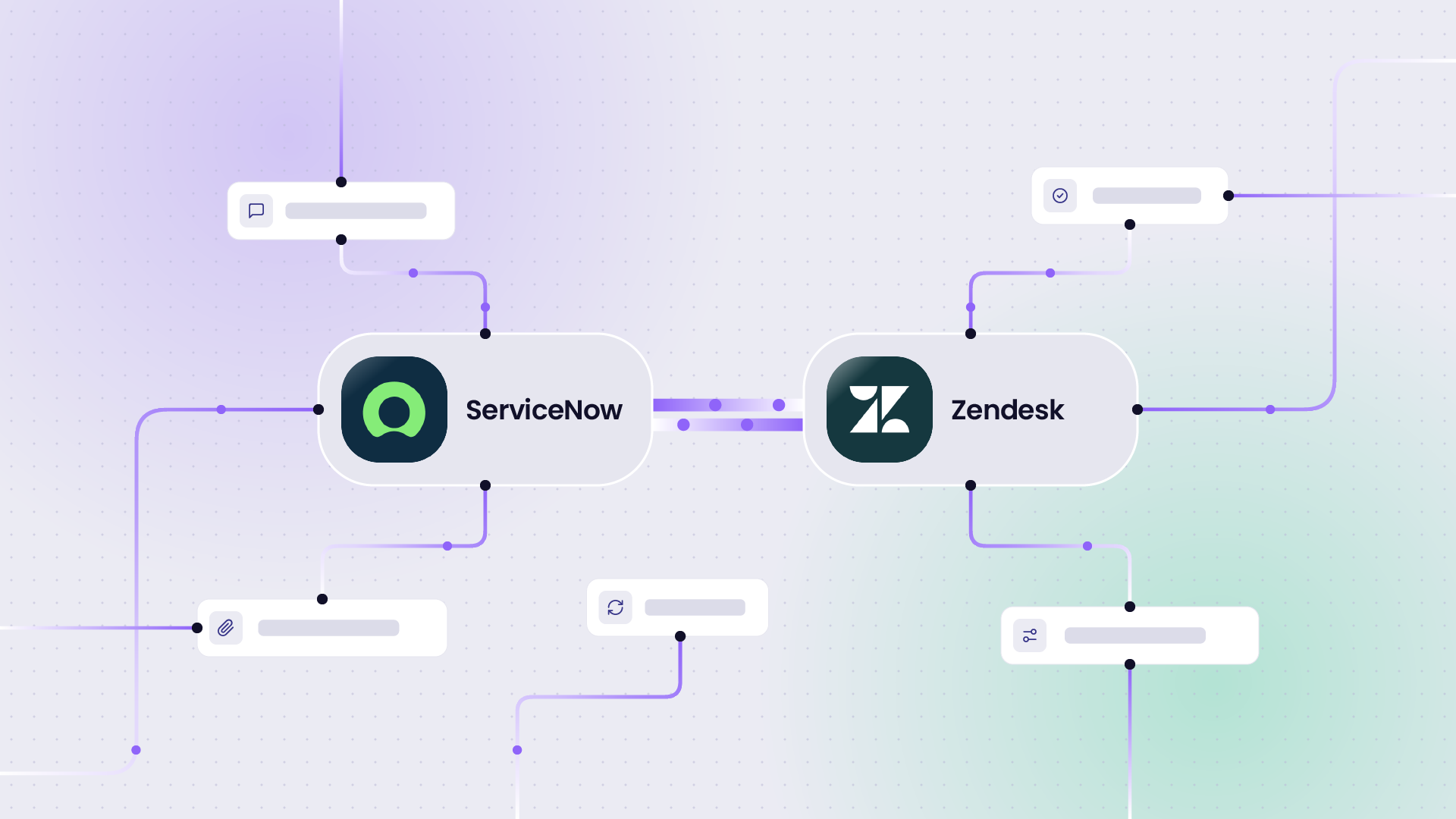
A common example is when your customer service team works in ServiceNow, while your development team works in Jira. Customer incidents coming into ServiceNow sometimes require the dev team’s attention.
A point-to-point integration between ServiceNow and Jira ensures that incidents in ServiceNow are directly escalated to Jira as work items, and that all required information and statuses are updated in both systems for clear visibility.
What are the advantages of point-to-point integration?
A point-to-point connection offers simplicity, enabling quick and specific data exchange between two systems. It requires less initial setup, has lower upfront costs, delivers faster time to deployment, and provides granular control over each connection’s data flow and security. It’s most effective when connecting a small number of systems with straightforward requirements.
Can point-to-point integration scale to accommodate growing business needs?
Point-to-point integration becomes less scalable as business needs grow. While suitable for a small number of integrated systems, the approach leads to complexity and maintenance challenges as the number of connections grows.
However, with purpose-built integration tools like Exalate, scaling and maintaining point-to-point integrations becomes significantly more manageable because the tool handles the sync logic, error recovery, and monitoring for each connection.
What platforms does Exalate support for point-to-point integration?
Exalate supports bidirectional synchronization between Jira, ServiceNow, Salesforce, Azure DevOps (Cloud and Server), Zendesk, GitHub, Freshservice, Freshdesk, and Asana. New connectors can also be developed for additional platforms, including internal tools or legacy systems that aren’t natively supported.
How does Exalate handle security for point-to-point integrations?
Exalate is ISO 27001 certified and uses JWT-based tokens to authenticate every data transfer request. Data is encrypted in transit using TLS 1.2/1.3, and role-based access controls manage who can configure and monitor integrations. Each side of a connection maintains independent control over which data is shared, ensuring that internal information remains private. Full details are available at the Exalate Trust Center.
How does AI-assisted configuration work in Exalate?
Exalate offers AI-assisted configuration through Aida, an AI scripting assistant embedded directly in the platform. You describe your sync requirements in plain language (for example, “sync high-priority Jira work items to ServiceNow incidents”), and Aida generates the Groovy script based on your existing sync rules and connector setup. You review, modify, or discard the suggestion before applying it. Aida also helps troubleshoot sync errors by explaining problems in plain language and suggesting solutions.
How long does it take to set up a point-to-point integration with Exalate?
Simple integrations between two platforms can typically be configured within an hour. More complex setups involving custom field mappings, conditional triggers, and advanced sync logic may take a few days. For enterprise implementations with multiple connections, Exalate’s integration engineers can help plan and execute the rollout. AI-assisted configuration through Aida can further reduce implementation time by generating sync scripts from natural language descriptions.
What is the difference between point-to-point integration and iPaaS?
Point-to-point integration creates direct connections between pairs of systems, with each connection managed independently. iPaaS (Integration Platform as a Service) provides a cloud-based platform that manages multiple integrations from a unified interface, typically offering pre-built connectors, monitoring, and low-code configuration.
P2P integration is simpler and cheaper for a small number of connections, while iPaaS offers better scalability and management for larger integration landscapes. Some tools, like Exalate, bridge the gap by providing the directness of P2P with platform-level features such as AI-assisted configuration, error recovery, and a unified console for managing connections.
Can point-to-point integration work between two companies?
Yes, point-to-point integration works between two companies if either controls its own side of the connection. A shared configuration that one party can edit doesn’t work for most vendor-client setups. Exalate configures each side independently for this reason.
Recommended Reading: