
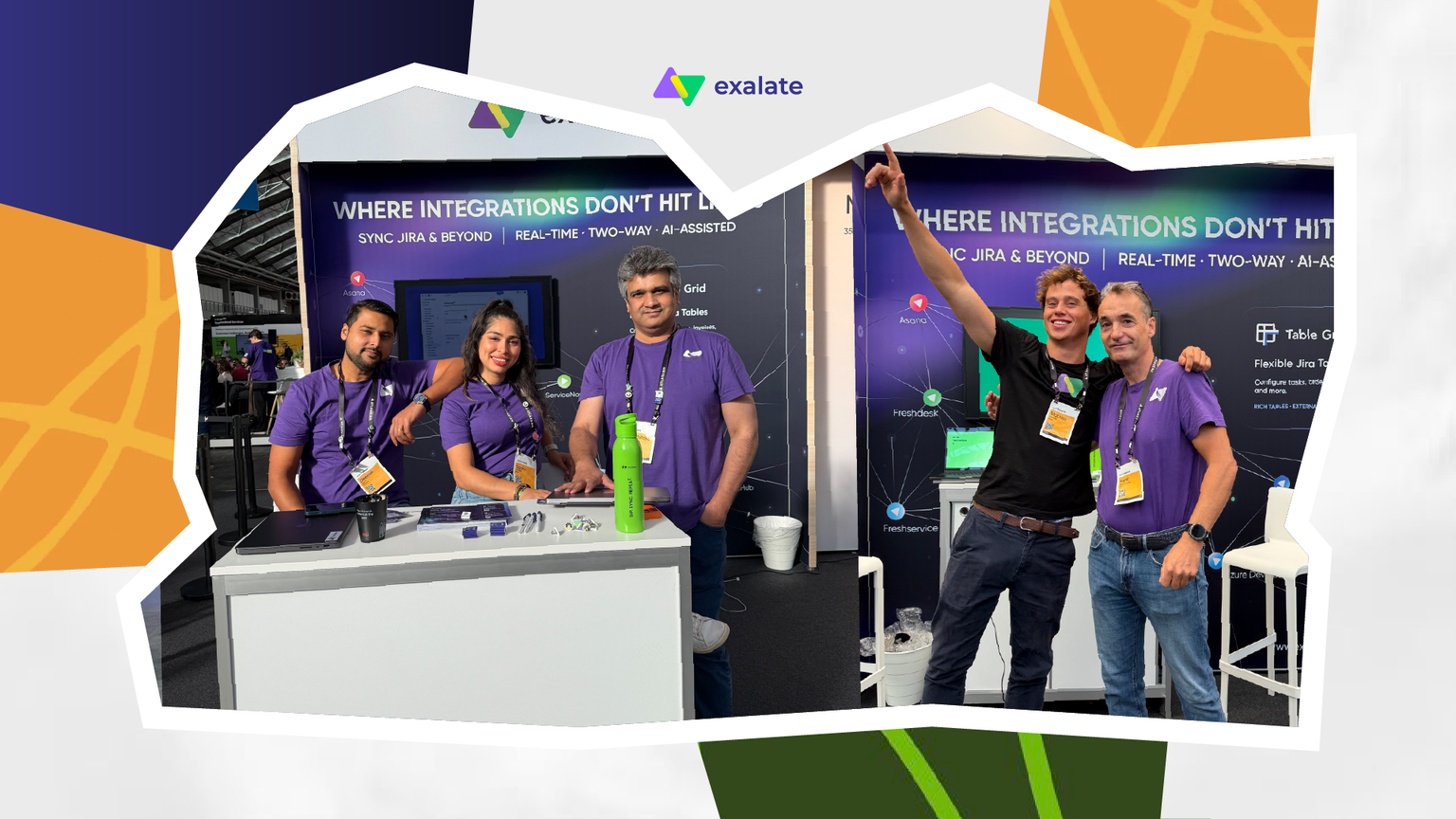
Looking back at Team ’26 Europe, we’re asking what Atlassian’s next steps mean for the systems and workflows enterprises already depend on.
Five months after Team ’26 Anaheim established agent assignments in Jira and opened the Teamwork Graph, Amsterdam shifted the focus to multi-agent execution, headlined by the Agentic Multiplayer Protocol (AMP), autonomous coding sessions right on the board, and enterprise governance tailored to European regulatory realities.
Yet beneath the keynote dazzle of multi-agent orchestration, the operational conversation on the floor told a far more grounded story. In our Team ’26 Anaheim recap, we argued that Jira and ServiceNow were both staying in the room and that AI is only as good as the underlying cross-system context.
Amsterdam reinforced that premise.
Our conversations brought it into sharper operational focus: existing integrations that needed to work better, cloud migrations with external dependencies, and teams that needed shared visibility while retaining their own tools.
Our take: enterprise expansion depends on keeping operational control intact.
Anaheim vs. Amsterdam: what advanced
| Dimension | Team ’26 Anaheim (Spring 2026) | Team ’26 Europe (Fall 2026) |
| Agent participation | Agents in Jira GA: assign work to Rovo and third-party agents, work with them in comments, auditable activity | AMP: agent identities with owners, shared presence and real-time attribution; third-party coding agents (Devin, Factory, Warp) with agent sessions on the board |
| Teamwork Graph | 150B+ objects and relationships; graph opened to external agents via CLI and MCP (open beta) | 250B+ objects and relationships, code and structured-data context, 80+ connectors, rebuilt MCP Server |
| Portfolio | New Product Collection; Rovo Studio GA; Service Collection updates | New capabilities across Teamwork, Strategy, and Service Collections (agents in JSM that take action, Solutions Composer, Workforce Management) |
| Governance & Trust | Scoped access and auditable agent activity | Local EU AI inference (announced, no date yet); agent accounts and non-human identity inventory (coming soon); Guard Premium; proactive EU AI Act and ISO 42001 compliance for Rovo |
| Integration Reality | Jira–ServiceNow coexistence, cross-company collaboration, migration continuity | Live migration pipelines, boundary governance, multi-tool sync |
Our reading is that Atlassian wants to coordinate work across people, agents, and tools. Its investment in external connectors and MCP makes interoperability part of that design.
For us, the practical question is what Rovo or another agent can understand from the context available in Jira, including information originating in ServiceNow or Zendesk. Making that information available also requires decisions about its meaning, visibility, and ownership.
Connected context gives agents more to work with. Explicit integration rules define what should happen across the boundary.
That is the integration work we focus on: keeping operational records aligned over time, with each side’s workflow and sharing rules explicit.
1. The ServiceNow + Jira Dynamic: Still the Enterprise Center of Gravity
Jira–ServiceNow remained a recurring focus in our conversations. Several teams we spoke with already had an integration. They wanted it to work better.
The requirement was practical: engineering should be able to progress work in Jira while service teams follow it from ServiceNow, without someone manually maintaining the connection between the two.
That puts the quality of the handoff at the center of the integration:
- Workflow translation: status changes need to reflect the agreed next step in each system.
- Selective sharing: internal notes and customer-facing updates need explicit visibility rules.
- Operational ownership: when synchronization fails, teams need to know what happened and who will resolve it.
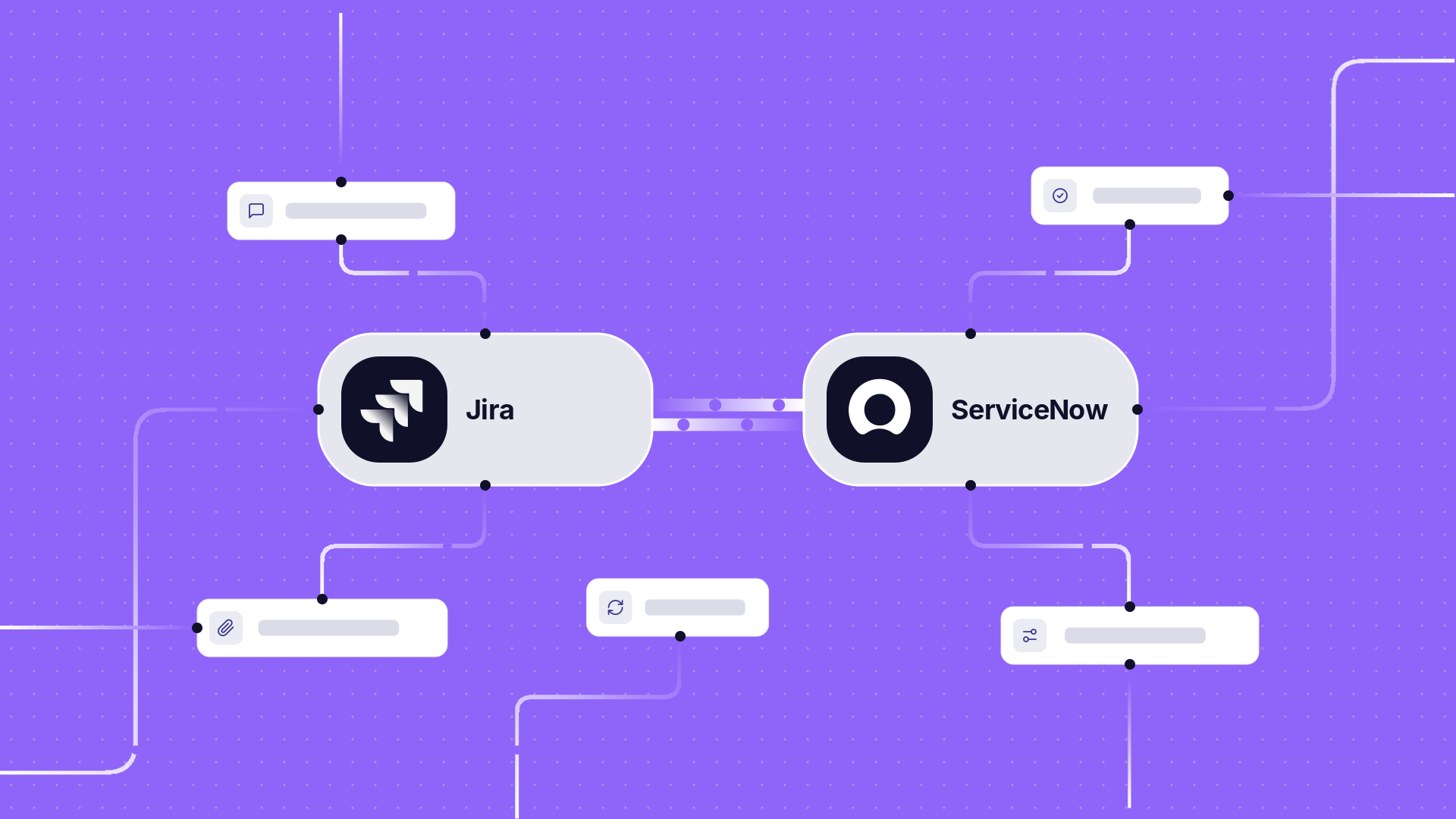
A connected system is only useful when both sides can trust the handoff.
For us, Jira–ServiceNow synchronization therefore includes decisions about ownership, status translation, comment visibility, and exceptions.
2. The consolidation question: connect first, move in stages
Atlassian’s broader strategic mandate in 2026 is expanding from “Tech to Biz”, moving from engineering departments into marketing, HR, legal, and operations.
Those departments bring established systems, processes, and responsibilities. Expanding Jira’s role means accounting for the work already running through them.
Integration provides the bridge. A team can begin using Jira while colleagues continue in ServiceNow, Salesforce, Asana, or Freshservice. Selected information flows between them, creating shared visibility before every team is ready to move.
That bridge can support a gradual migration or remain in place for ongoing collaboration. The organization controls the pace and decides which workflows should move.
Shared visibility can come before tool consolidation.
This is where we see integration supporting Atlassian’s growth: giving customers a sequence they can implement while respecting existing operational dependencies.
For Solution Partners, that creates a concrete design discussion: which teams need visibility, where they will continue working, and what information must move between them.
3. DC-to-Cloud Isn’t Done
Jira Data Center-to-Cloud migration surfaced in several of our discussions, often alongside ServiceNow connectivity. Zendesk, Azure DevOps and TOPdesk integrations also came up.
Moving Jira changes one end of a connection. The customer, service desk, or supplier at the other end may continue working exactly as before.
With Jira Software and Jira Service Management Data Center included in Atlassian’s already-announced end-of-life timetable for 28 March 2029, those dependencies belong in migration planning early.
Live synchronization can support a phased migration through:
- Coexistence: keep selected work-item data and updates flowing between source and target during an agreed transition period.
- Validation: check mappings and data in the target while preparing the move.
- Continuity across connected systems: plan how ServiceNow and other dependent environments will remain connected as Jira moves.
Our ServiceNow-to-JSM migration with Uber Freight provides a concrete example of this approach across systems. Around 130,000 tickets moved into Jira Service Management in about two months, without disrupting the service desk. Both environments operated in parallel during the transition, and Uber Freight chose the cutover when its team was ready.
The target configurations, permissions, and cutover still need their own preparation.
The migration plan needs to account for the work that stays outside the migration.
4. European Realities: Governance, Sovereign Data, and Build-vs-Buy
European teams approach software architecture with an instinctive skepticism toward uninspected magic. Atlassian responded directly to this in Amsterdam with announcements around EU AI inference and Guard Premium controls, alongside forthcoming agent accounts and a non-human identity inventory.
Our integration discussions highlighted a related deployment requirement: self-hosted setups for regulated and public-sector environments.
We also co-hosted Sovereign by Design, an invite-only breakfast with Sopra Steria on 7 October, built around collaborating across systems and company boundaries while retaining control over shared data. We chose the topic because European organizations face a practical challenge: moving ahead with cloud adoption while retaining control over data shared across systems and company boundaries.
For integration, that control has several dimensions:
- Sovereign Boundaries: each side defines what it shares and how incoming information is handled. Fields, transformations and change ownership need to be explicit.
- Build-versus-buy over time: the comparison includes maintaining mappings, adapting to API and workflow changes, investigating failures, and retaining the knowledge to do all three.
- Control across customers and partners: for managed service providers, a consistent service interface can be supported by work distributed across customer and delivery systems, with rules defined for each connection.
As Francis put it in our Anaheim recap:

Enterprises don’t just want more automation. They want to know exactly what moves, what stays local, and who owns the decision.
Our own AI approach follows that principle. Aida, the AI built into Exalate, helps teams write and troubleshoot sync logic using their configuration context. People review and apply the rules; our synchronization engine executes them. Test Run, script versioning, and rollback support checking and managing changes.
What we take forward
The question we’re watching into 2027 is whether autonomous agents and the Teamwork Graph can bridge the gap between technical and business teams without breaking operational governance. That is where connected context either delivers enterprise value or creates operational noise.

As an Atlassian Marketplace Partner, we help teams design and operate those connections.
Thank you to everyone who spent time with us at booth 403 and around Amsterdam.
If your next step involves Jira–ServiceNow sync, cloud migration, or collaboration across company boundaries, let’s map out the integration requirements together.
We’ll be at Atlassian Team ’27 San Francisco to continue the conversation. See you there.