


Integrations aren’t exactly the main character of the show. They’re the behind-the-scenes plumbing of the digital world, the part most people don’t think about until something goes wrong.
Integrations quietly do their thing, linking systems, syncing data, and making everything talk to each other without causing a scene.
Our “Integration Nightmares” series isn’t about scaring you. It’s about the very real pain teams feel when they try to connect their tools, systems, and workflows. We’ve seen the eye rolls, the sighs, and the “not another integration” looks. We get it.

The Invisible Backbone of Modern Work
Here’s our view from the engine room: integrations are the unsung heroes of digital work. They’re what turn a collection of disconnected tools into a smooth-operating machine. Done right, it’s pure satisfaction. Done wrong, it’s, well, a nightmare.
We love integrations because we understand they’re more than just technical connections. They’re about human connection, helping teams communicate, collaborate, and create more seamlessly.
The “Integration Nightmares” series is our honest way of starting a conversation. It’s an invitation to those who’ve been burned by integration attempts and a knowing wink to those who appreciate the art of connection.

2026: Jira and ServiceNow After Dark
This Halloween, our vampire returns to the gap between Jira and ServiceNow.
The cutover date is fixed. The incident queue didn’t get the memo.
A fix gets lost on its way back to the service desk. An acquisition brings two ITSM setups under one roof, with ServiceNow work moving toward Jira Service Management while both teams keep working. And one sync leaves a team with no way to keep internal notes internal.
These are real integration and migration decisions dressed up for October. Exalate lets teams choose which records and updates to exchange, map the data to each side’s workflow, test the logic before it goes live, and see what actually arrived, so both systems can run side by side while the move happens in phases. One Exalate customer moved roughly 130,000 tickets from ServiceNow to Jira Service Management while the service desk kept running.

Read the Uber Freight story to see how they migrated 130,000 tickets from ServiceNow to Jira Service Management, while preserving 15 months of history with zero downtime.
Not Every Fix Is a Cure
Every integration has a vampire in it. It arrives politely, promises to take care of everything, and a few months later it is quietly feeding on your budget, your time, and your control.
Some fixes are cures. Others just change who gets bitten.
Even our critics admit we’re good at day one. We were built for day one thousand.
Naturally, others have opinions about us. We’ve read them all. Here is what they whisper, and what we say in daylight.
“It’s a secret language.”
Exalate’s scripting engine is sometimes described as “requiring specialist knowledge.” There’s a learning curve, sure, but the language itself is no secret. Exalate uses Apache Groovy, open and widely used, and every rule is visible to whoever inherits it. Your code, your rules. The alternative is a promise of “no code” that has to live somewhere, usually in someone else’s hub, behind someone else’s queue.
“Old engine, new paint.”
We’ve been syncing for many years, and we’re still syncing. Some call it old. We call it proven. A rebuild is a promise, while a proven engine has a track record, and ours now comes with Test Run, versioning, and Aida AI on top.
“Nothing breaks. That’s the guarantee.”
That’s a bold promise for anything with a pulse. Living systems change: APIs get deprecated, fields get renamed, workflows get rewired. Living systems change: APIs get deprecated, fields get renamed, workflows get rewired. The honest question is what happens next. Can you see it, test it, fix it, and roll it back? We’d rather give you those tools than a promise.
“It’s all about Jira.”
Jira is a guest at this table, not the host. ServiceNow, Salesforce, Zendesk, Azure DevOps, GitHub, and more connect to each other directly. Different workflows, custom fields, conditional mappings, and different rules for different customers are part of the job. Hardly a quiet dinner for two.
“Every side needs its own node.”
That isn’t a flaw, it’s the point. When two companies connect, each one should decide what leaves its system and what enters. The Exalate experience gives you one place to manage and monitor your integrations. But centralized visibility shouldn’t mean one party controls every company’s data.
“Who owns your problem? You.”
Ownership isn’t something you outsource; it’s something you keep. A vendor that owns your problem also owns your data path, your queue, and your timeline. We’d rather hand you the keys and a team that picks up the phone.
“Compliance wants answers.”
Fair. Start with Exalate’s Trust Center, ISO 27001:2022 certification, documented security practices, and the data residency options available for your deployment. Then examine the rules that decide which fields leave each system.
“The meter is always running.”
Under Exalate’s current subscription model, pricing is based on active items in sync rather than every update or API call. A ticket changing its mind doesn’t become a fresh transaction charge. Plans and pricing are published, and you can estimate it before committing. Scope the integration before the invoice starts haunting you.
“Just use the native integration. It’s free.”
Free is the oldest invitation in the book. A native connector answers a small question well: one tool, one pair, a few tickets a week. Then the question grows, and it sets the house rules: its fields, its direction, its limits.
Or build it yourself. The connector works first, and the bill arrives later.
Discover the truth about the Build vs Buy integration debate in 2026.
“I can build this with AI.”
And we’re all for it. But AI is only as good as the context it works from. A generic AI agent can read both systems and still misunderstand the handoff: “Priority 1” means one thing here and another there. Aida, the AI built into Exalate, works with the context of your specific case. It helps turn your requirements into sync rules, explain the logic, and troubleshoot errors.
When other options hit their limits, Exalate keeps going:
- Bidirectional sync across platforms, so updates, comments, attachments, and statuses move both ways between Jira, ServiceNow, Azure DevOps, Salesforce, Zendesk, GitHub, and more.
- Control over what you send and receive. Each side chooses what data to send, what data to receive, and how and where to show it in its own system.
- Flexibility where you need it. Start simple, then script custom logic and conditions in Groovy scripts as your workflow grows, with AI help from Aida when you want it.
- Confidence before and after go-live. Test Run before you ship, sync rules versioning, and visibility into every connection, so troubleshooting starts with answers instead of guesses.
- Compliance answers on tap. ISO 27001 certification, data residency available as an add-on, an activity history for your connections, and per-side control over what leaves your systems.
- Built for cross-company collaboration. Engineering and support. An MSP and its customers. You and a vendor who will never use your tools. Set up different sync rules for every client or vendor, and let the systems stay different. The handoff will work.
The sun is up. Let’s keep going.
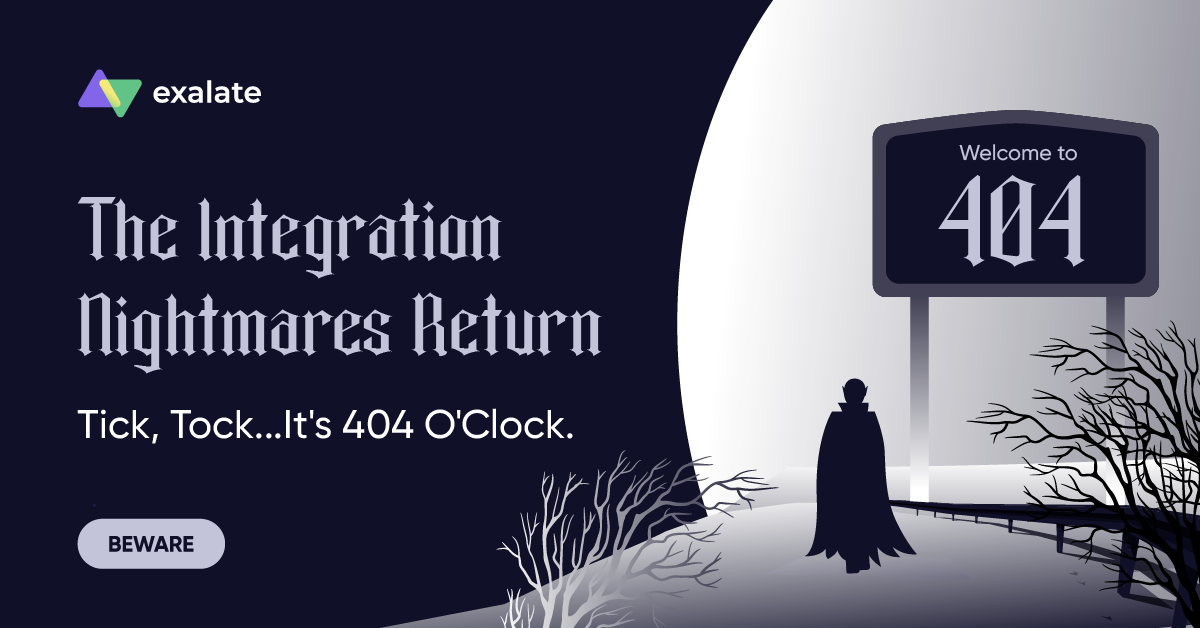
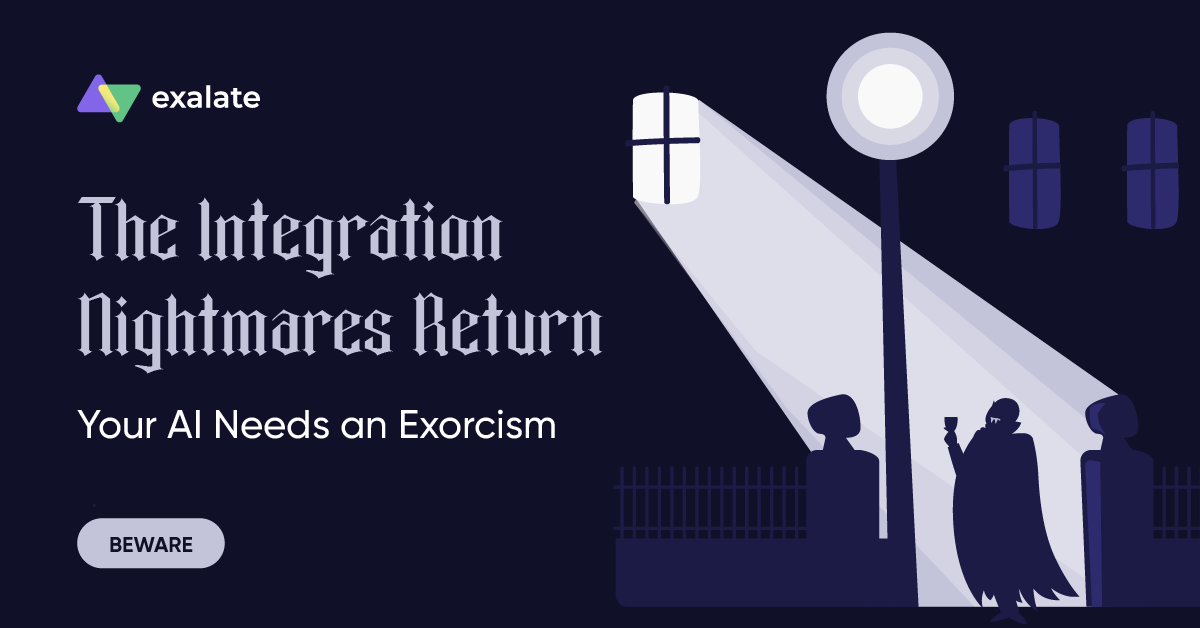
Highlights from the Integration Nightmares series – Halloween: The Second Edition
Integration That Doesn’t Put You Six Feet Under.
The nightmare begins when complexity becomes invisible, unmanageable, or controlled by nobody. It usually looks like this:
- The copy-paste curse. A human in the middle moves updates between Zendesk and Jira by hand. Context gets lost at every handoff.
- The Monday-morning haunting. Someone changes a workflow. The sync rules no longer match. You find out when a customer does.
- The one-way street. A ServiceNow incident reaches Jira. Engineering posts the fix. Nothing travels back. The service desk is still asking for news.
- The ghost in the machine. Someone built the integration years ago, then left. Everyone is afraid to touch it.
- The two-company standoff. You and your partner each run your own tools and rules. Nobody is willing to hand over the keys.
- The compliance cold sweat. Which fields leave your system, who decided, and can you prove it?
We’re calling out these nightmares, but we’re doing it with a smile, because on the other side of them there’s the green grass of smoother work.
We’re using Halloween’s darkness, Christmas’s connections, and Valentine’s relationship drama to show you that integrations are deeply, wonderfully human.
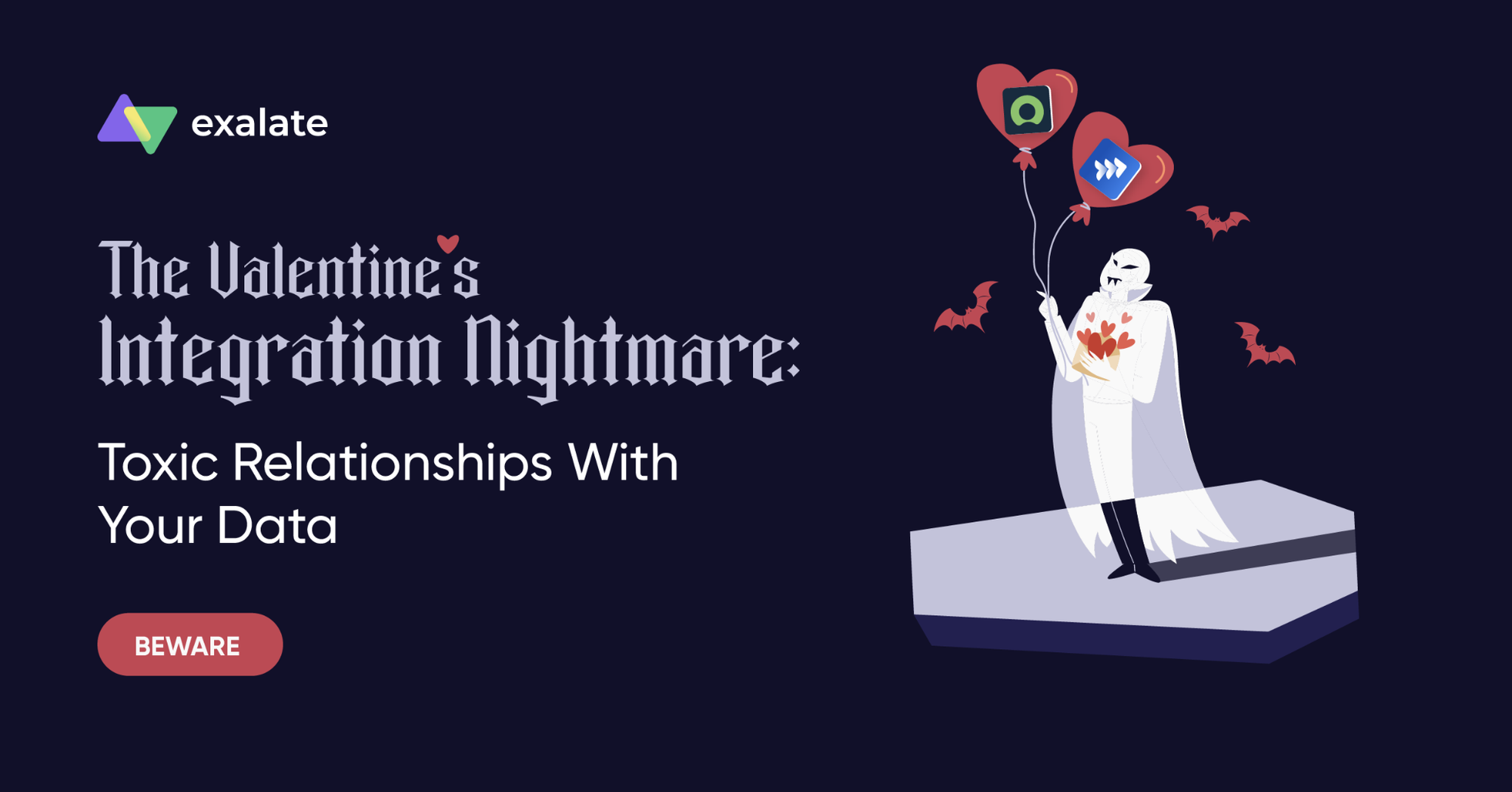

Highlights from the Integration Nightmares series – Valentine’s Day edition
Your Integration Trauma Is Valid
You’ve been burned before. We know. We understand.
Give us a chance to show you Exalate. We’re offering a conversation, a different perspective, and a smoother path through the integration landscape.
Bring us the integration nobody wants to touch.
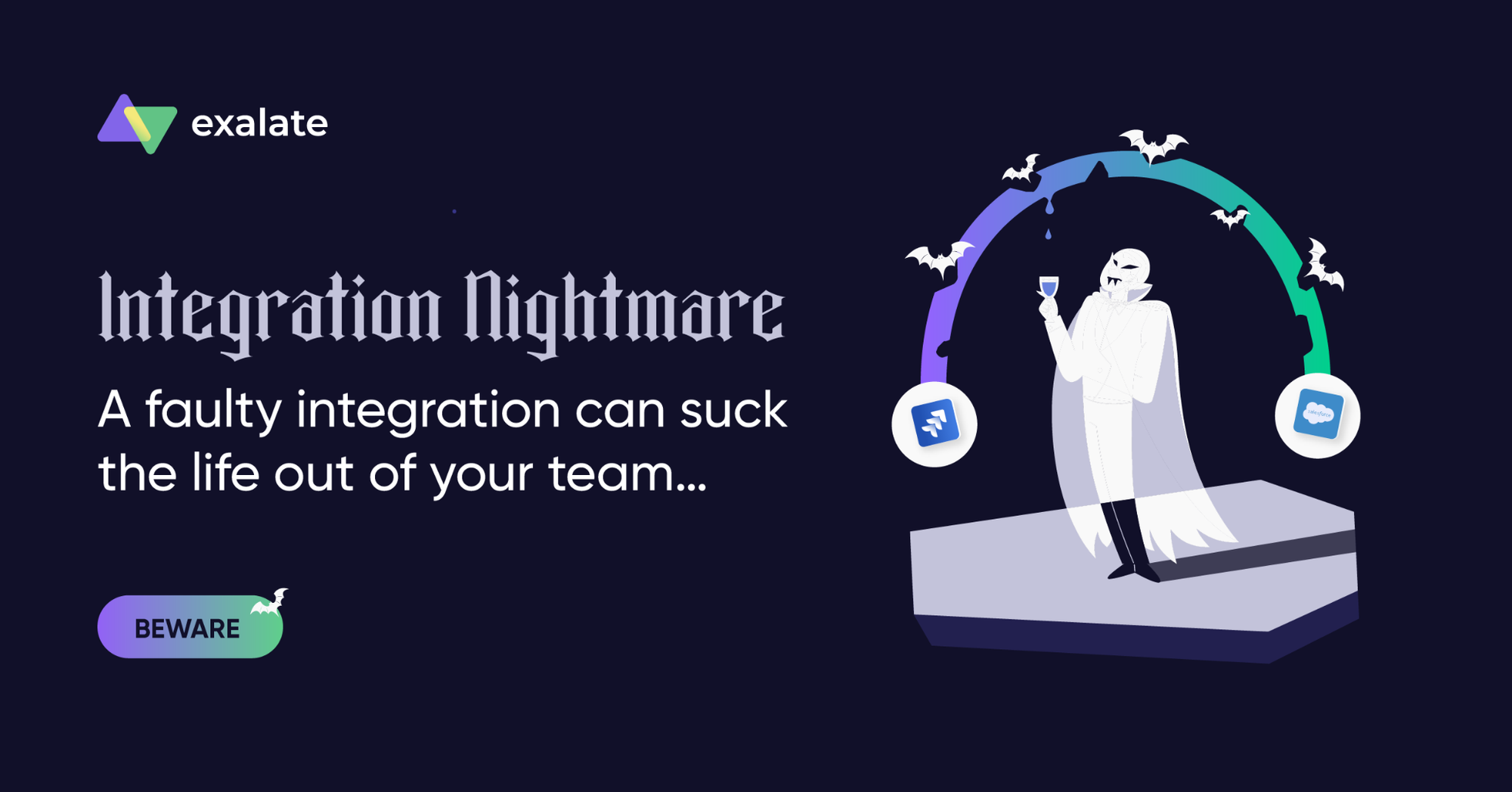
The “Integration Nightmares” series runs on our LinkedIn page. Follow us there to see more.
Check out some of the previous posts: