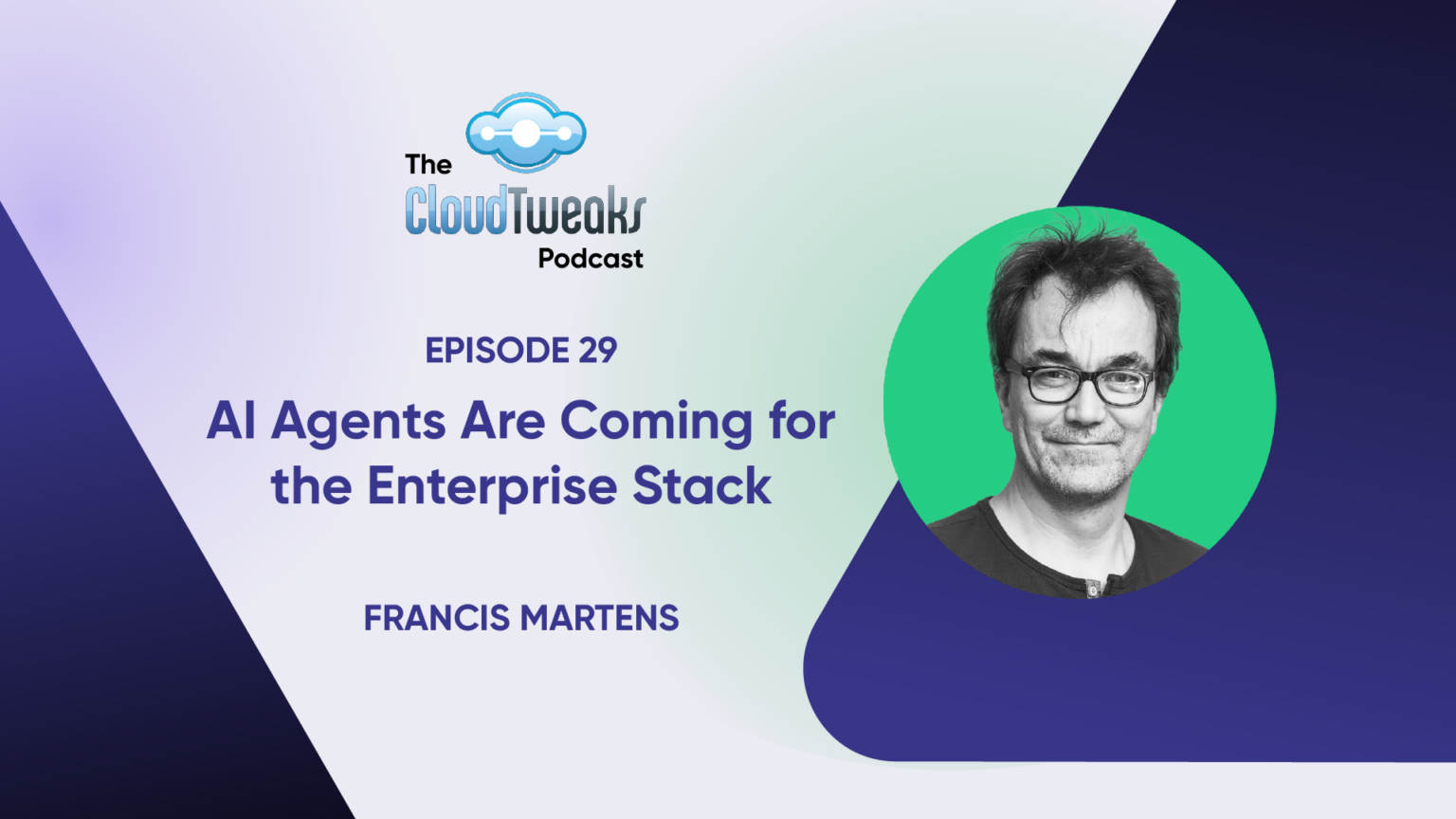
While AI makes building connections between systems easier, it makes governing them exponentially harder. In the latest episode of the CloudTweaks Podcast, Exalate CEO Francis Martens sat down with host Steve Prentice to discuss this urgent, yet often overlooked, challenge.
Picture an enterprise stack operating on complete autopilot. AI agents moving across departments, making and executing decisions across company boundaries at machine speed. It sounds like ultimate efficiency. Until you ask a simple question: who’s managing the traffic lights when something goes wrong?
In the latest episode of the CloudTweaks Podcast, host Steve Prentice speaks with Francis Martens, CEO and co-founder of Exalate, about what happens when autonomous systems meet complex enterprise environments.
Their conversation explores a central paradox: AI can make integrations easier to configure while making their behavior significantly harder to predict and govern.
Rather than treating integration as simple data movement, Francis argues that operating AI agents across business-critical tools requires preserving the autonomy of every connected party, maintaining clearly defined data boundaries, and establishing clear accountability.
A Few Noteworthy Ideas (Minor Spoilers Ahead 👀)
- Cross-company integration means accepting that control is distributed. Once your environment is connected with five or six other companies, you cannot control how each of them changes its systems or workflows. That is not a flaw to eliminate; it is a constraint to design around.
- Governance has to come before AI acts. When an autonomous system makes a decision, and something goes wrong, who owns the outcome? This is no longer just a technical question buried in an IT ticket.
- Why legacy iPaaS falls short. Traditional integration platforms are effective at moving data. But dynamic, multi-party workflows involving autonomous agents introduce a different challenge; the intelligence and governance surrounding those connections must now evolve beyond the job conventional iPaaS platforms were designed to perform.
Francis thinks:
AI can help configure an integration, but the engine executing it needs to stay predictable, and a human needs to sign off on the guardrails before anything ships.