exalate for Integration admins
Configure the Sync Your Teams Need. Control What Moves Between Them
Connect work items bidirectionally across Jira, ServiceNow, Azure DevOps, GitHub, Salesforce, Zendesk, and more. Define which items sync, map the fields your teams need, and control how updates flow between systems.
4.3/5

ISO-27001-2022

4.7/5

Follow one Ticket from Escalation to Resolution with Exalate
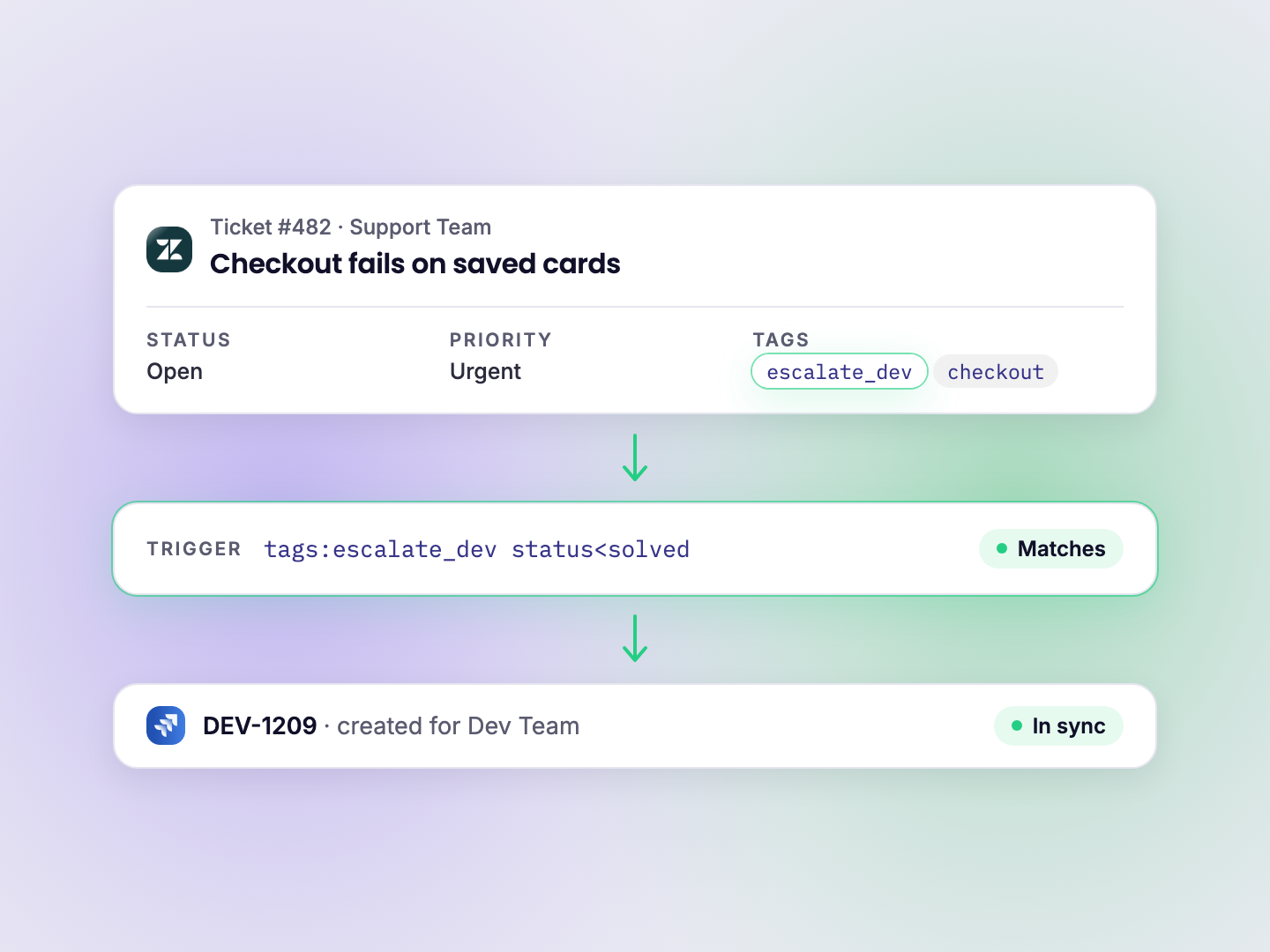
A support ticket needs engineering input. Engineering works in another system. Here’s an example of how you can configure the handoff.
Choose what starts the sync
An escalation flag, status, or other condition determines which tickets reach engineering.
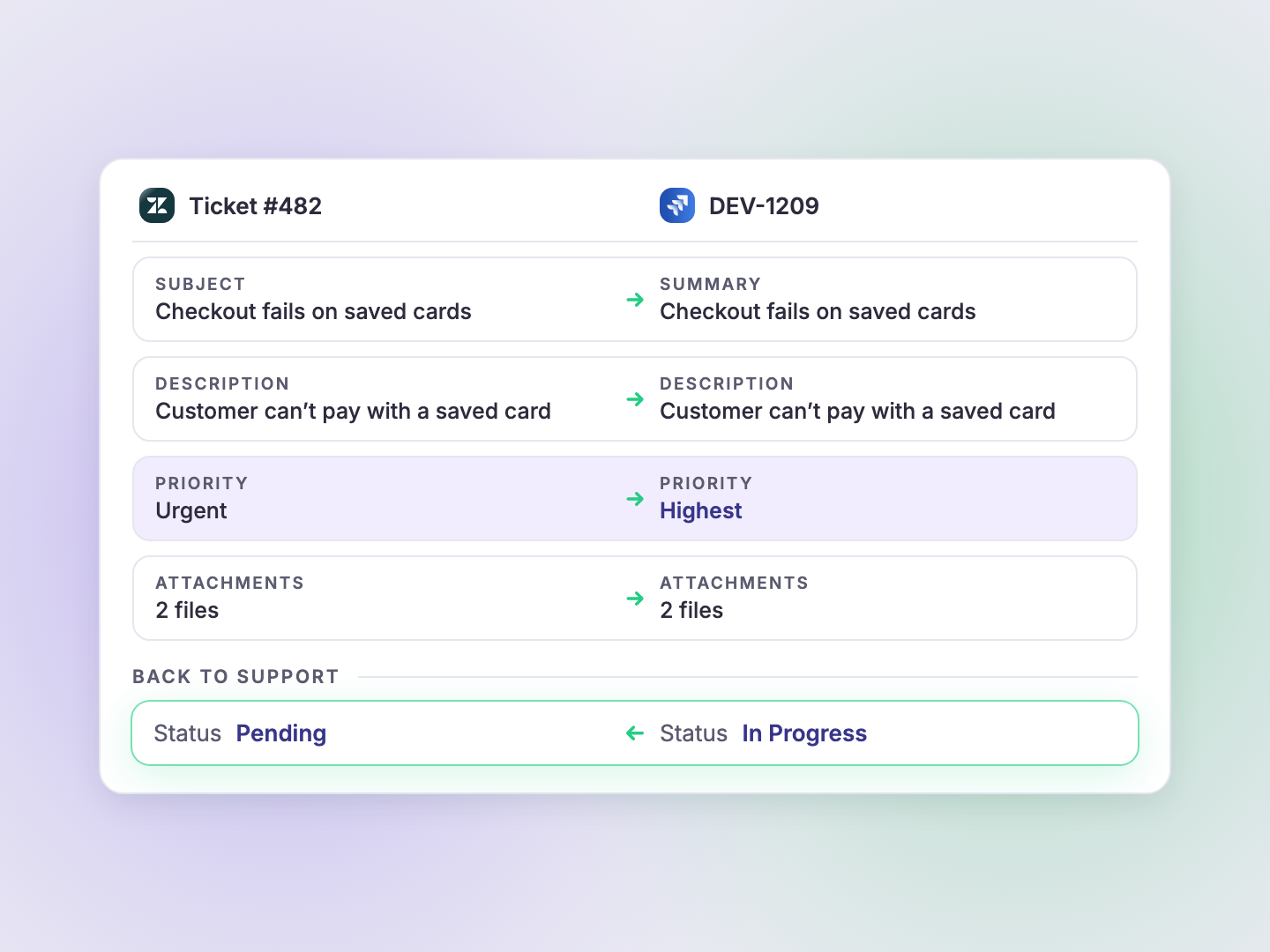
Send the context the teams need
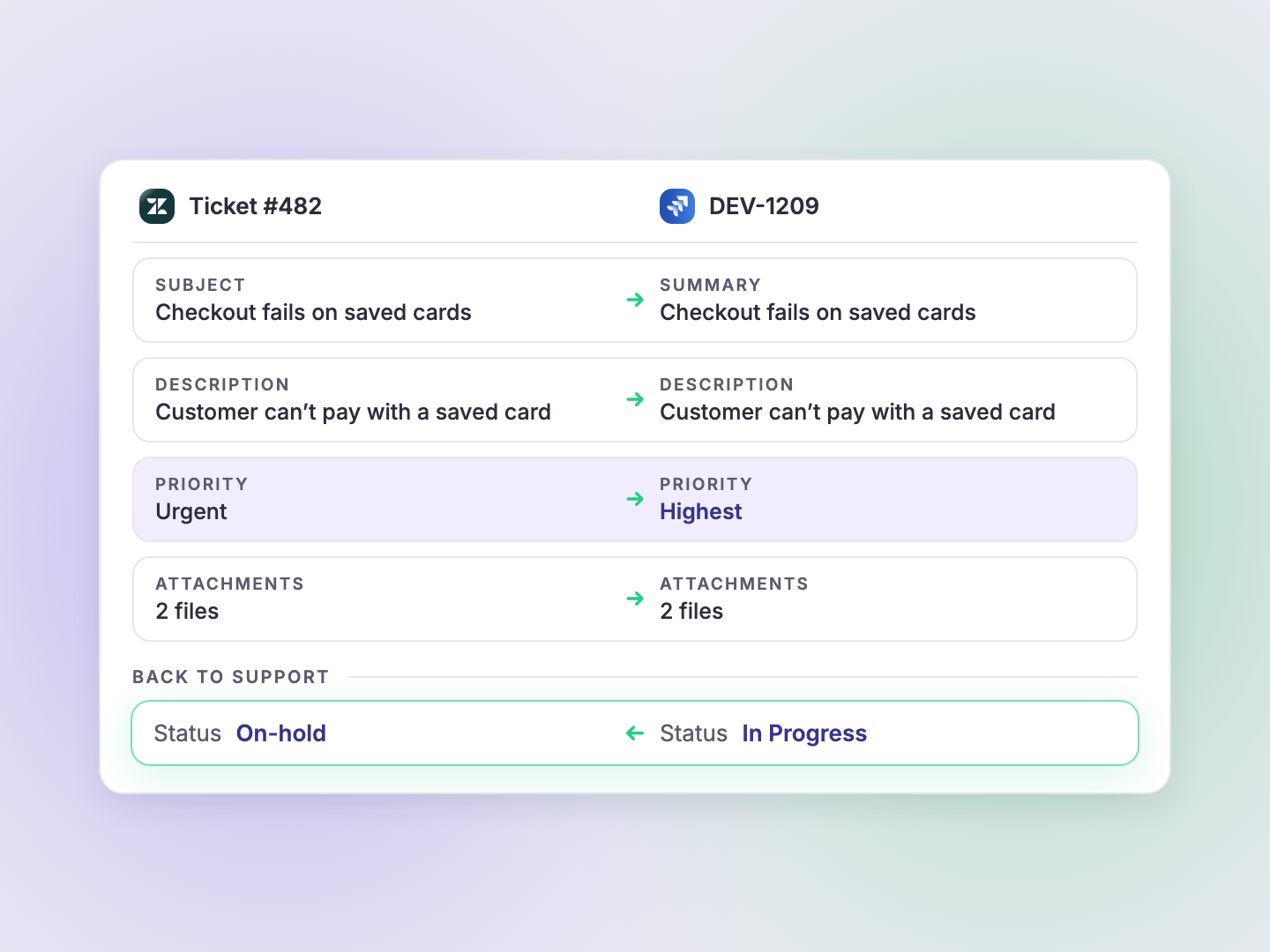
Map the ticket’s details to the destination work item. Define how fields and values should translate between the two systems.
For example, map engineering status updates back to the support ticket, so the support team can follow progress in its own system.
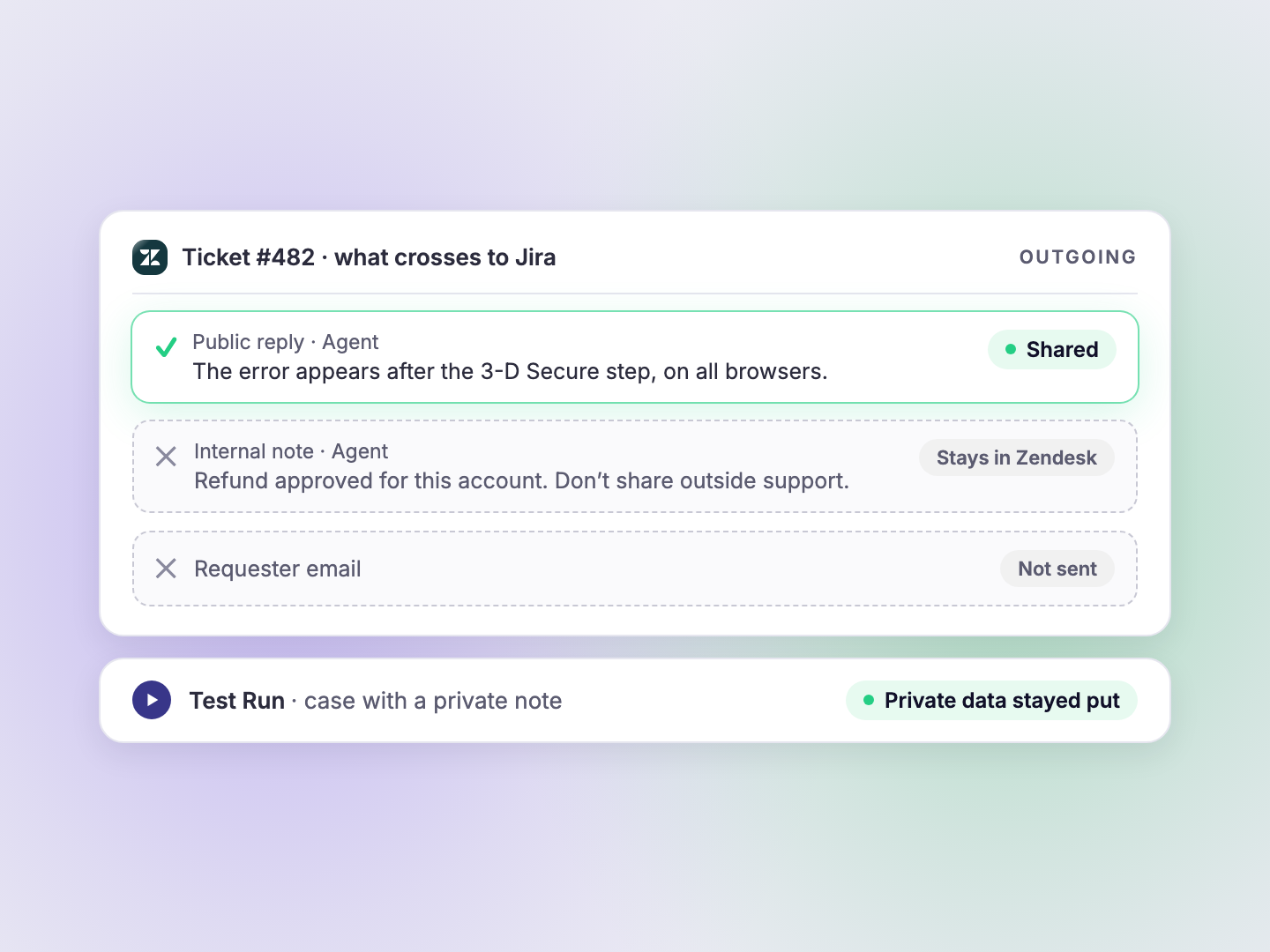
Set the boundaries for shared information
Define which comments and fields should cross the connection. Include private information in your test cases to check that your rules keep it where it belongs.
Configure the sync around your requirements. No compromises.
Different systems often use different fields, statuses, and workflows. Exalate’s scripting engine gives you the freedom to define how those differences are handled.
Choose the scope
Define which items qualify for synchronization and what data is sent.
Map the differences
Translate field values, map statuses, and add conditions for edge cases.
Control each direction
Use incoming and outgoing rules to define what each side sends and how it processes the data it receives.
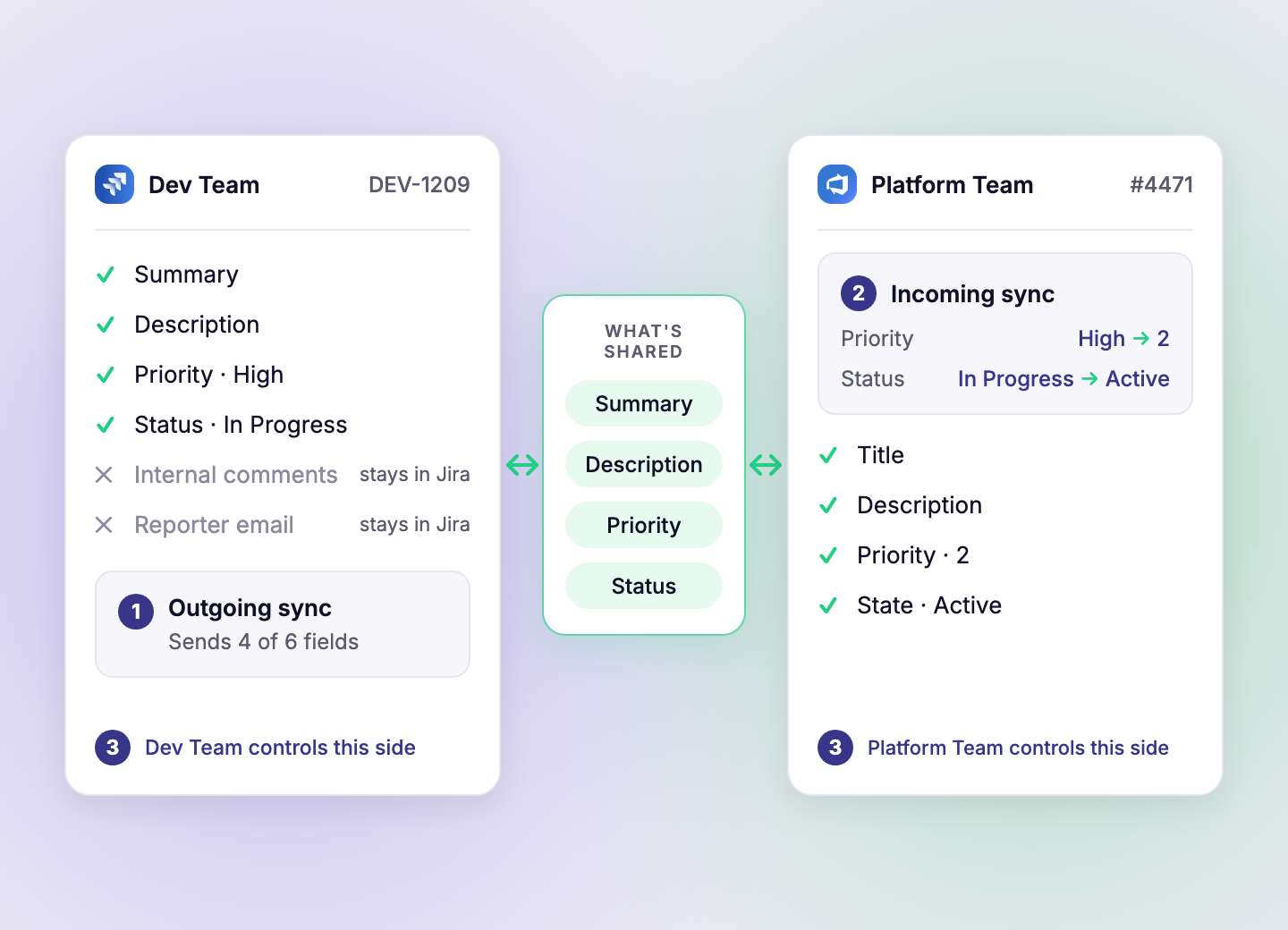
What does configuration involve?
Sync logic uses Groovy scripts. You can edit the rules directly and use Aida AI to help generate or explain them. You review and approve the logic.
Sync what each side needs. Route it where it belongs.
What you can configure
Choose which fields, comments, and files cross over.
Comment
Configure which comments are shared and how they appear on the receiving side, including internal versus public visibility.
Attachment
Send the files teams need alongside the work item, so screenshots and supporting documents stay with the issue.
Custom field
Include the fields your workflow depends on. Map corresponding fields and transform values where the two systems represent information differently.
Where it goes
Decide where each item lands and how its status reads on the other side.
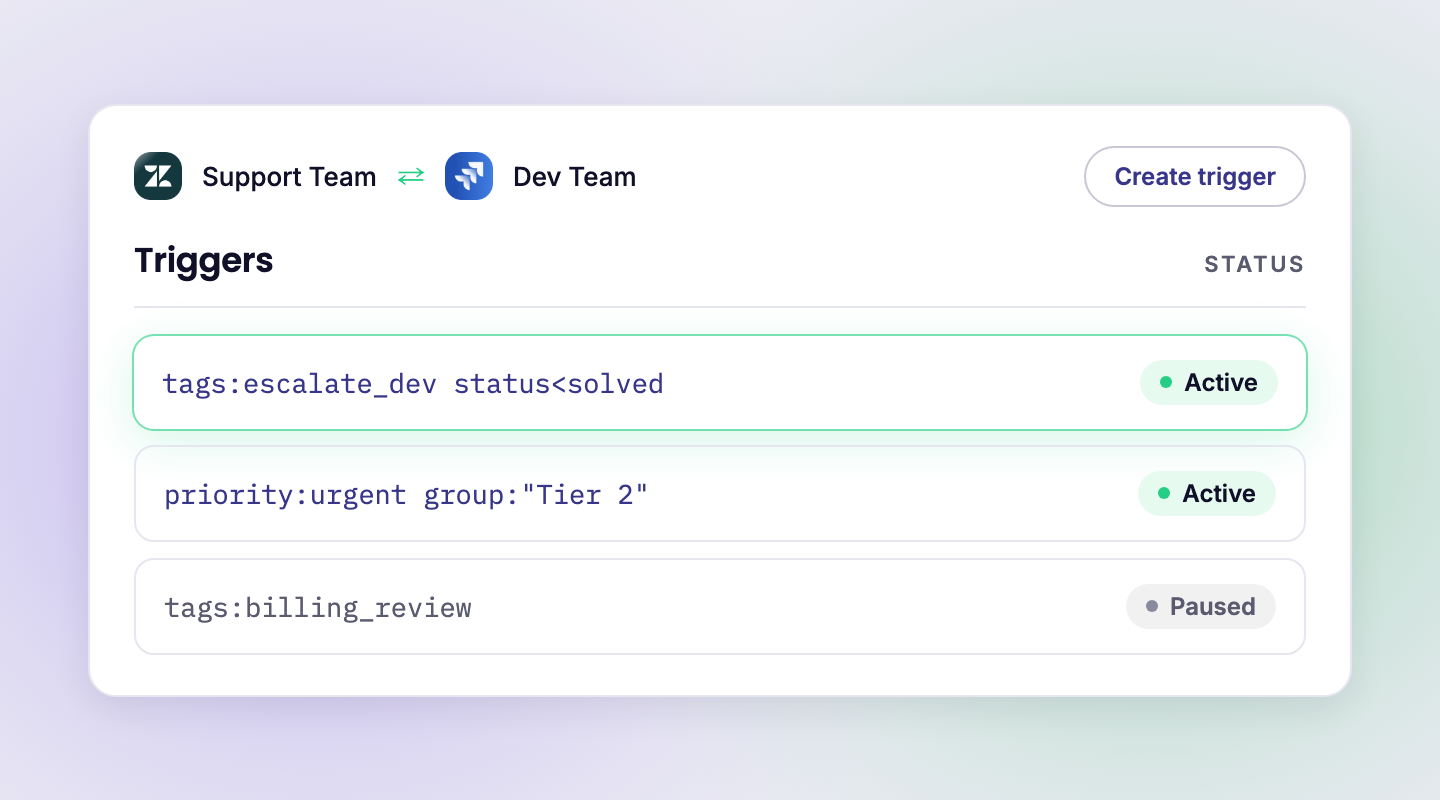
Triggers
Define which items enter the sync automatically. Use conditions to keep the scope focused on the work you want to share.
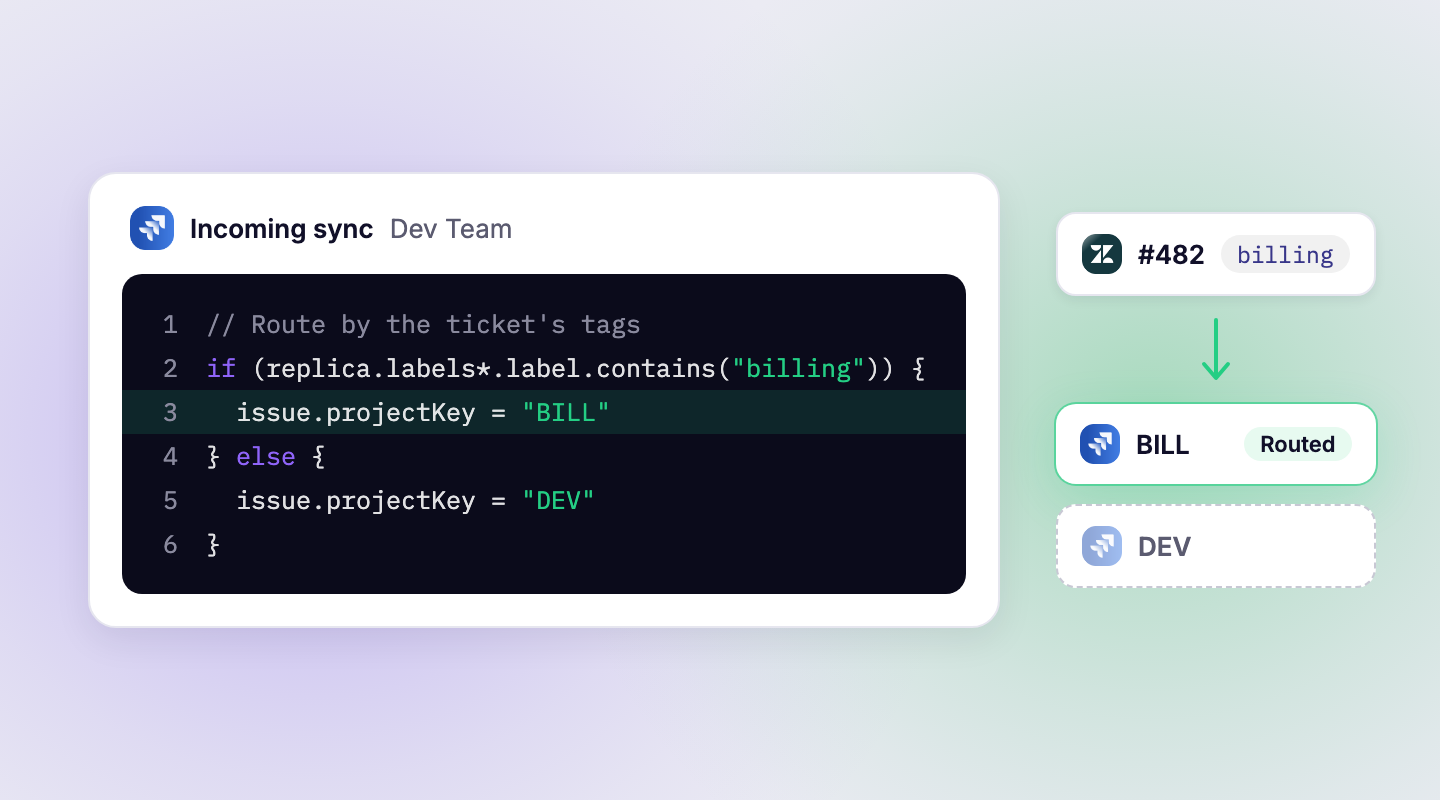
Multi-project routing
Route incoming work to the appropriate project using rules based on the source item and your workflow.
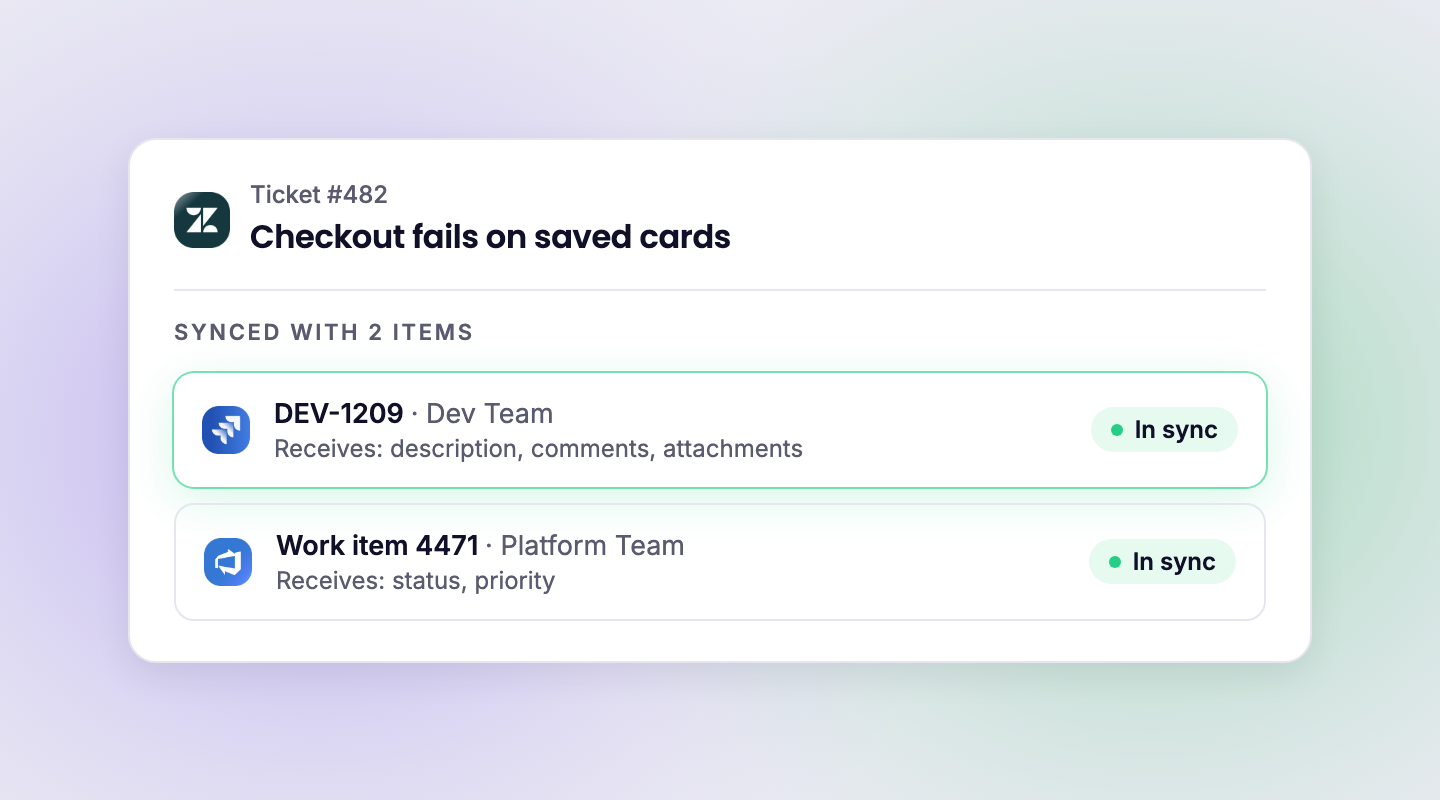
One-to-many sync
Configure scenarios where one source item needs to connect with multiple destination items. Define what each destination receives and how updates should flow.
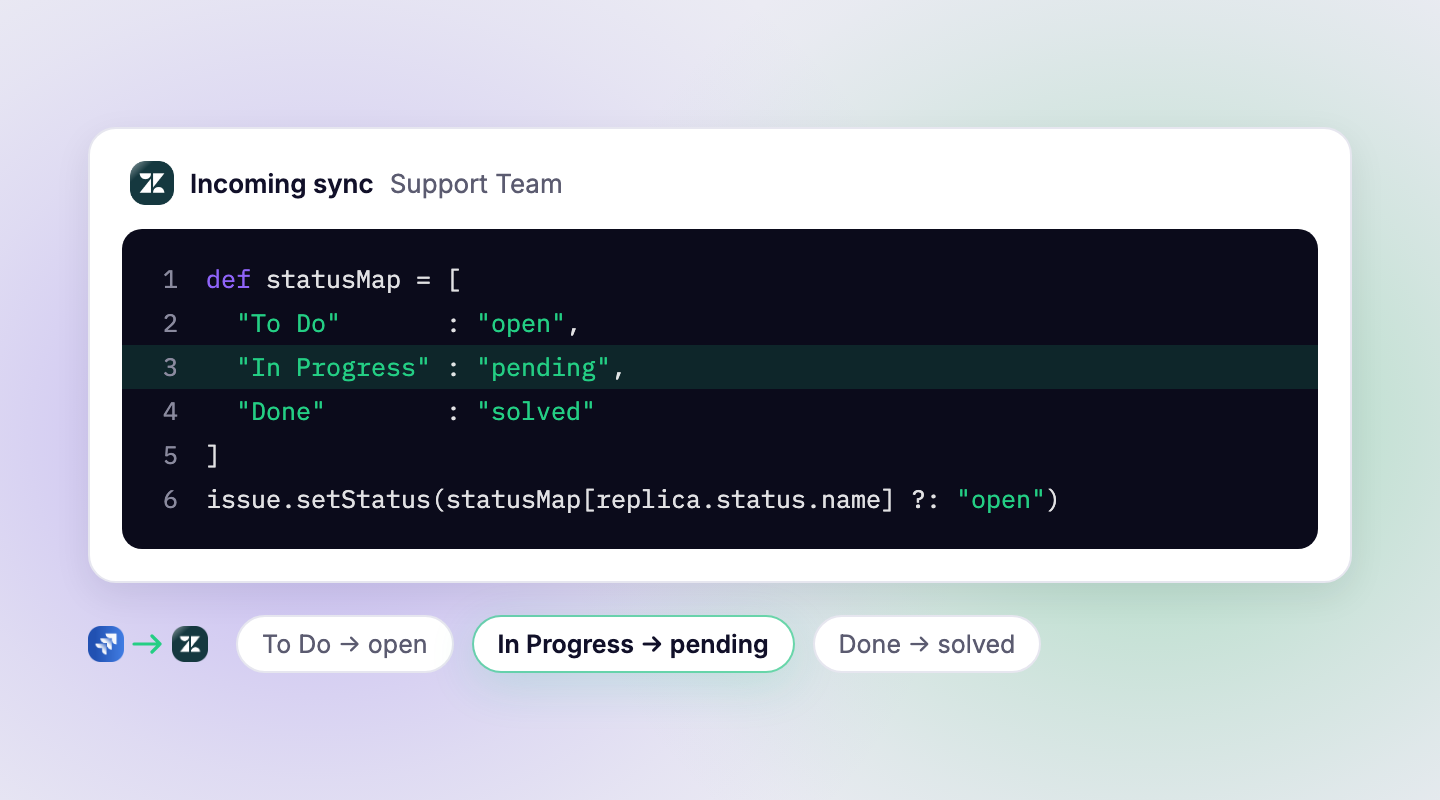
Status mapping
Map statuses between different workflows, so each team can follow progress using its own process and terminology.
Compare the options against the sync you need.
Start with your requirements, including the exceptions. Then compare what each approach takes to configure, test, and maintain.
| Approach | When to consider it | What to check |
|---|---|---|
| Native connector or built-in automation | Your workflow is straightforward and the existing integration covers it. | Does it synchronize the data you need in both directions? Check custom fields, comments, status updates, and failure visibility. |
| An integration you build internally | You need a tailored solution and have engineering capacity to own it. | The real question isn’t whether your team can build a sync, it’s whether the sync they can build in one sprint still fits business & security in six months. |
| An integration platform you already use | You already run one, and the flow is one-way or occasional. | It moves data between systems. It doesn’t remember that this ticket and that ticket are the same record. Pairing, loop prevention, conflict rules and catch-up after an outage are yours to build. |
| A specialist sync tool like Exalate | Keeping work items aligned across systems is the core requirement. | Compare connector coverage, mapping flexibility, setup skills, testing, support, and total cost using the same scenario. Does it cover different workflows on each side? How does it handle ownership on both sides? Does it support cross-company syncs? |
Consider Exalate when your evaluation depends on controlling what syncs and how different workflows map to each other, and your team wants to own that logic. Aida drafts and explains the Groovy scripts. You review, test, and approve them.
Estimate your cost
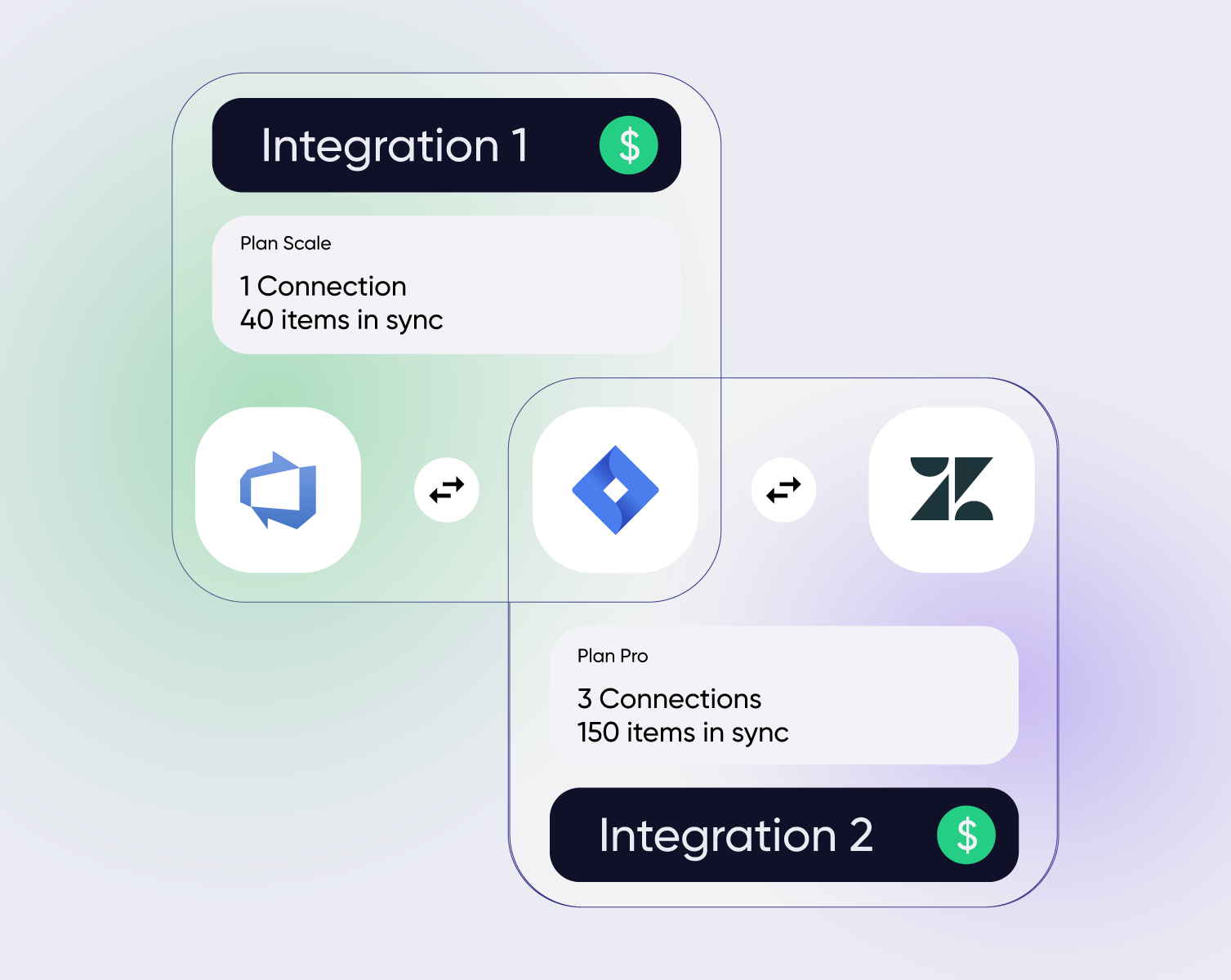
Exalate’s current pricing is based on active items in sync per integration. Your systems, capacity, environments, and support requirements determine the right plan.
An item remains active until you stop syncing it. Estimate how many items need to stay connected at the same time, including any that remain synchronized after resolution.
What you need to know for a successful PoC
- The two systems and their deployment types.
- The item types, fields, and update directions you need.
- Your expected number of active items in sync.
- The people who can authorize access and own the configuration.
- Integration rules requirements for both sides.

"It was quite easy for me to expand on the integration capabilities using the scripting engine after a short learning curve."
Danilo Simic | Atlassian Engineer, Qualco
Challenges Solved
100+ entities synced daily on a single connection
No more emails and spreadsheets to get information
Comments synced by tag from the Azure DevOps side
Integration extended with the scripting engine

Why Exalate is
Secure by Design
- Single-tenant architecture – no shared infrastructure
- Encryption in transit and at rest
- Automatic recovery from outages
- ISO 27001:2022 certified
- 24/7 threat monitoring with SentinelOne

FAQ
Answers to the most frequent questions.
Didn't find what you were looking for? Ask Aida
Native integrations are built for their own ecosystem and don’t flex much beyond that. Automation tools like Zapier are cheap and easy to set up, but they push data one way, triggered by an event: fine for simple tasks, not built for keeping two systems continuously in sync.
Exalate is built for the harder version of the problem: real-time, two-way synchronization between systems that have different data structures, workflows, and rules. The scripting engine underneath means you can shape the sync logic to match exactly how your teams work, instead of bending your process to fit a fixed template.
Jira, ServiceNow, Azure DevOps, Salesforce, GitHub, Zendesk, Freshdesk, Freshservice, Asana, TOPdesk, Ivanti, Xurrent, ServiceDesk Plus, ConnectWise, SolarWinds, and HaloITSM, all bidirectionally and in real time. You can also request a new connector if you don’t see your system listed here.
Yes. This isn’t an edge case; it’s core to how Exalate was built. It covers internal team-to-team syncing and cross-company scenarios alike: support handoffs to an MSP, vendor-client ticket sharing, agency collaboration. Each side only shares what it configures to share, and every customer’s environment stays fully separate from every other’s.
You don’t need to be a developer, but you (or someone on your team) need to be technical enough to work with your own systems: know what should map to what, be comfortable looking at a script and checking it matches your business logic, and be OK troubleshooting when something needs adjusting.
Exalate isn’t a no-code tool. It has AI tools that help. They’ll support someone who can review and trust what’s being built, but they’re not a replacement for that person.
If you’re not sure anyone on your team fits that profile, Exalate might not be the right fit for you to set up yourselves right now. That’s what Exalate’s managed services are for: our team handles the integration build, configuration, and maintenance, while you keep control over the business outcomes and approvals.
Yes. A support ticket becoming a dev bug, a request becoming a formal change record, a case escalating to a specialist team elsewhere. Exalate creates the linked item in the target system and keeps both sides in sync as the work progresses, without anyone copying details by hand.
No. If you only want a linked view or consolidated reporting rather than two systems staying in step, this is the wrong tool.
No. Incoming requests arrive as issues in the project and ticket type you specify. Your workflow, boards, and sprints stay as they are.
Each side can configure its own sync logic: the Jira admin chooses what enters and leaves Jira, and the team on the other system chooses theirs. Neither side needs access to the other’s instance.
This is worth planning for from day one rather than after the fact. The configuration is readable and version-controllable, so it can be documented and handed over like any other piece of infrastructure. Send your admin to the Admin & Developer page for the detail.
Yes. Connections are set up in pairs, and one system can hold several connections at once.
It gets raised early and dropped fast. Extra seats in a CRM or service desk cost real money every month for people who will open them twice a week. And every engineer you ask to work across two systems pays a context-switching tax on the work you actually hired them for. Syncing the ticket costs less than licensing duplicated users.
See Exalate in Action
Let us show you how Exalate can fit your unique business needs. No strings attached.
+2,500 clients worldwide