
The support team works in ServiceNow, and the development team in Jira. Someone spends hours a week manually copying tickets between the two, so neither team falls behind on work the other can’t see.
It’s not about connectors. It’s about whether the business can rely on the workflow.
A script one developer wrote breaks, and nobody else fully understands it. MuleSoft’s 2026 Connectivity Benchmark Report found that 71% of IT leaders agree that their infrastructure makes systems overly dependent on one another, and that dependency only grows as service management extends beyond IT into HR, finance, and facilities. Integration failures rarely happen inside any single platform. They happen at the seams.
ESM integration determines whether enterprise service delivery actually works, no matter which platform any given team uses.

What Is ESM Integration?
Enterprise Service Management (ESM) takes the ITSM building blocks (service catalogs, ticketing, SLAs) and applies them outside IT, in HR, facilities, legal, and finance: wherever work gets logged, assigned, and closed out.
ESM integration connects those platforms to each other and to the tools sitting next to them (dev tools, CRMs, ops), so work moves automatically instead of being relayed by hand.
An onboarding request touches your HR platform, ServiceNow, and Jira. Without integration, someone forwards emails manually between departments. With it, the HR request automatically triggers a ServiceNow ticket, which opens a Jira task for the right team.
ESM vs. ITSM Integration: What’s the Difference?
ITSM integration focuses on IT-specific workflows such as incidents, changes, and service requests, moving between tools like ServiceNow, Jira Service Management (JSM), or Freshservice. ESM integration extends that same logic across departments and often across organizations.
That second part matters most. When a vendor runs JSM, and their client runs ServiceNow, ESM integration has to respect both sides’ autonomy: neither wants to hand the other admin access, and neither should have to.
This is exactly where an architecture where each side configures and controls its own sync rules independently becomes a real differentiator, not just a technical footnote.
Why ESM Integration Is Harder Than It Looks
Your team probably already has some integration between ServiceNow and Jira. The problem is what’s holding it together: a script someone wrote years ago, or a workaround nobody documented.
In our experience, that’s how integrations become a permanent headcount tax.
The 5 Most Common ESM Integration Failure Points
- Manual copy-paste as the integration strategy.
A team built VBA macros to export data from Azure DevOps into Jira. It worked, as long as a developer maintained it by hand. As one buyer put it, “It’s a nightmare.” The hidden cost was never the macro; it was the full-time effort behind it.
- Race conditions that are difficult to catch.
An update gets sent before the corresponding ticket exists, or two sync events land at once and overwrite each other. Without a retry queue, nothing throws an error. The integration looks fine until someone notices a ticket’s been out of sync for days.
- Organizational silos are blocking field-level alignment.
What one team calls “In Progress” in Jira, another calls “Waiting for Customer.” Add more companies, and three organizations might need service requests synced across three separate Jira instances, each with its own statuses and rules. The blocker isn’t connectivity but the absence of a shared definition of “done.”
- VPN and network constraints.
Jira Cloud can’t reach a ticketing system sitting behind a corporate VPN, full stop. Teams running a mix of cloud and on-premise systems often discover this mid-project, not during planning.
- The “one license, two sides” confusion.
Buyers often assume one side can configure the entire integration alone. It can’t. Both sides need their own sync setup: one sends the data; the other has to know what to do with it. Missing that is a common reason POCs stall, and purchases get delayed.

Calculate time and money savings from automated bidirectional sync.
The Most Common ESM Integration Use Cases
Across customer conversations, these are the five scenarios we keep seeing, regardless of company size or industry.
L1/L2 Support Escalation Between ServiceNow and Jira
Your ITSM team works on incidents in ServiceNow, while the dev team resolves the bugs in Jira. Without a sync, someone recreates the ticket manually, SLA clocks drift, and support can’t see how close the fix is until they follow up.
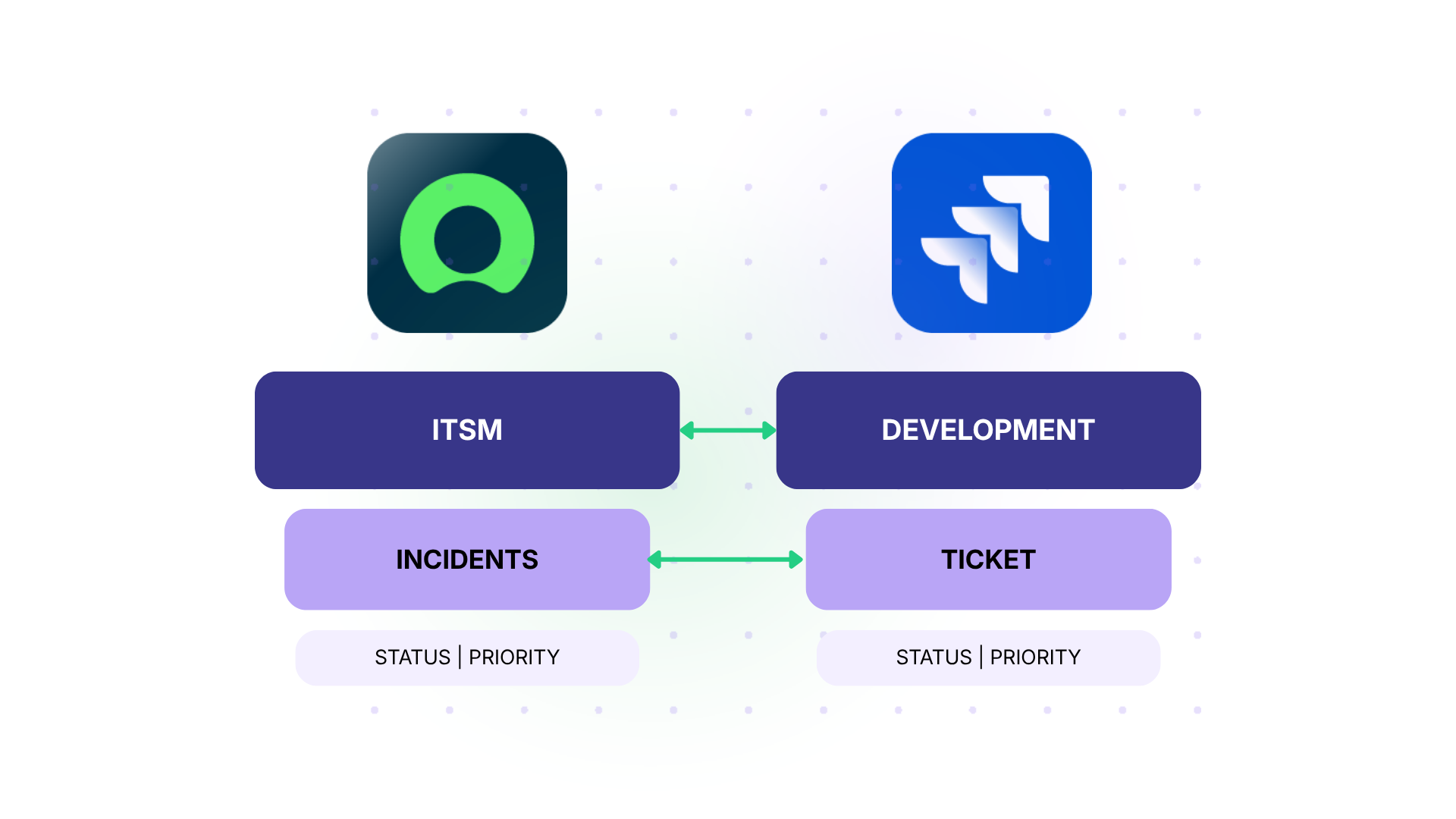
Buyers describe wanting one central point where their team can work, regardless of which vendors are involved. A bidirectional sync keeps both sides honest about where things stand, while each platform stays the system of record for its own team.
Cross-Company Vendor/Client Integration
When a client is on ServiceNow and a vendor is on Jira Service Management, one of them changes a workflow, switches tools, or tightens a security policy. Ideally, the other shouldn’t even notice.
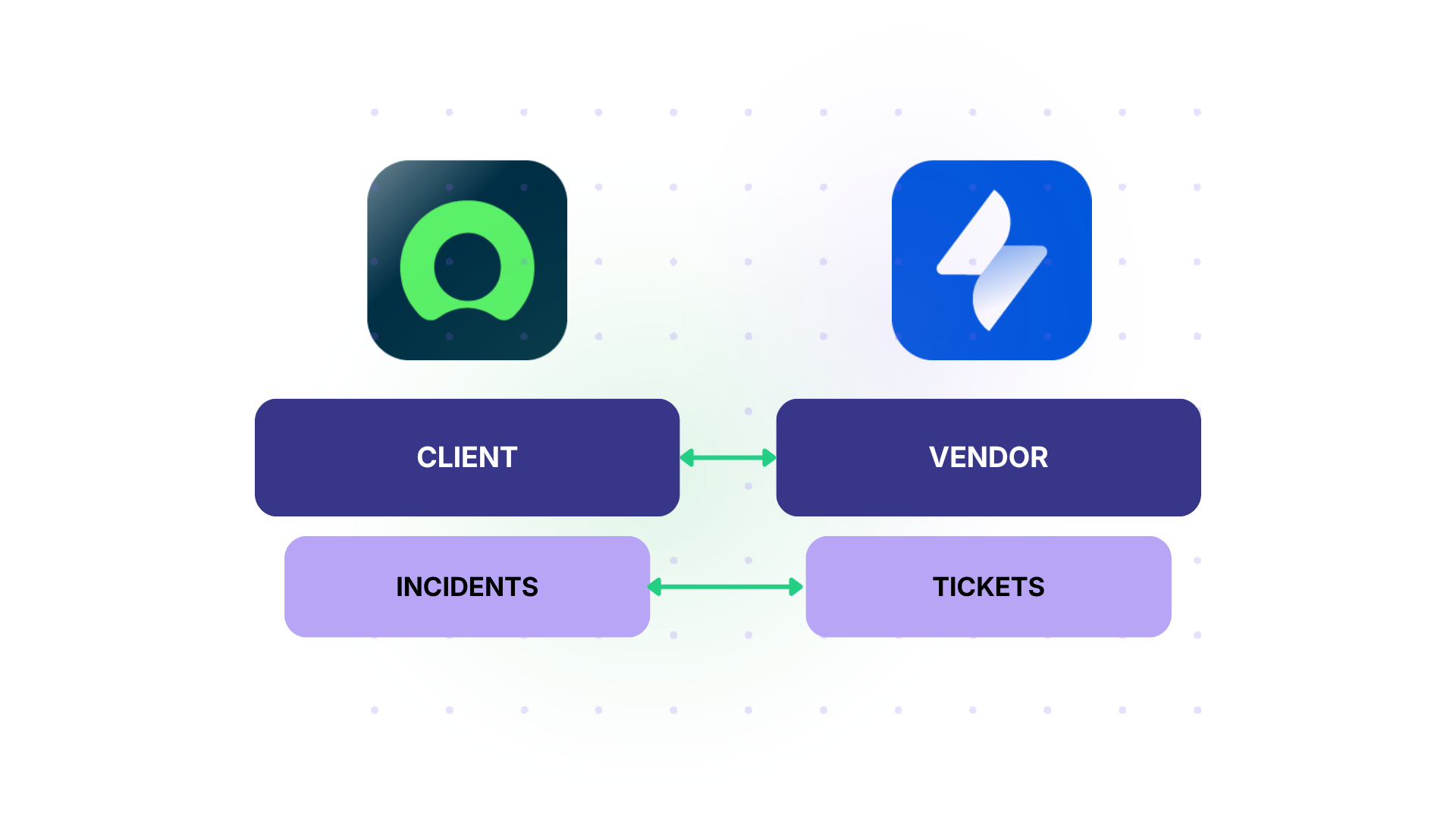
A decentralized integration architecture makes this possible: each side controls which fields cross over. The pattern that shows up most often is hub-and-spoke: one JSM instance as the hub, vendor systems syncing in as spokes. Add a vendor, connect a spoke, and the hub stays untouched.
M&A and Multi-Instance Consolidation
Two companies merge. Now there are two Jira instances, or a ServiceNow and a Jira, and leadership wants one unified view of the pipeline and support load immediately.
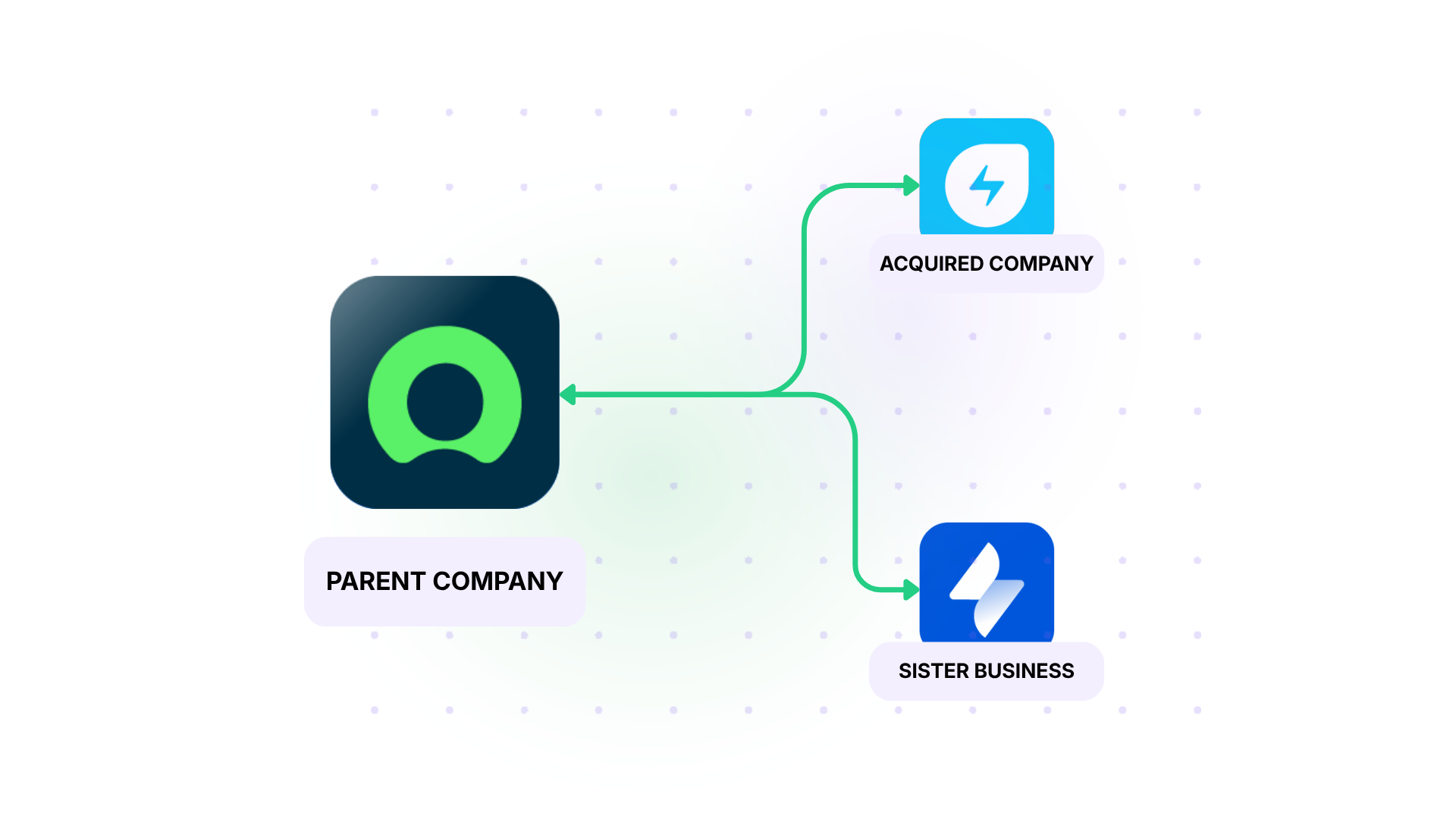
The instinct is to migrate everything onto one platform right away. The better move: integrate first, migrate later. A continuous sync keeps both instances current while the migration gets planned properly.
One signal worth knowing: when a buyer opens with “we just need visibility and tracking across both systems,” that’s rarely a connector request. It’s a governance problem, and integration needs to happen before any migration decision.
HR, Facilities, and Non-IT ESM Integration
HR is the fastest-growing non-IT use case in ESM integration. A new hire’s onboarding request, logged once in your ServiceNow, can automatically generate access requests, equipment provisioning, and facilities tickets, instead of someone opening three separate tickets by hand. Offboarding works the same way in reverse.
Exalate connects these platforms with each other through trigger-based sync, configurable through Aida without anyone needing to write Groovy by hand.
Managed Service Providers (MSPs)
MSPs can manage clients across Jira, ServiceNow, and Zendesk from a single instance, each with its own isolated sync rules, instead of creating a custom integration project per client.
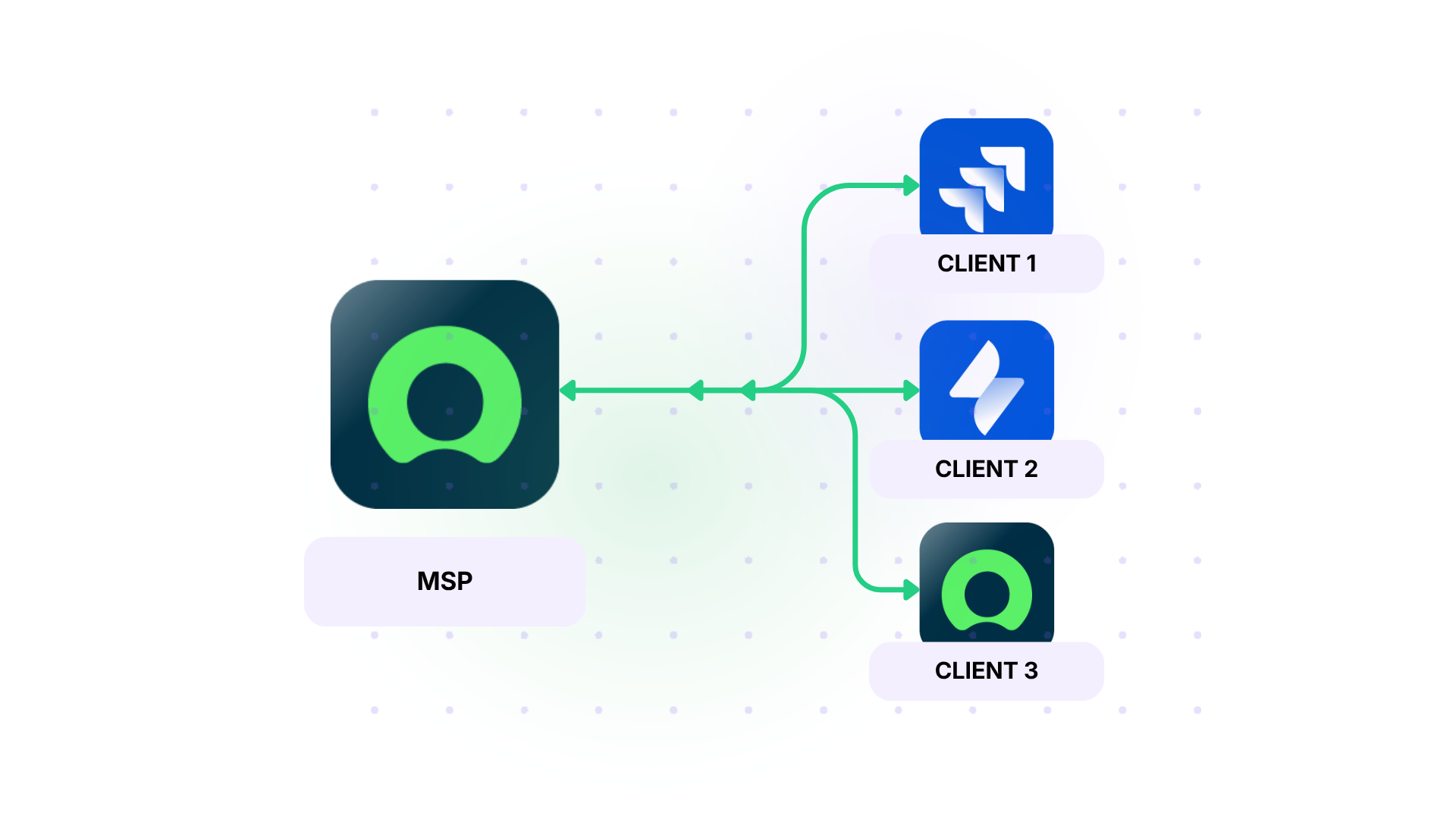
MSPs report saving 14+ hours a week that used to go into manual ticket duplication. And for teams that would rather not run the integration in-house, Exalate offers managed services: an integration expert handles setup, configuration, and ongoing maintenance.
What to Look for in an ESM Integration Solution
Whatever you end up choosing, these seven things separate an integration that holds up from one that breaks the first time something unexpected happens.
- Bidirectional sync. Both systems stay current, not just the one that changed first. Unidirectional sync leaves the other side stale, and once a team stops trusting that data, they go back to checking the source system by hand.
- Field-level control. Not every field should cross once a vendor or client is involved. Internal notes, PII, and SLA terms are common candidates to keep local. Map only what needs to cross, and leave the rest where it is.
- Trigger-based automation. Sync should fire on business logic: a JQL filter, a status transition, or a field hitting a specific value. Schedule-based polling means real updates wait for the next cycle, even after the trigger condition has already happened.
- Decentralized architecture. Critical once two organizations are involved: each side runs its own sync rules independently, and a change on your end doesn’t touch the other side’s setup. A centralized broker, where one system mediates every connection, creates both a single point of failure and a governance risk.
- Error handling and retry queues. Outages shouldn’t mean lost data. A FIFO queue holds updates in order during downtime and resumes them automatically once the connection’s back.
- Sync flexibility. Preset mappings cover the common cases. They don’t cover a custom field with conditional logic, a value that needs transforming, or a status depending on more than one field. That’s what script-based solutions like Exalate are for.
- Deployment options. Cloud works for most teams. Regulated industries often can’t use it: data residency is a compliance obligation, not a preference, and on-premise or Docker deployment covers that case.
ESM Integration Best Practices
These six practices hold up across most ESM integration projects, regardless of which platforms are involved.
- Map the process before mapping the fields. Field mapping is the easy part. If the workflow underneath is broken, syncing it just breaks it in two systems instead of one.
- Start with one high-pain, high-volume use case. Don’t integrate everything at once. L1/L2 support escalation is usually the fastest path to ROI, since it already generates the most manual work and frustration.
- Agree on field ownership, not just field mapping. Mapping says where a field goes. Ownership says who’s allowed to write to it. Without that, two systems can update the same field at once with no clear winner. Resolve by ownership, not timestamp: clock skew makes “whichever update came last” unreliable.
- Build for the exception. Mandatory fields, status transitions, and attachment limits are what actually break most integrations. Test edge cases before go-live, not after a real ticket hits one in production.
- Don’t make it person-dependent. Document the sync logic somewhere other than one person’s head. If the integration breaks the day a specific developer leaves, that’s technical debt, not infrastructure.
- Plan for scale. A setup handling 50 tickets a month won’t necessarily hold up at 500 an hour. Manual routing that works at low volume breaks down as ticket counts rise.
How AI Is Changing ESM Integration
Configuring an intricate sync can mean either writing scripts yourself or finding someone who can. AI-assisted configuration changes that are part of the equation: describe what you want the sync to do, and a tool like Aida generates the script, no Groovy expertise required to get started.
What AI doesn’t do is replace the integration logic itself. It lowers the barrier to configuring it correctly, but the logic still has to be correct. An AI-generated sync rule that looks right and behaves incorrectly is still a sync rule that needs a human to check it before it touches production data. Misconfiguration, not malicious access, is one of the most common causes of integration security incidents.
In Exalate, Aida AI sits inside the connection screen, where the most flexible sync logic gets configured. That’s the layer ESM integrations rely on most, because once HR, facilities, and finance are in the mix, the rules stop being uniform across departments. HR doesn’t want PII crossing into a Jira ticket, the vendor side doesn’t want internal notes reaching the client, and the facilities team uses status values nobody else has.
You describe each rule in plain English (“only sync this field if the ticket type is onboarding, and translate the HR status into the IT equivalent”), and Aida writes the Groovy. Each side configures its own logic without needing a developer on call, which is what makes decentralized architecture actually work once more than two teams are involved.
Gartner research found that only 28% of AI use cases in infrastructure and operations fully succeed and meet ROI expectations, while one in five fail outright. ITSM is also where Gartner found most of that AI success actually lands, which tracks: the integration layer is exactly where AI-driven ticket routing creates more automated handoffs crossing between systems, and every one of those handoffs is a place a misconfigured rule can do real damage.
ESM Integration Is a Strategic Decision, Not Just a Technical One
Let’s go back to where this started: support team in ServiceNow, dev team in Jira, someone manually copy-pasting between them. The goal is never to connect those systems for the sake of connecting them. It’s to build a workflow that the business can actually rely on.
When teams can’t trust what a system tells them, they stop checking it. They email instead of updating tickets; they build shadow spreadsheets; they ping someone on Slack instead of looking at the dashboard that’s supposed to have the answer. None of that is a people problem. It’s what happens when the integration isn’t holding up its end.
Done right, integration removes the reason for the workaround in the first place.
If you’re trying to figure out where to start, book a call with an Exalate expert, or start a free trial and see how it holds up against your own setup
Recommended Reading: