
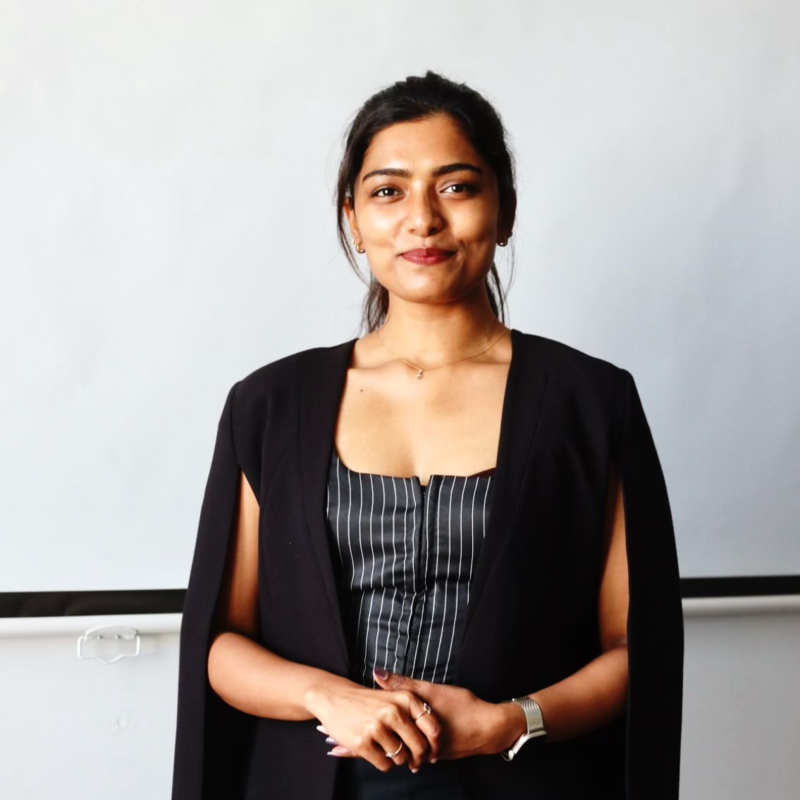
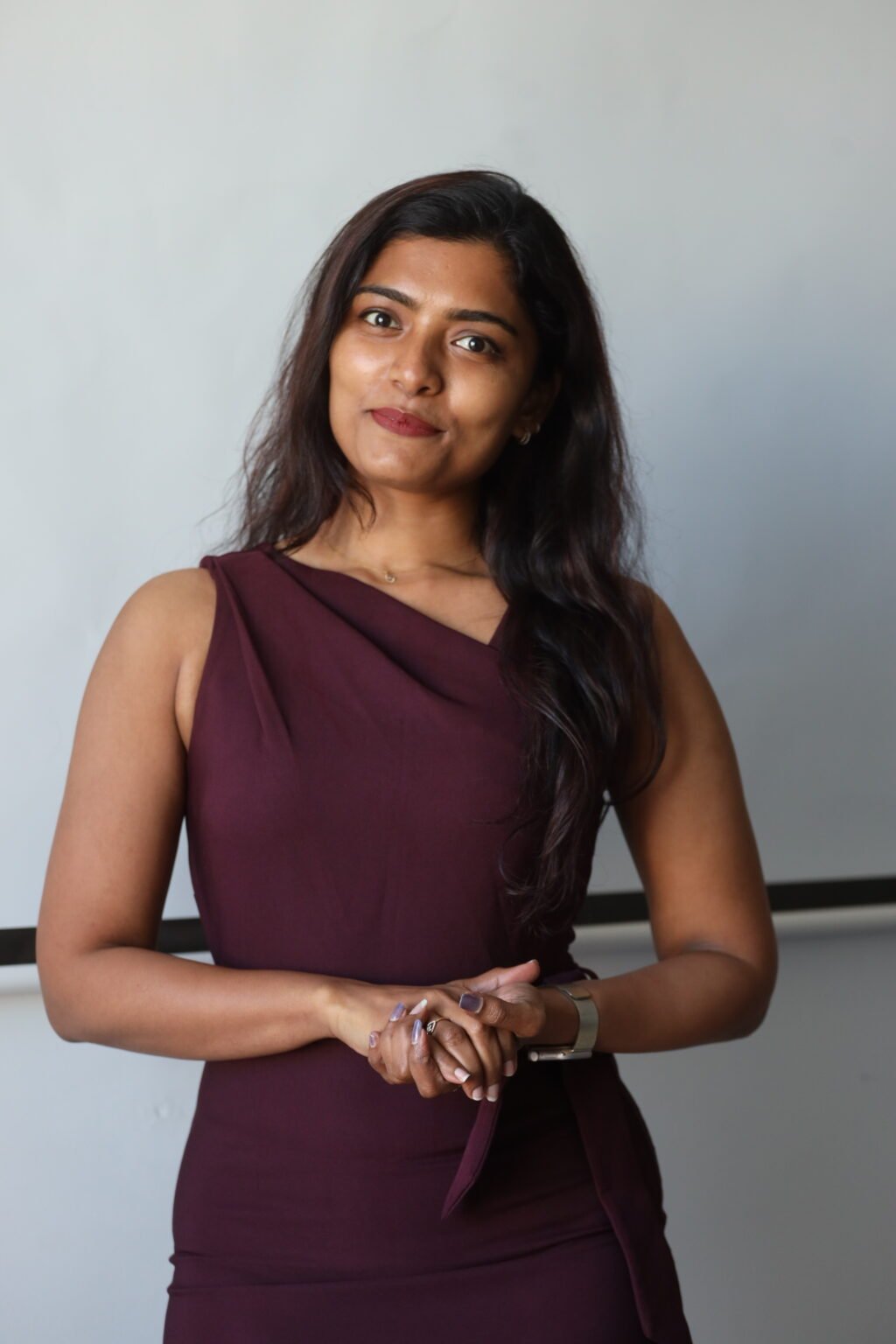
Ramya Arul has always been ambitious, but finding her confidence took time. She talks about learning to act before she feels ready, being underestimated as a young Asian woman, and why the opportunities that scare us can be the ones that change everything. Meet Ramya and HERpower.
Bio
Ramya Arul leads growth across EMEA at Storylane, where she combines account management and sales responsibilities. An engineering graduate, she began her career in content writing before moving through digital marketing, growth marketing, and eventually sales. Originally from India, Ramya has spent seven years building an international career that has already taken her to 12 countries and has given her a particular affection for Europe.
The Conversation
Tell us a little about yourself and how you found your way into sales.
Ramya: My name is Ramya Arul, and I lead growth across EMEA for Storylane. I’ve been with the company for two and a half years, and I’m seven years into my career now. I’ve moved across five companies and traveled to 12 countries, all of it for work.
I’m an engineering graduate, but I started my career as a content writer. From there, I moved into digital marketing and growth marketing. Then an opportunity came along, and I jumped into sales.
My first sales role was at Lemlist, and it happened through what was supposed to be a quick coffee conversation. At the time, I was working on the side for an agency that wanted me to do outbound, and I was using Lemlist. I was really inspired by the product and by how the team had grown as a fully bootstrapped company.
I wanted to understand the story behind that growth, so I reached out to Nadja, who was leading sales at Lemlist at the time. She accepted my invitation for a 15-minute LinkedIn coffee chat. I only wanted to ask about her strategy, but by the end of the conversation, she had offered me a role helping Lemlist expand into APAC.
That became my first real sales role. Somewhere in that short conversation, she saw something in me and decided to give me the opportunity. I jumped and it completely changed my career trajectory.
If I had missed that opportunity, I think it might have taken me another five years to reach where I am today. That’s one decision I can look back on and say, “I’m really happy I did that.”
Were you always someone who could take those leaps?
Ramya: Ever since I was a child, I was a good student on paper. I studied well, and I did well in sports, mathematics, and academics. But I also always had self-doubt: Am I really good enough?
At the same time, I knew I was extremely ambitious. Even while I was studying engineering, I had a strong idea of what I wanted to achieve. I didn’t necessarily have a plan for reaching it. I hadn’t studied at one of the biggest institutions. I attended what would be considered a tier-three institute. On paper, there was no obvious path from there to what I wanted.
But the ambition and the go-getter attitude were always there.
Today, I’m quite confident about my street-smart quotient. I attend a lot of events, I know how to communicate, and I’m a good listener. I can often understand what’s expected of me without someone having to spell out their actual pain points.
One of the principles I follow is that when you get something to chew on, you chew it through. If something lands on my plate, I need to be accountable for what happens to it next. I cannot take it for granted or let it drift away.
That means doing the basic things consistently. If someone doesn’t join a call, reach out. If you’ve had a first conversation, set the reminder for the next one. These may sound like small hygiene practices, but they matter.
For me, that also comes from a very middle-class mindset. When something falls onto my plate, I feel I have to make the most of it. I can’t simply let it drop.
Eventually, that becomes muscle memory. You’re no longer following a script in every conversation. Your instinct becomes: This has landed on my plate. I’m not letting it pass. What do I need to do to make it stay?
I think ambition, accountability, and discipline are what drive me.
You once reached out to someone to learn from her. Now people approach you in the same way. What does that mean to you?
Ramya: That feels like a win already.
I reached out to Nadja because I wanted to understand her process. Today, I’m quite vocal on LinkedIn, and people reach out to me to ask about my processes.
If someone sees what I’m doing and begins to believe that they could also make a place for themselves in tech, that means something to me. You don’t have to be over 35 or hold a director-level role to build recognition for yourself or have something valuable to share.
The larger picture for me is creating a community in which women feel they can be vocal. Women go through so much within families, relationships, and physically. We need to make the community around them easier to fall back on.
I’m especially thinking about young women in tech and GTM. As you get older, you begin to understand how to respond to the world. But at the beginning of your career—maybe between 20 and 30, you can feel completely lost. You might know what the right thing to do is but still feel that you aren’t good enough for it.
That’s how I felt, and I wouldn’t want that feeling to stop another woman from taking an opportunity that comes her way.
Tech has created more opportunities for women, but many rooms are still predominantly male. Why do you think that is?
Ramya: The leadership table has women at it now, but I would be lying if I said the proportion is the same as it is for men. It is still a male-dominated industry.
Many men have become kinder and more empathetic and want to create space for women to grow. But certain assumptions remain.
Sometimes, midway through a pitch, I feel the question: Why should I listen to a 26-year-old brown girl telling me why this product is right for me? It’s spoken loudly through the prospect’s body language when they’re distracted, avoid eye contact, don’t nod, or never have those lightbulb moments. It just shows.
When you’re a young woman working in GTM, people can assume you somehow made your way into the room without necessarily deserving to be there. I often feel I need to establish my credibility immediately: I’ve been here for two and a half years. I know what works. I’m making this recommendation because I believe it will improve things for you.
This can be problematic, but I’d still say it: young women in GTM can still be looked at as eye candy rather than being recognized for their actual calibre. That has to change.
I’m single right now, and I’m trying to make the most of these years because I expect that, if I have a family later, I will carry many of those responsibilities too.
Things have definitely improved. But could I promise a young woman entering tech sales today that she would never be made to feel lesser? I don’t think I could. That’s why we need to talk about this more.
Where does meaningful change begin?
Ramya: Organizations need to become kinder and more empathetic rather than being cutthroat.
Of course there will be competition. But a company’s values should include kindness, and its initiatives should feel collaborative rather than competitive. When everything becomes a competition, the disparities between people become more visible.
When organizations look beyond somebody’s résumé and understand what they bring to people and relationships, the environment becomes healthier for everyone.
AI is creating another transformation in the workplace. How do you see it affecting your own work?
Ramya: The way I see it, AI is here to make my job easier.
I need to be able to guide it: these are the areas where I want AI to step in, and these are the guardrails.
AI and humans can coexist as long as those guardrails are set by humans. It becomes much trickier when you allow AI to make decisions of its own.
When I worked in outbound in 2020, personalizing emails and LinkedIn requests could take me 12 hours. Today, I can see an SDR complete that work in less than an hour with AI. It handles much of the personalization, and then we add the human touch.
As long as AI makes us more efficient rather than replacing us, it can give us more time to think creatively. It is here to coexist with us, but that coexistence still needs to be guided by humans.

What would you tell yourself at the beginning of your career?
Ramya: If anything makes you feel scared, jump ahead and do it. That is where the whole trajectory lies.
You’re scared because it is outside your comfort zone, and that is where real growth happens. You don’t want to be the smartest person in the room. I’ve always wanted to be the person with the most to learn.
I would also tell women not to shy away from talking about their achievements. Talk about your highs and lows. Document your experiences, thought processes, and perspectives.
It may help someone you don’t even know is watching.
You’re a globetrotter. What’s your favorite country or city, and what would you like people to know about it?
Ramya: I’m from India, so I’m obviously biased towards my motherland. Beyond India, I do have some cities I’ve liked spending time in.
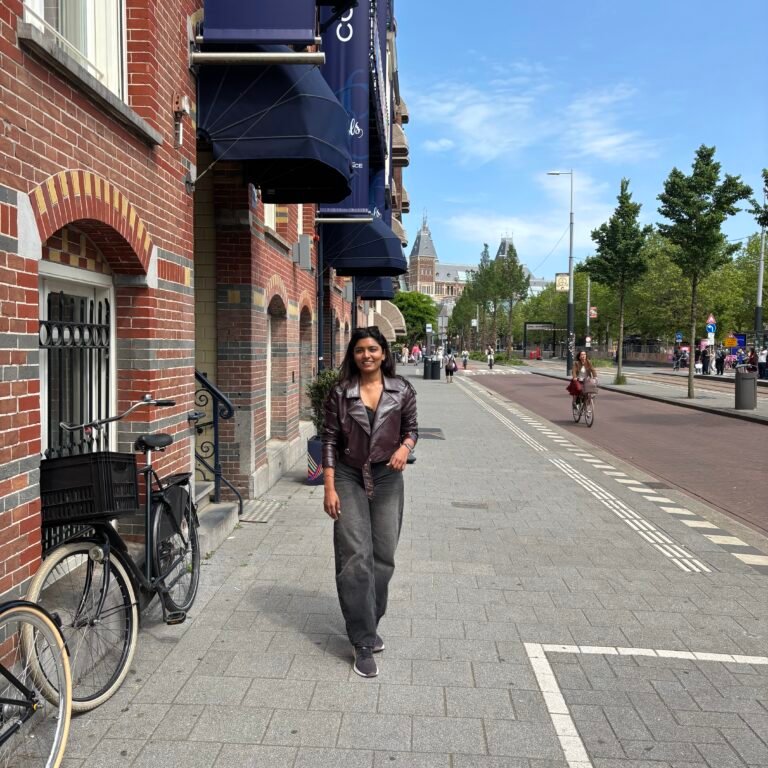
I started as an APAC account executive, but one of the first events I attended was in Amsterdam. Since then, I’ve had this love affair with Europe.
I had always dreamed of experiencing a European summer, and in 2026 I was fortunate enough to spend the summer there. Many of my customers are also based across Europe.
I’ve worked with the US, Indian, APAC, and European markets. In my experience, Europe has felt particularly welcoming and inviting to talent, women, and young people. It has been extremely warm to me, and I’m very glad it happened.
Amsterdam was my original favorite, but I also love Copenhagen and London.
And I have much more to explore ahead.
Thank you, Ramya! It’s been a pleasure getting to know you.
Connect with Ramya Arul
If you wish to connect with Ramya Arul and learn more, seek advice, or share similar experiences, feel free to reach out to her via LinkedIn.