
flexible two-way sync
Asana ServiceNow Integration
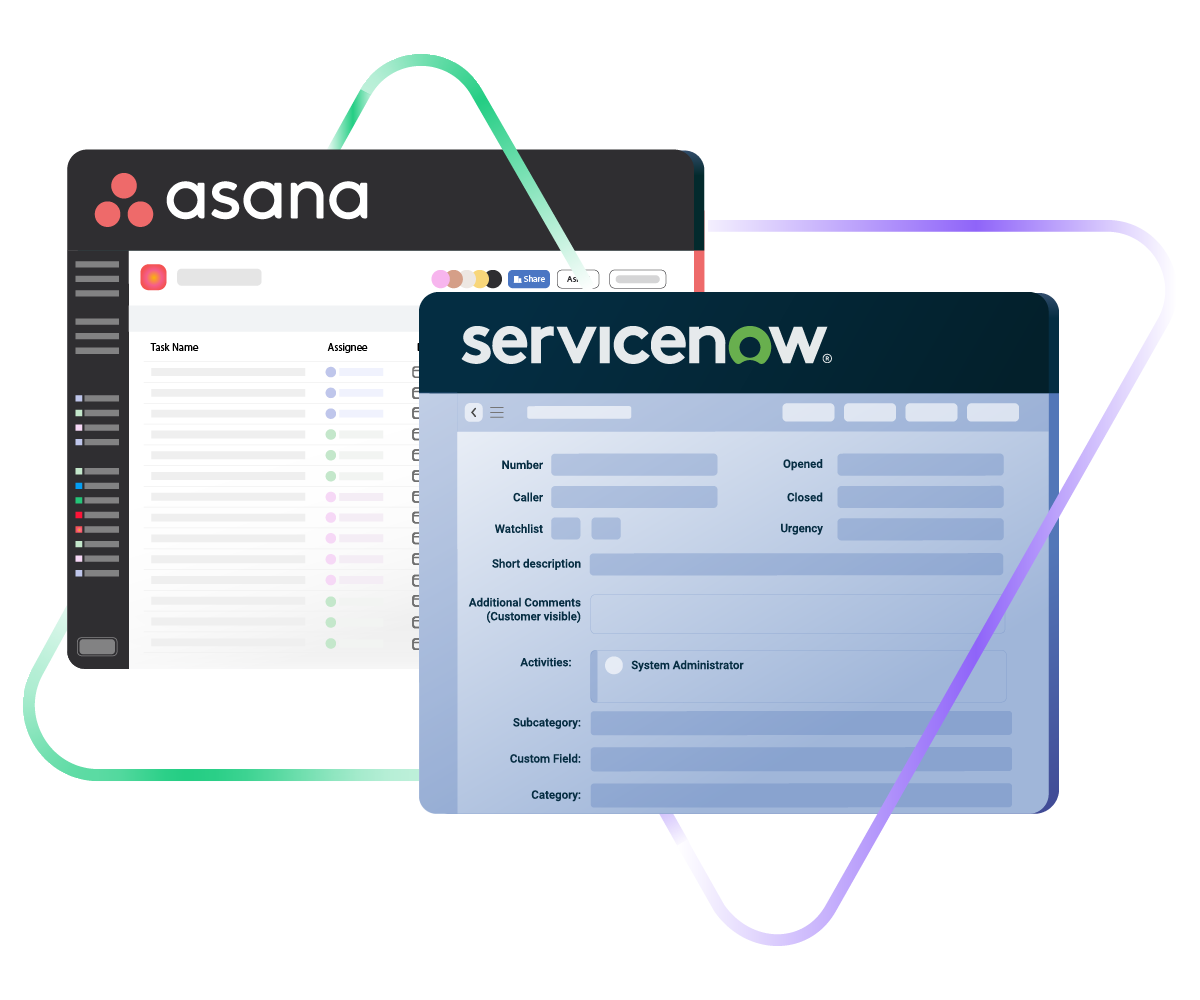
Link Asana with ServiceNow so your project management and ITSM workflows stay connected at all times. Give both platforms a direct line to each other, so teams stop juggling tabs and manually relaying updates.
Convert ServiceNow incidents into trackable Asana tasks and send project progress back to your IT operations team, all without constant follow-ups.
Sync id, subject, description, type...
sync assignee, submitter, requester...
sync attachments, custom fields...
sync tags, priority, due sate, status...
Sync summary, description, labels...
Sync status, priority, attachments,
Sync phone, notes, custom fields, custom keys...







Asana to ServiceNow Sync
Align Project Execution With IT Operations
Empower your project and IT teams to stay in their preferred tools while maintaining a constant flow of information between them. Set up a flexible, real-time Asana to ServiceNow integration tailored to your team’s actual workflows.
Turn ServiceNow incidents, problems, or change requests into Asana tasks automatically so project teams can respond to IT issues without delay.
Connect several ServiceNow records to one Asana task when they all relate to the same root cause or initiative.
Pick one-way or two-way synchronization depending on how each team needs to receive and share updates.
Close the visibility gap between project management and IT service delivery by keeping both systems current with shared information.
Sync field changes between Asana tasks and ServiceNow records so no one has to manually check the other platform for updates.
Remove the need for repetitive data entry by letting the integration handle the transfer automatically.
Asana to ServiceNow: Precise Control Over Shared Data
Decide exactly what gets exchanged between Asana and ServiceNow and what remains local. Map both standard and custom fields across platforms so each team receives relevant context without unnecessary clutter.

Asana
Enterprise supported
Tickets
All fields are supported, including:
- Custom fields
- Key
- Summary
- Description
- Asignee
- Reporter
- Status
- Attachment
- Label
- Due
- Comments
Tickets
All fields are supported, including:
- Custom Fields
- Key
- Summary
- Description
- Status
- Assignee

ServiceNow
Incidents
All fields are supported, including:
- Custom fields
- Short description
- Description
- Assigned to
- Assignment group
- Priority
- Urgency
- State
- Work notes
Problems
All fields are supported, including:
- Problem statement
- Description
- Assigned to
- Priority
- Urgency
- Impact
- State
Change Requests
All fields are supported, incuding:
- Short description
- Description
- Assigned to
- State
- Type
- Impact
- Risk
- Requested by
Sync any Servicenow Entity
Sync all ServiceNow entities available via REST APIs.
Simply look for the field names in ServiceNow tables, choose what you want to sync, and add it to your script.
Check the complete list of supported fields for Asana and ServiceNow.

Exalate is stable, flexible, customizable, and pretty easy to set up and use.
ALEXANDER SINNO
“
Exalate is stable, flexible, customizable, and pretty easy to set up and use.
ALEXANDER SINNO
Get the Most Out of Your Integration
Sync in Real-Time
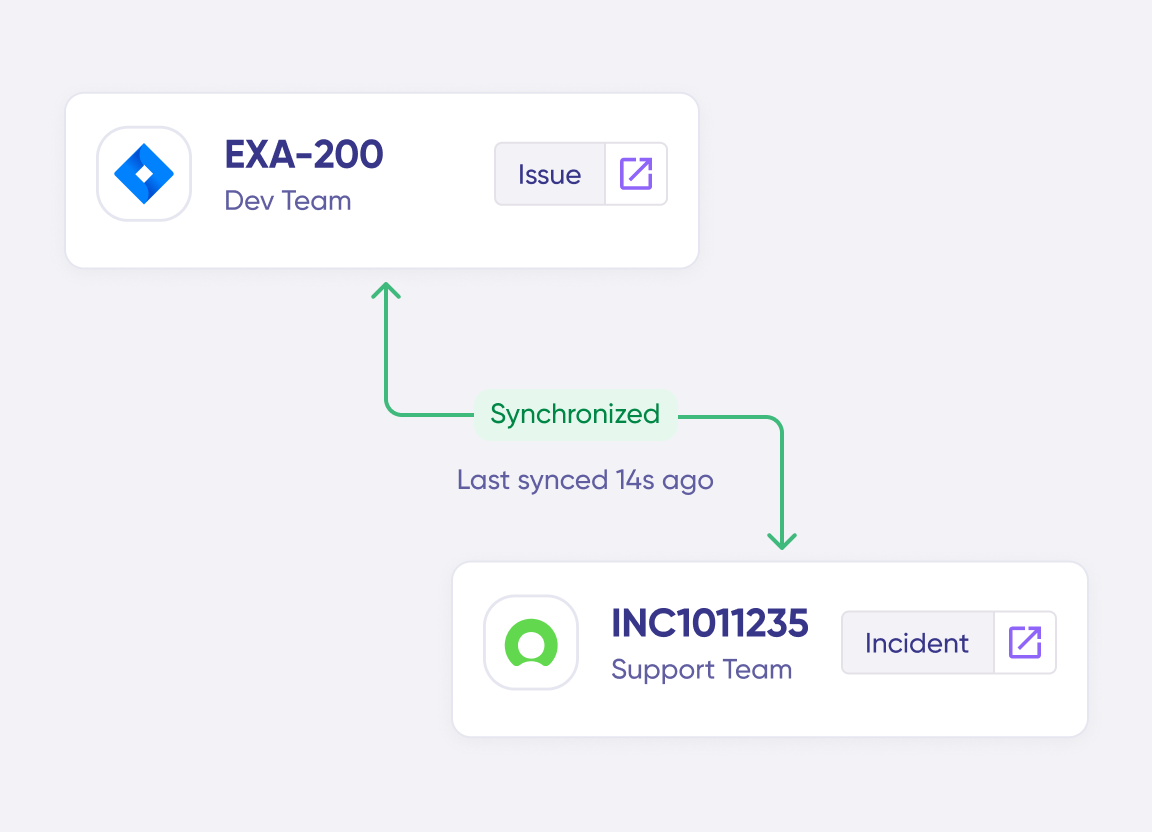
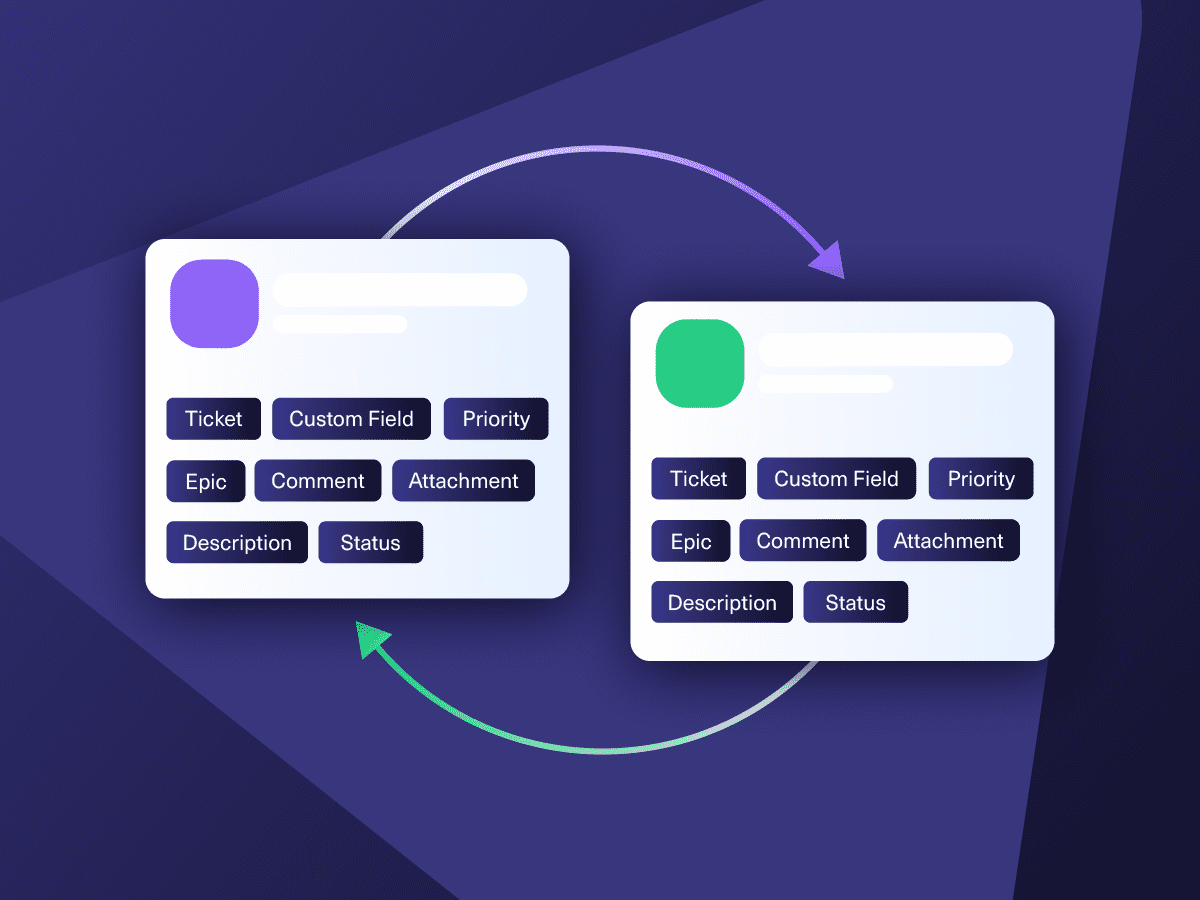
Two-way, real-time sync between platforms. Updates flow automatically. No manual exports, no delays.
Connect Any Number of Instances
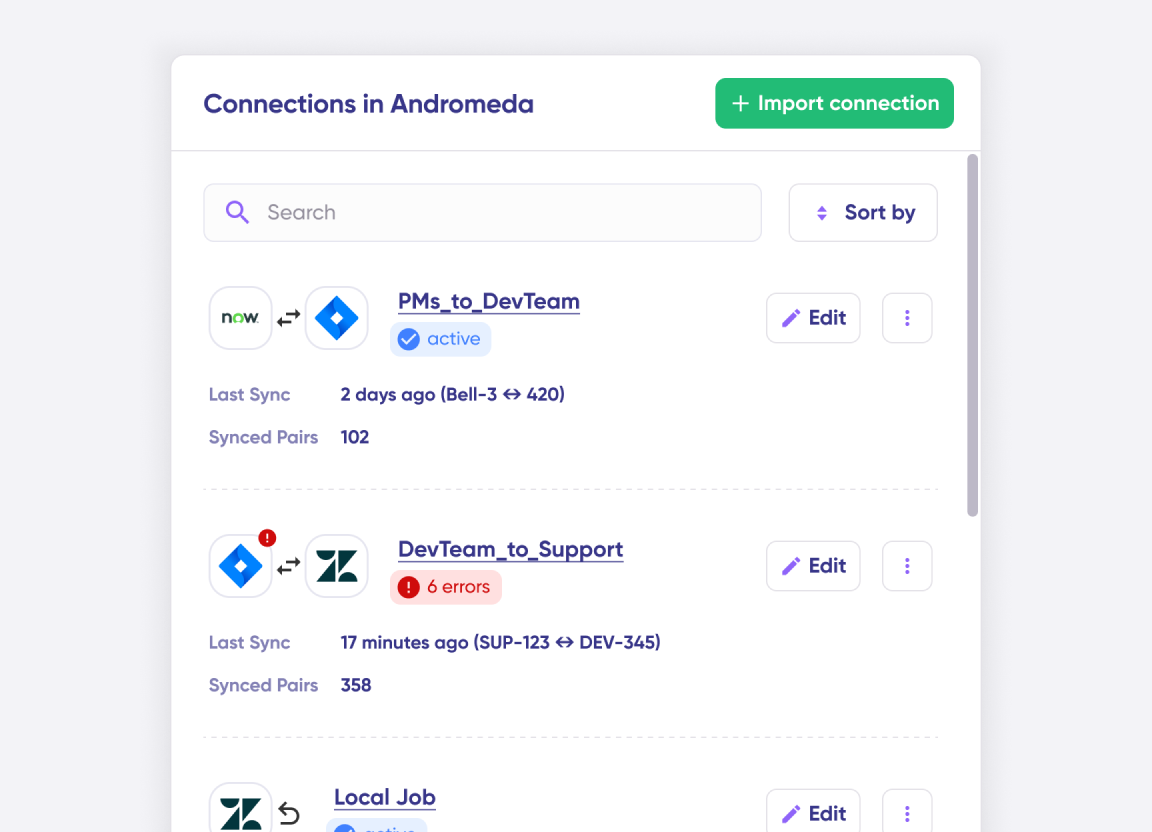
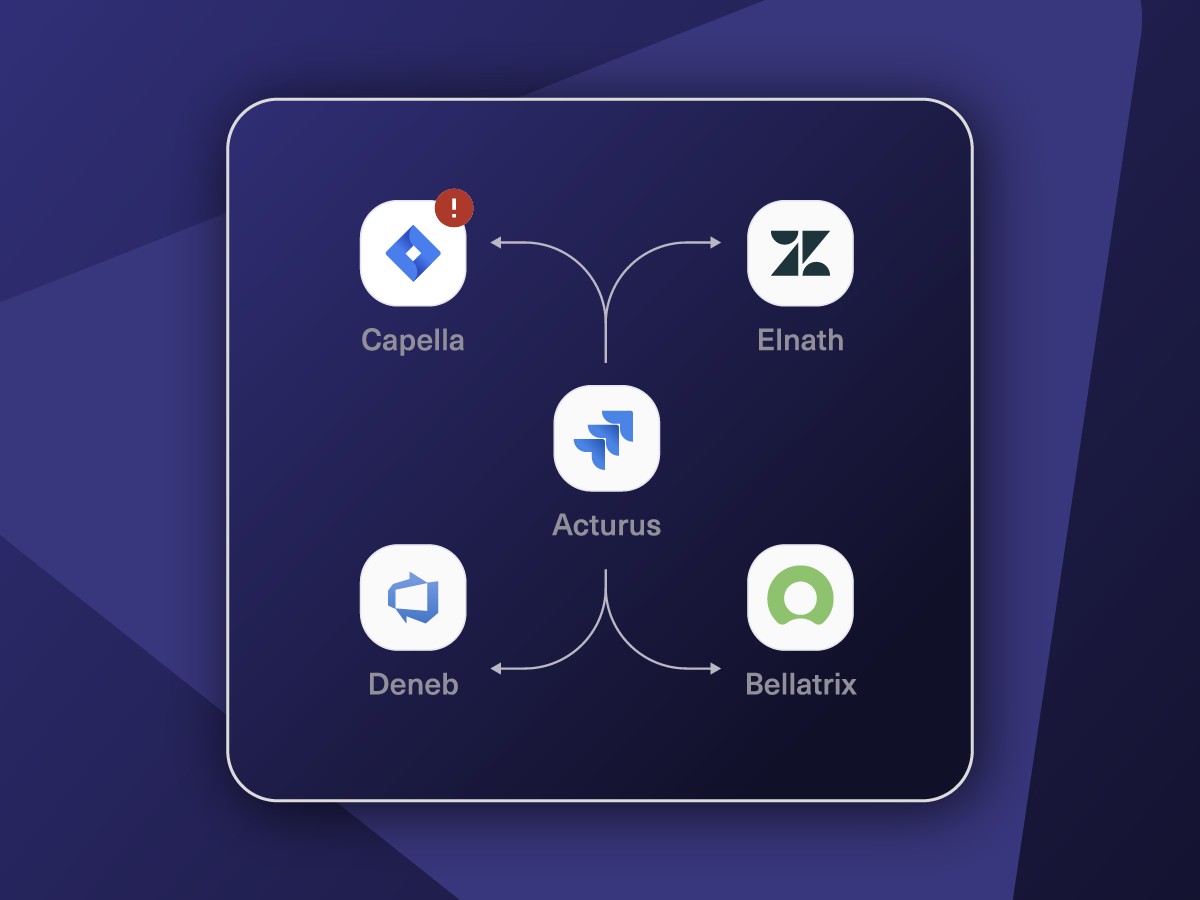
Connect multiple projects, instances, and platforms. Use different rules for each connection.
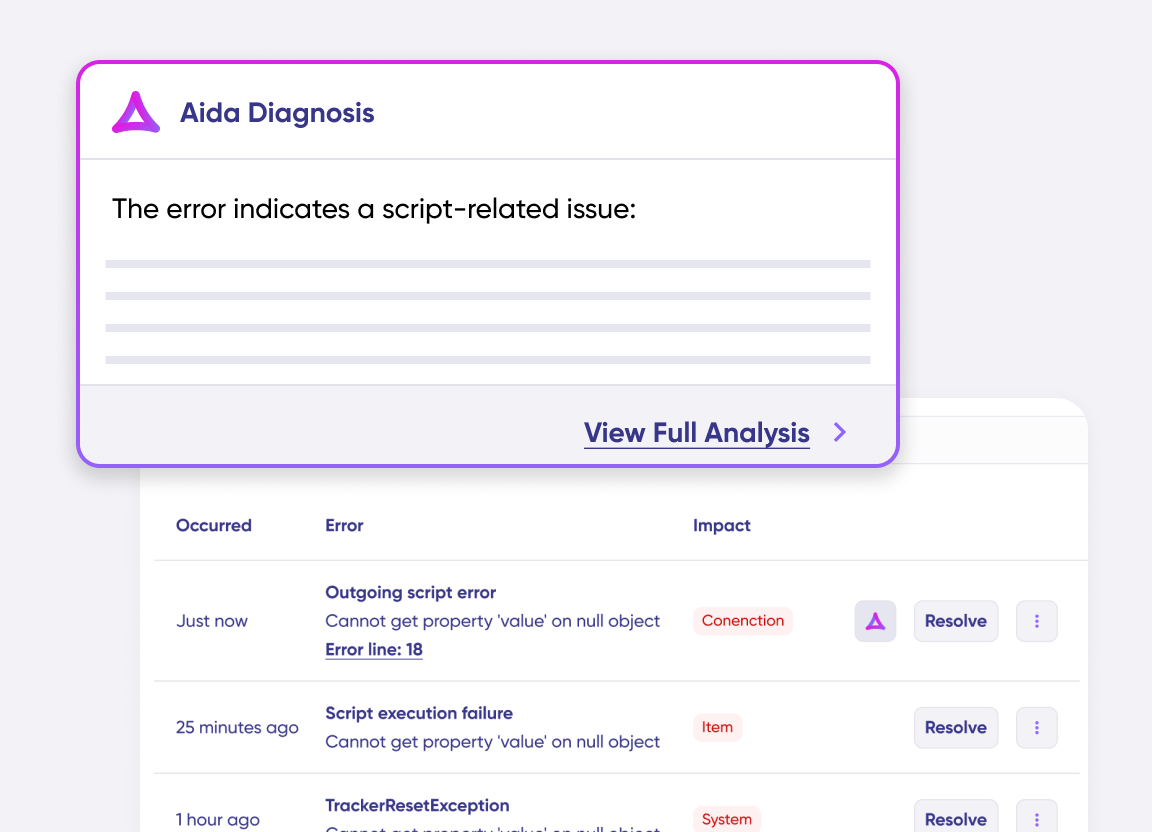
Know What Failed and Why
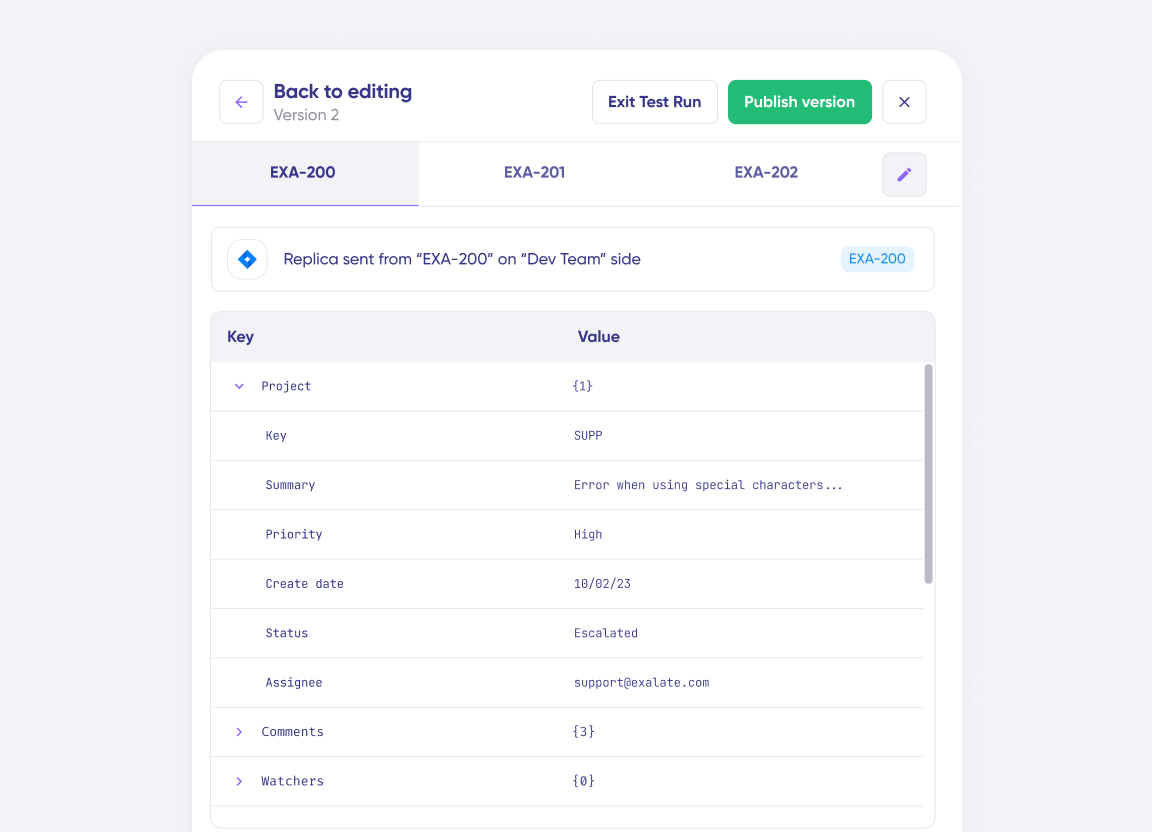
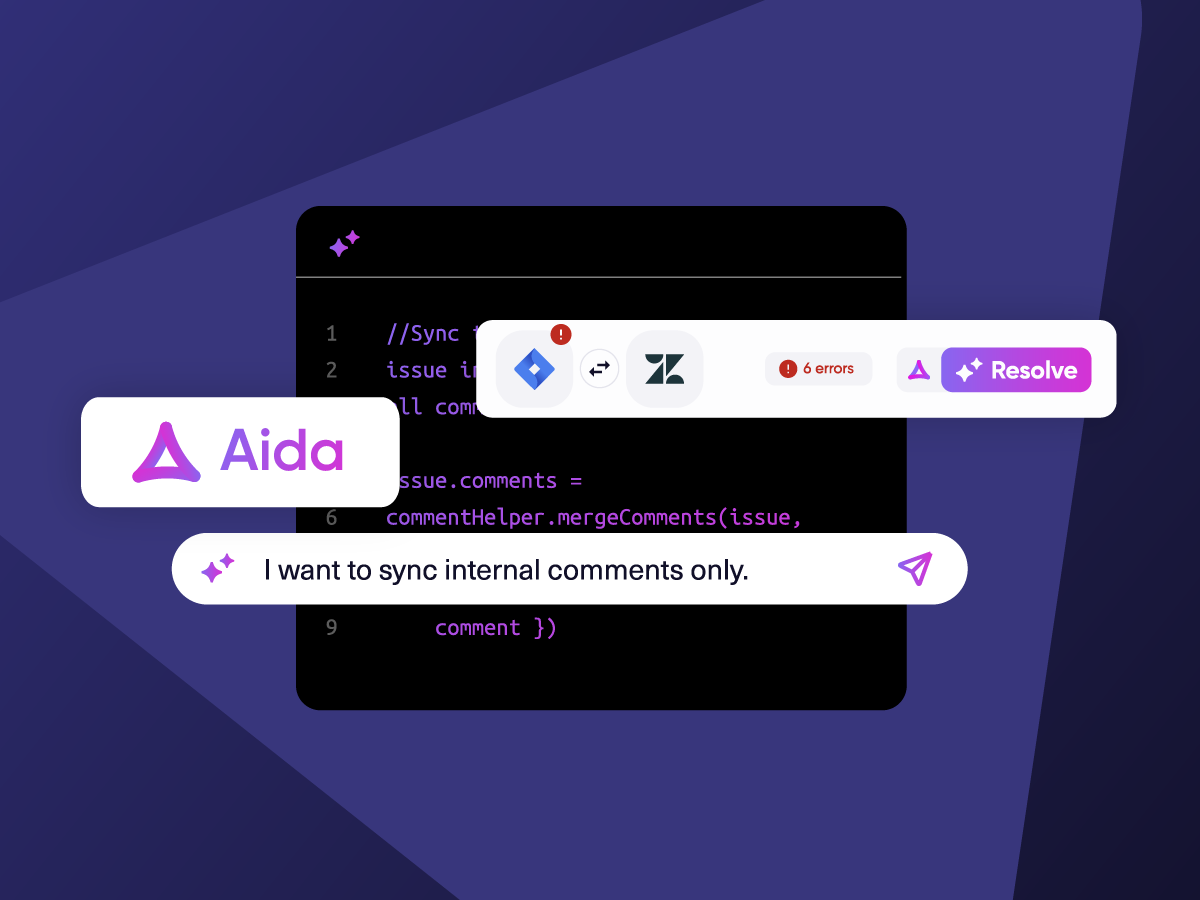
Get AI-powered recommendations for resolving the issue, including possible fixes and next steps.
AI Assisted SetUp
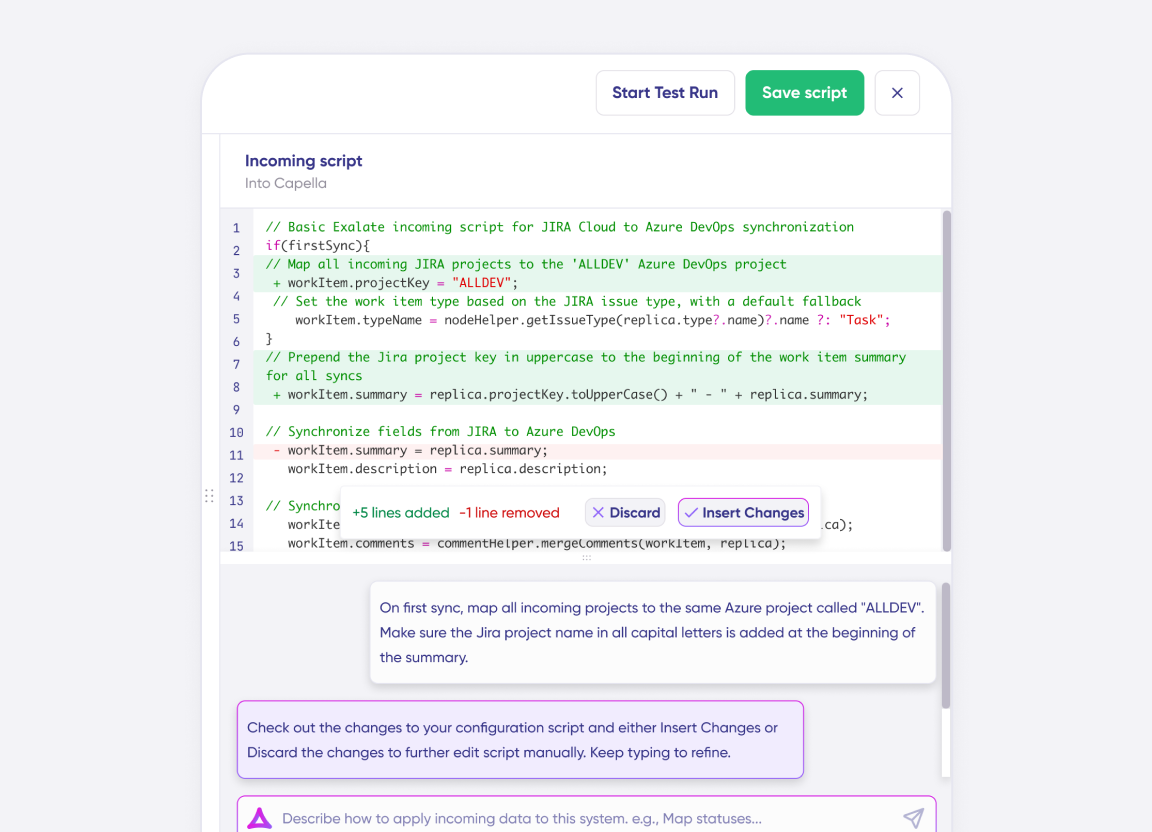
Describe your integration goal. Aida reviews your sync rules and connector type, then suggests script changes
Only Sync What Matches
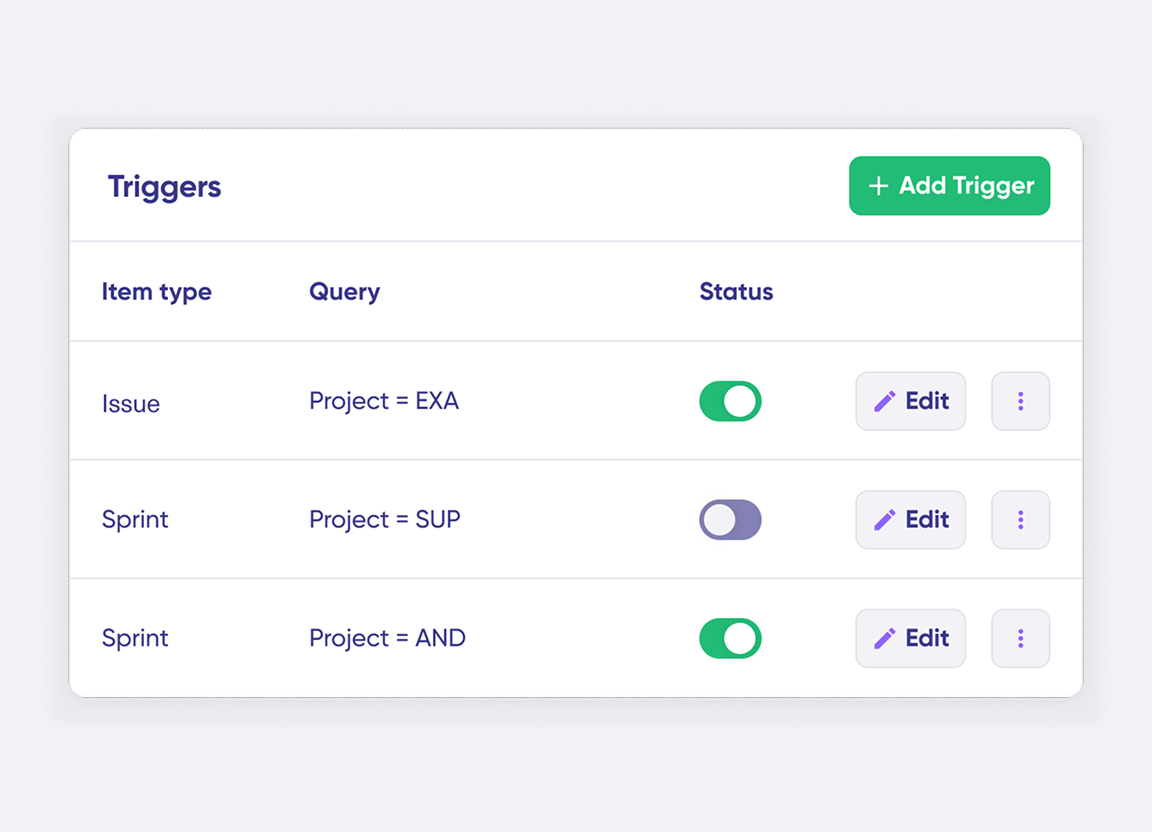
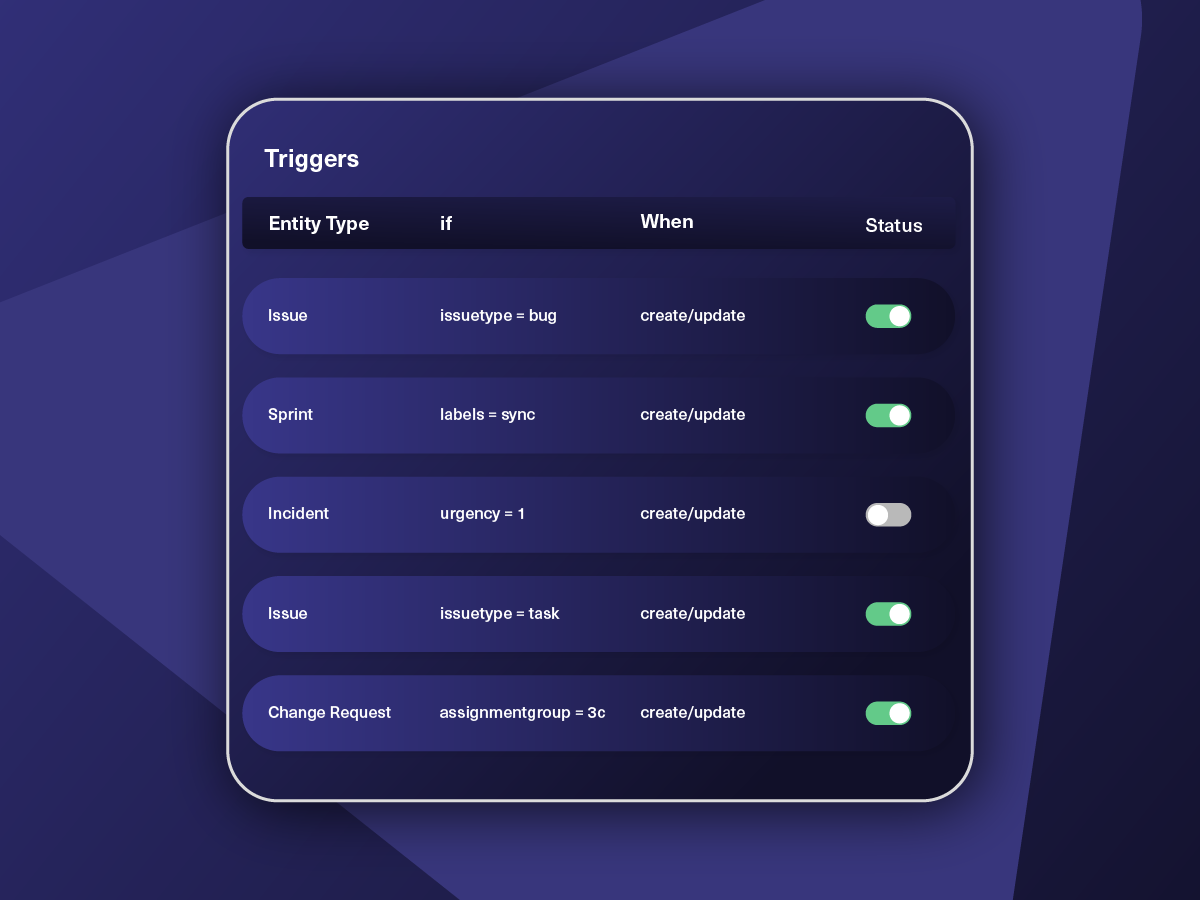
Set various conditions for automatic synchronization.
Sync Visibility, Right Where You Work
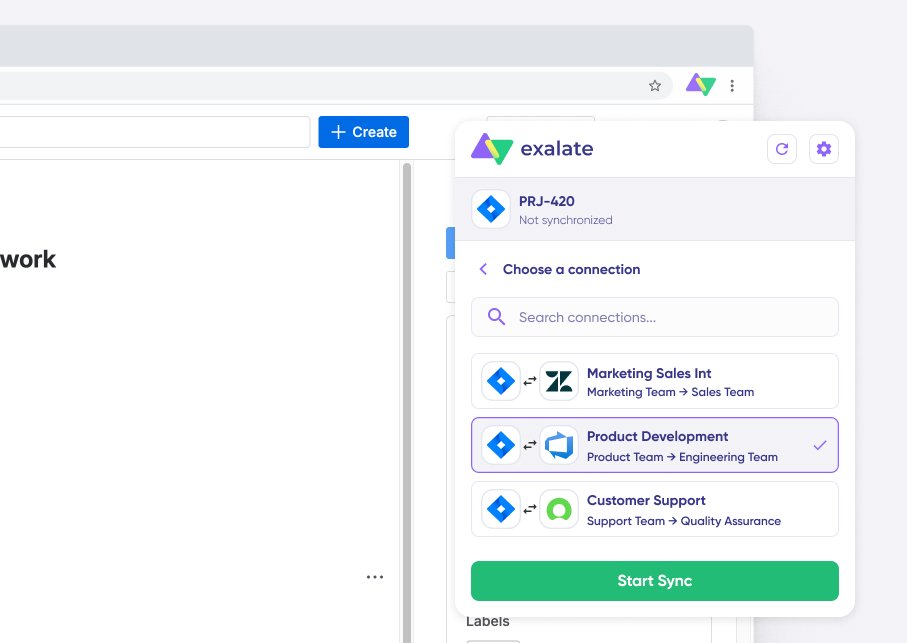
Check the real-time status of your active syncs, spot failures, and trigger a manual push. All from a browser extension, without opening the Exalate console.
How it Works
Connect
Easily connect multiple projects, instances, and platforms. With local, or external partners.
Customize
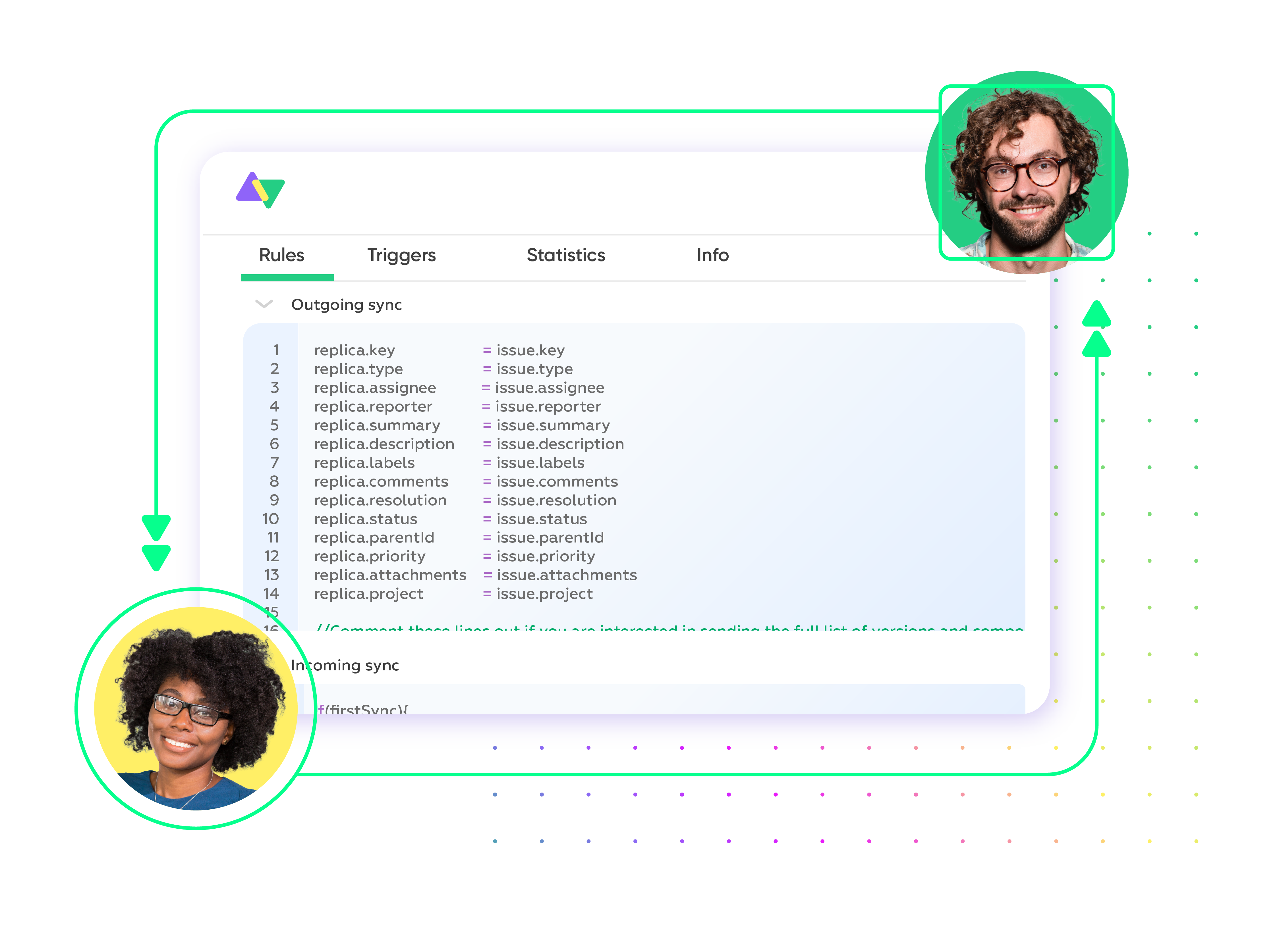
Set your sync rules to make sure the right data is shared.
Prompt Exalate’s AI to generate rules, or fine-tune with Groovy-based custom mappings and logic for complete control.
Automate
Set triggers to automate your sync based on specific conditions.
Synchronize
Now your connected instances will exchange information automatically. Happy syncing!
Simple to Complex Asana to ServiceNow Integration Use Cases
Begin with straightforward field mapping and expand into sophisticated workflows with AI-assisted scripting as your requirements grow.
Turn Problem Records Into Structured Asana Projects for Root Cause Investigation
Automatically generate an Asana project when ServiceNow's problem management process flags a recurring issue across multiple incidents. The problem statement, linked incident count, affected CIs, and category all sync over, giving the investigating team a ready-made workspace. As teams document findings in Asana, those updates flow back into the ServiceNow problem record so the problem coordinator stays informed without chasing down status.
Sync Change Request Approvals With Asana Delivery Milestones
Create or update an Asana task the moment a normal or standard change request receives CAB approval in ServiceNow. The implementation window, risk assessment, and assigned change tasks carry over so the project team can plan around firm dates. As the Asana team completes their deliverables, the change request in ServiceNow reflects that progress automatically. This keeps the change manager and project lead aligned on timelines without separate status meetings.
Feed Incident Trends Into Asana for Proactive Product Planning
Set conditions to sync ServiceNow incidents that match a specific pattern, like repeated failures tied to the same category or configuration item, directly into an Asana project designated for product improvements. Product managers can then assess the volume and severity of these incidents, prioritize fixes on the roadmap, and track remediation work. ServiceNow retains the original incident data while Asana becomes the execution layer for long-term fixes.
Coordinate Service Request Fulfillment Across IT and Project Teams
Generate an Asana task in the relevant project when a ServiceNow requested item (RITM) requires deliverables from a project team, like provisioning a new tool, setting up infrastructure, or onboarding a vendor. The request details, requested-for user, and approval status carry over so the project team understands what's needed and who asked for it. Fulfillment updates in Asana sync back to the RITM, letting the service desk close the loop with the requester.
Track Change Task Implementation Across Distributed Teams
Sync individual change tasks from a large ServiceNow change request into the Asana projects of the teams responsible for implementation. Each team works in their own tool while status, comments, and completion dates stay current on both sides. The change manager in ServiceNow retains a consolidated view of all implementation progress without requiring every team to log into ServiceNow.
Build End-to-End Workflows That Span Multiple Tools
Chain the Asana-ServiceNow connection into a broader cross-platform workflow. For example, a ServiceNow problem record triggers an Asana project for investigation, which then creates a Jira epic for the engineering team to build the fix. As the Jira epic progresses, updates ripple back through Asana and into the ServiceNow problem record. Every stakeholder, from problem coordinators to project leads to developers, sees the current status in their own tool without extra overhead.

We can now handle around 500 customer incidents per week, thanks to Exalate, which is a very good result regarding the number of products we’re dealing with. It synchronizes 45x faster than our previous solution.
Christof Cuyper
“
We can now handle around 500 customer incidents per week, thanks to Exalate, which is a very good result regarding the number of products we’re dealing with. It synchronizes 45x faster than our previous solution.
Christof Cuyper |
Always at Your Service
Get timely assistance from the best support technicians in the business. Relax as we help you solve every sync-related issue and more.
FAQ
Answers to the most frequent questions.
Didn't find what you were looking for? Ask Aida
Most companies that use both platforms deal with a persistent disconnect: IT operations handles incidents and change requests in ServiceNow, while product and project teams plan and execute work in Asana. Without integration, updates travel through Slack messages, emails, or meetings, and details get lost along the way. Connecting the two means incident context reaches project teams the moment it’s logged, and delivery progress flows back to IT without anyone having to ask. Teams spend less time relaying information and more time acting on it.
Head to exalate.app and create an account. From there, add your Asana workspace and ServiceNow instance as connected nodes. The next step is configuring what data moves between them. You can describe your sync requirements in plain language and let Aida (Exalate’s AI) draft the scripts, or build the rules yourself if you prefer full manual control. After that, set up triggers to determine which records initiate a sync. Once active, the connection runs on its own.
For Zendesk, you can sync default and custom fields, plus any other field available via REST APIs. If you don’t see the fields or entities that you need to sync, book a call with our engineers to discuss your use case.
On the Asana side, syncable fields include task name, description, assignee, due date, status, comments, attachments, and any custom fields you’ve created. ServiceNow covers short description, description, state, urgency, priority, assignment group, caller, category, work notes, comments, attachments, correlation IDs, and custom fields. Essentially, if a field is available through either platform’s REST API, Exalate can work with it.
It does. A one-way setup might look like ServiceNow incidents flowing into Asana as tasks, with no data going back. A two-way configuration keeps changes on both sides mirrored continuously. You can also build multi-directional flows if your workflow touches more than two platforms. Historical data migration is supported as well, so you’re not limited to syncing only new records. Every aspect of direction and scope is something you configure yourself.
Absolutely. Say a network outage generates dozens of related incidents in ServiceNow. Rather than creating a separate Asana task for each one, you can funnel all of those incidents into a single task for investigation. This avoids duplicate effort on the project side while still preserving the individual incident records in ServiceNow. Both platforms retain independent control over their own rules and data, so nothing bleeds across boundaries unintentionally.
Authentication uses JWT-based access tokens, and role-based access controls govern who can configure and view sync rules. All data in transit is secured with HTTPS using TLS 1.2 and 1.3, and data at rest is encrypted as well. The platform holds ISO 27001certification. Full details are available at the Exalate Trust Center.
ServiceNow’s Integration Hub and general-purpose middleware tools can handle basic data transfers, but they struggle with deeper requirements. Bidirectional field-level updates, consolidating multiple ITSM records into a single project task, and applying conditional logic to determine what syncs and when are typically outside their scope. They also tend to lack the scripting flexibility needed for custom field transformations or multi-platform chains. If your integration needs go beyond surface-level connectivity, a dedicated tool like Exalate fills those gaps.
Yes, and the range is broad. Text fields, dropdowns, number fields, date fields, checkboxes, and anything else available through each platform’s API can be mapped. Aida can auto-generate the transformation scripts for common scenarios. For more involved requirements, like converting data types between platforms, applying value lookups, or conditionally populating fields based on record attributes, you can write custom logic directly in the scripting engine.
Pricing is based on active sync pairs, meaning the number of records currently being synchronized. You’re not charged per user or per API call. A 30-day free trial is available so you can test the setup before making a commitment. Details and tier breakdowns are on the pricing page.
Yes, Exalate supports multi-tenant setups natively. You can wire up several ServiceNow instances and Asana workspaces under one Exalate deployment while maintaining strict data isolation between each. This is useful for large enterprises with separate departmental instances, managed service providers coordinating across client environments, or any setup where data boundaries between organizational units need to be airtight. A central admin view lets you oversee all connections without compromising the separation between them.
Basic integrations can be configured in under an hour. Register at exalate.app, connect both systems, and use Aida to help write sync rules from plain-language descriptions. Complex integrations with custom field mappings, conditional logic, and multi-party connections may take longer to configure properly. For organizations that prefer expert assistance, Exalate offers managed services where integration engineers handle setup and ongoing optimization: https://exalate.com/managed-services/
Yes, and the conditions can be as specific as you need. You might restrict syncing to only incidents assigned to a particular ServiceNow group, or only trigger a sync when an Asana task enters a specific project section. You can also combine multiple conditions, like syncing only P1 incidents that are tagged with a certain category. Field mapping behavior, data transformation rules, and workflow logic are all customizable per scenario, so only the data that matters actually moves between platforms.