
integration for manufacturing orgs
One Organization. Multiple Systems. No Manual Syncing.
Exalate connect tools in real-time, bidirectionally. So IT ops, engineering, subsidiaries, and suppliers stay automatically in sync, without a manual middleman.
100% KPI
visibility restored
Eliminate
the manual middleman
Minutes to onboard
subsidiaries or suppliers
Unified reporting
across all teams
The Reality of manufacturing orgs
Your product lives in 5+ tools.
Disconnected systems create more than just “busy work”. They create operational risk.
The Visibility Void
Engineering teams have incident work in ServiceNow and project work in Azure DevOps or Jira. Managers can’t see true capacity. Accountability breaks down when work is invisible across tools.
Manual Middleman Between Systems
When incidents need escalation to a parent company or external partner, agents manually create tickets in the other system and relay updates by hand. This bottleneck delays resolution and spikes MTTR.
DIY Integrations That Don't Scale
“Free” spokes and custom REST APIs eventually become a full-time job to maintain. When the sync breaks, trust in the data collapses.
Stakeholder Trust Issues After Outages
When syncs fail during incidents, data gaps erode trust. Internal teams deal with incorrect data and SLA breaches.
common use cases
How Manufacturing Teams use Exalate
Incident-to-Engineering Workflow
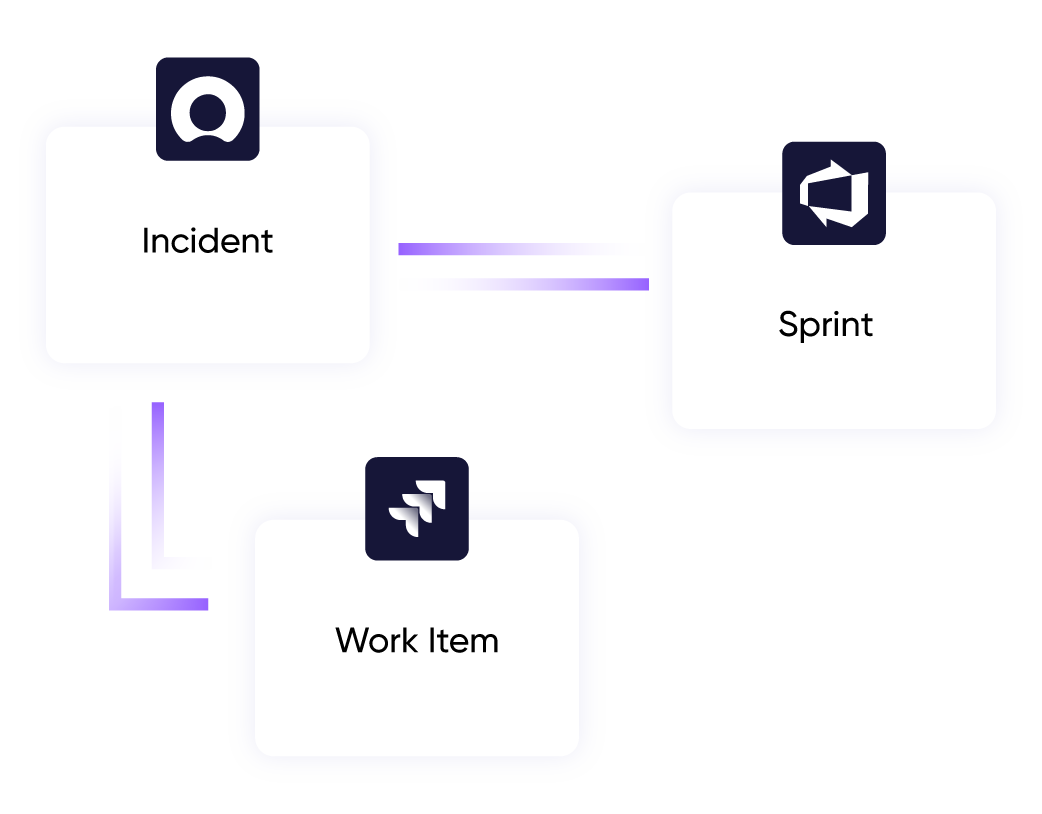
Critical floor equipment fails. Incident is in ServiceNow, but the fix is in Jira. Automatic sync creates a Jira work item. Comments, attachments, and status flow back to ServiceNow in real-time.
Subsidiary ↔ Parent Company Escalation
Subsidiary uses JSM; Corporate HQ mandates ServiceNow. Escalated tickets sync to the Parent Co. without granting them access to the Subsidiary’s internal Jira.
Cross-Company Vendor Integration
Sync work items with global vendors and suppliers, including international partners using different platforms. Each side controls its own data. No system access sharing needed.
Cost-Effective Migration
Moving from one platform to another to reduce licensing costs. Maintain a “Live Bridge” during the transition. Move data with zero downtime and keep teams productive in both systems.





Get the Most Out of Your Integration
Sync in Real-Time
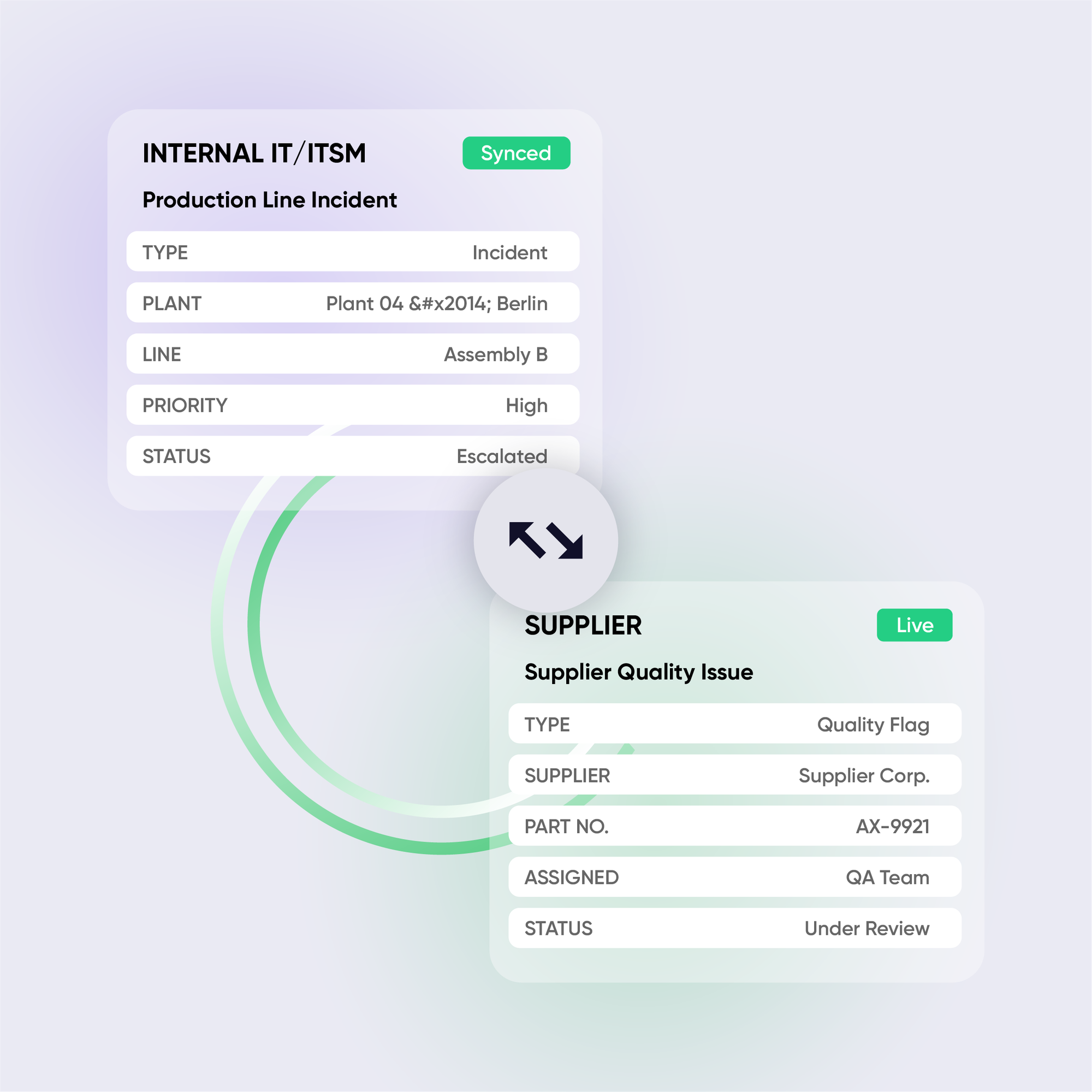
Two-way, real-time sync between platforms. Updates flow automatically. No manual exports, no delays.
Connect Any Number of Instances
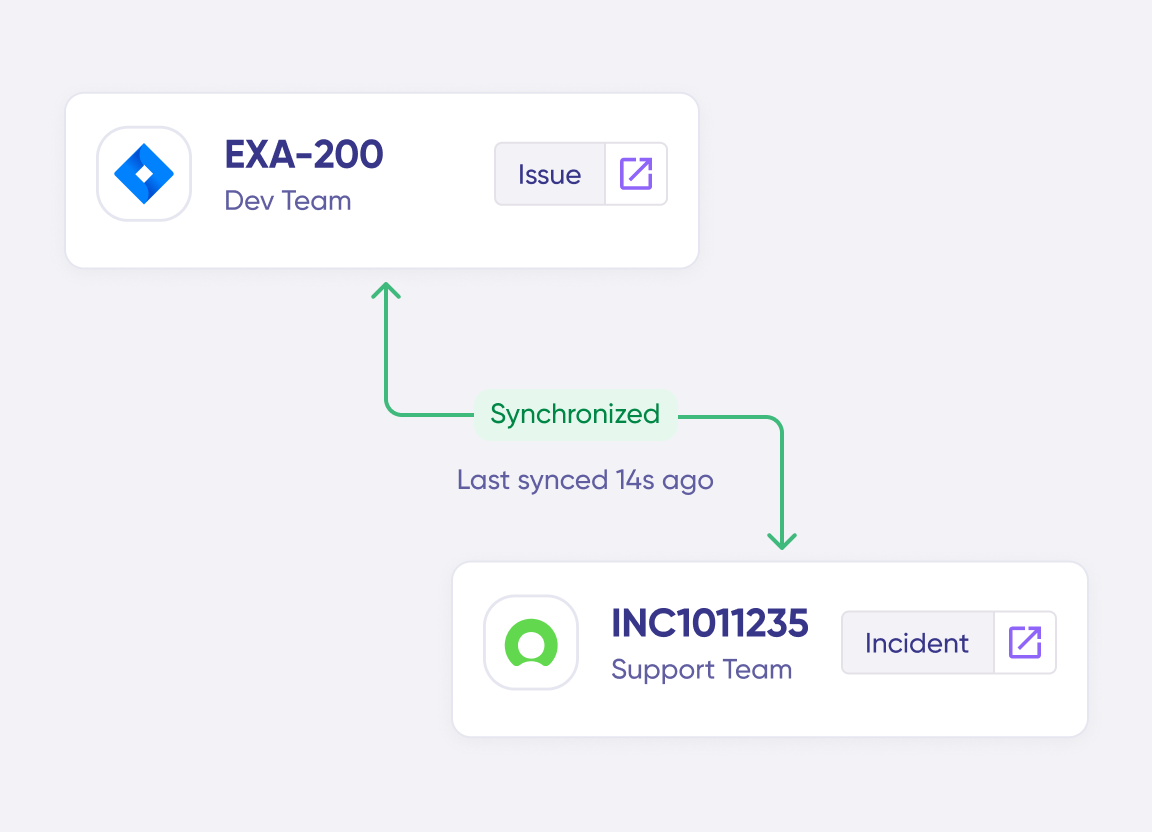
Connect multiple projects, instances, and platforms. Use different rules for each connection.
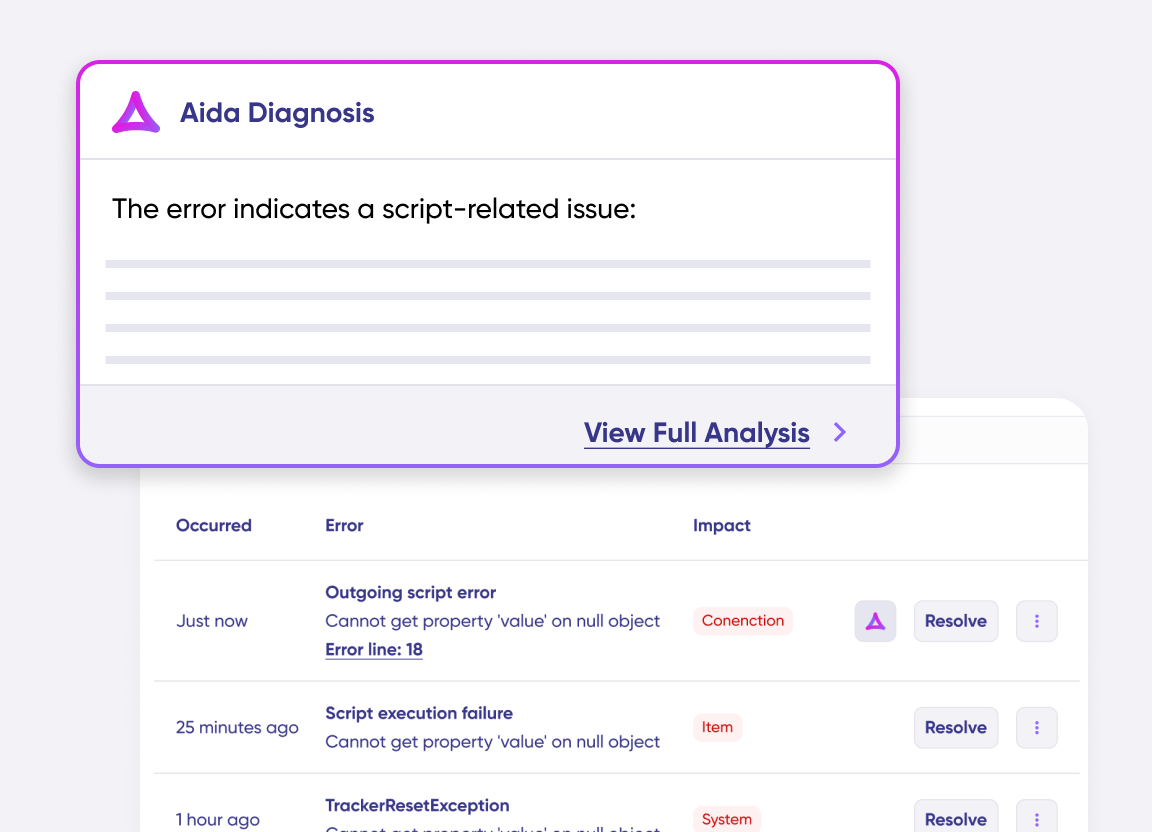
Know What Failed and Why
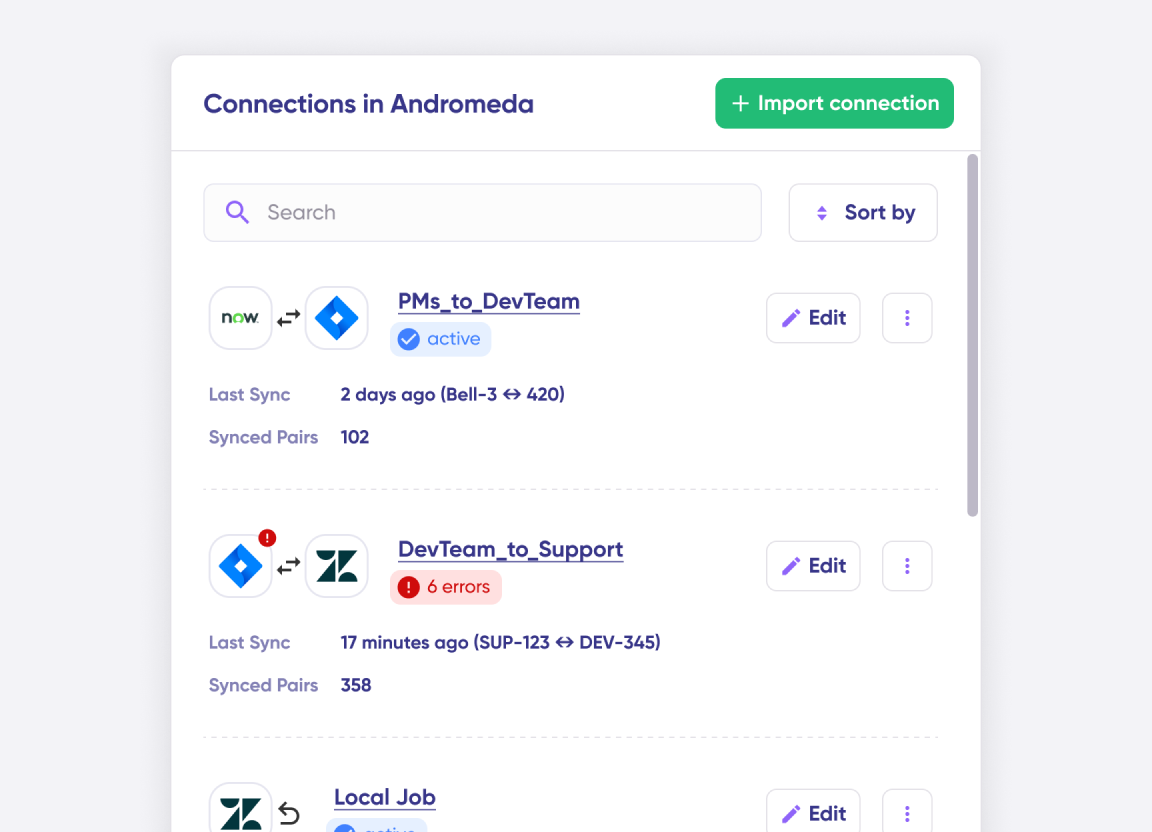
Get AI-powered recommendations for resolving the issue, including possible fixes and next steps.
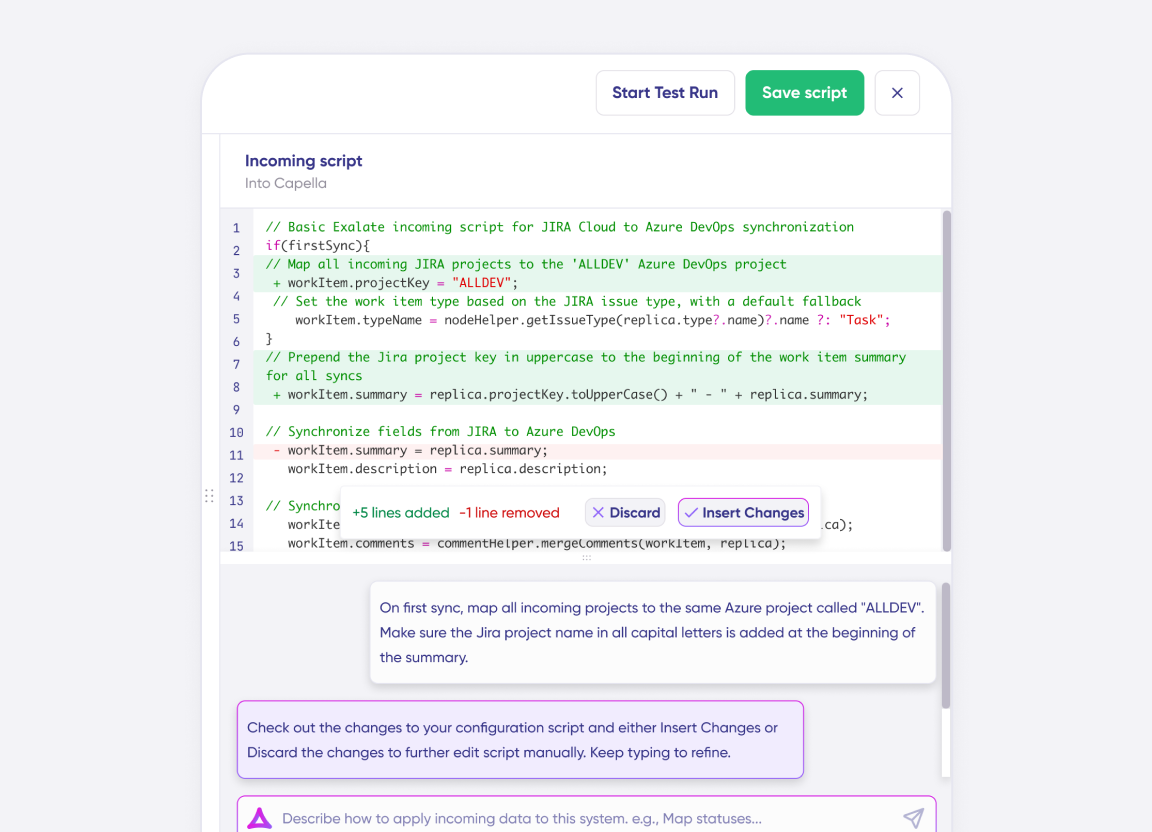
AI Assisted SetUp
Describe your integration goal. Aida reviews your sync rules and connector type, then suggests script changes
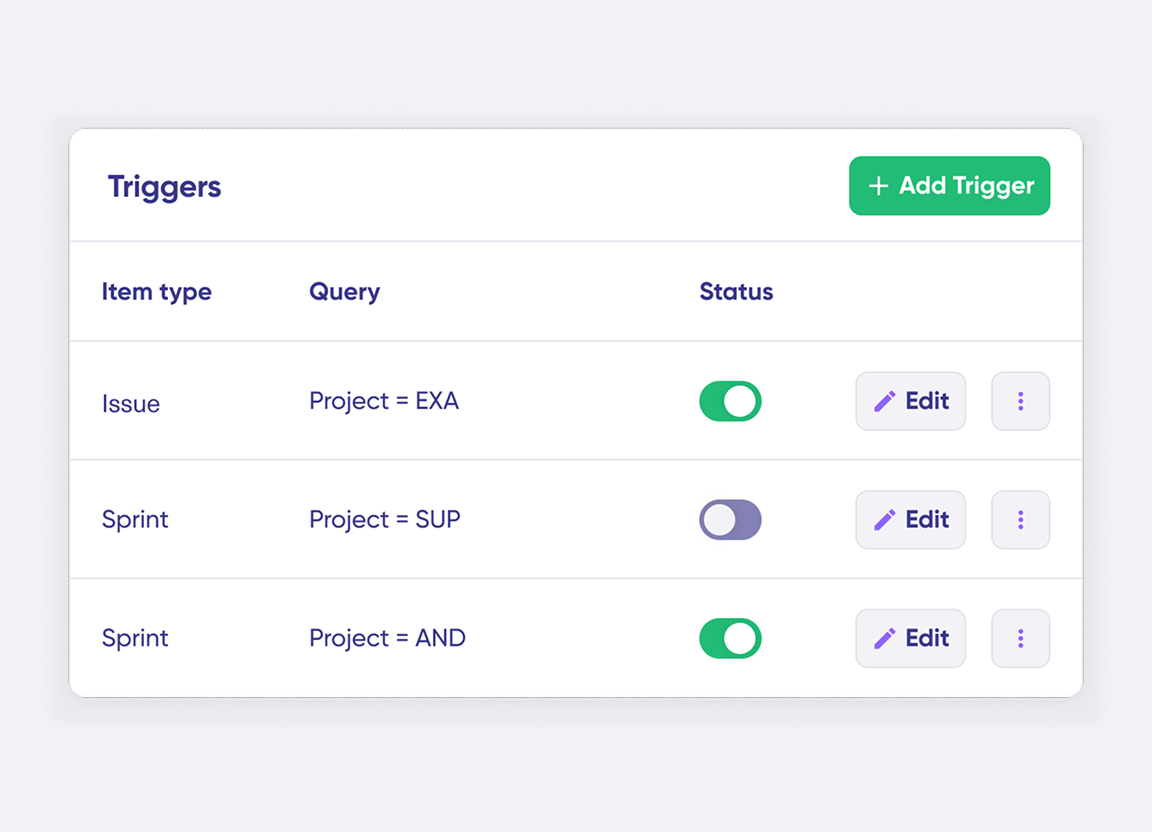
Only Sync What Matches
Set various conditions for automatic synchronization.
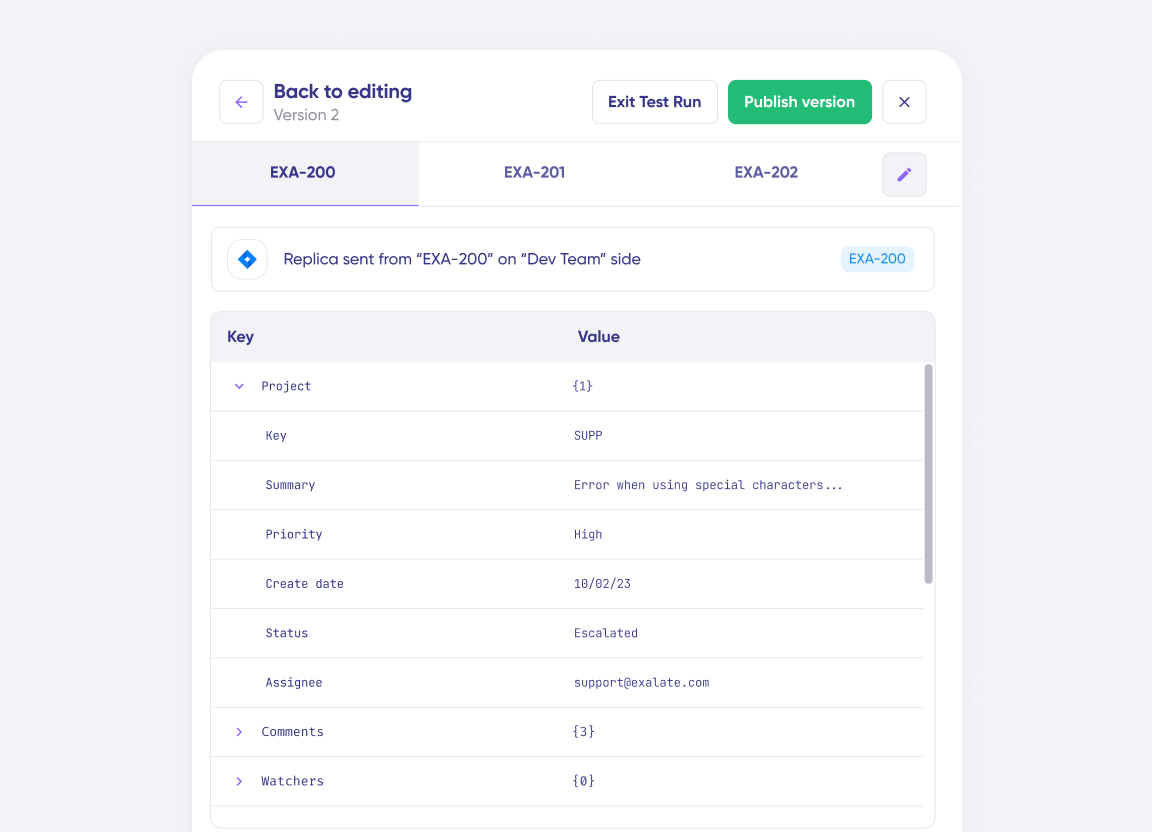
Sync Visibility, Right Where You Work
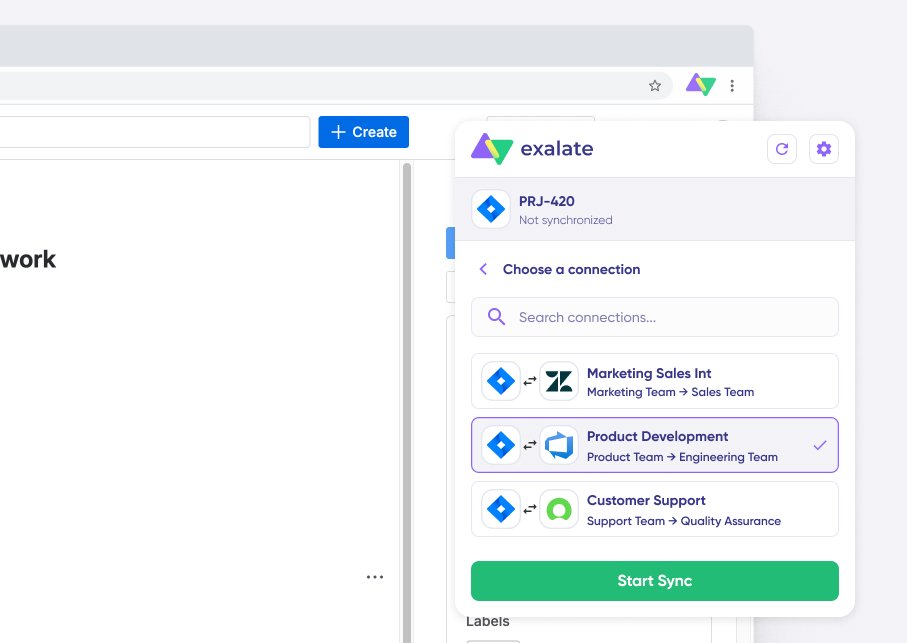
Check the real-time status of your active syncs, spot failures, and trigger a manual push. All from a browser extension, without opening the Exalate console.

"We needed to keep different teams synchronized across Jira instances and external partner tools. Exalate gave us the control and flexibility to do that without compromising security or autonomy."
Daniel Miks
Results
Traceability of the tickets and the workflow
Increased productivity resulting in customer satisfaction
Full control over what data crosses organizational boundaries
Turning a time-consuming process into efficiency

Why Exalate is
Secure by Design
- Single-tenant architecture – no shared infrastructure
- Encryption in transit and at rest
- Automatic recovery from outages
- ISO 27001:2022 certified
- 24/7 threat monitoring with SentinelOne

the build vs buy decision
Making the Right Choice
DIY webhooks and API integrations seem cheap at first. But they don’t stay cheap:
- Race conditions causing data inconsistencies
- No bidirectional sync without significant engineering
- Breaks every time an API changes
- You become integration support, not client support
- Each new client = another custom build
Free tools work for basic one-way syncs. But when you need bidirectional sync, advanced field mapping, or to scale across multiple clients; they hit limits fast.
| Capability | Exalate | Free Spokes / Native Tools | DIY / REST APIs |
|---|---|---|---|
| True bidirectional sync | ✓Full Sync | Limited / one-way | Complex to build |
| Multi-partner hub-and-spoke | ✓Supported | X | Manual per connection |
| Independent control per side | ✓Full control | X | X |
| Template-based rollouts | ✓Automated | X | X |
| AI-assisted configuration | ✓Aida AI | X | X |
| Migration support (DC → Cloud) | ✓Included | X | Complex |
| Enterprise security (ISO 27001) | ✓Certified | Varies | Your responsibility |
| Scalability as teams grow | ✓Seamless | Degrades | Full-time job |
| Maintenance burden | Managed | Low (until it breaks) | High |
See Exalate in Action
Let us show you how Exalate can fit your unique business needs.
trusted by clients worldwide






FAQ
Answers to the most frequent questions.
Didn't find what you were looking for? Ask Aida
Yes. Exalate doesn’t require installation on the parent company’s side in the traditional sense. It uses a ramp-up flow that connects through standard authentication methods. We also provide documentation and can join calls with the parent company’s team to address security and technical concerns. Many manufacturing subsidiaries start with a POC to demonstrate value before the parent approves broader rollout.
Yes. Exalate supports continuous sync during migrations with zero downtime. Migrate historical data from one tool to another, while maintaining real-time sync during the transition. Teams keep working normally in either system, and you cut over when ready, not when forced. This is a common use case for manufacturing companies looking to reduce costs.
It depends on the use case. Most customers with a straightforward sync go live in 2–5 days, including POC. Complex manufacturing networks with multiple partners average 2–3 weeks, including testing. Once your first connection is live, additional connections can be replicated from templates, dramatically faster than the first.
For straightforward syncs, no. The default scripts work out of the box. For complex ITIL workflows or custom field mappings, the Groovy scripting mode gives full control. And with Aida AI, you can generate scripts from plain language descriptions.
Generic automation tools can’t handle true bidirectional ITSM sync, complex field mappings, conditional data filtering, and the independent control model that manufacturing requires. They also weren’t designed for cross-company integrations where each side needs autonomy. Exalate is purpose-built for advanced ITSM workflows with enterprise security, on-prem deployment, and business logic tailored to regulated industries.
Yes. With on-premises or Docker deployment, each node stores and processes its own data, so nothing leaves your environment unless you configure it to. Exalate’s independent control model means you define granular data filtering rules: choose exactly which fields, attachments, and comments are transmitted. Regulated data stays behind your firewall. We’re ISO 27001 certified and work with manufacturers who have these exact requirements.
We hear this concern from manufacturing teams. Exalate uses outcome-based pricing, so you pay based on active items in sync, not user counts. We offer multi-integration-pair options for companies connecting multiple subsidiaries or partners. The right comparison isn’t against “free” tools, it’s against the cost of a person spending time manually relaying tickets, plus the SLA breaches and trust issues that come with broken DIY integrations. Contact our team to discuss pricing that fits your scale.