
Exalate vs ONEiO
Which Integration Platform Is Right for Your Team?
Both Exalate and ONEiO deliver bidirectional sync between enterprise tools like Jira, ServiceNow, Zendesk, and Salesforce. But they take fundamentally different approaches to who owns the integration: you, or your vendor.
Check which model fits how your team actually works.
Quick Comparison Table
| Feature | Exalate | ONEiO |
|---|---|---|
| Primary Purpose | Real-time, bidirectional, cross-platform, cross-team, and cross-company sync with managed integration services available as an add-on | Managed Integration Ops for ITSM-focused service providers and enterprises |
| Model | Integration platform you operate. Managed services optional. You stay in control | 3 service tiers: Self-Managed, Co-Managed, Fully-Managed. You pick how much ONEiO operates. Vendor-operated at the higher tiers. Vendor-operated |
| Customization | AI-assisted Groovy scripting. Unlimited logic, any field, any condition No limits | No-code rule editor with automated rule robot. Configured by the ONEiO team. Vendor-configured |
| Architecture | Decoupled. Each side controls its own rules independently Purpose-built | Centralized. ONEiO sits in the middle of all data flow Central dependency |
| Cross-Company Privacy | Each org configures independently. No data exposure to the other side. Full isolation | ONEiO works as a centralized interface for all data flow between parties Shared visibility |
| Fully Managed Services | Available as an add-on. Your team stays in control of outcomes. | Core offering. Self-managed, co-managed, or fully-managed tiers built into the platform model |
| AI Capabilities | Aida AI for your team: scripting, troubleshooting, and scoping Available to you | ONEAi® automation engine. Internal, vendor-side only Not user-facing |
| Pricing Model | Per integration, based on active items in sync. From $85/month Transparent | Not published. Flat subscription with an included message quota.Higher floor |
| Free Trial | 30 days, full functionality Self-serve | Not publicly listed No public trial |
| Ratings | G2: 4.6/5 (75+ reviews) Atlassian: 4.3/5 (200+ reviews) | Capterra: 4.5 (31 reviews). Not available on G2 or Atlassian |
| Support Resources | Documentation, Community, YouTube, Priority Support, Aida AI | Account team + 24/7 monitoring on Fully Managed tier |
| Best For | Enterprise teams or MSPs needing custom field logic, advanced ITSM/DevOps workflows, or cross-company sync with independent control per side | IT service providers and enterprises that want to fully or partially offload integration operations to a vendor |
Customization

Exalate: Script-First (AI-Assisted)
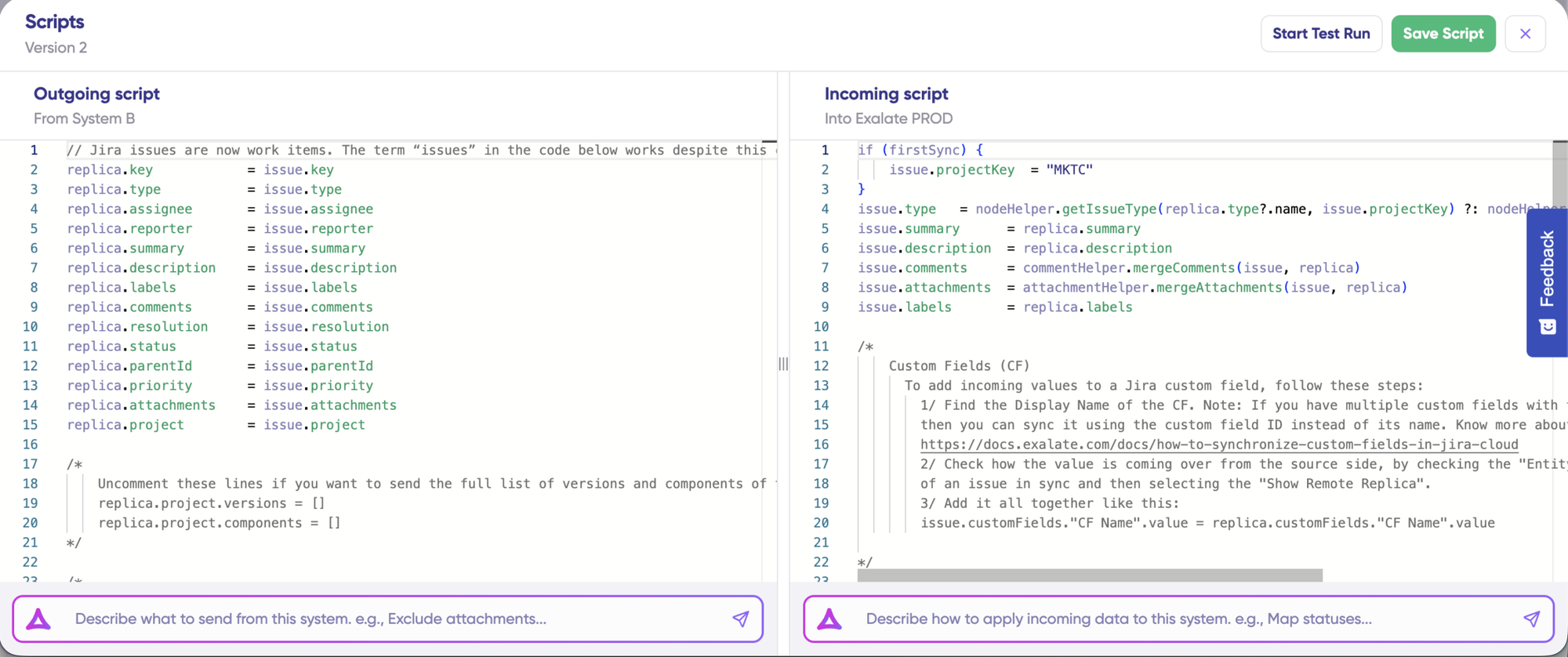
Use Aida AI to generate scripts from plain language, or write Groovy yourself. Logic stays in your hands.
For: Teams that need deep, precise control over sync behavior, conditional logic, field transformations, or direction-specific rules.
- Conditional sync, unlimited rules
- Different sync rules per direction
- Advanced field mappings and validation
- AI-assisted scripting with Aida
- Requirements that evolve. Update scripts on your own timeline.

ONEiO: CONEiO: Depends on Your Tier
On Self-Managed, your team configures integrations directly. On Co-Managed and Fully-Managed, configuration shifts to ONEiO. Every change goes through their schedule.
For: Enterprise IT teams and service providers who want to fully hand off integration operations.
- Rule robot generates baseline rules
- Regex, case changes, date formatting, HTML/whitespace cleanup
- 1:1 and 1:many field mapping
- Attachment handling, anonymization, translation
Important limitation: on Co-Managed and Fully-Managed, a new field mapping or an API change means waiting on ONEiO's schedule. Self-Managed avoids that wait but puts the configuration work on your team.
What You Can Actually Sync
Exalate: Deep Sync Across ITSM, DevOps, and Beyond
Covers main ITSM tools, plus DevOps, CRM, and project management. Sync logic is yours to define.
For: Enterprise IT teams, MSPs, or ITSM workflows to control how data is handled in each direction.
- Granular comment control per tool. Configure user mentions.
- Multi-level hierarchy sync
- Any data via REST APIs, plugins, or hierarchies
ONEiO: ITSM Coverage, Tier-Defined Depth
Covers ServiceNow, Jira, Freshservice, Zendesk, and others. New endpoints by request.
For: Enterprise IT teams and MSPs working primarily within ITSM tooling, particularly Nordic and European enterprise ecosystems.
Trade off: strong within ITSM. Outside that, like DevOps or the Atlassian ecosystem, it's not a fit.
Real-Time Sync & Perfomance
Exalate: Real-Time Sync on Every Plan
- Real-time sync across all pricing tiers
- Queue-based architecture handles large volumes without degradation
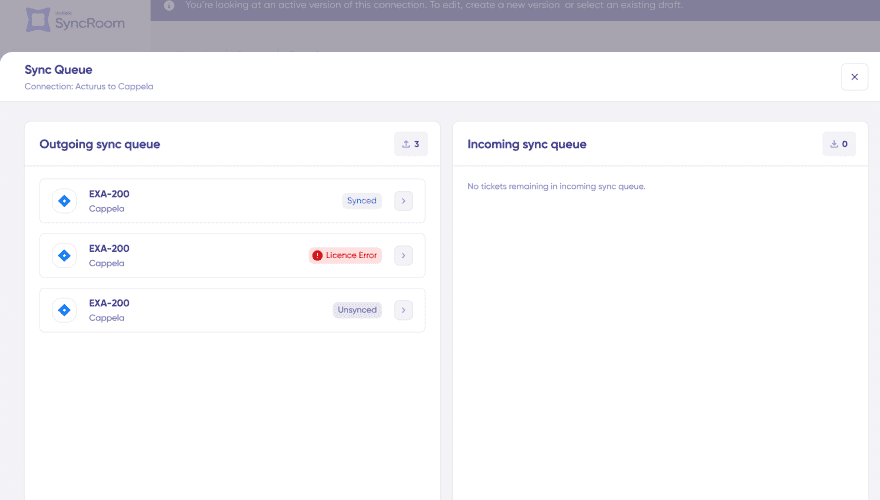
- Automatic retry with resume from point of failure
- Sync queue visibility with detailed status per item
- Aida AI error diagnosis: plain-language explanations with context-aware fix suggestions
ONEiO: Managed Uptime, Vendor-Side Monitoring
ONEiO’s Fully Managed tier includes 24/7 monitoring and proactive incident response.
- 99.99%+ uptime claimed across managed integrations
- 24/7 problem detection and resolution (Fully Managed tier)
- Messages held during outages and recovered when systems return
Operational Control
Exalate: Decoupled. Each Side Owns Its Rules
Exalate architecture: each organization configures its own side independently.
No vendor in the middle.
- Your team defines what syncs and how
- Your partner configures their side, their rules, their data
- Fits cross-company setups: MSPs, enterprise-to-vendor, regulated environments
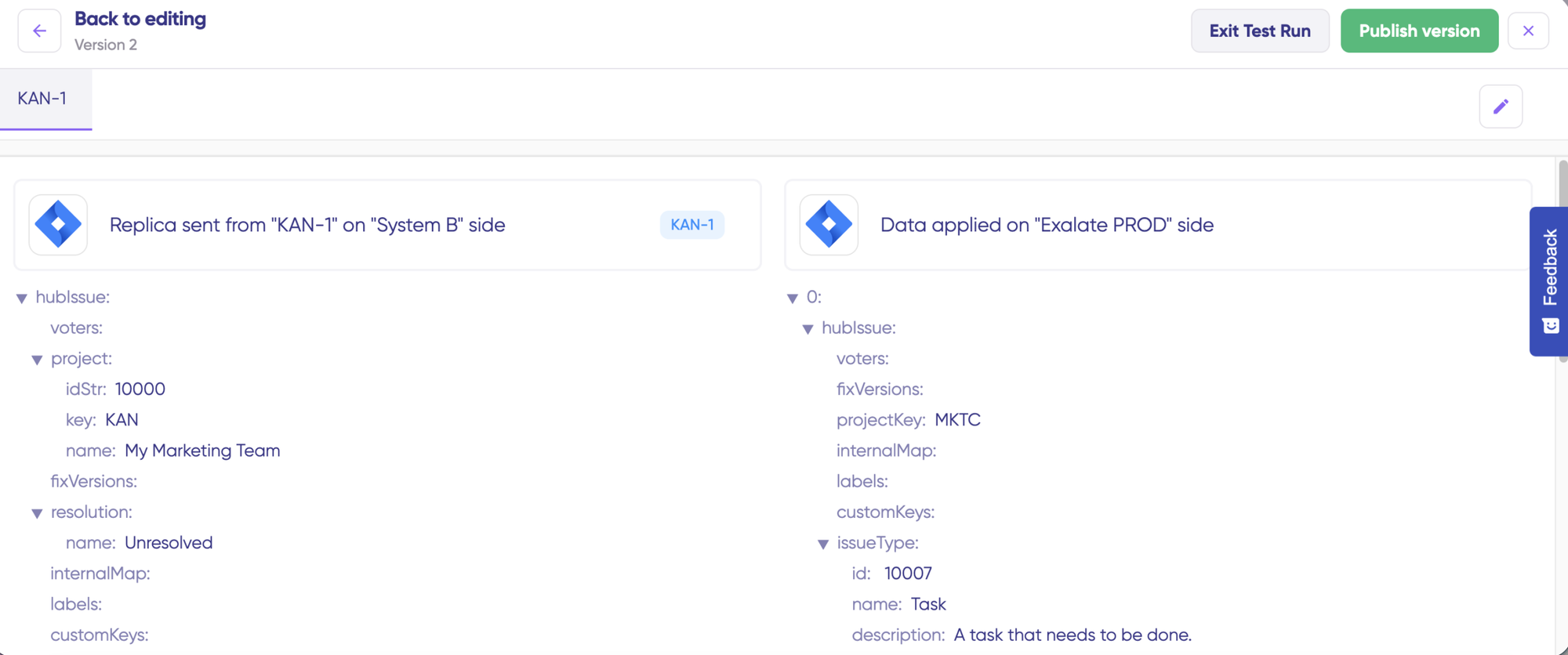
- Test Run validates changes before production
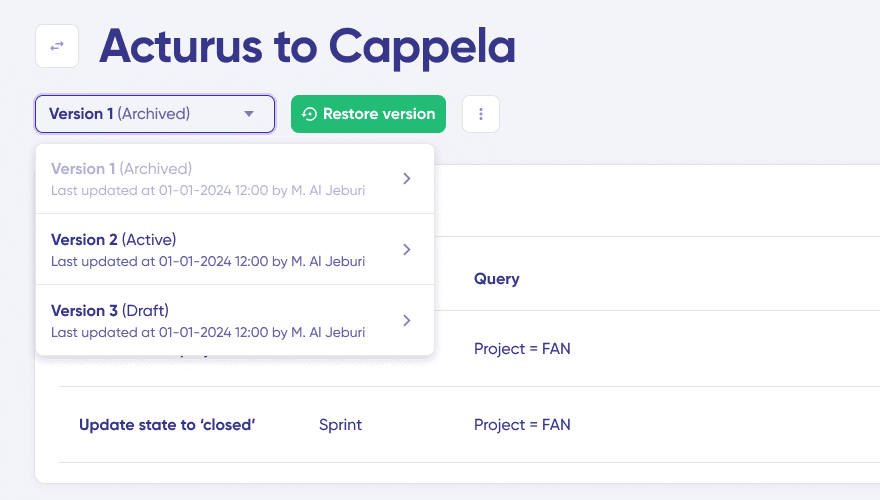
- Script versioning with rollback prevents breaking changes
ONEiO: Centralized. ONEiO Sits in the Middle
ONEiO: All data flows through their infrastructure.
- ONEiO mediates the connection
- No per-side independent configuration
- Integration Ops Center, operated by ONEiO
Important for cross-company scenarios: If your integration involves external partners or customers with their own compliance and governance requirements, the fact that ONEiO sits in the middle is worth evaluating carefully.
Exalate's decoupled model keeps each party's configuration and data on their own side.
Security and Compliance
- ISO 27001 certified
- GDPR compliant
- Cloud Fortified by Atlassian
- Bug Bounty program participation
- Regular security assessments and penetration testing
- Encryption in transit (TLS 1.2+) and at rest (AES-256)
- Threat detection with SentinelOne monitoring
- Role-based access control
- Decoupled authentication: API keys, OAuth, and PAT support without exposing credentials
- Data residency options
- ISO/IEC 27001:2022 certified
- GDPR compliant
- DORA compliance mentioned
- Data residency: EU, UK, US clusters
- SOC 2, HIPAA, PCI-DSS: not publicly documented
Notable difference: Exalate's full security stack is publicly documented with a live Trust Center. ONEiO's security page lists ISO 27001:2022 and GDPR; the detailed controls stack is not publicly available. For regulated industries with audit requirements, Exalate's transparency is a practical advantage.
AI Capabilities
Exalate: Aida AI For Your Team
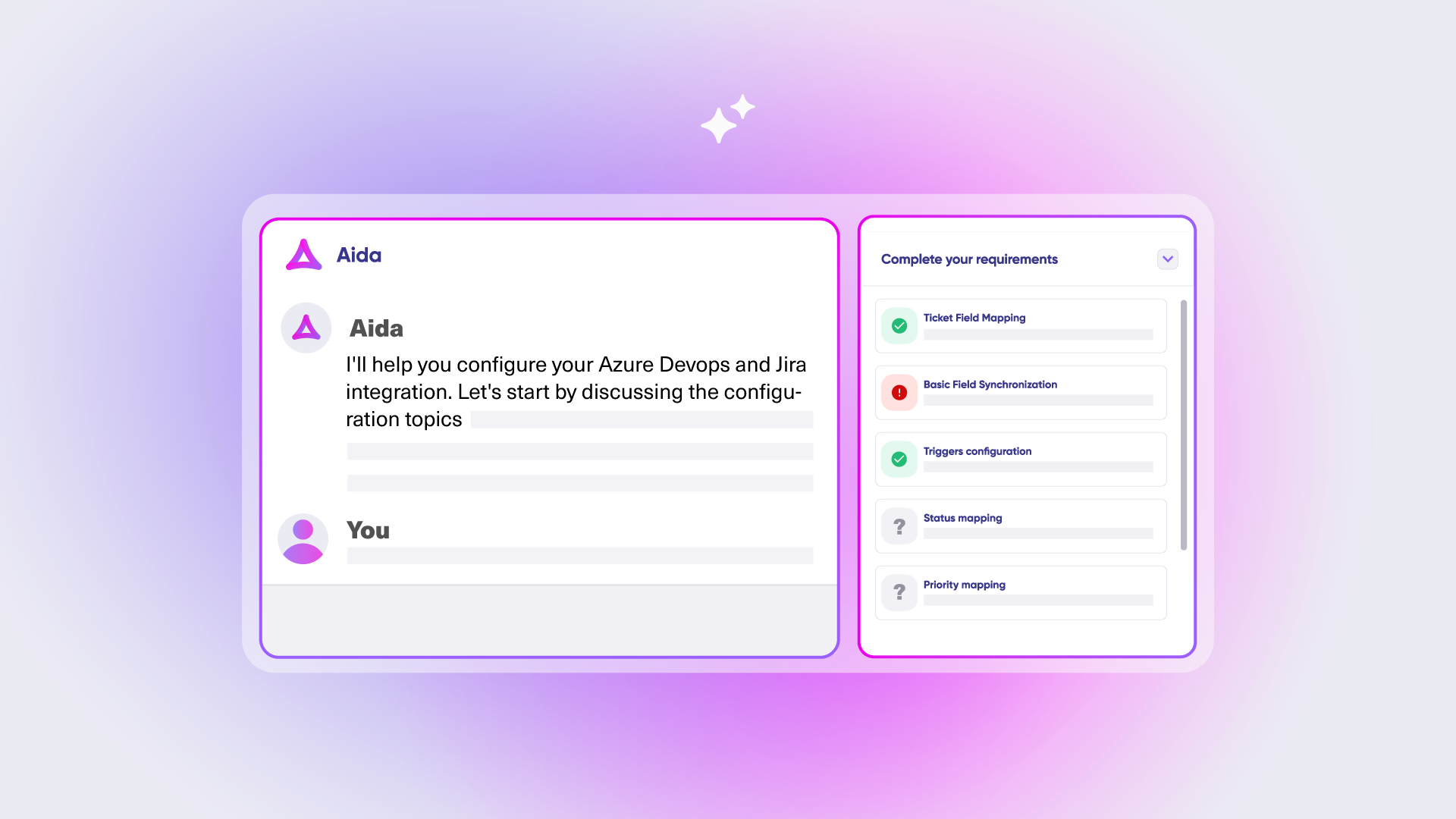
Aida is embedded in the Exalate console and available whenever you are working on a connection.
- Plans and scopes integrations based on your requirements
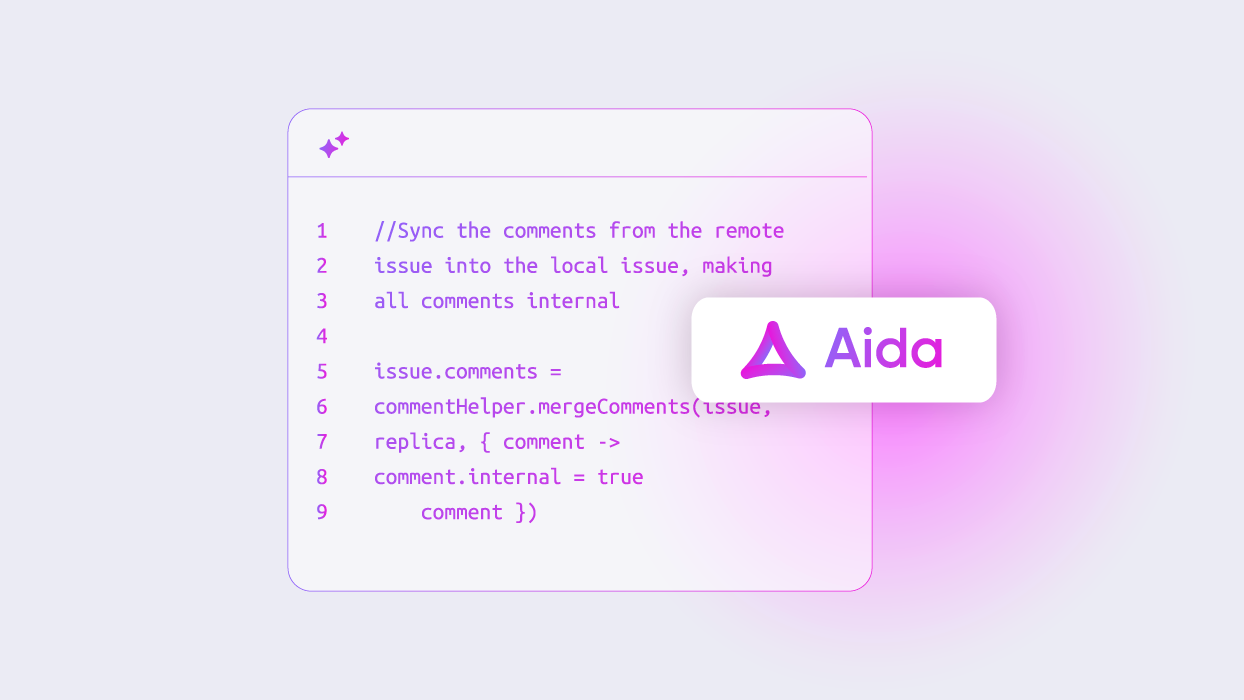
- Generates sync scripts from plain-language descriptions
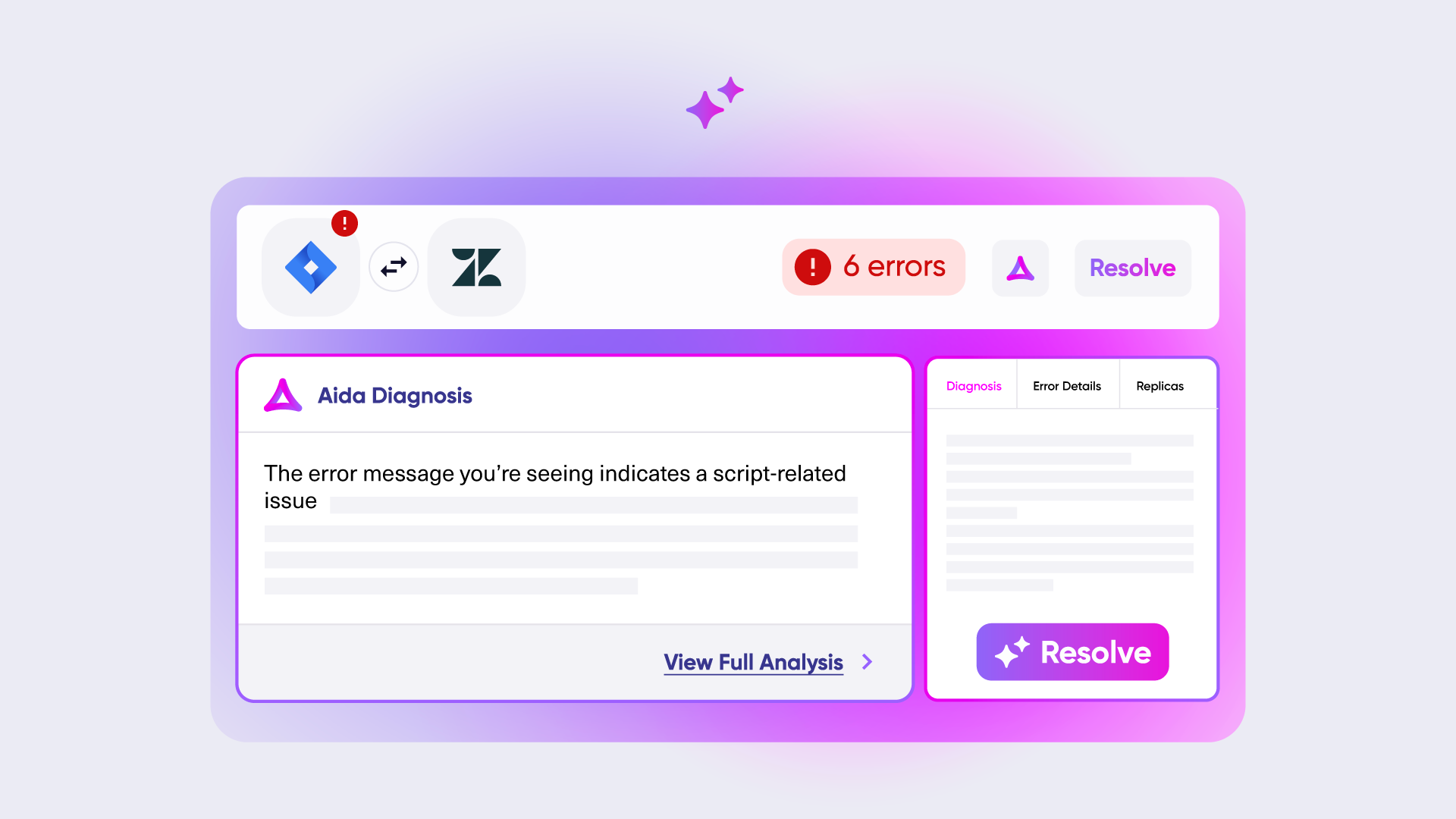
- Explains errors in plain language and recommends fixes
ONEiO: ONEAi For Their Team
ONEAi engine speeds up how quickly their engineers configure and deploy integrations. They report 80% faster go-live as a result.
The distinction: Aida AI is a tool for your team, available every session. ONEAi is a tool for ONEiO's team. You benefit from ONEAi indirectly through faster delivery. You benefit from Aida directly every time you configure or troubleshoot.
Pricing: How Much Will It Cost?
Exalate: Transparent Pricing
Pay for active items in sync, per integration. Usage spikes, user count, and update frequency don’t change the cost.
- Predictable costs
- Scales with integration complexity, not headcount
- 30-day free trial, full features
- Fully managed services: contact Exalate for a quote
“We managed to reduce Service Desk costs by around 95% using Exalate.” — Piotr Radtke, Netguru
ONEiO: Tiered by How Much You Hand Off
ONEiO prices are in 3 tiers and are not published publicly.
Contact ONEiO for a quote.
- Self-managed: pay for platform and integrations
- Co-managed and fully-managed: price includes support
- New endpoints and API maintenance included
Opaque pricing makes total cost hard to estimate upfront.
With Exalate, you can estimate your cost upfront using the public pricing page and calculator.
Managed Services
Exalate: Expert Help, You Stay in Control
Exalate offers optional Managed Services addon. A dedicated team builds and runs your connections. You keep ownership.
Exalate owns:
- Integration architecture, build, and configuration
- Monitoring and alerting
- Maintenance, and incident resolution
- Scaling new connections
You keep:
- Control over outcomes and system access
- Visibility into how integrations run
- A named contact on Slack or Teams
- 24/7 SLA support for critical issues
Live within 6 weeks. Costs itemized per integration, so MSPs can pass them to clients as a line item.
ONEiO: Multiple Service Tiers
ONEiO offers 3 service tiers, depending on how much you want to run yourself.
- Self-Managed gives your team platform access. You build and run the integrations.
- Co-Managed splits the work. You decide which operational tasks stay with your team and which go to ONEiO's experts.
- Fully-Managed hands over the entire lifecycle. ONEiO plans, implements, operates, and monitors the integrations, including change management.
Suited for organizations managing integrations within their own ecosystem, or on behalf of clients through a single centralized platform
The key distinction: ONEiO's fully-managed tier centralizes operations under ONEiO's team and platform. Exalate managed services preserves each party's autonomy : a meaningful difference for cross-company scenarios where data governance matters on both sides.
Common Objections Addressed
"Exalate looks complex."
The Exalate console provides guided onboarding. Aida AI writes scripts from a plain-language description, no prior Groovy experience needed. And for teams that want expert support without losing ownership, Exalate Managed Services is available.
"ONEiO offers a fully-managed service. Exalate is just a platform."
Exalate also offers a fully managed service, where Exalate’s expert team handles implementation, operations, and maintenance end-to-end. With a dedicated delivery manager and 24/7 SLA coverage.
The structural difference is that Exalate’s managed service preserves each party’s autonomous control over sync rules and data. ONEiO’s managed tiers operate through a centralized hub. For cross-company and partner-facing integrations, that distinction has real implications for data governance.
"ONEiO has stronger enterprise credentials."
ONEiO has strong enterprise logos. Exalate has stronger enterprises too, with 2,500+ organizations using it, 200+ verified G2 reviews, a native Atlassian Marketplace presence, and a publicly documented security stack that goes deeper than what ONEiO publishes. Enterprise credentials and enterprise fit are not the same thing.
"We don't need cross-company sync."
Exalate’s independent control model isn’t only for external collaboration. Inside large organizations, it means your ServiceNow team and Jira team each manage their own sync rules without shared admin access or risk of data exposure between departments.
"Building our own is more cost-effective."
Rarely true: 3 to 6 months build time, 20 to 30% annual maintenance, and hidden costs from API changes and security updates.
Frequently Asked Questions
"What is the main difference between Exalate and ONEiO?"
ONEiO is built around Integration Ops, treating integrations as a continuously managed discipline via a centralized hub platform, with managed service tiers that let you offload operations entirely. Exalate offers deep scripting-based sync control and its own fully managed Integration as a Service, built specifically for cross-company integration where each party retains autonomous data governance. The choice is between centralized managed ops (ONEiO) versus distributed scripting control with optional full managed delivery (Exalate).
"Does Exalate offer a fully managed service like ONEiO?"
Yes. Exalate’s enterprise managed services cover the full lifecycle: implementation, operations, and maintenance, with a dedicated delivery manager, 24/7 SLA support for critical issues, and a 9-week lead time guarantee.
The key difference from ONEiO’s managed tiers: Exalate’s service uses a distributed architecture, so each party retains independent control over sync rules and data, which matters for cross-company and partner-facing integrations.
"Can I try either tool for free?"
Exalate offers a 30-day free trial with full functionality. ONEiO does not publicly list a free trial.
"What happens if I want to change sync logic quickly?"
With Exalate, your team updates the script, and the change is live immediately. With ONEiO’s Co-Managed or Fully Managed tiers, changes go through ONEiO’s team, which adds lead time.
"Which is better for integrations with external partners?"
Exalate: both the solution and managed services are built for cross-company integration, where each party keeps autonomous control. ONEiO’s central hub model is better suited to internal enterprise scenarios or service providers managing all sides from a single platform.
"How does Exalate pricing compare for small and large teams?"
Exalate’s outcome-based pricing charges for active items in sync, not users. The 30-day free trial includes all features. For teams using Integration as a Service, pricing is based on scope and client network size. ONEiO’s pricing is not publicly listed, which makes upfront comparison harder.
"Does Exalate require installation on both sides?"
No. You register, connect your systems by entering and verifying each URL, name your connection, and start configuring sync rules, all from within a single console.
Making Your Decision
Choose Exalate If
You want control over what syncs, how, and what your partners see. You work with external parties or regulated data, need to adapt sync logic fast, and want a transparent, documented security posture. You want managed support without giving up ownership.
Choose ONEiO if
You want to hand off integration operations entirely. You have no internal integration capacity and don't need to control sync logic yourself.
This comparison is based on publicly available information as of June 2026. Verify current details with each platform.
See Exalate in Action
Let us show you how Exalate can fit your unique business needs.
trusted by clients worldwide