This article was originally published in the Atlassian community.
The aim of syncing Zendesk and Jira is to get both systems to share data about updates automatically. But when more than one Jira instance is involved, you need a way to keep certain comments private and route them to the right team.
Here’s how to sync these side conversations between Zendesk and Jira using Exalate.

Use Case Description
A customer support team (Zendesk) is in contact with a team of developers (Jira D) and a QA team (Jira Q).
When a comment is made on the Zendesk ticket, the admin can apply macros, and the configuration will determine whether it goes to Jira D or Jira Q.
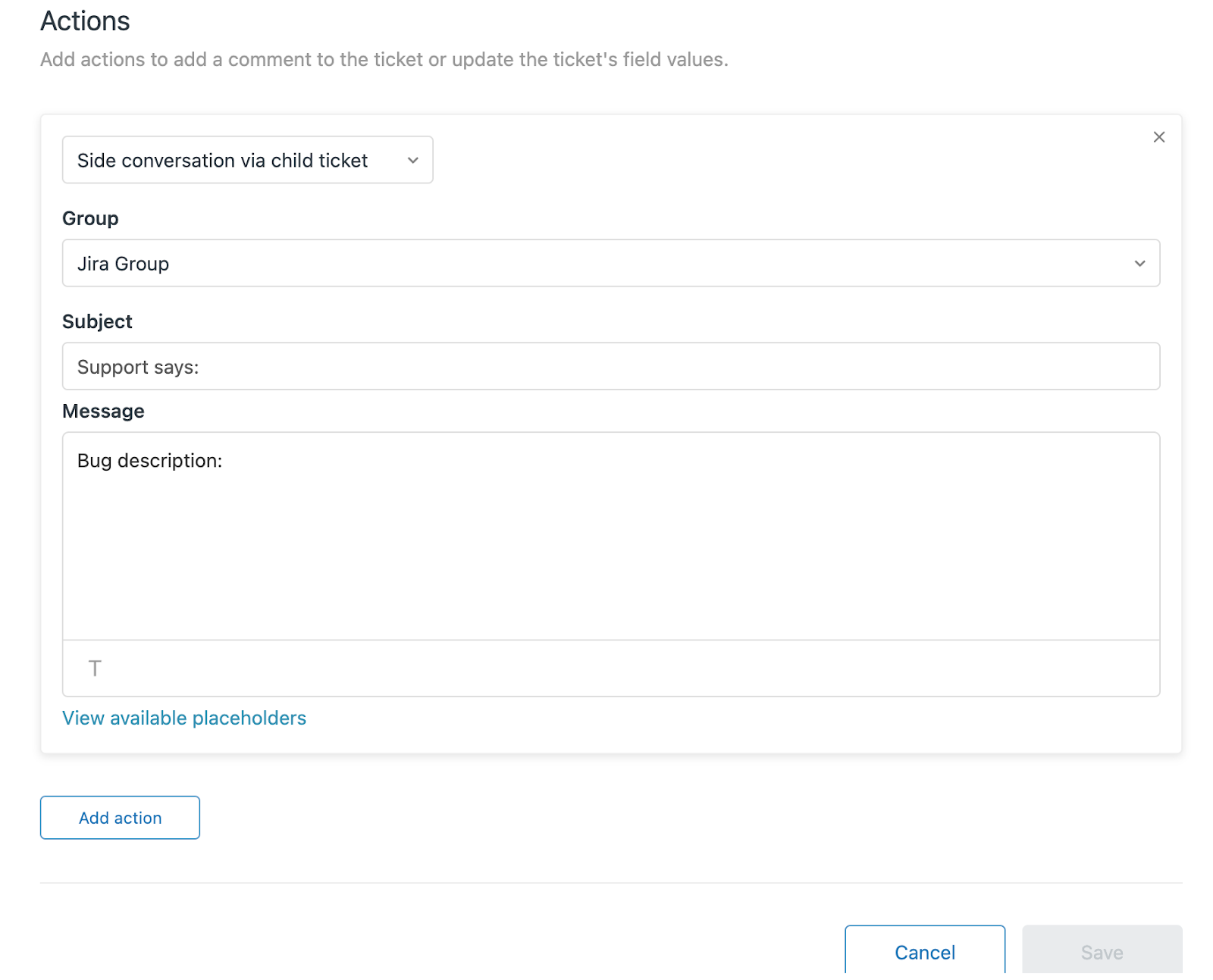
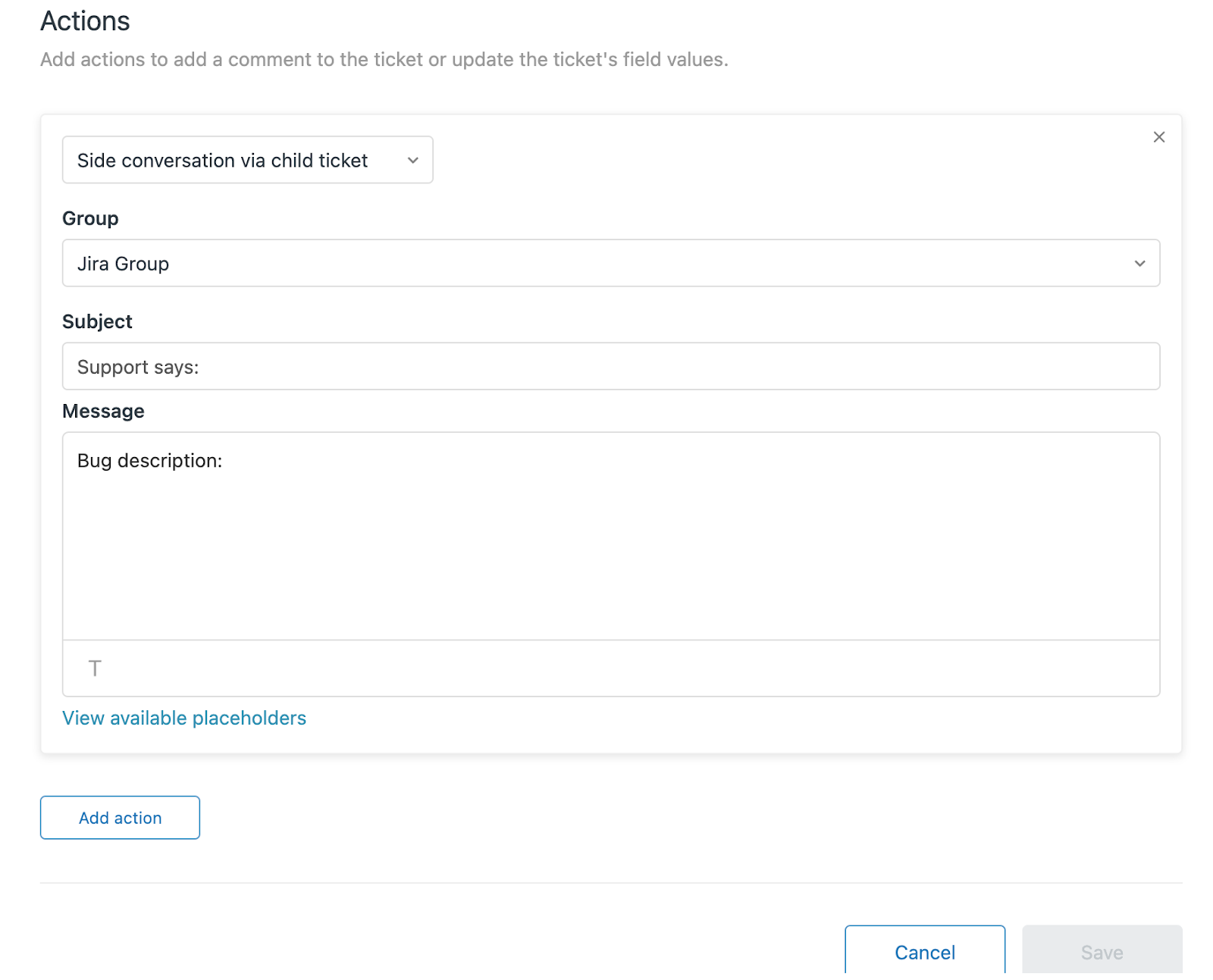
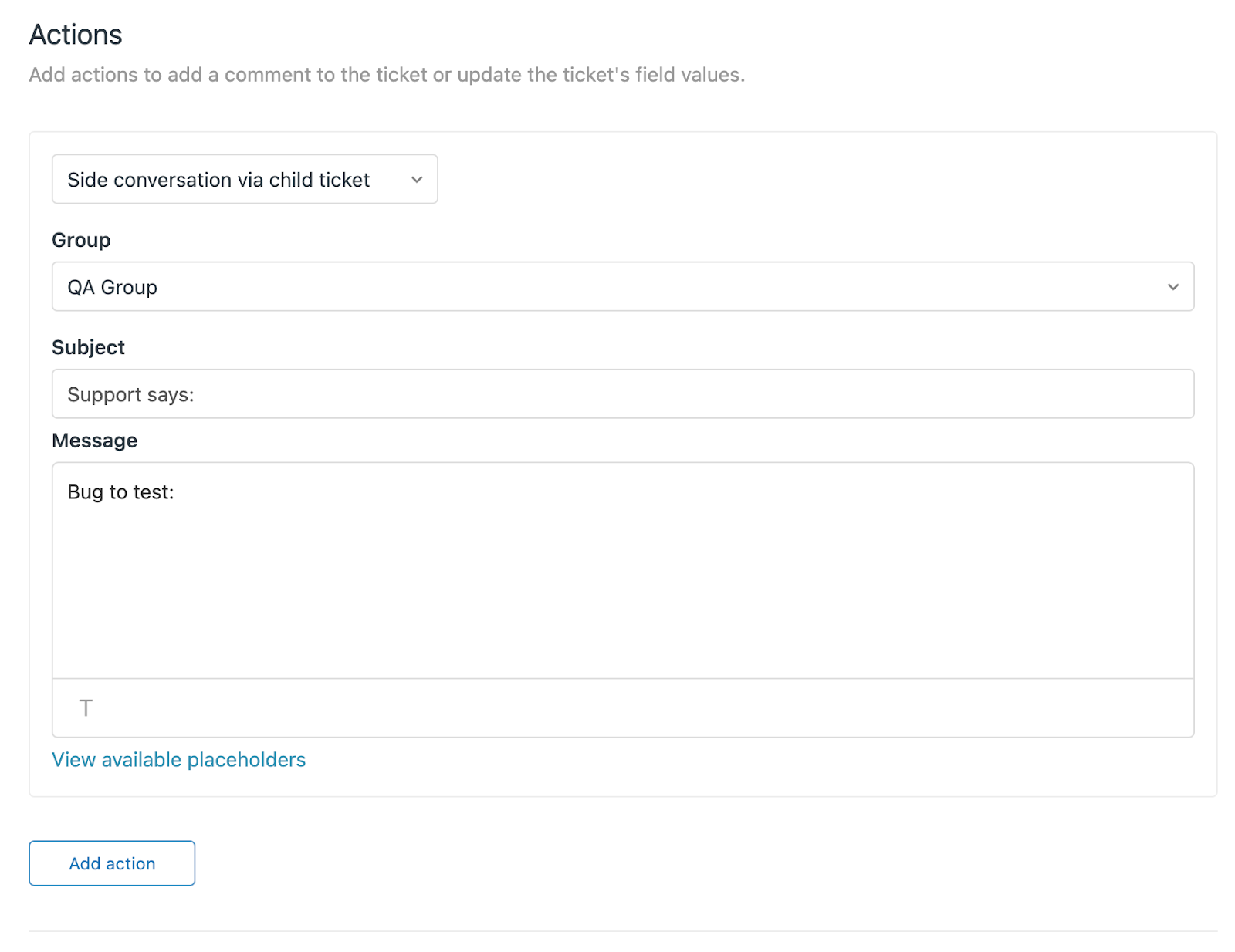
The macros action contains the name of the group, the subject, and the message body. You can label them respectively:
- Jira D (“Send to Developers”)
- Jira Q (“Send to QA”)
The comment will then appear only in the Jira instance to which the macro was applied, along with a note specifying the source.
What Are Side Conversations?
Side conversations are separate threads within a Zendesk ticket where agents can discuss a topic or resolution with a specific group of people. They’re available on Zendesk Suite Professional plans and above. Admins and agents use them to organize and channel information about a ticket without cluttering the main customer thread.
Side conversations can happen through multiple channels, including email, Slack, Microsoft Teams, and child tickets. This makes them flexible for reaching internal teams or third-party collaborators who may not even have access to Zendesk.
Your team can also use side conversations to segregate information when your system is in sync with multiple platforms at the same time.
Why Sync Side Conversations?
Setting up side conversation syncs takes some planning, but they pay off quickly when you’re managing cross-team communication.
Integrating side conversations with Jira provides the following advantages:
- Organize and manage information based on specific topics or concerns, keeping each team focused on what’s relevant to them.
- Ensure that only authorized users get access to specific pieces of information. For example, a QA team sees only QA-relevant discussions, not developer-side threads.
- Make it easier for users to filter out noise and focus on what matters to their workflow.
- Declutter the system and make it easier for support, development, and QA teams to stay productive.
Usually, you can configure side conversations to send via email or Slack messages. But with Exalate, you can convert the side conversations into Jira comments or structured information tables, giving your dev and QA teams the data directly in their preferred tool.
In addition to Jira, Exalate supports syncing side conversations for other systems like Salesforce, Zendesk, ServiceNow, Azure DevOps, Freshdesk, Freshservice, Asana, GitHub, and more.
How It Works: Routing Side Conversations with Macros and Triggers
The core logic involves creating Zendesk macros that tag tickets based on the intended Jira destination, then using Zendesk triggers and Exalate triggers to route the data to the correct connection.
Here’s the breakdown:
- Set up a connection between Zendesk and Jira D.
- Set up another connection between Zendesk and Jira Q.
- Create a macro called “Send to Developers”, and include the following in the Action:
- Create another macro called “Send to QA”, and include the following in the Action:
- Now create Zendesk triggers to add a custom tag when a new ticket is created in one of the Groups assigned above:
- The final piece is to create Exalate triggers based on those tags in the respective connections:
tags:dev
tags:qa
Now support agents can run macros and create side conversations to communicate with the Development and QA teams on separate threads. Nobody has to leave their preferred tool.
To watch a detailed explanation of how to set up macros and sync side conversations from Zendesk to two Jira instances, check out the video above.
Common Scenarios for Syncing Side Conversations
Here are a few practical examples of where this setup helps:
- L1-L2 Support Escalation: Your L1 support team in Zendesk handles initial customer contact. When a ticket needs deeper technical investigation, a side conversation can route it to your L2 engineering team in Jira, keeping the customer-facing thread clean.
- Multi-vendor or MSP Environments: If you’re managing integrations across multiple service providers, side conversations let you compartmentalize information. Each vendor’s Jira instance gets only the data relevant to them.
- Regulated Industries: When compliance requires you to control what information reaches which team, routing side conversations through Exalate gives you an auditable, scripted approach to data sharing.
Get Exalate on the Atlassian Marketplace. Need help syncing side conversations or have some other use case in mind? Book a call with our solution engineers.
Recommended Reading:
- Jira Zendesk Integration: Connect Jira and Zendesk Bidirectionally
- How to Sync Multiple Zendesk Tickets to a Single Jira Issue
- How to Synchronize a Zendesk Ticket to Multiple Jira Cloud Instances
- How to Append the Jira Issue Key to a Private Comment in Zendesk When the Issue is Closed
- ITSM Integration: Simplify Your IT Services Like Never Before