This article is written by Mariia Onyshchenko, Product Marketing Manager at Exalate.
Acquisition Is Done, Now What?
One of the ways to unlock fast growth (and a pretty effective one at that) is to acquire another company. On paper, everything looks perfect: you’ll now be able to deliver 54% more, come very close to eliminating technical debt, and give more love and attention to your existing customers with this new injection of resources. But there is a “but.”
According to PwC’s M&A Integration Survey, only 14% of respondents reported achieving significant success with their merger and acquisition integration efforts (How to Achieve Successful M&A Integration: Phases & Challenges).
I’d bet you wouldn’t want to be among that 86% who fail.
What Are We Dealing With
The success of the merger depends on many things. And let’s leave the planning and execution of M&A to the experts.
However, during my 9+ years at Exalate, I saw many cases where companies would come to us at various stages of their M&A with very similar challenges:
Our teams are disconnected.
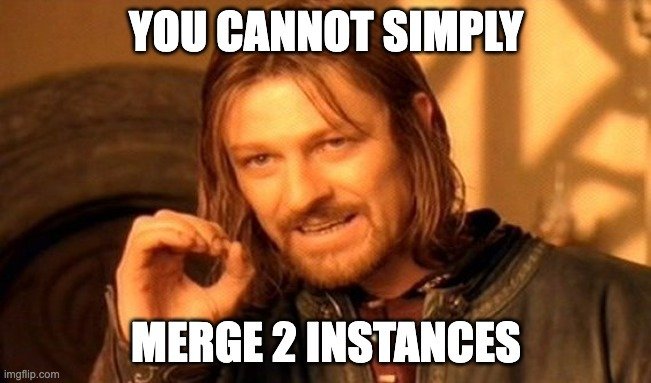
They use different task management tools, or they use the same tools, but we cannot simply merge the two; we have different processes and ways of working, and (insert your 17 more valid reasons).
They need an easy way to pass on work and the necessary context to make sure that the work will be picked up and completed.
Data is scattered across systems. We don’t have a single source of truth.
Looking across the hundreds of conversations we’ve had with customers and prospects dealing with M&A, there’s a pattern that repeats itself almost every time: the acquired company’s teams resist switching platforms, historical data is too complex to migrate cleanly, and vendor relationships force multi-tool environments that were never meant to be “temporary.”
In this article, I want to talk about how a synchronization solution like Exalate can make your life after M&A easier:
- The 3 main productivity killers in M&A integrations
- How synchronization tools solve communication bottlenecks
- Why full system merges can be riskier than you think
- Handling regulatory compliance and security during integration
- The ROI math behind sync tools
- Best practices for implementing synchronization in your merger
- Frequently asked questions about M&A integration
Why Can It All Fail?
I don’t have to be an expert to state the obvious: two companies are never exactly the same.
They have their own processes and tools, and when these two worlds collide, the loss of productivity is unavoidable. But it doesn’t mean that you cannot minimize it.
Now, next to the planned work both teams have, they have to add more to their workload, because they have to allocate time to understand each other and how they can work together.
That’s why it’s essential to ensure that communication paths are easy and natural.
Communication Challenges
Think of it this way. Imagine you’re a support engineer. The customer you’re assisting has an issue with a database. You’ve seen a similar problem many times, and every time you had to come up with a workaround.
But last week, your managers announced that in the “new part of the company,” there are engineers who have the experience and the knowledge to permanently fix the issue!
Now, you can go about it two different ways.
Scenario 1
You reach out to your manager and ask who these people are, and who is available right now to pick up your issue.
You wait for a response from your manager (it can take from 2 hours to two days). Customer asks for an update, you answer.
After you have the contact information of the DB engineer, you reach out to Mike (his name is Mike) over email, or, let’s be more in the loop with time, over Slack, providing him all the context you have from the ticket.
Mike asks a couple of clarification questions. You go back to the ticket and ask your customer. Mike gets to work. You update the customer via ticket. Mike delivers a fix in 1 hour. (Even I am impressed, well done Mike!)
You come back to the ticket and provide the steps that you got from Mike to the customer.
Customer tries, but something isn’t quite right. A bit more back and forth in the Mike<>you<>customer circle, and the ticket is closed after 5 days.
Customer thanks you, but does mention that they expected a faster turnaround.

Source: https://blogs.brighton.ac.uk/careers/2019/03/05/employers-recruiters-vice-deputy-managing-graduate-hr-coordinators-what-are-they-on-about/
Introducing scenario 2, where we add a synchronization solution to the mix
You escalate (or should I say “exalate” 😏) your ticket to the DB engineers’ Jira instance. An available engineer picks it up. (Hello again, Mike!)
He asks a couple of clarifying questions, which are synced back to your ticket. (In the meantime, please have a coffee break. I am sure you’re exhausted after I made you work so hard in the previous scenario.)
The customer sees the questions from Mike and replies right away. Mike estimates that it’ll take him about 2 hours to fix the issue, so he lets the customer know.
Mike finishes the fix in just 1 hour (we’re all still very impressed, Mike!) and explains how to fix the issue to the customer. The customer is absolutely delighted!
- The issue he reported was worked on within just a couple of hours.
- They were informed all the way through the process.
- And even got the fix earlier than expected.
He’s so happy with this turnaround that he leaves a very positive review on G2 and even agrees to a joint case study. And maybe expansion, but we’ll see.
I mean, scenarios may vary, but I hope you get the gist.
This communication challenge may cost you and Mike 2 extra hours at the very least. Not to mention the customer, who could have gotten his fix 4 days earlier.
When Manual Workflows Hit the Breaking Point
The Mike scenario above is hypothetical, but the pain is very real. Across our conversations, manual data entry after M&A shows up as one of the most consistent productivity killers, and the numbers are worse than most people expect.
One managed security services provider quantified it: 14 hours per week wasted on manual ticket copying between their system and their clients’ systems. That’s nearly two full working days, every single week, doing nothing but copy-paste.
A subsidiary of a major industrial equipment manufacturer described their vendor escalation process as “very, very manual, where they create a ticket in our system, and then it’s manually copied and pasted into each other’s systems.” And when agents went home for the day? Information transfer simply stopped. Dead time. Incidents sat unresolved until the next shift started.
Scale makes it even worse. One user told us directly, “Come September, we’ll have a much larger customer going live on the software, and that will generate a significant support workload. We just wouldn’t be able to create tickets manually.” Another company, after 4 acquisitions in 2 years, found that each new acquisition brought a new ticketing system, and the manual bridging simply couldn’t keep up.
And then there’s the duplicate entry problem. One integration partner described maintaining “double systems manually, entering the same tickets in both Jira instances.” Errors creep in, data gets out of sync, and overnight, nobody’s checking email to catch incoming updates.
The DIY route? Just as painful. One systems integrator tried building custom webhook and API integrations and reported: “It took me so much time, but I moved nowhere.” Another company spent 5 years building bespoke middleware integrations, only to accumulate technical debt they now desperately want to shed.
Data Consolidation
Another villain in the story is the fact that you now have two sets of data.
And you need to get all the necessary data into one dashboard.
Source: https://seattledataguy.substack.com/p/ten-of-the-funniest-data-memes
I’ve seen companies take different approaches to solving this issue. There are many ways and tools to make this work. I have dealt with many companies that came to us to address data consolidation problems.
And if you have already invested in the synchronization tool to make sure that the entire team is aligned and has all the necessary context, why not use the same tool to also solve data accessibility and visibility issues?
Here’s how you can do it.
Some prefer to synchronize everything happening in the remote instance, essentially cloning all the team’s work from their system into yours. This way, you can create enhanced, more comprehensive reports based on all the synchronized data.
Another approach I’ve seen is more selective: only certain outcomes get synchronized. For example, there might be a custom field called “outcome” that, once filled in, automatically syncs to the management Jira instance.
This keeps the synchronization focused on just the essential information that leadership needs to see.

Consolidate data from ITSM and project management tools to improve reporting and visibility, enabling smarter decision-making and unified cross-team insights.
Why a Full System Merge Can Be Riskier Than You Think
Here’s something I hear from customers all the time: “We just acquired a company, and we’d like to sync their projects into our Jira instance because we are not yet ready to merge into one Jira instance.”
And honestly? That “not yet ready” instinct is usually right.
A full system merger collapsing two Jira instances (or a Jira and a Zendesk, or whatever combination you’re dealing with) into one sounds clean and efficient on paper. In reality, it introduces a whole set of risks that can blow up your timeline and your team’s morale.
Here’s what we’ve seen go wrong, not in theory, but from real experiences with companies dealing with this right now.
Teams won’t give up their tools. Period.
This is the single most consistent pattern we see in acquisition after acquisition. One UK-based marketing agency needed to merge 3 separate Jira instances after acquiring multiple agencies, and each agency refused to budge.
A global sportswear brand, after being acquired, kept its own tooling while the parent company mandated ServiceNow.
At a global IT services company, different business units simply refused to standardize, regardless of what leadership wanted.
The logic is pragmatic: forcing a migration disrupts workflows, retrains entire teams, and risks losing the historical context embedded in the existing tool.
Historical Data is Where Migrations Go to Die
Companies consistently discover, often too late, that full migration loses critical context. One company needed 500–600 tickets migrated with exact ticket ID preservation. Migration tools couldn’t do it.
Another company with 250,000 work items found that change history and resolution dates simply wouldn’t carry over due to platform limitations.
A marketing firm was surprised to learn that workflows don’t transfer at all; only raw data comes across flat and stripped of the relationships that made it meaningful. Epics, stories, parent-child hierarchies? Gone.
Timeline Pressure Makes Migration a Non-starter
Several companies we’ve spoken with face tight deadlines where a full migration simply can’t be scoped in time. One company’s ServiceNow licenses expired in three months, making a phased sync-then-migrate approach the only viable path.
Another had 3 weeks before contract expiry with 70,000 tickets, not enough time for a proper migration, even if they wanted one.
Multi-tool Environments Are Permanent, Not Transitional
Here’s the pattern that surprises people the most: after an acquisition, companies almost never end up on a single tool. Vendor relationships, team preferences, regional compliance requirements, and cost all push toward a sustained multi-tool environment.
One company acquired by a large multinational needed to sync with the parent’s systems while keeping their own, not as a transition, but as the permanent operating model.
A fulfillment company that acquired 4 companies in 2 years needed customer support consolidated in Salesforce, while some teams stayed in Jira or Freshdesk.
Sync isn’t a crutch. It’s the architecture that matches the operational reality.
Slow-walk Live Migration
If you want to take data consolidation further, consider live migration. The concept is very simple: teams use their own environments, and synchronization runs in the background. And then when the time is right, you just abandon one of the tools.
What Happens to Your Existing Data During System Integration?
This is one of the first questions we get from companies evaluating synchronization as part of their M&A plan. And the answer is: nothing bad happens if you plan it right.
With a sync-based approach, your existing data stays exactly where it is. Nothing gets moved, overwritten, or deleted. The sync tool creates mirrored copies of the data you choose to share, keeping the originals untouched in their source system.
This means you can start syncing new tickets and items immediately while deciding what to do with historical data at your own pace. Some companies choose to backfill historical data. Others decide that only new items from the acquisition date onward need to be synced.
The beauty of this approach is that it’s reversible. If something doesn’t look right, you pause the sync, adjust your rules, and try again. Compare that to a full migration, where a mistake can mean weeks of cleanup.
Can You Integrate Systems Without Disrupting Daily Operations?
Short answer: yes, that’s the whole point.
With a two-way sync, both teams continue working in their own environments as if nothing changed. The sync runs in the background, and the only difference is that now relevant data appears in both systems automatically.
Our customers love this approach because it’s the most flexible and foolproof. Not to mention, the least stressful for IT and management teams. No migration weekends, no system freezes, no retraining. Teams wake up on Monday, and their tickets are synced. That’s it.
Handling Regulatory Compliance and Security
Let’s quickly consider another very probable plot.
A US-based enterprise called “American Gulls” acquired an EU-based start-up “European Frogs”. GDPR suddenly becomes very real.
You can dive headfirst into a bottomless pit of regulations, or you can use a workaround – a sync tool that makes sure that only necessary data is shared via secure channels and with proper data residency.
Why Compliance Is the Silent Deal-Breaker in M&A
Here’s what keeps compliance officers up at night after an acquisition: suddenly, you have two different data environments, potentially in two different jurisdictions, with two different sets of rules about what data can go where. And the clock is ticking.
This isn’t theoretical. In our conversations with companies, compliance and security concerns show up in over a third of all M&A-related calls. And the concerns are very concrete.
Data residency drives multi-instance architectures. One enterprise client migrating to Jira Service Management needed multi-site sync specifically because of data residency requirements. A technology company runs 4 separate Zendesk instances: APAC, China, Europe, and the Americas, specifically for data protection compliance.
These aren’t companies that chose to be complex. Regulations made them complex. They don’t want one centralized system; they need regional separation with controlled sync.
Government and defense regulations create hard stops. One division of a large industrial conglomerate faces stringent regulations; even screen-sharing during a demo could expose restricted data.
They require Master Service Agreements and technical review board approval before any integration tool touches their systems. Another company working on federal election systems emphasized that “security and compliance are absolutely critical”; no flexibility.
Security reviews add weeks to timelines. One major sports organization halted the deal when they discovered that the integration tool required full Jira admin access; their Head of Security needed to review Trust Center documentation before even scheduling a demo.
How Exalate Addresses Compliance in Cross-Border M&A
A synchronization (or integration) solution like Exalate addresses these concerns head-on:
Selective data sharing. You control exactly which fields sync and which don’t. Personal customer data that should stay in the EU instance? It stays there. Only the ticket summary and status sync to the US team, which is all they need to manage the work anyway. For instance, healthcare organizations can filter protected health information at the sync level, ensuring that sensitive patient data never leaves the provincial system.
Data residency options. Exalate’s architecture means each side of the connection operates independently. The EU data stays on the EU infrastructure. The US data stays on US infrastructure. The sync only passes the data you’ve explicitly scripted to flow between them.
Encryption and security. Data in transit is encrypted using TLS 1.2+, and Exalate is ISO 27001 certified. No passwords are stored; only OAuth tokens and API credentials specific to each platform.
One financial services client told us they avoided €1.3M in potential GDPR violations simply because their sync tool kept EU customer data in EU systems while still giving US teams the visibility they needed.
Real-life Case
My favourite case is DPG Media. When they rapidly grew from 2,000 to 8,000 employees through acquisitions, they faced a classic M&A challenge: their newly acquired company, Medialaan, used Zendesk while DPG used Jira.
One IT employee spent hours daily manually copying customer tickets between systems – a massive productivity drain that left issues loose and untracked. After trying automation tools, they realized that they needed something more robust.
After evaluating a few other options, they implemented Exalate.
The results were immediate: the IT employee who had been doing manual data entry was freed up to become a Product Owner, now managing livestream products that bring breaking news to millions.
In this case, the synchronization tool didn’t just connect systems; it freed human potential, turning mind-numbing manual work into resources ready to address what the organization needed the most at that moment.
ROI Math: The Cost-Benefit Analysis of Sync Tools in M&A
The ROI math is surprisingly simple: DPG Media saved one full-time employee’s salary (€60,000+) by eliminating manual data entry. Add the 45x faster ticket resolution (that’s 4 days saved per ticket × 100 tickets/month = major customer satisfaction gains), plus the avoided cost of maintaining duplicate systems for 18-24 months while you “figure out integration.”
One mid-size tech merger calculated its two-way sync investment paid for itself in just 6 weeks through productivity gains alone.
Case Study: Learn how DPG Media boosted productivity and smoother workflows with Exalate.
How Do You Measure Integration Success Beyond Productivity Metrics?
Productivity is the obvious metric, but smart M&A teams track more than that:
Employee satisfaction. Are the acquired team’s employees still happy? Are they still here? If you’ve forced a tool migration on them, survey results tend to drop. If they’re still working in their preferred tools, that friction disappears.
Customer experience scores. Track CSAT and NPS before and after the integration. If customers notice the merger (in a bad way), your integration isn’t working.
Data accuracy. How many duplicate tickets exist? How many tickets fell through the cracks? A sync tool should drive these numbers toward zero. One integration partner described maintaining “double systems manually” before Exalate; that’s exactly the kind of error-prone duplication you’re eliminating.
Time to resolution across teams. Not just within one team, but across the newly merged organization. If the acquiring team can now tap the acquired team’s expertise (like Mike’s database skills), resolution times should improve.
Speed to first cross-team collaboration. How quickly after the acquisition did the two teams start working together on actual tickets? With a sync tool, this can happen within days. Without one, it often takes months.
Best Practices for Implementing Synchronization in Your M&A
Over ten years and hundreds of M&A-related implementations, we’ve seen what works and what doesn’t.
Here’s what separates the smooth integrations from the painful ones.
1. Start Before Day One
Don’t wait until the deal closes to think about integration. The best outcomes happen when teams evaluate their tooling landscape during due diligence. Identify which systems overlap, which are unique, and where the communication gaps will be.
2. Prioritize Which Systems to Integrate First
Not everything needs to sync on day one. Start with the highest-impact, lowest-risk connections. In most cases, that means:
First, connect the customer-facing systems (support tickets flowing between teams). This is where your customers will first feel the impact of the merger, so get this right immediately.
Second, connect project management and engineering tools. This enables cross-team collaboration on product work.
Third, handle reporting and dashboards. Once the data is flowing, consolidate it into unified views for leadership.
3. Respect Each Team’s Way of Working
The biggest mistake I see in M&A integrations? Forcing the acquired team to adopt the acquiring company’s processes overnight. It never works. We see it constantly: different business units simply refuse to standardize, regardless of executive mandates. And they’re right to push back. Let them keep their tools, their workflows, their field names. Use the sync tool to translate between the two worlds.
4. Handle Different Data Formats Gracefully
The acquired company uses “P1/P2/P3” for priority. You use “Critical/High/Medium/Low.” Their “Bug” is your “Defect.” Status and field mapping chaos is one of the most common pain points we hear about. One manufacturing company described constant confusion because “Resolved” on one side didn’t mean the same thing as “Done” on the other.
This is exactly what sync scripting is built for. Map values between systems so each team sees data in their own language. With Exalate, you can use Groovy-based scripts or the AI-powered Aida assistant to set up these mappings. Aida lets you describe what you want in plain English, and it generates the working configuration.
5. Use Triggers to Automate the Flow
Don’t make people remember to “sync this ticket.” Set up triggers based on conditions: any Zendesk ticket with the tag “escalation” automatically creates a Jira issue in the engineering instance.
Any Jira issue moved to “Done” automatically updates the corresponding Zendesk ticket status to “Solved.”
Automation removes the human bottleneck and eliminates the “dead time” that happens when agents go home, and manual processes stop.
6. Start Small, Scale Fast
Begin with a pilot. Pick one team, one connection, maybe 50–100 tickets. Validate that the sync works correctly.
Then expand. The growth pattern we see from our customers is almost always the same: start with 1–2 connections, grow to 3–5 in the first half-year, and often reach double digits by year-end.
Exalate’s architecture makes it easy to add new connections and platforms without rebuilding anything.
7. Don’t Underestimate the “Temporary to Permanent” Pattern
Here’s something to plan for: the sync you set up “temporarily” during the M&A will very likely become permanent. We see this pattern consistently. Once workflows are built around the tool and teams are working smoothly, there’s no business case to rip it out.
The cost of removing the sync and reintroducing manual processes or forcing a migration is almost always higher than just keeping the sync running.
Plan for this from the start. Set up your sync as if it’s permanent with proper naming conventions, documented rules, and clean scripting so you won’t have to redo it later.
8. When Should You Consider Custom Integration vs. Off-the-Shelf Solutions?
Go custom only when you have truly unique requirements that no existing tool can handle, and even then, think twice.
We’ve spoken with companies that spent years building bespoke middleware integrations, accumulating technical debt they desperately want to shed.
One tried building a webhook and API integrations and reported: “It took me so much time, but I moved nowhere.”
Off-the-shelf solutions like Exalate cover the vast majority of M&A sync use cases out of the box. And because Exalate offers deep scripting capabilities on top of its standard configuration, you get the flexibility of custom code with the stability and support of a managed product.
9. Ensure Scalability Post-Merger
Your sync solution should grow with you. After the first acquisition, there might be a second. And a third.
One fulfillment company acquired 4 companies in 2 years, each bringing its own ticketing system. Exalate’s network architecture supports hub-and-spoke, peer-to-peer, and even complex multi-platform topologies.
Adding a new company’s tools to your sync network is as straightforward as setting up a new connection.
With Exalate’s unified console, you can manage all your connections from a single dashboard and visually map how your instances are interconnected. This becomes invaluable as your integration network grows from 2 connections to 50.
Let’s Sum Up
Of course, we just scratched the surface. To be able to say “our merger was a huge success,” one synchronization tool (even one as powerful and flexible as Exalate) is not enough. And it won’t be a silver bullet. You still need strong leadership, clear communication, and cultural alignment.
But it can eliminate the technical friction that often derails even the best-planned post-merger integrations.
In the early stages of your M&A, it can become a real lifesaver to ensure:
Teams keep using familiar tools while having access to all necessary context, and can escalate issues in a simple way. This isn’t just a nice-to-have across hundreds of conversations; tool preference is the single most consistent reason teams resist full migration.
A full system merge isn’t your only option. Keeping separate instances connected via sync is often safer, faster, and cheaper than forcing everyone into one environment. And it preserves what migration destroys: ticket IDs, change history, parent-child relationships, and workflows.
Management has good visibility into the data they need to move the needle and make strategic choices, without requiring every team to be on the same platform.
Data is shared securely and compliantly with scary abbreviations like GDPR. You control exactly what flows where and maintain proper data residency, something that matters especially when data residency requirements are the reason your architecture is multi-instance in the first place.
It scales as you grow. Today’s two-company sync becomes tomorrow’s multi-company network. We’ve seen customers grow from 1 connection to 50+. Each new connection eliminates more manual work and connects more teams.
As a result, it reduces the number of errors and duplicates, making the integration faster and smoother.
M&A Integration FAQs
What’s the difference between one-way and two-way sync in M&A contexts?
One-way sync sends data from one system to another without sending updates back. It’s useful for reporting: clone the acquired team’s data into your dashboards without affecting their workflow. Two-way sync keeps both systems in real-time alignment such that changes on either side are reflected on the other.
For M&A, two-way sync is almost always what you want for operational workflows, because both teams need to see updates and collaborate actively. One-way sync works well for data consolidation and management reporting.
What’s the ROI timeline for M&A integration tools?
Most companies using Exalate see payback within 4–8 weeks. The savings come from eliminating manual data entry (typically one or more FTEs worth of effort), faster ticket resolution (we’ve seen up to 45x improvements), and avoiding migration costs.
Based on implementation benchmarks from our partner network, typical setups take 20–60 hours: that’s days to weeks, not the months required for a full migration.
How do we measure integration success beyond productivity metrics?
Track employee satisfaction (especially on the acquired side), customer experience scores, data accuracy (duplicate tickets, dropped issues), cross-team resolution times, and time to first cross-team collaboration. The best indicator of a successful integration is when customers don’t notice the merger happened or notice it in a positive way through faster, better service.
When should we consider custom integration vs. off-the-shelf solutions?
Go custom only when your requirements are truly unique and no existing tool can handle them. We’ve spoken with companies that spent years building bespoke integrations only to accumulate technical debt. Platforms like Exalate cover the vast majority of M&A sync use cases with out-of-the-box connectors and deep scripting capabilities. You get the flexibility of custom code with the stability and support of a maintained product.
How do we ensure integration tools are scalable as the company grows post-merger?
Choose a tool with a network-ready architecture. Exalate supports hub-and-spoke, peer-to-peer, and multi-platform topologies, so adding a new company’s tools after a second or third acquisition is as straightforward as setting up a new connection. The typical growth pattern we see: 1–2 connections at launch, 3–5 by month six, and 5–50+ by year-end. One enterprise customer scaled to over 400 connections.
Want to see how Exalate can fit into your M&A integration plan? Book a demo with our team, and we’ll walk you through how other companies in your situation have set up their sync.
About the Author
Mariia Onyshchenko is a Product Marketing Manager at Exalate, where she has spent 10+ years (yes, she’s almost as old as Exalate, not literally 😉) helping companies navigate cross-tool collaboration challenges from M&A integrations to cross-company partnerships.
She has also led Exalate’s partner program and worked closely with hundreds of customers and partners across industries to solve complex synchronization use cases.
You can find more of her writing on the Exalate blog.