Data is the driving force behind the success of every organization. That’s why companies across industries are looking for advanced data management and integration solutions (along with models like Integration as a Service) to collect, store, manage, and analyze as much information as possible.
But here’s the problem: these data management platforms are usually not interoperable. You can’t exchange data between them without an integration solution. And this leads to information silos emerging between internal and external teams.
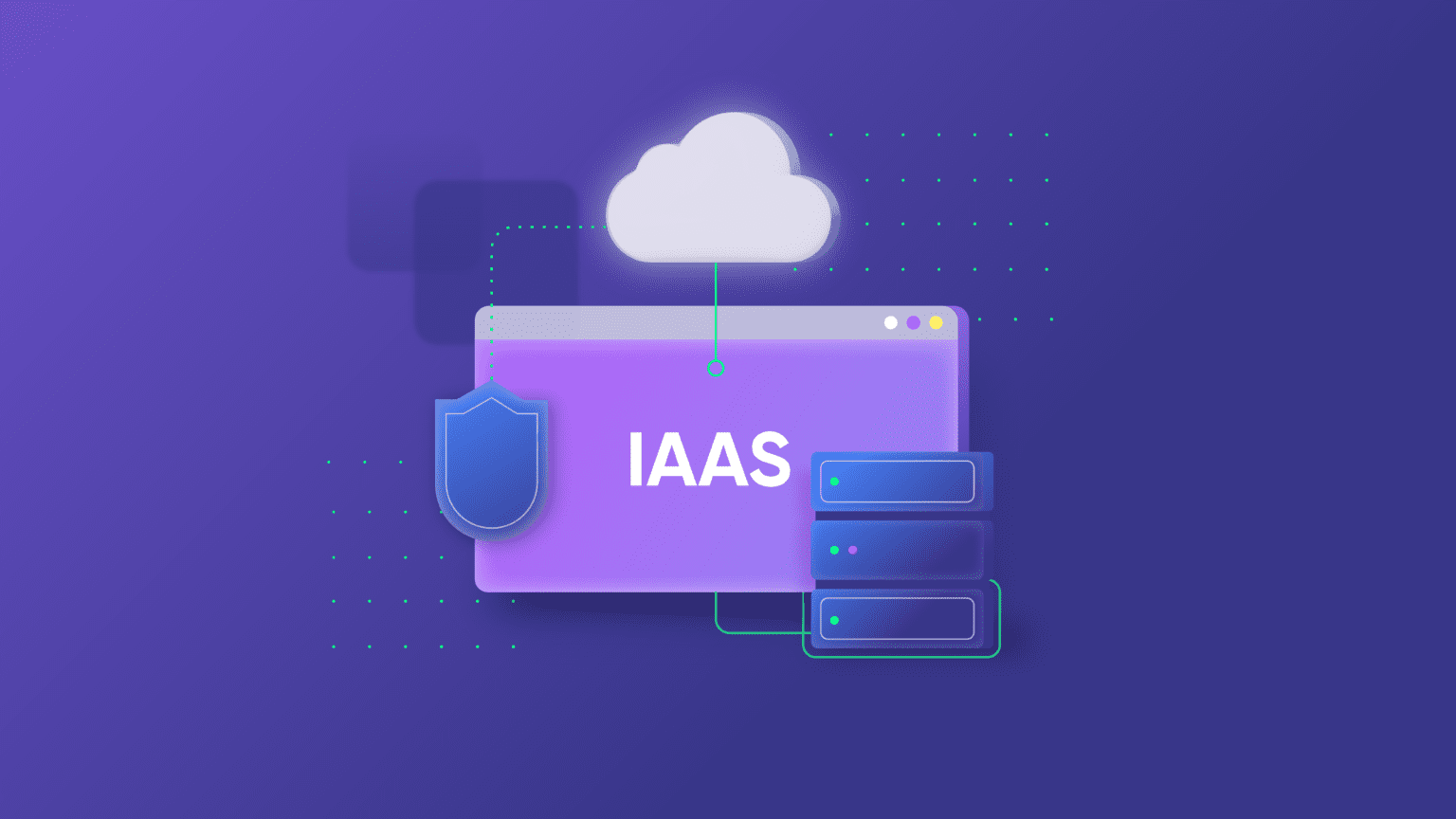
Companies now explore the Integration as a Service (IaaS) model for transferring data, comments, files, and other assets to address this problem.
Let’s explore the definition of Integration as a Service as well as the attributes, benefits, and challenges of using this delivery model.
Key Takeaways
- Integration as a Service (IaaS) is a solution delivery model that integrates data across multiple systems, with vendors handling security, maintenance, and functionality while you focus on configuration.
- IaaS differs from iPaaS in that IaaS provides ready-made integration solutions, while iPaaS offers development environments where you build integrations yourself.
- Common IaaS implementation models include cloud-based integration platforms, integration middleware, API-based integration, and data integration solutions.
- Core attributes of reliable IaaS tools include versatility across platforms, secure connectivity, AI-assisted configuration capabilities, scalable infrastructure, and responsive support.
- IaaS delivers measurable benefits, including cost savings of 40-60% compared to in-house integration, improved cross-company collaboration, real-time data synchronization, and faster decision-making.
- The future of IaaS involves AI-driven configuration recommendations, adaptive integration models, and low-code solutions that reduce technical barriers.

What is Integration as a Service (IaaS)?
The definition of integration as a service varies depending on who you ask. But the overall consensus is that Integration as a Service (IaaS, not to be confused with iPaaS) is a solution delivery model that integrates data across multiple data management systems.
Instead of approaching integration as a standalone part of data management, companies can now get the integration solution in one package (as a service). This means that users only need to configure the integration software for their specific needs, while the supplier handles the security, maintenance, and functionality.
What sets IaaS apart is the fully managed nature of the service. Organizations using IaaS reduce integration-related costs by 40-60% while accelerating time-to-value from months to weeks. Whether you’re an enterprise managing dozens of business applications or an IT service provider delivering solutions across multiple client environments, IaaS eliminates the technical complexity, unpredictable costs, and resource constraints that plague traditional integration approaches.
IaaS vs. iPaaS: What is the Difference?
People usually confuse IaaS with iPaaS. But the differences are clear.
For starters, IaaS means “Integration as a Service” while iPaaS means “Integration Platform as a Service”. Let’s break it down further.
Under the iPaaS model, you get access to an IDE for building and maintaining the integration solution on your own, completely autonomous of the vendor.
However, you will need in-house developers to build, configure, and maintain massive code bases for the integration to work. The iPaaS market grew by more than 23% in 2024, driven largely by AI adoption, no-code tools, and SaaS proliferation, according to Gartner’s 2025 analysis.
Conversely, the IaaS model gives you access to a ready-made solution for integration between different systems. The only thing you need to do is configure the solution to meet your specific needs. For simpler integrations, you might not even need to write any code to get things started.
Key differentiator: With iPaaS, you (or your system integrators) are responsible for maintaining integrations. With IaaS vendors, they take responsibility for integrations as a full service.
This includes not just the technology infrastructure but also the process transformation, removing bottlenecks and allowing teams to focus on business outcomes rather than maintaining connections.
Overall, iPaaS gives you more control over what you can build, but it introduces additional responsibilities for coding and maintaining anything you create. With an IaaS solution, you don’t need to bother yourself with maintenance because the vendor handles that side.
Common IaaS Implementation Models
IaaS solutions are cloud-based services that usually come as pre-built connectors like Zapier, Microsoft Power Automate, and Exalate.
They come in the following forms:
Cloud-based integration platforms provide a suite of features and pre-built connectors for standard applications and services. You can use these tools to integrate several systems without writing custom code.
These platforms typically include visual workflow designers, extensive connector libraries, data transformation engines, monitoring capabilities, and security frameworks that collectively enable both technical and non-technical users to build, deploy, and manage integrations.
Exalate, for example, supports platforms including Jira, ServiceNow, Salesforce, Azure DevOps, Zendesk, GitHub, Freshservice, Freshdesk, Asana, and custom connectors via its REST API capabilities.
Integration middleware provides an abstraction layer that allows communication between different systems. Under this IaaS framework, organizations can use the middleware as a buffer for protecting the core architecture from exposure.
This approach helps organizations bring forward existing investments while building a secure, scalable path to modern integration requirements.
API-based integration uses application programming interfaces (APIs) to establish interactions between different systems. APIs are the building blocks of application integration, providing a set of protocols and tools for building software and applications.
They’re essential for creating a connected ecosystem of applications and services, enabling real-time data exchange without the complications and delays inherent in manual processes.
Data integration solutions give companies access to advanced data transfer protocols for secure transmission. The features available in this model include data warehousing, ETL (Extract, Transform, Load) processes, and real-time data streaming.
This approach supports both batch processing for large-scale data migrations and continuous synchronization for operational systems.
How Does Integration as a Service Work?
To understand how IaaS works, let’s examine this Integration as a Service example.
The support team at Company A (MamaMia) wants to sync data with developers at Startup B (PapaMia). But the problem is that MamaMia uses Zendesk, while PapaMia uses Azure DevOps, and both of them insist on sticking with their respective platforms because of security concerns.
In this scenario, the only compromise is to employ reliable Integration-as-a-Service software to sync data from both organizations. By doing so, PapaMia and MamaMia outsource the integration problem to the IaaS solution provider, who now has to ensure the tool continues functioning without extended downtimes, security concerns, and reliability issues.
With that, MamaMia and PapaMia can automatically share data bi-directionally without using webhooks, scripts, and other less reliable integration methods.
The typical IaaS workflow follows this pattern:
- Discovery and mapping: The IaaS provider works with you to map out your service delivery landscape and identify the systems and processes that need to communicate.
- Prioritization: Integration of systems that have the most impact on your service delivery gets prioritized to kickstart your ecosystem.
- Automation: The provider automates the communication process, establishing the correct communication rules based on the processing logic you agree on.
- Monitoring: The result is a fully integrated ecosystem with real-time monitoring of communications. You can add any tool or service to the ecosystem, knowing it will work seamlessly with existing systems.
Core Attributes of a Reliable IaaS Tool
As with every industry, the IaaS sphere is becoming saturated with different solutions. After conducting thorough research, we’ve figured out what makes an IaaS solution dependable and foolproof.
Versatility
Any reliable IaaS solution should be flexible enough to sync data between different platforms. For instance, you should be able to use an Azure Integration as a Service solution to connect a service management platform like ServiceNow with Azure DevOps, or sync Jira work items with Salesforce cases.
This versatility will enable you to employ only one IaaS solution for all synchronization without spending on different ones for every unique scenario.
Look for solutions that support the platforms you currently use and those you might adopt in the future. Exalate, for example, supports Jira, ServiceNow, Salesforce, Azure DevOps, Zendesk, GitHub, Freshservice, Freshdesk, Asana, and offers custom connectors for specialized requirements.
Cost-effectiveness
Only use an Integration as a Service platform that saves your company money. Generally, IaaS platforms reduce how much you spend on workflow synchronization since you no longer have to build, test, manage, and maintain a unique solution in-house.
Research indicates that organizations using IaaS reduce integration-related costs by 40-60% compared to building and maintaining integrations internally.
According to McKinsey, 66% of enterprise software projects have cost overruns, making the predictable pricing of IaaS solutions particularly attractive.
At the same time, you need to look for affordable tools within your organization’s budget. Consider the total cost of ownership, including subscription fees, implementation costs, and ongoing support.

Calculate time and money savings from automated bidirectional sync.
Secure Connectivity
Data security is one of the main reasons companies are skeptical about using IaaS connectivity tools. When shopping for an IaaS vendor, always consider their track record with security. You should also check the access controls and encryption protocols they use for protecting user data in transit.
Some common security measures to consider include:
- Access tokens (JSON Web Tokens, Secure Shell Keys, etc.) for authentication
- Role-based access controls that determine who can access what data
- ISO certification that guarantees top-notch security measures to protect your data from threats and unauthorized access
- TLS 1.2 and 1.3 encryption for data in transit
- Multi-factor authentication for additional account protection
Exalate maintains ISO 27001:2022 certification and provides detailed security documentation through its Trust Center, where you can learn about information flow, security measures, and key components.
AI-Assisted Configuration
Modern IaaS platforms increasingly incorporate AI capabilities to simplify configuration and reduce the learning curve.
Look for tools that offer AI-assisted setup to help admins generate sync rules and automate integrations, speeding up connections between systems within the organization or across companies.
Exalate offers Aida, an AI scripting assistant that helps users quickly find answers and generate configurations. This reduces the time spent on manual configuration while ensuring accuracy.
Scalable Infrastructure
Find a tool that can grow with your company. Before adding an IaaS solution to your tech stack, always check if the available features can handle larger workloads as your company scales operations.
The average enterprise now uses 897 applications, with 46% of organizations using 1,000+ applications. Yet 71% of applications remain unintegrated or disconnected. Your IaaS solution needs to accommodate this reality and scale as your integration needs grow.
Doing so will help you prevent switching to a new interface to accommodate increasing demand and avoid frequent downtimes.
Responsive Support
When something goes wrong with the IaaS – an error occurs, a feature stops working, or a node goes down during data transfer – you’ll need to contact support to fix this issue as fast as possible.
If the IaaS provider’s support agents can address issues promptly, this will help you avoid bottlenecks and backlogs resulting from the integration. Look for providers that offer:
- Multiple support channels (email, chat, phone)
- Clear SLAs for response times
- Dedicated customer success managers for enterprise accounts
- 24/7 support for critical issues
Vibrant Community
The robustness of the IaaS vendor’s community will show you how far they’ve penetrated the market and how confidently people trust the product. Similarly, a vibrant community of users and experts will also provide you with solutions to problems from a fellow end user’s POV.
Community resources like forums, user groups, and shared scripts can dramatically accelerate your time-to-value with an IaaS solution.
Detailed Documentation
Some IaaS providers offer customization options for advanced use cases. Developers might also want to understand how your product’s infrastructure works to play around with it. To this end, any reliable IaaS solution must have the backing of extensive, detailed documentation.
Good documentation should include getting started guides, API references, use case examples, troubleshooting guides, and regularly updated content that reflects the latest features.
Challenges of Implementing IaaS
While IaaS offers significant advantages, organizations should be aware of potential challenges and how to address them.
- Data security concerns: The risk of data breaches and unauthorized access increases with sensitive information being in cloud-based services. Mitigate this by choosing providers with robust security certifications (ISO 27001:2022), end-to-end encryption, and regular security audits. Verify the provider’s security posture through their Trust Center or security documentation.
- Integration complexity: Despite the ease of use that IaaS promises, integrating different applications and systems can still be complex, especially when dealing with legacy systems or custom APIs. Each service provider uses different APIs, integration methods, and data formats. Look for IaaS solutions with pre-built connectors and AI-assisted configuration to reduce this complexity.
- Latency and performance: Real-time synchronization requires low latency and high performance. Prioritize IaaS solutions with proven infrastructure and clear performance SLAs. Ask for case studies or references from organizations with similar data volumes and synchronization requirements.
- Regulatory compliance: Compliance with various legal and regulatory frameworks is especially important for businesses operating in heavily regulated industries like healthcare, finance, or government. Look for IaaS providers compliant with all relevant industry standards and regulations (GDPR, PCI DSS). Regular audits and working with legal experts will help ensure the implementation meets all necessary requirements.
- Vendor dependency: When an organization becomes heavily reliant on a single vendor’s integration platform, switching to a different provider in the future may be difficult. Vendor dependency may result in high costs, limited flexibility, and reduced control over data exchange. Evaluate providers that offer data portability and have well-documented, standardized APIs.
IaaS Use Cases: Real-World Scenarios Across Industries
Companies and startups in various industries can use data integration as a service because of its versatility.
Cross-Company Development Collaboration
Case: A managed service provider (MSP) needs to coordinate bug fixes and feature requests between their internal development team using Jira and their enterprise client’s IT operations team using ServiceNow. Each organization requires visibility into the other’s work progress without granting direct system access.
Solution: An IaaS platform creates bidirectional sync between Jira and ServiceNow, automatically mapping work items, comments, attachments, and status updates. When the client logs an incident in ServiceNow, it automatically creates a corresponding work item in the MSP’s Jira instance. Status changes, comments, and resolution notes sync in real-time.
Real-world application: NVISO uses deep ticket integration between Jira and ServiceNow to connect with their customers, ensuring both parties have real-time visibility into ticket progress without manual updates or system access sharing.
eCommerce Data Synchronization
Case: An online retailer needs to share store data between their Shopify platform and Power BI for analytics, while also connecting to their CRM for customer insights.
Solution: IaaS connects Shopify with Power BI and the CRM, enabling automatic export of store data for analysis. Sales, marketing, product, and fulfillment teams access up-to-date customer activities instantly, enabling data-driven decisions without manual data exports.
Real-world application: eCommerce websites use IaaS solutions to export store data for further analysis, understanding consumer behavior and market trends in real-time rather than waiting for batch reports.
Healthcare Data Integration
Case: A healthcare network needs to integrate electronic health records (EHRs) with telehealth services, lab systems, and billing platforms while maintaining HIPAA compliance.
Solution: IaaS provides secure, compliant integration between healthcare systems, enabling a unified view of patient data across care delivery points. Providers access complete patient histories regardless of which system originally captured the information.
Real-world application: Healthcare professionals and pharmaceutical companies used IaaS solutions to sync data, resulting in delivering COVID-19 vaccines in record time through coordinated information sharing.
Multi-Tool Support Escalation
Case: A software company’s support team uses Zendesk for customer tickets, but complex technical issues need to be escalated to the development team using Azure DevOps. Support agents waste time copying information between systems, and developers lack context about the customer impact.
Solution: IaaS creates automatic escalation workflows. When a Zendesk ticket meets certain criteria (severity level, keyword triggers, or manual escalation), it automatically creates a work item in Azure DevOps with full ticket context, customer information, and conversation history. Updates flow bidirectionally, so support agents see development progress without leaving Zendesk.
Real-world application: This pattern eliminates the silos between customer-facing and technical teams, reducing resolution times and improving customer satisfaction through faster, more informed responses.
MSP Client Integration
Case: A managed service provider supports 50+ clients, each with their own ITSM tools (ServiceNow, Jira Service Management, Freshservice, Zendesk). The MSP needs to receive tickets from all clients in their internal system while allowing clients to maintain their preferred platforms.
Solution: IaaS provides multi-tenant integration where each client connection operates independently. Tickets flow from client systems to the MSP’s platform with appropriate field mapping for each client’s unique configuration. The MSP maintains a unified view of all client work while clients see only their own tickets.
Real-world application: MSPs and MSSPs use IaaS to scale their client base without proportionally scaling their integration overhead, maintaining service quality across a diverse client ecosystem.
Historical Data Archival
Case: A media company needs to archive decades of historical data to reduce demands on their main servers while maintaining searchability and accessibility.
Solution: IaaS facilitates the migration and synchronization of historical data to cloud storage, maintaining connections to active systems for retrieval when needed.
Real-world application: The New York Times used Amazon’s Elastic Compute Cloud to archive historical data within 48 hours, a process that would have taken weeks without cloud-based integration services.
In general, you can find an application for IaaS solutions if you are in a data-centric sector, which is every sector in the modern world.
Benefits of Integration as a Service
Here are reasons why you should consider using IaaS solutions:
To Keep Your Integrations Secure
Moving data between systems could introduce potential security vulnerabilities that hackers could exploit to compromise your data.
Fortunately, IaaS solutions use advanced encryption protocols to ensure your data doesn’t fall into the wrong hands. Users within your network will also have to generate access tokens for using your instance. Most importantly, IaaS solutions use role-based permissions to determine who can access what data.
The best IaaS providers invest significantly in implementing robust security measures such as encryption, authentication, and intrusion detection systems. They maintain certifications and adhere to industry-specific compliance standards, ensuring that businesses can meet regulatory obligations while integrating their systems.
To Move Data between Platforms Seamlessly
Network administrators and project managers can control workflow integration across independent teams (or companies) with the help of IaaS solutions. These tools provide customization options that you can tweak to your business needs.
For instance, you can configure sync rules to automate the transfer of information from Jira to Salesforce. You can also set triggers with specific instructions regarding the fields and attachments to transfer in both directions. With AI-assisted configuration tools like Aida, generating these rules becomes faster and more accurate.
To Improve the Customer Experience
Using IaaS tools to establish seamless team connectivity will improve the user or customer experience.
Here’s how: the IaaS solution connects all the teams involved in the process (support, sales, development, QA, design) to ensure everyone is working from the same unified view. By eliminating the formation of silos, these teams can share information without friction and delays.
As a result of this close collaboration, the company can gather insights and feedback from users in order to improve its products and services. And with all this data, spotting emerging trends in user behavior becomes easier.
To Save Money
IaaS solutions help companies save money, which they could have spent on building their own integration system from scratch, as well as maintaining it. So instead of hiring developers to build an integration solution in-house, you could find an IaaS tool that interconnects multiple service management systems.
Research shows that self-maintained integrations consistently exceed the investment in third-party integration providers by 40-70%. When you factor in the hidden costs of maintenance, updates, security patches, and personnel time, IaaS typically delivers significant ROI.
Of course, IaaS solutions will cost you money; you’ll need to pay for a subscription (fixed, pay-as-you-go, or pay-as-you-use). But this cost pales in comparison to what you’ll spend on building a fully-fledged, reliable tool.
Calculate time and money savings from automated bidirectional sync.
To Make Decisions Faster
IaaS tools improve the speed of decisions by providing a universal, unified source of truth. You can synchronize data from multiple applications to one central platform, from which you can extract data for further analysis.
Insights from this analysis will help organizations make business-critical or life-changing decisions faster, as seen in the example of Big Pharma and COVID-19 vaccines. With real-time data synchronization, you’re always working with the most current information rather than waiting for batch updates.
The Future of Integration as a Service
With a better understanding of the current state of IaaS, time to look ahead.
IaaS vendors will focus more on creating user-friendly tools with a flat learning curve. This trend aligns with the current increase in preference for easy-to-use, low-code (possibly no-code) solutions. The iPaaS market is projected to reach $78.28 billion by 2032, growing at a CAGR of 25.3%, driven by SaaS proliferation, no-code platform democratization, and increasing organizational complexity.
Moving on from custom scripts, middleware, adapters, ETL tools, and ESBs (enterprise service bus) might take time, but it’s inevitable. Users will opt for more flexible IaaS alternatives to automate workflow integration across several platforms.
AI will play a massive role in this transformation. Future IaaS tools will use machine learning algorithms to recommend integration configurations to guarantee the best results.
AI tools will also clean up your data and handle other redundant tasks involved in integrations. Integration Operations (IntOps) has emerged as a new paradigm, treating integration as a continuous operational capability rather than a project-based task.
With AI driving future iterations of IaaS platforms, we might see a broad implementation of adaptive IaaS, an IaaS model that can be customized or adapted to work with multiple platforms simultaneously. This innovation will reduce the current trend of companies needing 10 to 100 integrations geared towards different goals.
For organizations pursuing AI transformation, integration is no longer a supporting capability; it’s become a strategic enabler that determines whether AI initiatives deliver value or stall in perpetual pilot mode. Future-built companies plan to spend 26% more on IT and dedicate up to 64% more of their IT budget to AI in 2025, with much of this investment going toward integration infrastructure that can support AI at scale.
Conclusion
The Integration as a Service model has transformed how businesses manage integrations. This delivery model also offers user-friendliness and cost-effectiveness. Adopting an IaaS solution in your workflow will eliminate silos and improve collaboration between teams, externally and internally.
Implementing IaaS tools gives you access to low-code integration solutions that connect Jira, Salesforce, ServiceNow, GitHub, Azure DevOps, Zendesk, Freshservice, Freshdesk, Asana, and other service management platforms. You can use them for bi-directional syncs in real time.
FAQs
What is Integration as a Service (IaaS)?
Integration as a Service is a cloud-based delivery model that connects data across multiple data management systems, applications, and organizations. Unlike building integrations in-house, IaaS provides ready-made solutions where the vendor handles security, maintenance, and functionality while you configure the sync rules for your specific needs. Organizations using IaaS typically reduce integration-related costs by 40-60% compared to in-house development.
What’s the difference between IaaS and iPaaS?
IaaS (Integration as a Service) provides fully managed, ready-to-use integration solutions where the vendor handles all maintenance and support. iPaaS (Integration Platform as a Service) gives you a development environment to build and maintain integrations yourself, requiring in-house technical resources. With IaaS, you focus on configuration; with iPaaS, you’re responsible for development, testing, and ongoing maintenance.
How do IaaS solutions handle data security?
Reliable IaaS solutions implement multiple security layers, including end-to-end encryption (TLS 1.2 and 1.3), JSON Web Tokens for authentication, role-based access controls, and multi-factor authentication. Look for providers with ISO 27001:2022 certification and compliance with industry standards like GDPR. Exalate provides detailed security documentation through its Trust Center.
What platforms can IaaS solutions integrate?
Modern IaaS solutions support a wide range of platforms. Exalate, for example, integrates Jira, ServiceNow, Salesforce, Azure DevOps (both Server and Service), Zendesk, GitHub, Freshservice, Freshdesk, Asana, and other platforms. Many providers also offer custom connectors or REST API capabilities for specialized systems not covered by pre-built integrations.
How much does Integration as a Service typically cost?
IaaS pricing varies based on the number of connections, data volume, and support level required. However, IaaS is typically 40-70% less expensive than building and maintaining integrations in-house when you factor in development time, ongoing maintenance, security updates, and personnel costs. Most providers offer subscription models (fixed, pay-as-you-go, or usage-based).
Can IaaS handle bidirectional synchronization?
Yes, bidirectional sync is a core capability of most IaaS solutions. This means changes made in either connected system automatically sync to the other. For example, if you connect Jira and ServiceNow, updating a work item in Jira will reflect in ServiceNow, and vice versa. You can configure sync rules to determine which fields sync in which direction and under what conditions.
How long does it take to implement an IaaS solution?
Implementation time varies based on complexity, but IaaS dramatically accelerates time-to-value compared to custom development. Simple, standard integrations can be operational within hours or days. Complex, multi-system integrations with custom field mapping and workflow rules typically take weeks rather than the months required for in-house development. AI-assisted configuration tools further reduce setup time.
Is Exalate suitable for cross-company integrations?
Absolutely. Solutions like Exalate are specifically designed for scenarios where two separate organizations need to share data between their systems without granting direct access. Each organization maintains control over their own sync rules and data, determining exactly what information flows in each direction.
How does AI improve Integration as a Service?
AI enhances IaaS in several ways: AI-assisted configuration tools (like Exalate’s Aida) help generate sync rules and answer documentation questions quickly. Machine learning algorithms can recommend optimal integration configurations, identify potential sync conflicts before they occur, and automate data cleaning and transformation. As AI capabilities mature, expect more intelligent error handling and predictive maintenance.
Recommended Reads: