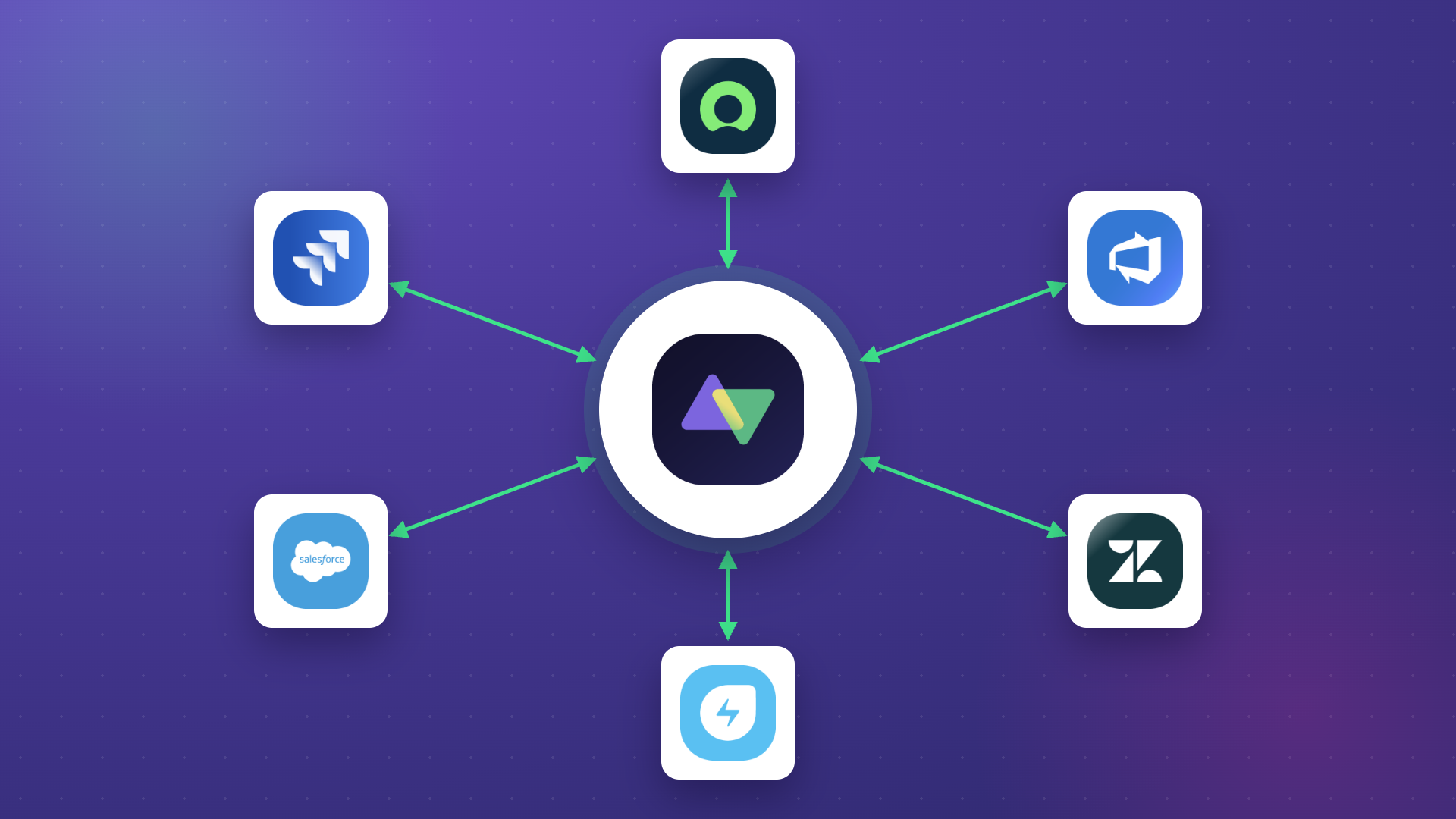

Software teams working on different platforms face a familiar challenge: keeping everyone aligned without forcing them into a single tool. Azure DevOps excels at project management and CI/CD, while GitHub dominates version control and open-source collaboration. When your organization uses both, you need integration that keeps work synchronized without creating bottlenecks.
This guide explains how to integrate Azure DevOps and GitHub, what features matter most when choosing integration tools, and how to avoid common pitfalls that create more problems than they solve.
Key Takeaways
- Azure DevOps and GitHub serve different team needs, so integration lets you use both without creating information silos
- Bidirectional sync ensures changes made in either platform are automatically in the other
- AI-assisted integration configuration reduces setup time from weeks to hours
- Role-based sync control prevents teams from depending on each other’s workflows while maintaining visibility
- Real-time triggers control exactly when work items sync based on status, labels, assignees, or custom conditions

Why Integrate Azure DevOps and GitHub
Azure DevOps
Azure DevOps provides comprehensive DevOps capabilities: project management, version control, CI/CD pipelines, test management, and artifacts. It integrates tightly with Microsoft’s ecosystem and supports both agile and waterfall methodologies.
Teams using Visual Studio or Eclipse benefit from native integration, and the platform scales from small teams to enterprise deployments.
You can deploy Azure DevOps in the cloud (Azure DevOps Services) or on-premises (Azure DevOps Server). The marketplace offers thousands of extensions for custom workflows.
GitHub
GitHub leads in version control and distributed development. It handles code hosting, pull requests, code review, and project milestones.
GitHub’s collaboration features make it the default choice for open-source projects and distributed teams. Microsoft acquired GitHub in 2018, but it remains independent from Azure DevOps with distinct features and workflows.
GitHub Enterprise adds enterprise-grade security, compliance, and deployment options for organizations needing self-hosted solutions.
Why Teams Use Both
- Different teams need different tools. Backend developers might prefer Azure DevOps for its pipeline orchestration and test management, while frontend teams work in GitHub for its pull request workflow and community integrations. Product teams track work in Azure Boards, but engineering teams manage sprints in GitHub Projects.
- Using both platforms without integration creates silos. Backend teams lose visibility into frontend progress. Support tickets in Azure DevOps disconnect from the GitHub issues that engineering teams use. Updates get duplicated manually, leading to inconsistencies and wasted time.
- Integration solves this by syncing work items between platforms automatically. Your Azure DevOps sprint board shows GitHub issue status in real time. Comments made in GitHub appear in Azure DevOps work items. Engineers working in their preferred tool automatically keep stakeholders informed in the other system.
What to Consider When Choosing an Azure DevOps GitHub Integration Tool
Not all integration solutions work the same way. The right tool depends on your sync complexity, team size, security requirements, and how much customization you need. Here’s what matters:
Bidirectional Sync
Changes should flow in both directions automatically. When someone updates an Azure DevOps work item, the corresponding GitHub issue should update within seconds. When a developer closes a GitHub issue, the linked Azure DevOps item should close too. One-way sync forces teams to work in a specific platform, defeating the purpose of integration.
Field Mapping Flexibility
Different platforms use different field names and structures. Azure DevOps has “State” while GitHub uses “Status.” Azure DevOps work items have rich custom fields; GitHub issues have labels. Your integration tool needs to map these fields correctly, including custom fields your organization created.
AI-assisted configuration (like Exalate’s Aida) generates field mapping automatically from natural language descriptions, reducing setup time significantly.
Trigger-Based Control
Real-time sync is powerful, but you don’t always want to sync everything immediately. Triggers let you define conditions: sync only when a work item reaches “In Progress,” sync issues with specific labels, sync to certain repositories based on assignee. This prevents incomplete work from syncing prematurely and reduces noise.
Security and Compliance
Development data is sensitive. Your integration tool should use OAuth for authentication, encrypt data in transit with TLS 1.2 or higher, and ideally hold certifications like ISO 27001.
Check whether the vendor publishes security documentation. Exalate maintains a Trust Center with current certifications and security practices. Role-based access control also prevents unauthorized users from syncing sensitive work items across platforms.
Scalability Across Platforms
Your tech stack will evolve. Today, you need Azure DevOps and GitHub; next quarter you might add Freshservice for support tickets or Asana for marketing project management.
Choose an integration platform that supports multiple connectors, including Jira, ServiceNow, Freshdesk, Azure DevOps Server, Asana, GitHub Enterprise, and custom REST APIs. This prevents you from managing multiple integration tools as your stack grows.
Connection Reliability
Outages are bound to happen, and your integration should queue changes when one platform goes offline and replay them in order when connectivity returns. This prevents data loss and keeps teams working during downtime.
Common Azure DevOps GitHub Integration Use Cases
Development Team Visibility Across Platforms
Case: A company’s backend team uses Azure DevOps for sprint planning and pipeline management, while the frontend team works entirely in GitHub. Product managers track progress in Azure Boards but have no visibility into frontend work happening in GitHub issues.
Solution: Integrate Azure DevOps work items with GitHub issues bidirectionally. Map Azure DevOps “State” to GitHub “Status,” sync comments, and link pull requests to work items. Configure triggers to sync only when work items move to “In Progress” or “Done” to avoid syncing planning-stage work.
Cross-Functional Project Coordination
Case: An enterprise runs a multi-team project spanning DevOps (Azure DevOps), engineering (GitHub), and support (Freshservice). Each team works in its preferred platform, but dependencies create coordination overhead. Status meetings consume hours each week just to align on what’s completed.
Solution: Sync Azure DevOps work items with GitHub issues and Freshservice tickets in a unified integration setup. When support escalates a ticket, it creates a linked work item in Azure DevOps and a GitHub issue for engineering investigation. Updates in any platform sync to the others automatically.
Open Source and Internal Development Integration
Case: A software company maintains open-source projects on GitHub.com while managing internal enterprise development in Azure DevOps. External contributors submit pull requests on GitHub; internal teams need to track these contributions in Azure DevOps for release planning and compliance.
Solution: Set up one-way sync from GitHub to Azure DevOps for external contributions, and bidirectional sync for internal repositories. Use triggers to sync only pull requests with specific labels (e.g., “ready-for-review”) to avoid syncing every draft PR.
Multi-Repository Development Coordination
Case: A platform team maintains infrastructure code across 12 GitHub repositories. Product teams create feature requests in Azure DevOps, but the platform team doesn’t monitor Azure DevOps; they work exclusively in GitHub Projects. Feature requests get lost or delayed because the platform team never sees them.
Solution: Sync Azure DevOps feature requests tagged “platform-team” to GitHub issues in a central coordination repository. The platform team triages these issues in GitHub Projects and distributes work across their 12 repositories. Status updates sync back to Azure DevOps automatically.
How to Set Up an Azure DevOps GitHub Integration With Exalate
Connecting Azure DevOps and GitHub through Exalate follows the same overall flow as any other Exalate connector, with the key difference being that the authentication steps and field mappings are specific to these two systems.
Set Up Your Account
Go to the Exalate integrations page and sign up with your business email or Google Sign-In, or log in if you already have an account.
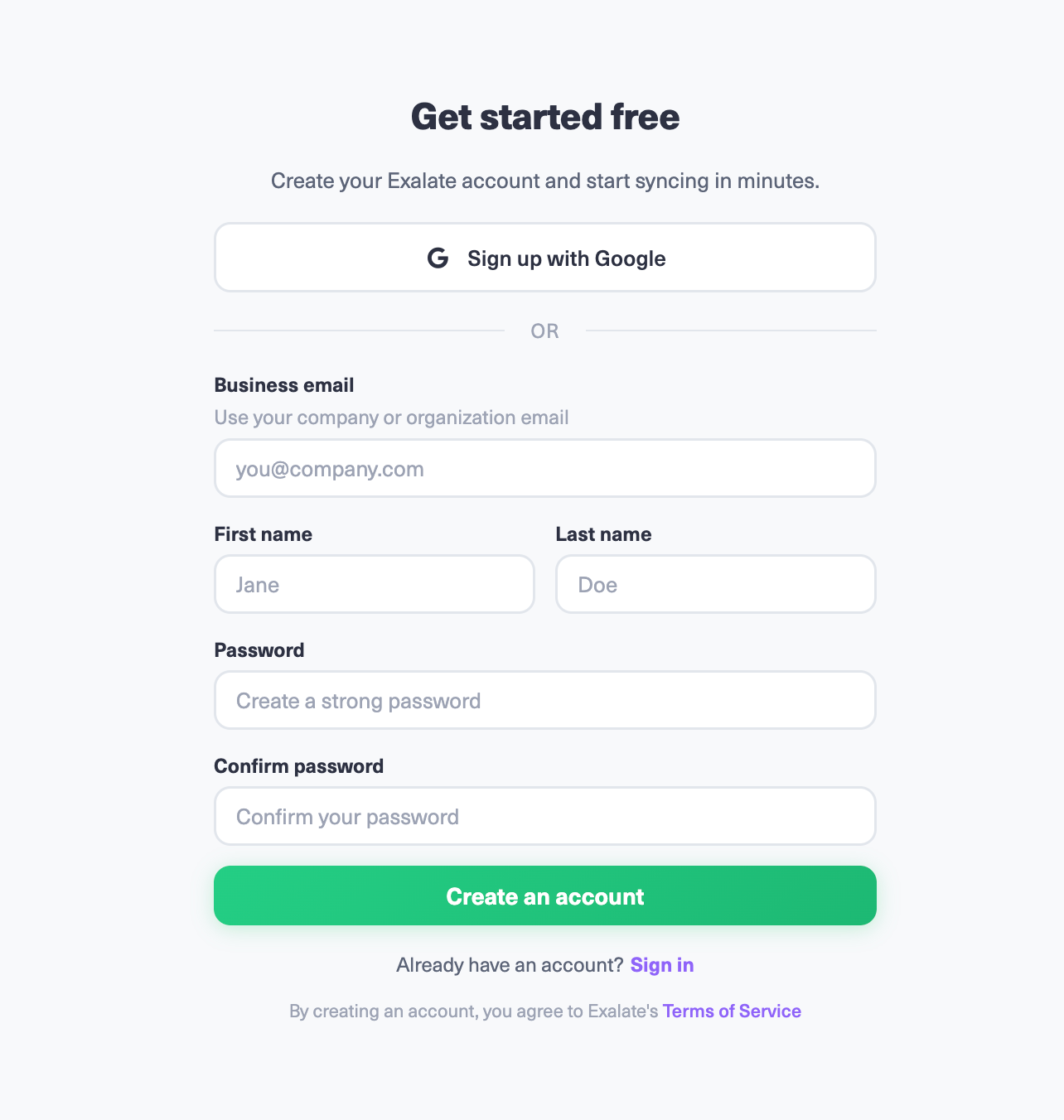
Your Exalate account is not limited to this particular integration. The same credentials can be used when setting up additional connectors. So, if you already use Exalate to connect Azure DevOps with another application, there is no need to create another account.
Once you’re in, the welcome page walks you through a Getting Started checklist.
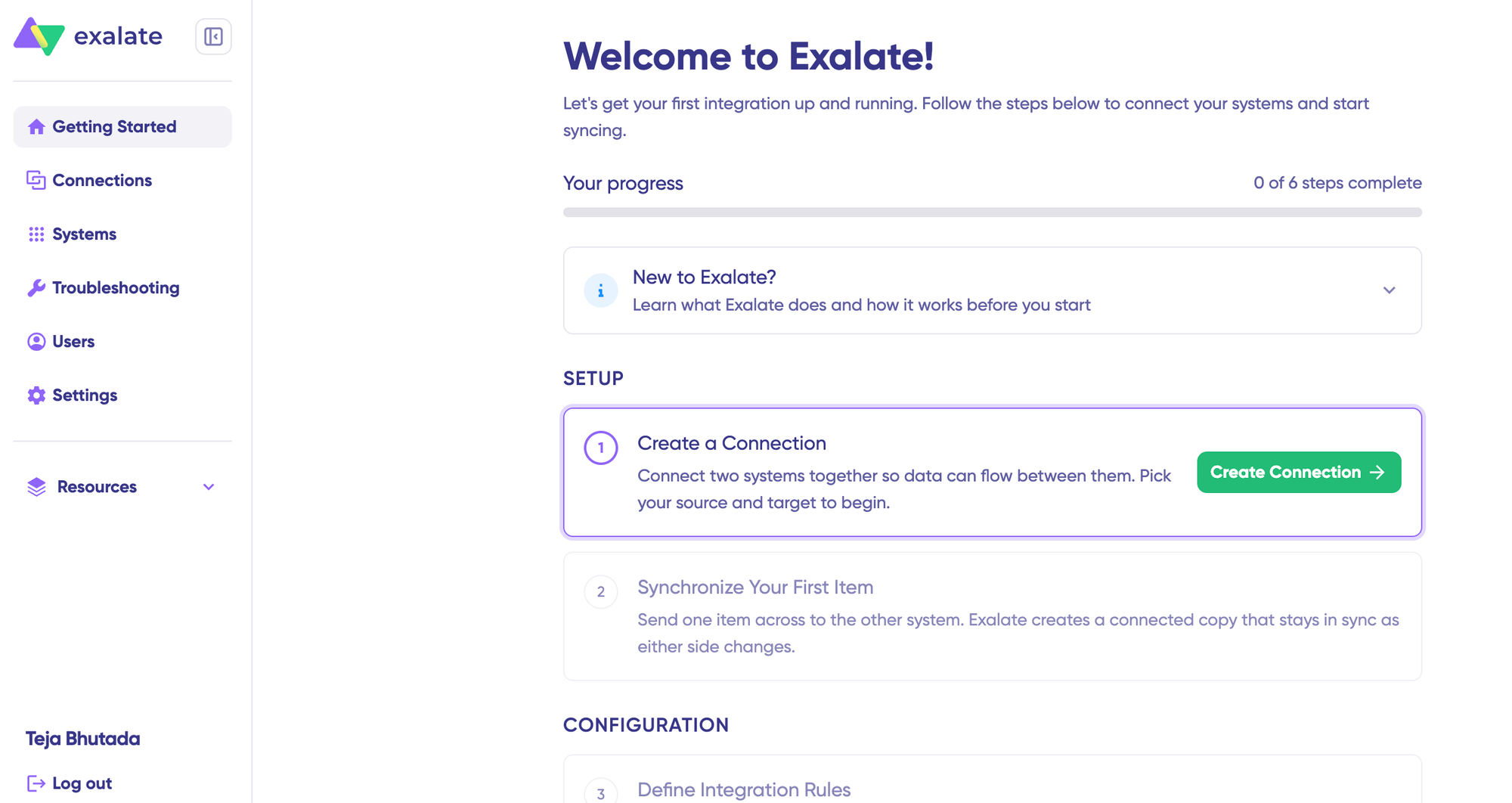
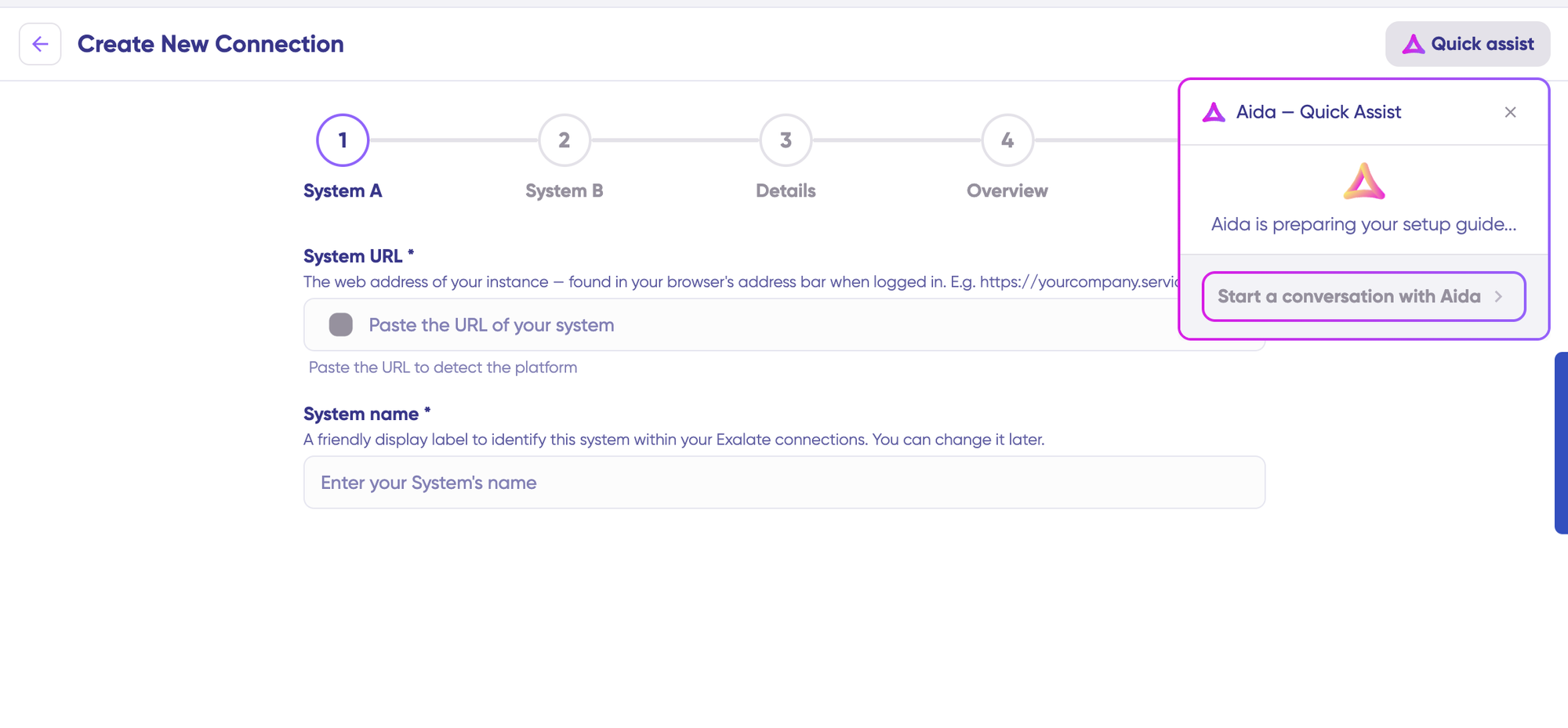
If you need assistance while configuring the connection, click Aida Quick Assist in the upper-right corner. It can help you work through the setup process.
Connect and Authenticate Your Systems
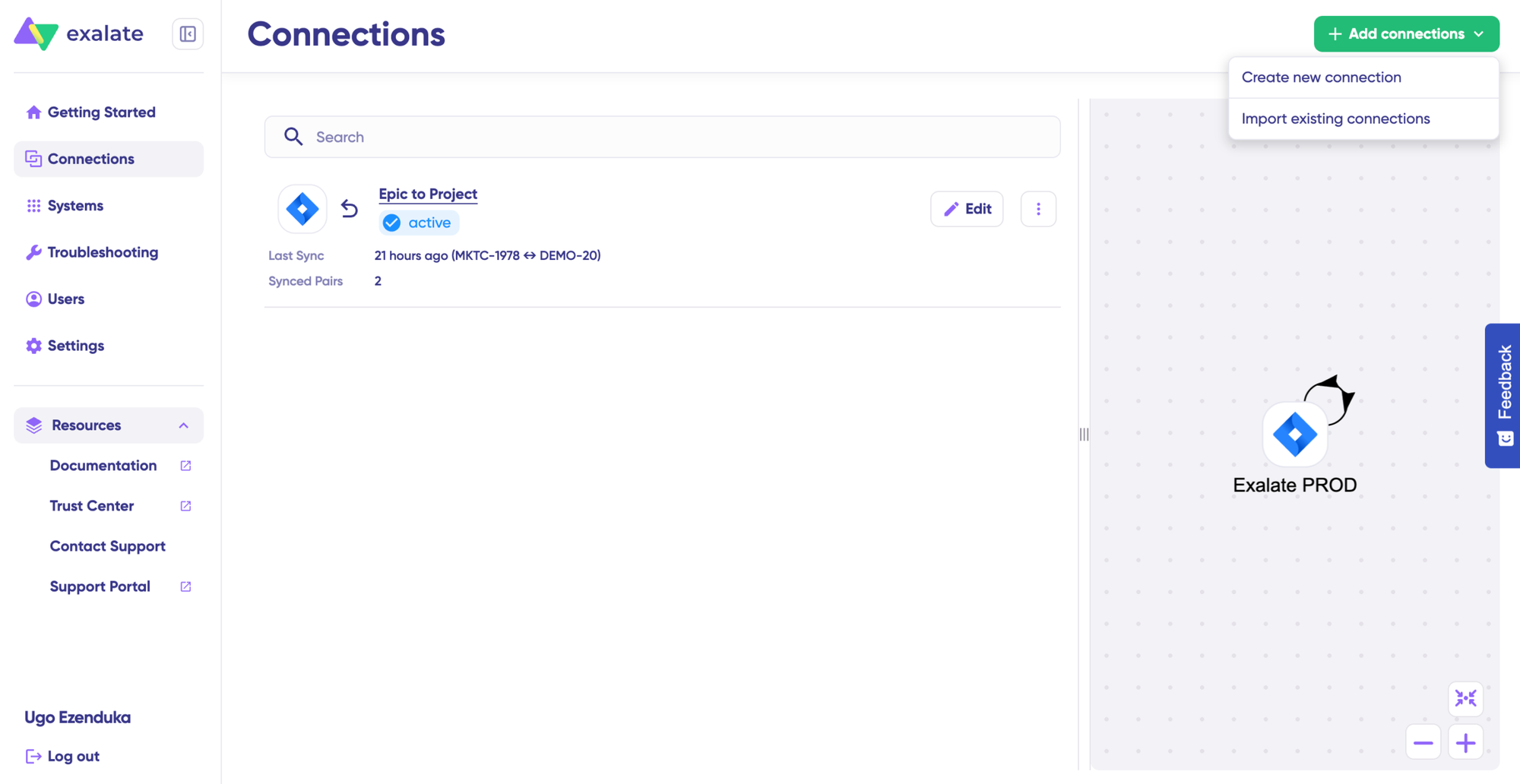
Once your account is ready, open the Exalate console and click “+ Add connections.” From there, select “Create new connection.”
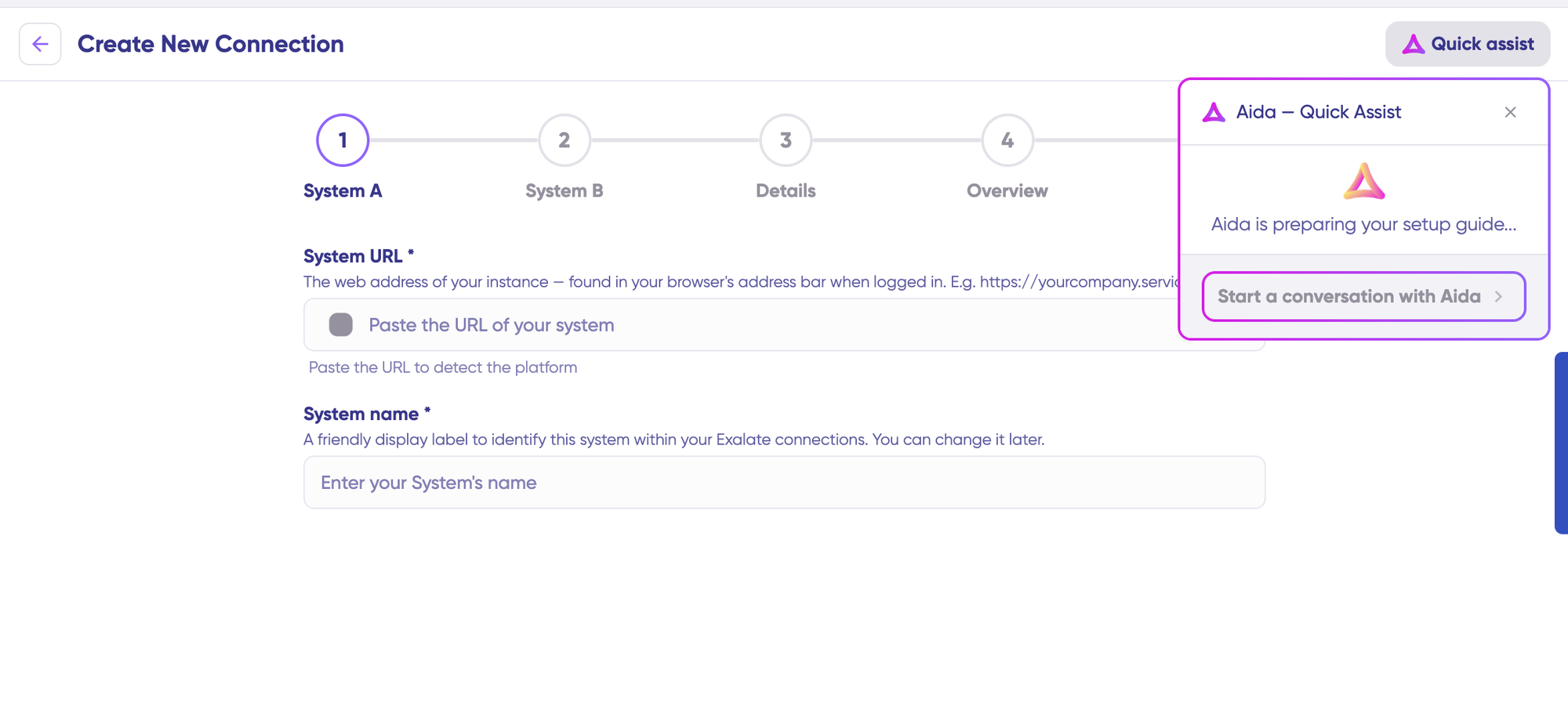
Enter your Azure DevOps organization URL, for example dev.azure.com/xyz. Exalate automatically checks the address to confirm that the Azure DevOps instance can be reached and used with the connector.
On the Azure DevOps side, authentication is handled through a Personal Access Token (PAT) or OAuth 2.0.
Generate your PAT from your Azure DevOps profile settings with Work Items (Read & Write), Project, User Profile, Identity, and Member Entitlement Management scopes, then paste it into Exalate to authorize the connection.
When using OAuth, you also need to provide a Client ID, Tenant ID, and Client Secret Value. Read more about system authentication with Exalate.
To connect GitHub, first install the Exalate for GitHub App. You must be the repository or organization owner to install it and grant Exalate access to issues, pull requests, and metadata.
Enter your GitHub URL in the System URL field and click Connect with GitHub. Follow the installation steps in the pop-up window.
Install the app on the organization or account matching the System URL you entered so Exalate can detect it. Then click Authorize to complete authentication.
Get a full breakdown of the GitHub authentication flow with Exalate.
Back in the Exalate console, click Next. You’ll be asked to provide a name for the connection on the GitHub side. Add a descriptive explanation as well, particularly if other administrators may need to manage the integration later.
Click “Create Connection” and wait while Exalate completes the required background configuration.
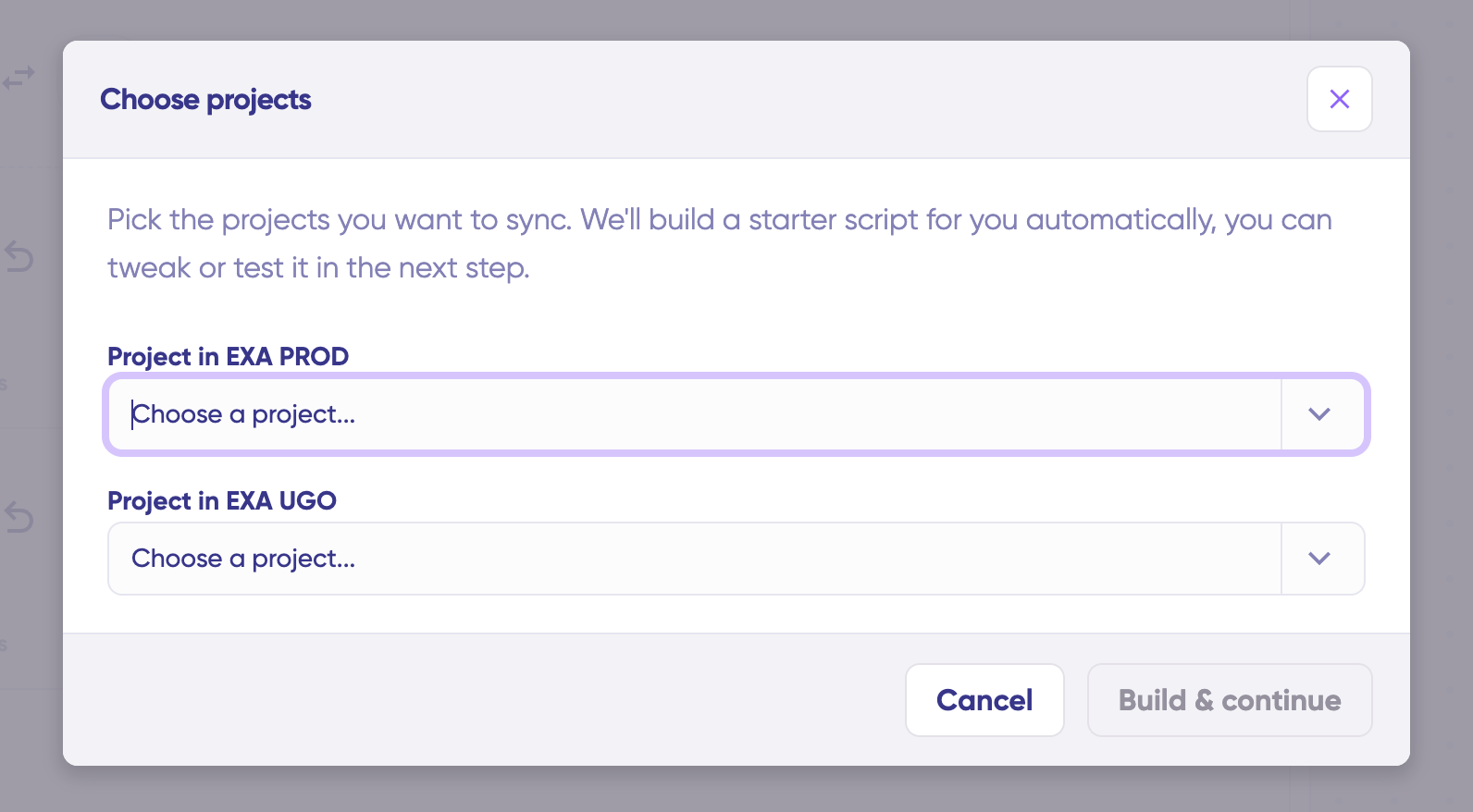
When the setup is ready, select “Continue.” Choose the relevant project and then click “Build and Continue.”
Exalate will then present two main configuration choices:
- Quick sync
- Edit & Test
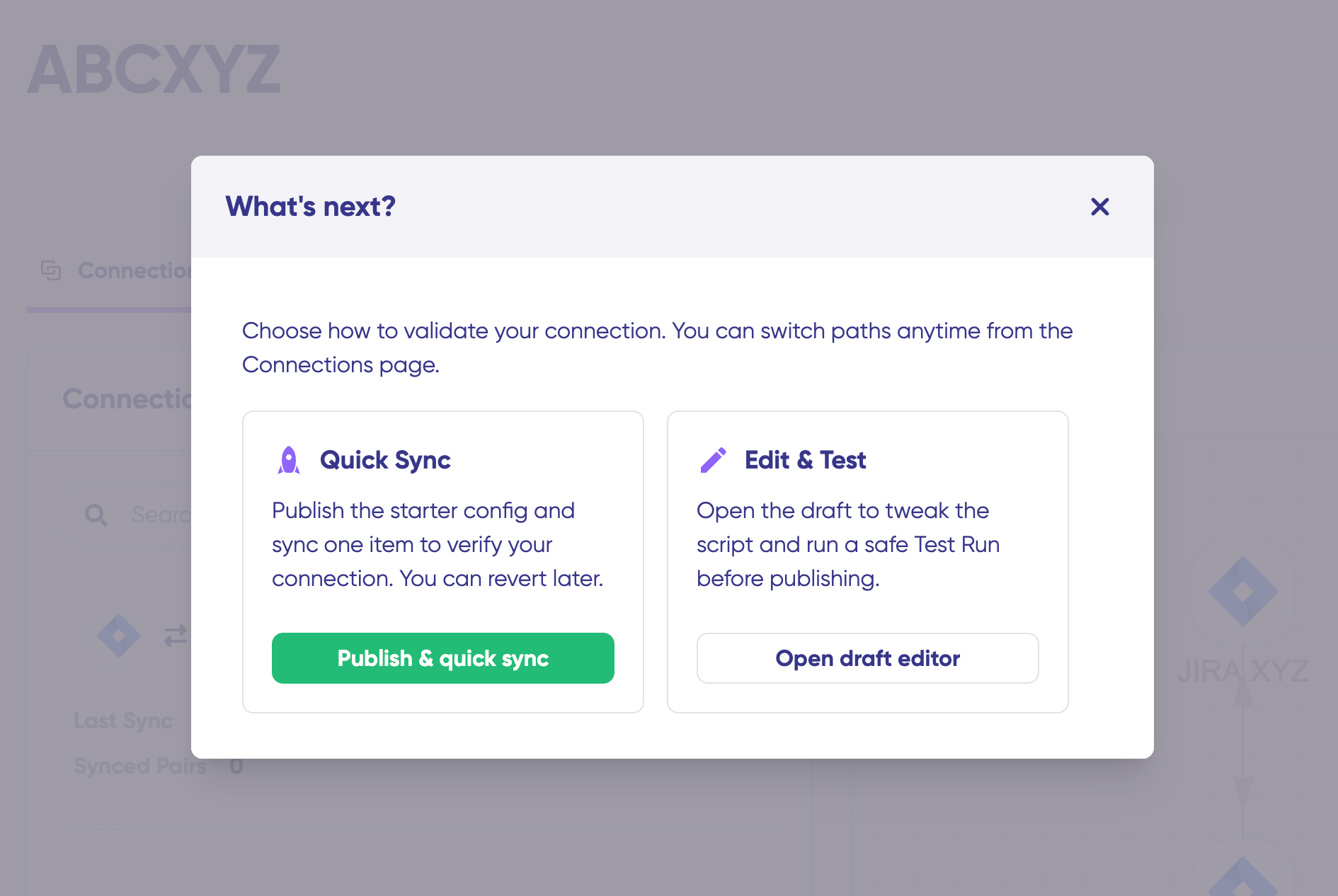
Quick Sync To Manually Sync Items Between Azure DevOps and GitHub
Quick Sync is useful when you want to verify that the connection works before spending time on more detailed configuration. It allows you to synchronize an individual Azure DevOps work item or GitHub issue.
To start with Quick Sync, click on “Publish & quick sync” to proceed.
Next, open Item sync monitor, enter the ID of the work item you want to test, and run the search. When the item appears in the results, select Sync Now.
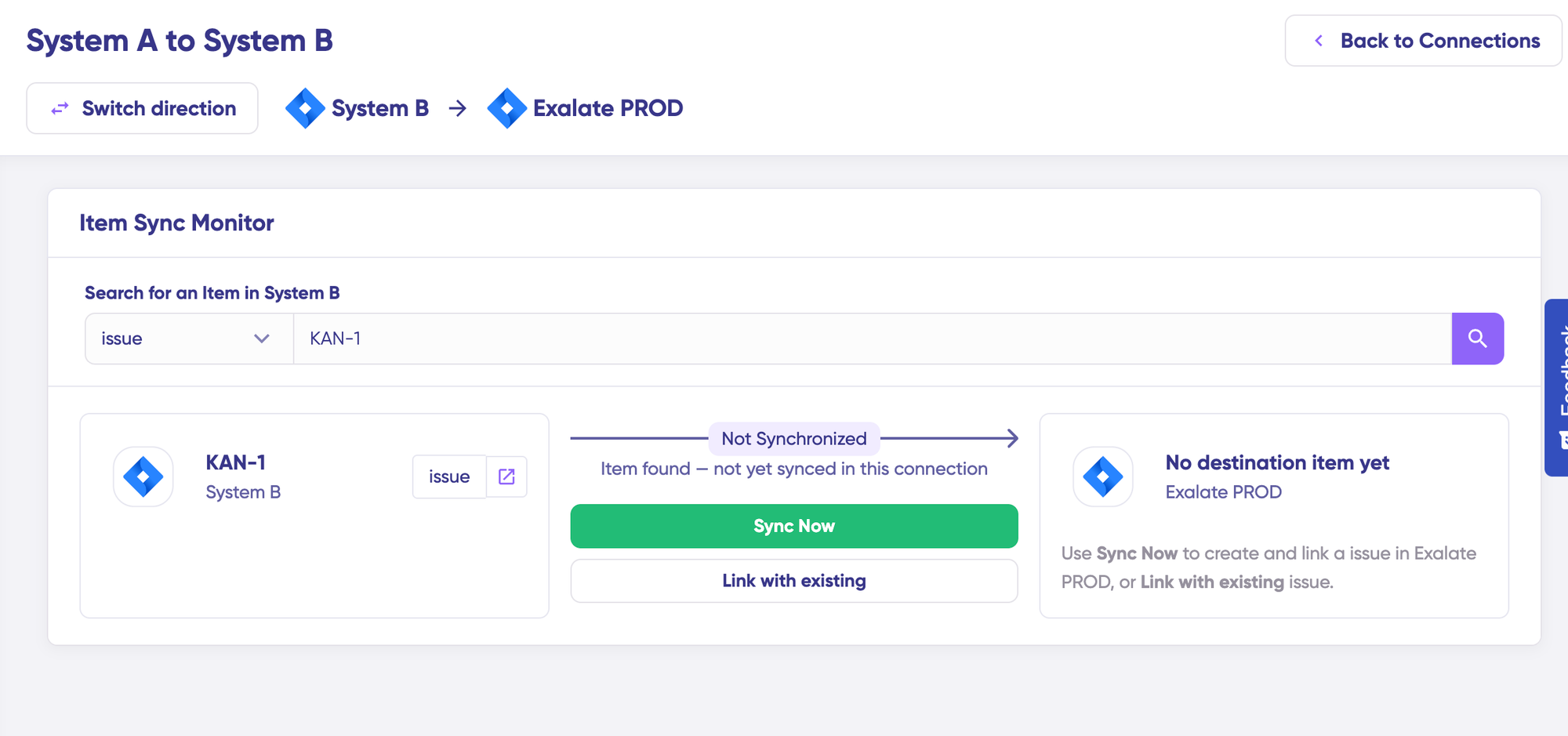
You can also connect two items that already exist in both systems. To do this, choose “Link with existing.”
Once synchronization has finished, Exalate lets you open both items in a separate window so you can compare their content and changes.
Edit & Test To Configure Sync Rules
Choose Edit & Test Sync for deeper customization with detailed scripting.
Open draft editor: This option allows changes when you click “Create a new version” or select “Open latest draft”. This ensures you don’t modify the existing configuration accidentally.
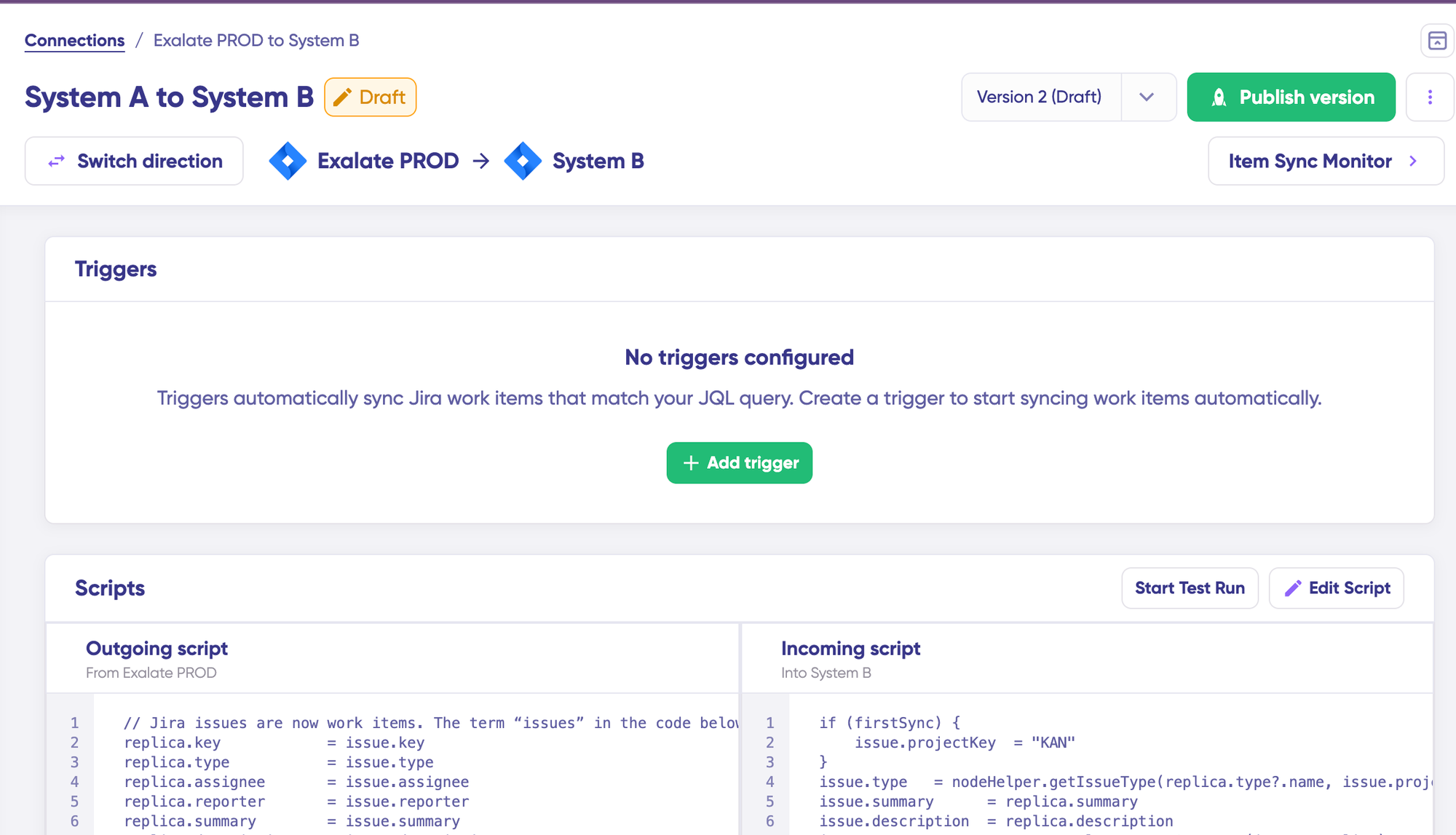
After activating the draft, open the editor and select “Edit Script.”
Exalate uses Groovy scripts to define how information is prepared, transferred, and interpreted between the two platforms.
The outgoing script decides what leaves a system and how it’s packaged; the incoming script decides what gets written on the receiving end.
For example, changes to information leaving Azure DevOps should be made in the Azure DevOps Outgoing script. If you need to control how information arriving from GitHub is processed, you would work with the appropriate Incoming script. The scripts therefore depend on which direction the synchronization is moving.
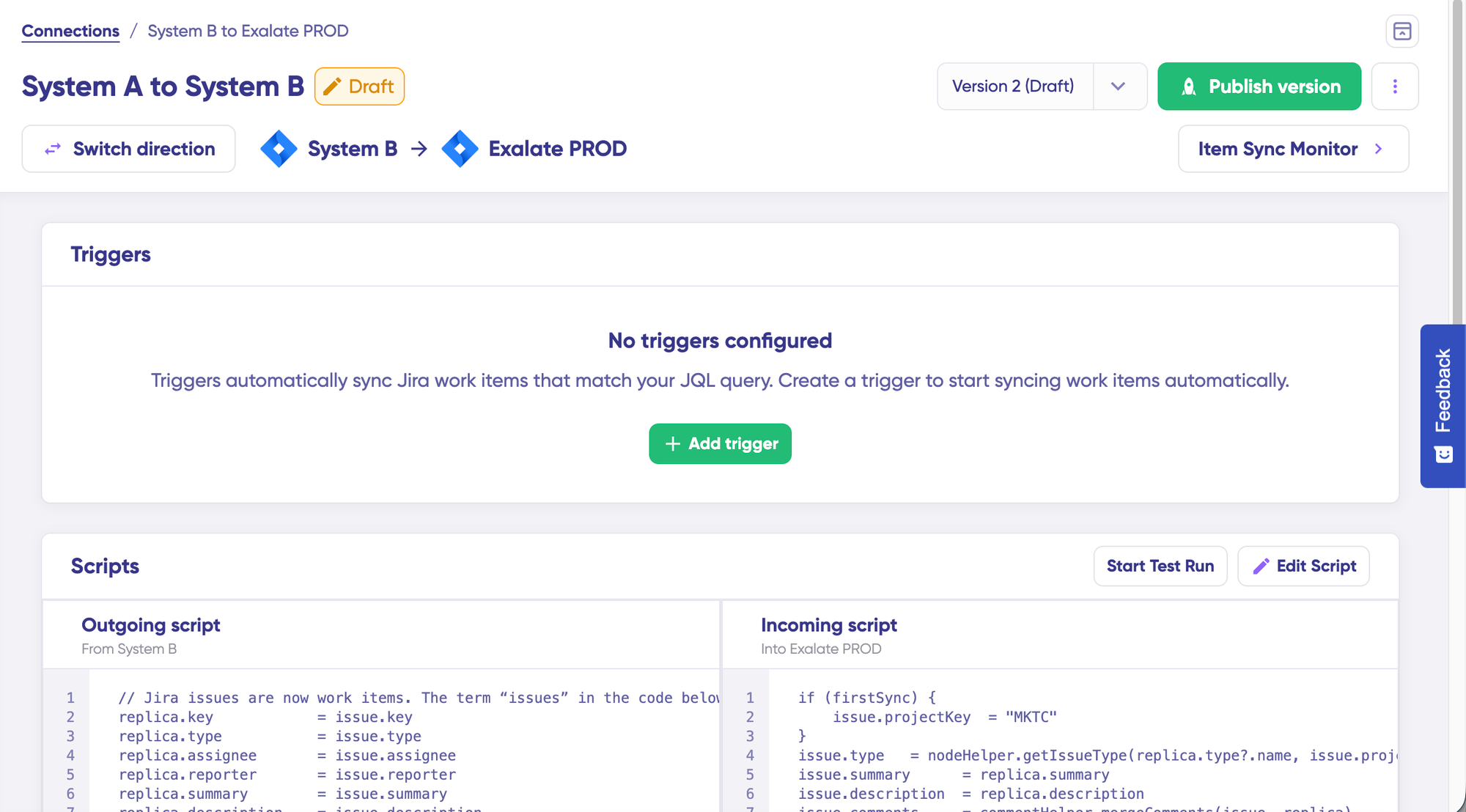
If you need to reverse the direction you’re working on, select “Switch direction.” This changes the sides used for the Outgoing and Incoming scripts.
During synchronization, Exalate uses a Replica object to carry shared information from one system to another. The Replica is represented as a JSON payload containing the data being transferred.
So if you see replica.status = workItem.status in the Outgoing script on the Azure DevOps side, it means the work item’s title is saved into the summary field of the replica object. On GitHub’s incoming script, that maps to issue.status = replica.status, meaning the summary gets written into the GitHub issue’s title.
You don’t have to interact with the Replica directly, but knowing it’s there helps when you’re debugging why a field didn’t come through as expected.
Check out the fields and entities available for synchronization on GitHub.
Use Aida for Script Generation
Writing Groovy scripts can be challenging if you’re unfamiliar with the language. Exalate’s Aida AI can help by letting you describe the synchronization rule you need in plain language.
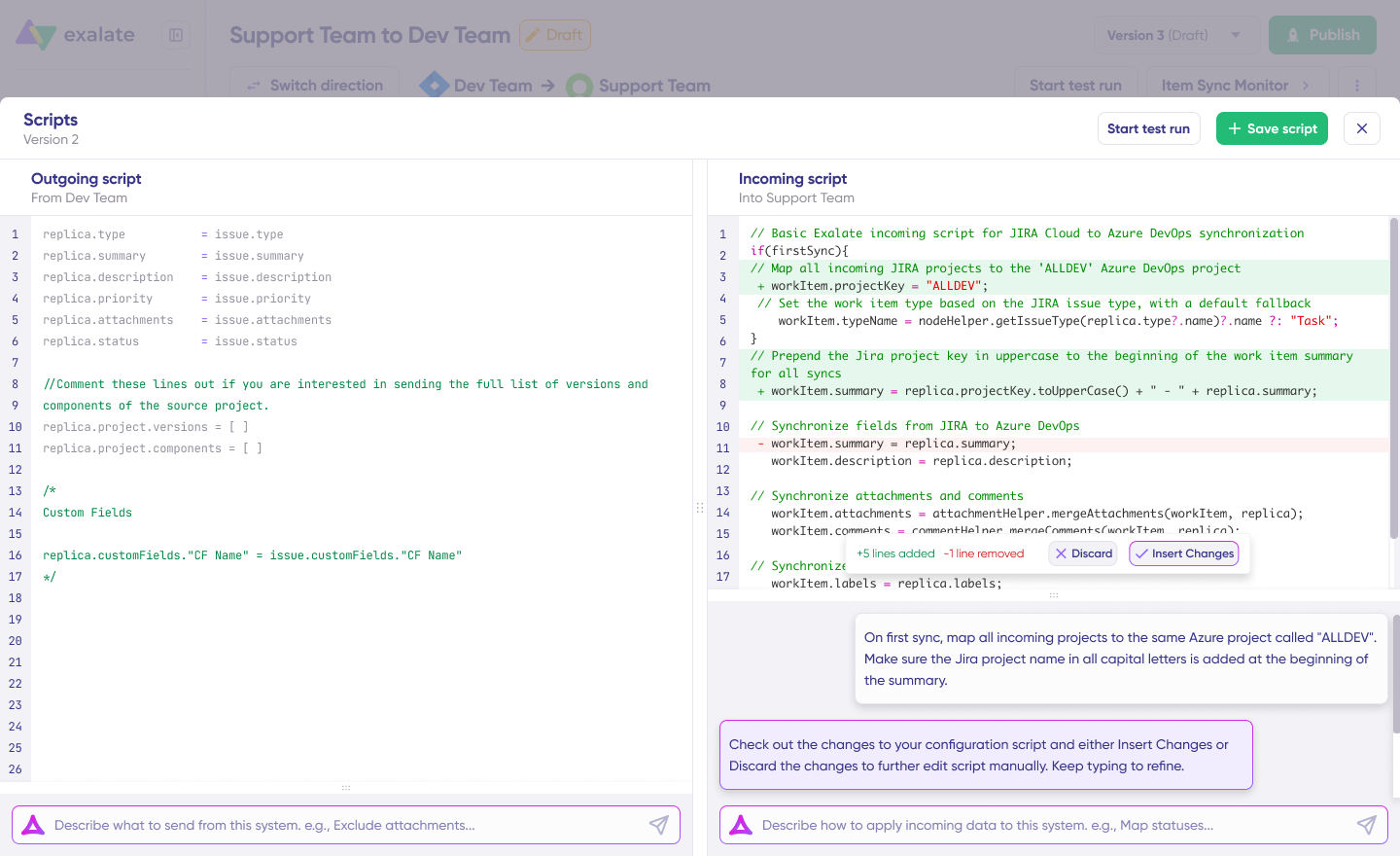
Aida AI uses Exalate’s scripting API and your existing configuration to generate a script from your description. Before accepting the result, review the generated changes. New code is highlighted in green, while code Aida recommends removing appears in red. You can then decide which changes to keep.
Note: As with any AI solution, review the generated code before applying it to avoid errors and hallucinations.
Once you’ve finished reviewing the scripts, you can choose “Save script” or test the configuration before publishing it.
Test Before You Publish
A test run gives you an opportunity to identify mapping problems before the integration is used in production.
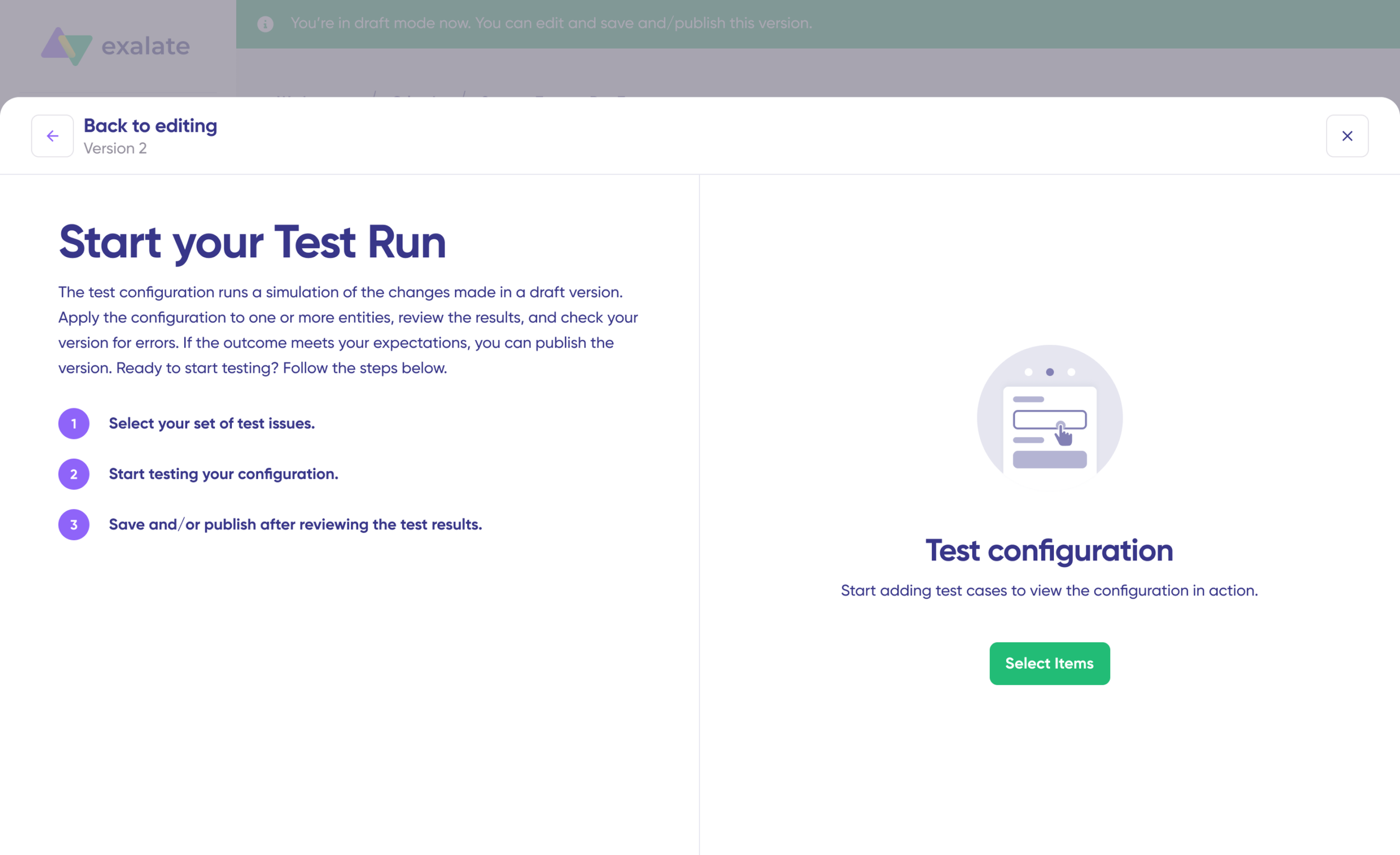
Select “Start Test Run” and then choose “Select items.” You can include multiple Azure DevOps work items or GitHub issues in the test.
After the test completes, Exalate displays information about the fields that were transferred and the payload exchanged between the two systems.
If the results match your expectations, select “Publish Version.”
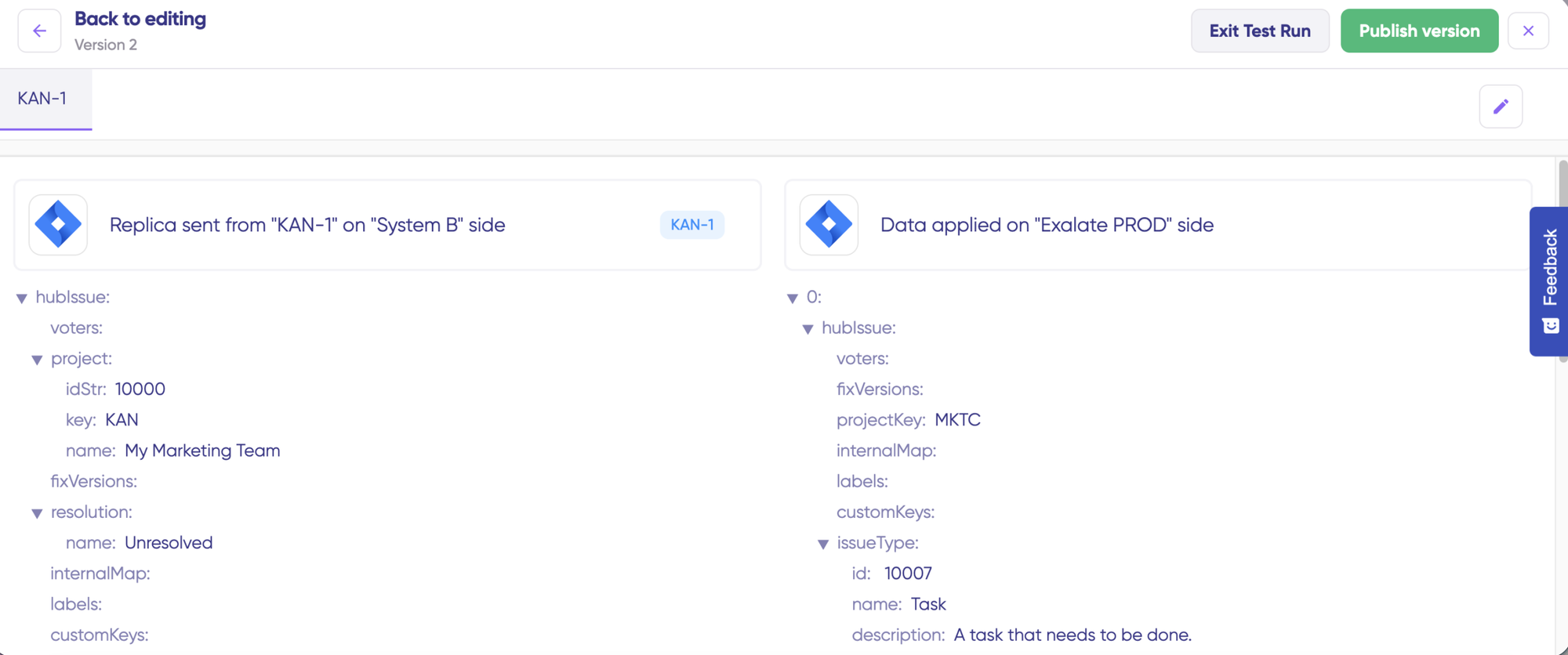
The point is to catch field mismatches or identity mapping gaps before the connection goes live for your whole team.
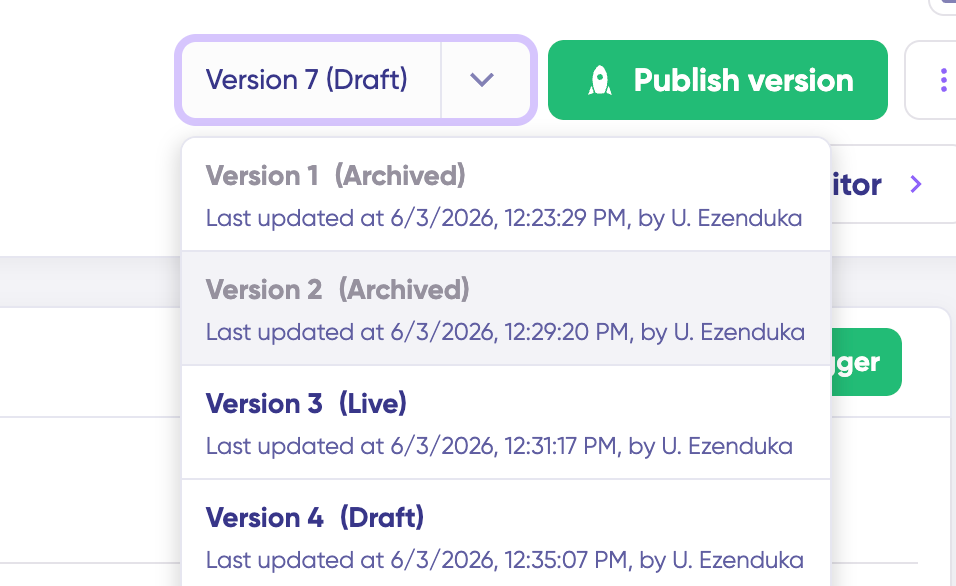
You can view all versions from the “Version” dropdown. Versions can be “Live“, in “Draft” (editable), or “Archived“.
Set Your Sync Triggers
Triggers determine which items qualify for synchronization. Instead of syncing everything, you can create conditions that select only the work items or issues matching specific criteria. To create one, click “+ Add trigger.”
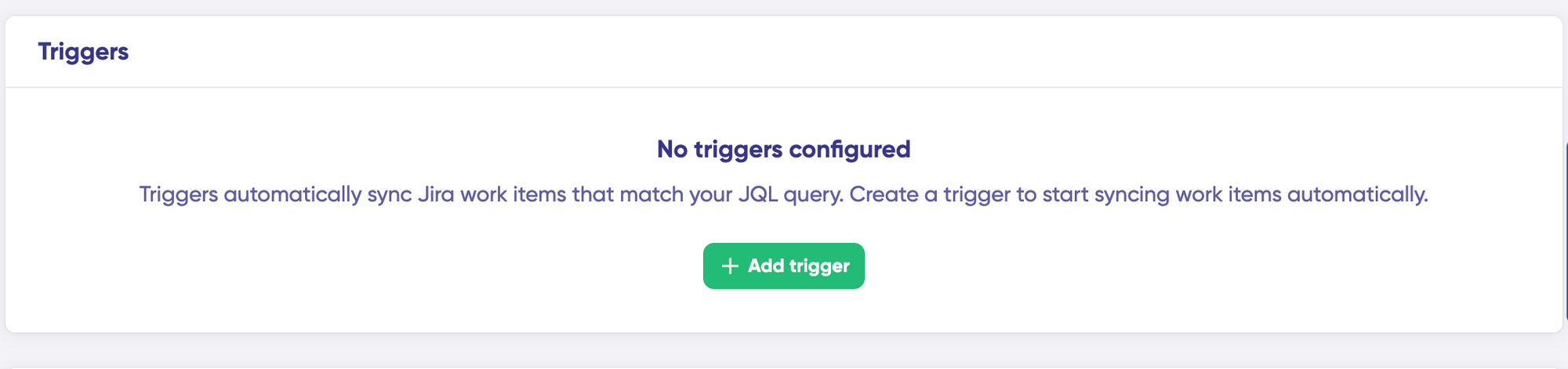
For Azure DevOps, choose the work item entity type and provide a query using the appropriate search language.
- On the Azure DevOps side, that’s WIQL, something like “[System.TeamProject] = ‘ENG’ AND [System.Tags] Contains ‘github-bug’.”
- On the GitHub side, it’s GitHub’s search syntax, like “label:bug is:open.”
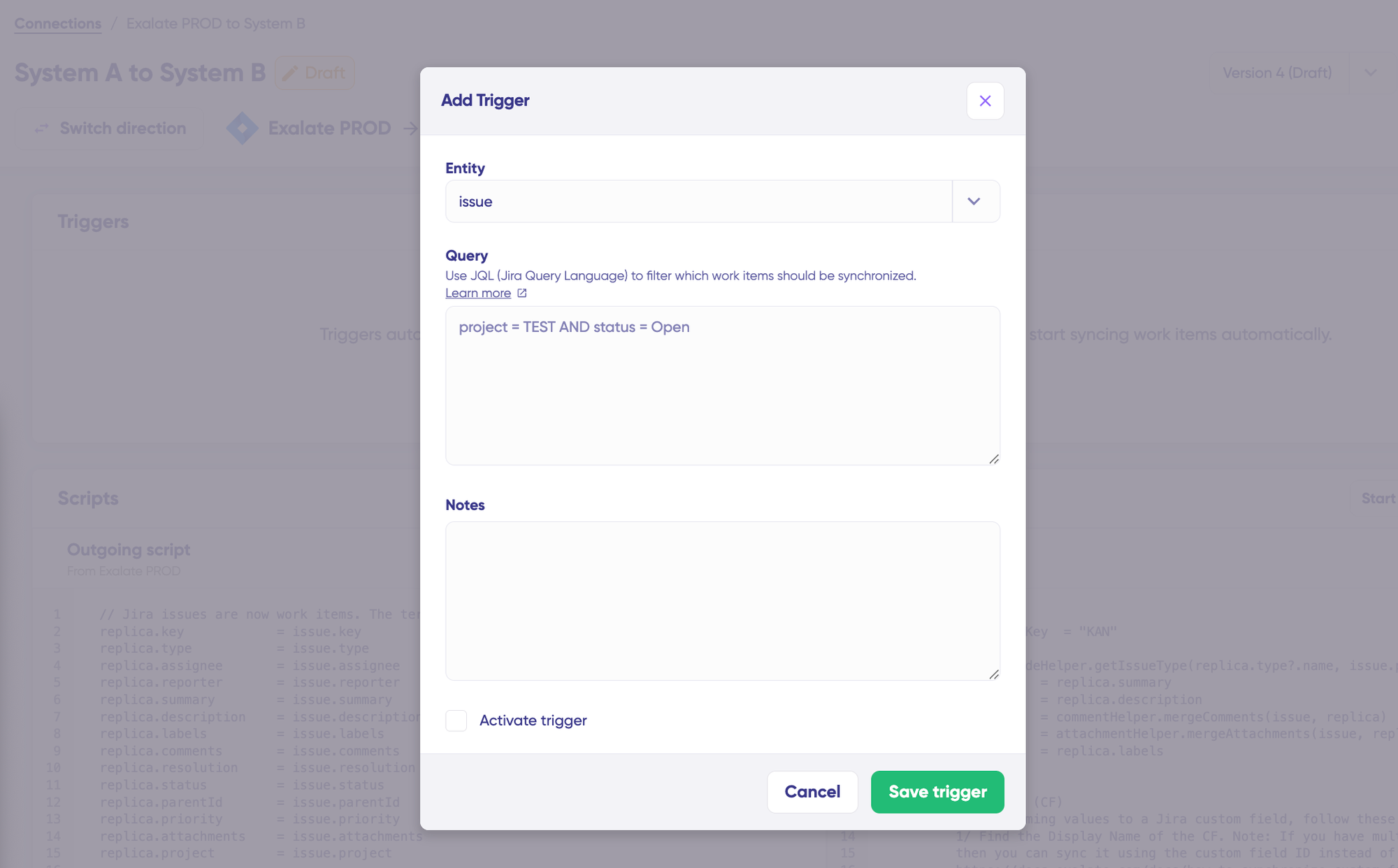
Click “Save Trigger” after setting up the sync query for the trigger. Tick the “Activate trigger” checkbox to activate it.
Troubleshoot Your Connection
If something goes wrong during synchronization, open the Troubleshooting tab. It provides information about affected items and connections on both sides.
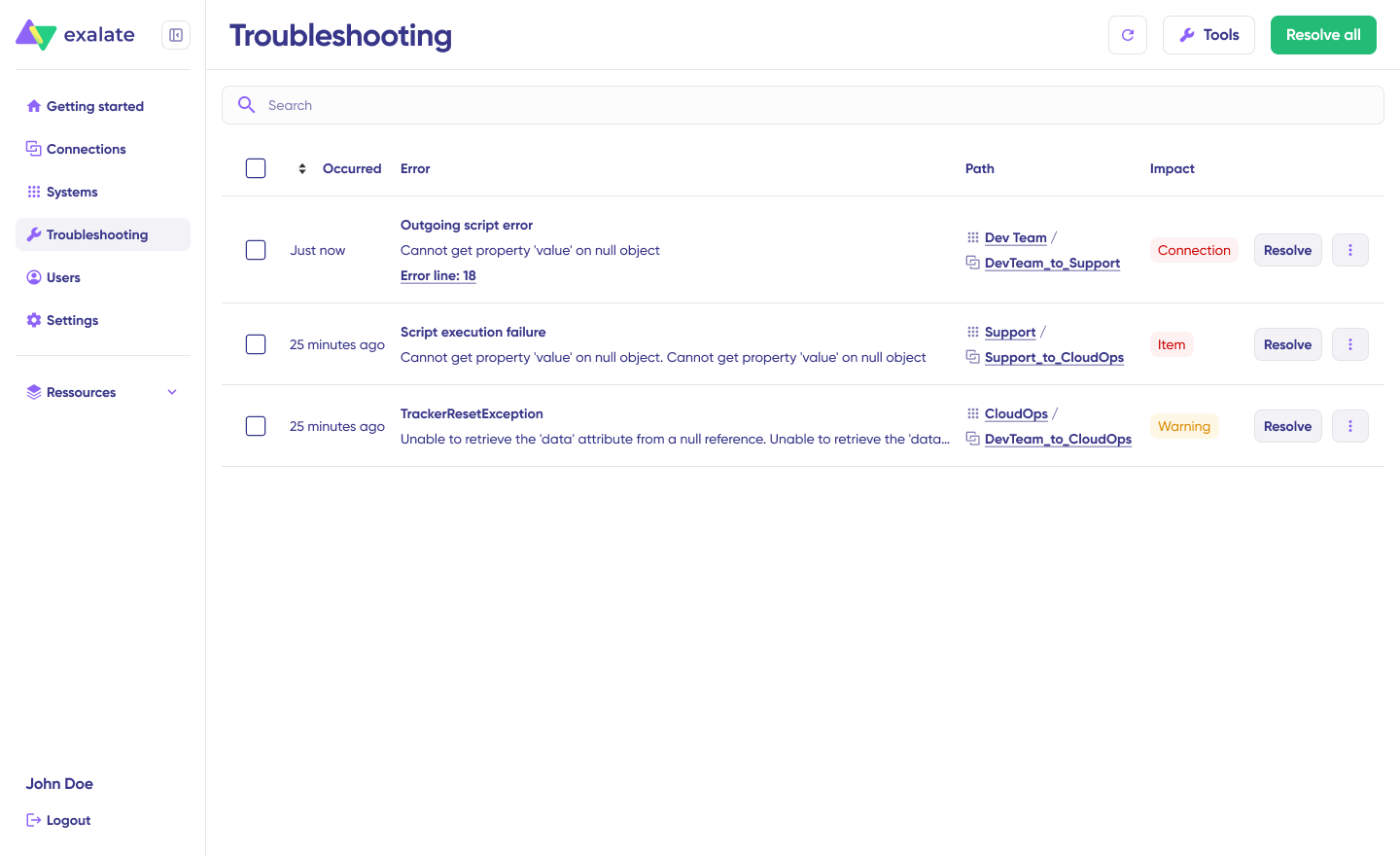
Aida can provide an initial explanation of an error. Hover over the relevant error to see a plain-language description and, when available, a suggested solution.
For additional technical information, open “Error Details.”
The details include information such as:
- Impact level
- Stack trace
- Error type
- Date the error occurred
You can also “View Full Analysis” for more context. Fix the error, then click “Resolve“.
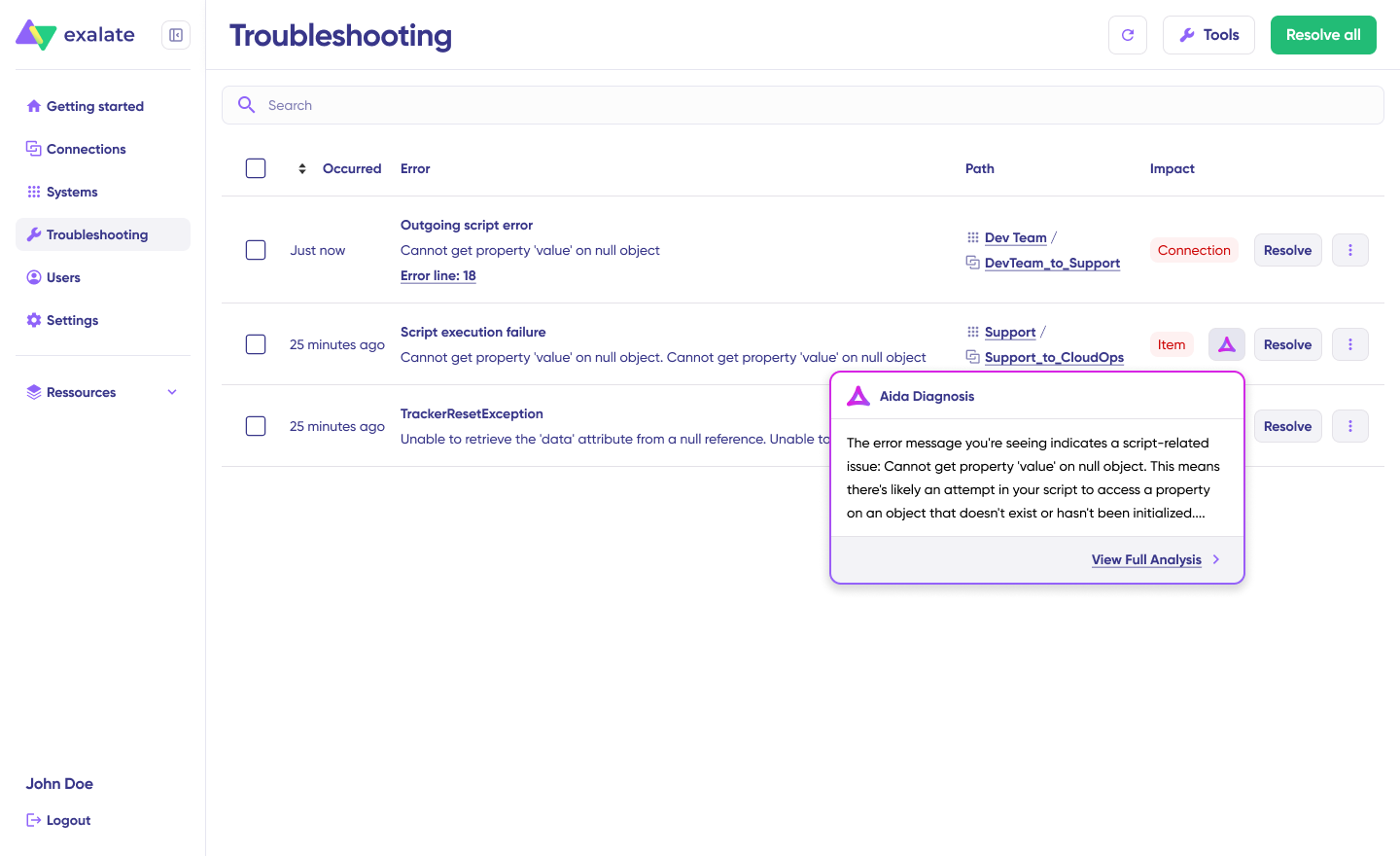
Error details typically include the stack trace, impact level, and when it first occurred. This information should be enough for the admin to tell whether the problem is a permissions issue, a field mismatch, or something on GitHub’s side.
After setting the trigger, click “Save Trigger” to activate it.
Sync Panel
Exalate provides a Sync Panel as a Chrome browser extension. It displays the current synchronization status of a ticket directly in the browser, so you don’t have to repeatedly open the Exalate console.
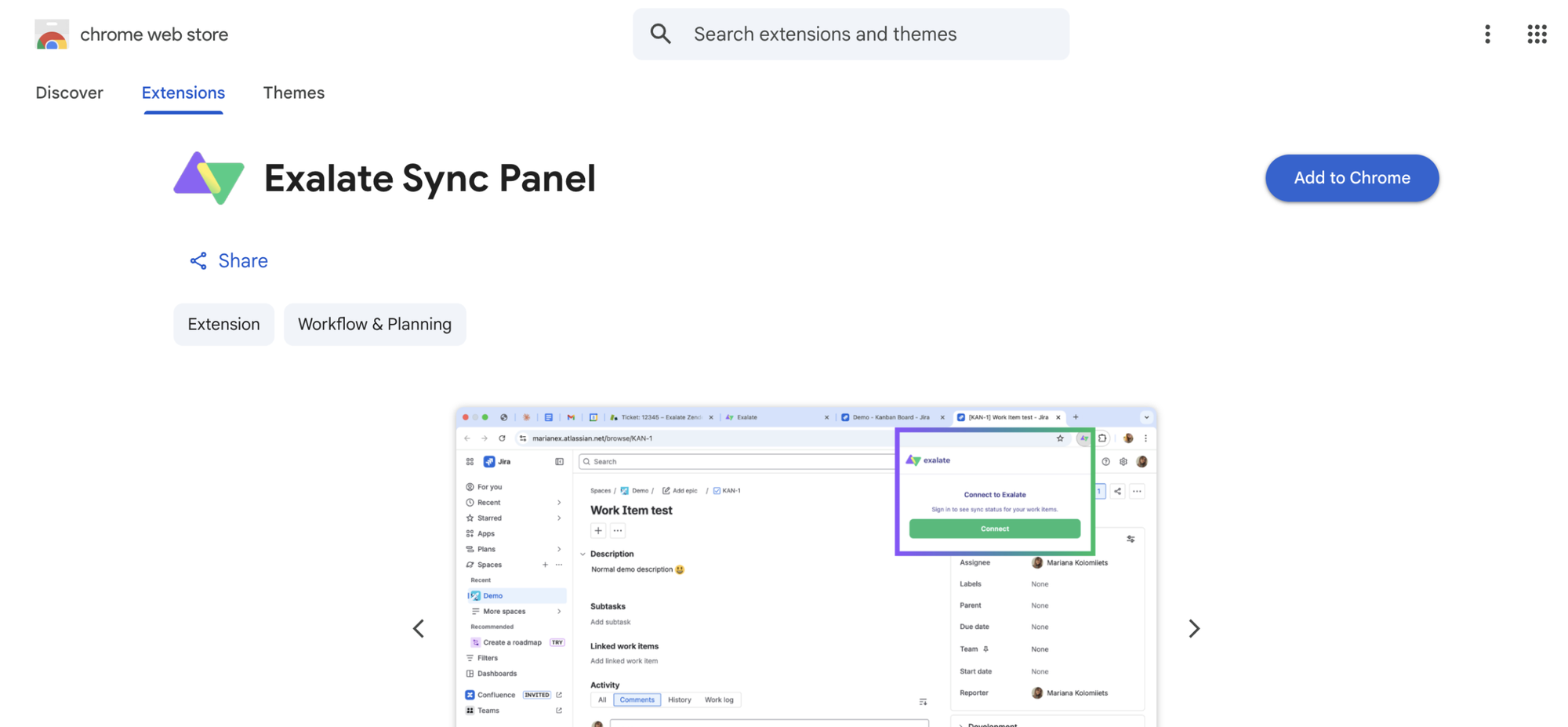
From there, you can trigger a manual sync, unlink a pair that’s no longer needed, and check status across more than one connection at a time.
Dashboard for Sync Monitoring
The Exalate Dashboard provides an overview of synchronization activity and the number of items currently being handled. You can use it to review all connections available to you or narrow the view to a particular integration or connection.
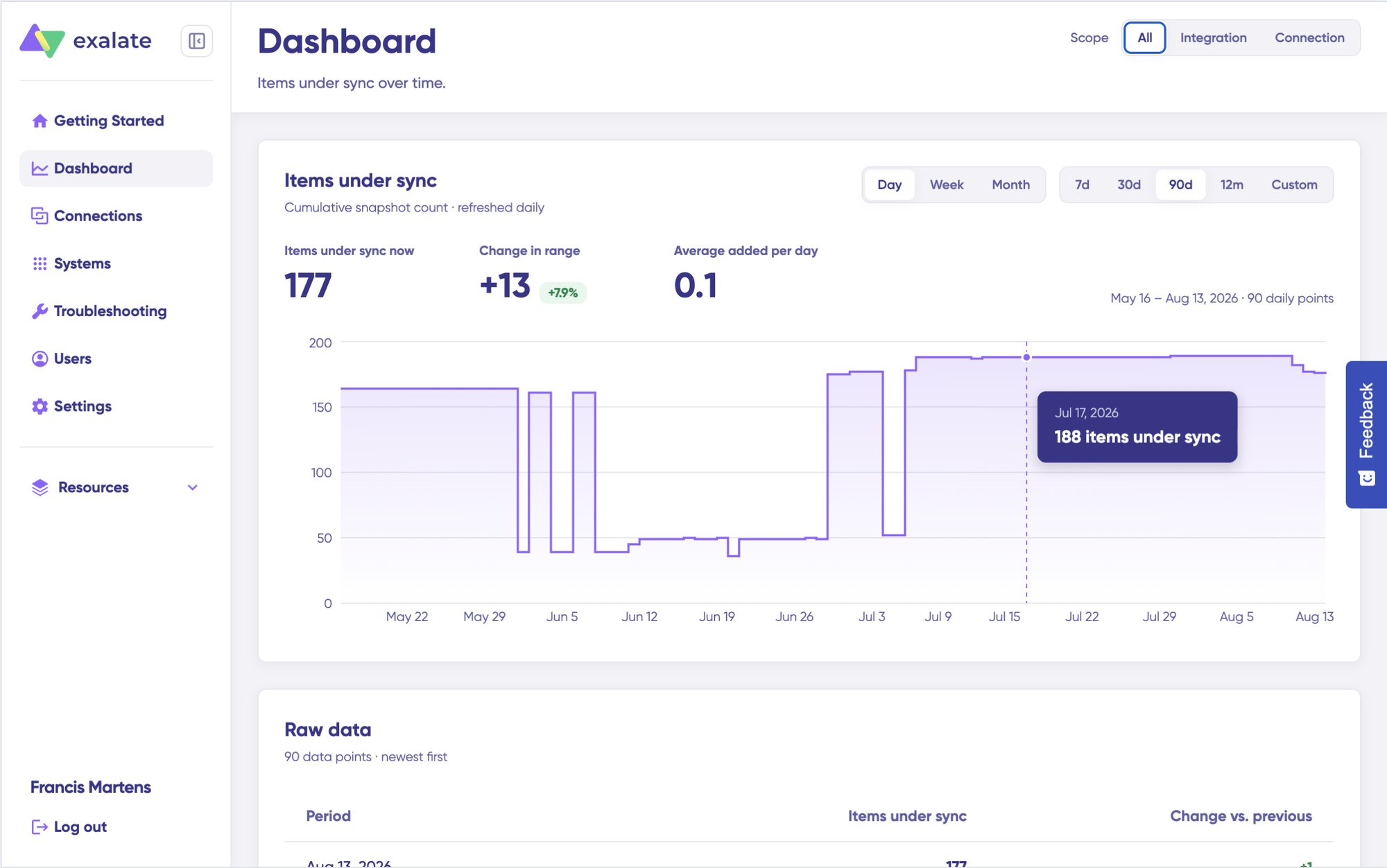
- Log in to the Exalate Console.
- Select Dashboard from the left menu.
You can also open the Dashboard for a specific connection:
- Go to the Connections list.
- Open the Action Menu for the connection.
- Select View Dashboard.
Dashboard data is displayed as cumulative snapshots and refreshed daily. You can display everything or choose a specific integration or connection to be shown, as well as a time range.
Common Integration Pitfalls and How to Avoid Them
Syncing Too Much Too Soon
Teams often start by syncing every field, every work item, and every repository. This creates noise, slows down performance, and overwhelms teams with irrelevant updates.
Solution: Start small. Sync one project to one repository with basic field mapping. Add complexity gradually as you understand what your teams actually need. Use triggers to filter sync to relevant items only.
Unclear Ownership
When the same work item exists in two platforms, teams sometimes duplicate effort or both assume the other team is handling it.
Solution: Define ownership clearly. If a work item originates in Azure DevOps, the Azure DevOps assignee owns it. GitHub shows the work for visibility, but the owner makes decisions in Azure DevOps. Document this in your integration setup and communicate it to all teams.
Notification Overload
Every sync generates notifications in both platforms. Multiply this across hundreds of work items, and you create alert fatigue.
Solution: Configure notification settings in both Azure DevOps and GitHub to reduce noise. Turn off notifications for automated updates or sync-related comments. Use digest notifications instead of real-time alerts. Let your integration tool handle the sync; your team doesn’t need to watch every update.
Ignoring Security Configuration
Default sync often syncs everything to everyone. This exposes sensitive work items to teams or users who shouldn’t see them.
Solution: Use role-based sync control. Configure triggers to sync only work items visible to specific users or teams. Review your connection permissions regularly and audit who can create or modify sync rules.
Treating Integration as “Set and Forget”
New custom fields get added, workflows evolve, and new teams join the organization. Integration that worked six months ago might not fit current needs.
Solution: Schedule quarterly reviews of your integration setup. Check if new fields need mapping, if triggers still match current workflows, and if new teams need access. Integration is a living process, not a one-time setup.
Frequently Asked Questions
How does Exalate integrate Azure DevOps and GitHub?
Exalate connects Azure DevOps work items and GitHub issues with real-time bidirectional sync. You authorize Exalate to access both platforms using OAuth (no passwords stored), then configure which projects and repositories sync.
Aida, Exalate’s AI-assisted configuration assistant, generates field mapping from natural language prompts. Describe what you want synced, and Aida creates the rules automatically. Setup takes hours instead of days or weeks.
Can Exalate sync Azure DevOps work items with GitHub issues in real time?
Yes, Exalate provides real-time bidirectional sync. When someone creates or updates a work item in Azure DevOps, the corresponding GitHub issue updates within seconds. The same happens in reverse: changes in GitHub are reflected immediately in Azure DevOps. You control which fields sync (title, description, status, assignee, comments, custom fields) and define triggers to control when sync happens based on status, labels, or other conditions.
Does Exalate support GitHub Enterprise and Azure DevOps Server?
Yes, Exalate supports all deployment combinations: Azure DevOps Services with GitHub.com, Azure DevOps Server with GitHub Enterprise Server, and any cloud-to-server or server-to-server configuration. Whether you’re running entirely in the cloud or have on-premises requirements, Exalate handles the connection securely with the same features and performance.
How does Aida help configure Azure DevOps GitHub sync in Exalate?
Aida is Exalate’s AI-assisted configuration assistant. Instead of manually writing mapping rules, you describe what you want in natural language. For example: “Sync Azure DevOps State to GitHub Status, and add Azure DevOps comments as GitHub comments.” Aida generates the field mapping code, highlights suggested changes, and lets you review before applying. For complex transformations, like converting Azure DevOps tags to GitHub labels or handling custom fields, Aida AI helps you write the logic automatically.
What fields can Exalate sync between Azure DevOps and GitHub?
Exalate syncs standard fields like title, description, status, assignee, priority, and comments. It also handles custom fields you’ve created in either platform. Common mappings include Azure DevOps “State” to GitHub “Status,” “Tags” to “Labels,” “Assigned To” to “Assignee,” and “Description” to “Body.” Exalate handles format differences automatically. For example, converting Azure DevOps priority numbers to GitHub priority labels.
How much does Exalate cost for Azure DevOps GitHub integration?
Exalate pricing scales with the number of synced items. There’s a free plan for basic use cases and paid plans based on sync volume. Check out our pricing page to see which plan works best for your use case.
Can Exalate connect one Azure DevOps project to multiple GitHub repositories?
Yes, you can sync one Azure DevOps project to several GitHub repositories, multiple Azure DevOps projects to one GitHub organization, or any combination that fits your workflow. Each connection can have different field mappings and triggers, so one project might sync differently from another based on team requirements.
How secure is Exalate for Azure DevOps GitHub integration?
Exalate is ISO 27001 certified. It uses OAuth and personal access tokens for authentication (never stores passwords), encrypts all data transfers with TLS 1.2 or higher, and implements role-based access control to restrict who can create connections and define sync rules. Exalate publishes detailed security documentation, certifications, and compliance information from our Trust Center.
Can Exalate integrate Azure DevOps and GitHub with other platforms simultaneously?
Yes. Exalate supports multi-platform ecosystems. You can integrate Azure DevOps with GitHub for engineering, Freshservice for support, Asana for marketing, Jira for product management, and ServiceNow for IT operations. This creates a unified view across your entire tech stack without managing multiple integration tools or learning different sync configurations for each platform.
Recommended Reading:
- Jira Azure DevOps Integration: The Complete Step-by-Step Guide
- GitHub Salesforce Integration: How to Set up a Sync in 6 Steps
- How to Set up a Jira GitHub Integration
- How to Set up an Azure DevOps Salesforce Integration
- How to Set up a ServiceNow GitHub Integration
- How to Set Up an Azure DevOps ServiceNow Integration
- How to Set up a Zendesk GitHub Integration