
Build or Buy Your Integration Solution?




You didn't hire a team to be copy-paste machines.
So you already know integration between tools is essential for your business.
Now, you might be asking yourself: should we build and maintain an integration in-house, or spend a few hours deploying it with an external tool?



You Know the Build-It-Yourself Trap
Development looks cheaper upfront. But then...
Your integration breaks every time an API updates
The dev who built it left. And the documentation of the project is not up-to-date.
A "quick fix" requests now take weeks to get done
You need to integrate more systems... and repeat everything
The Hidden Truth
Custom integrations consume 60-70% of their total cost in maintenance alone.
Calculate it Yourself
Year 1: $20K
- Development time
Every Year After: $40K+
- 10K - API changes and breaking updates
- 12K - Bug fixes and error handling
- 15K - Feature requests and customizations
- 08K - Knowledge drain and documentation
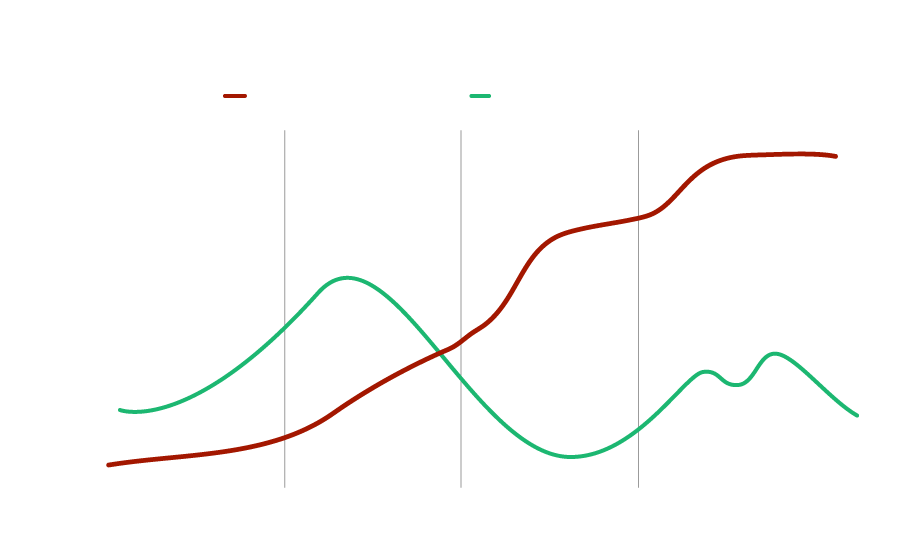
the ai effect
Doesn't AI Change Everything?
AI changed how fast you can write code.
It didn't change what makes integrations hard.
What AI helps with:
- Writing the initial sync logic
- Generating boilerplate API calls
- Drafting documentation
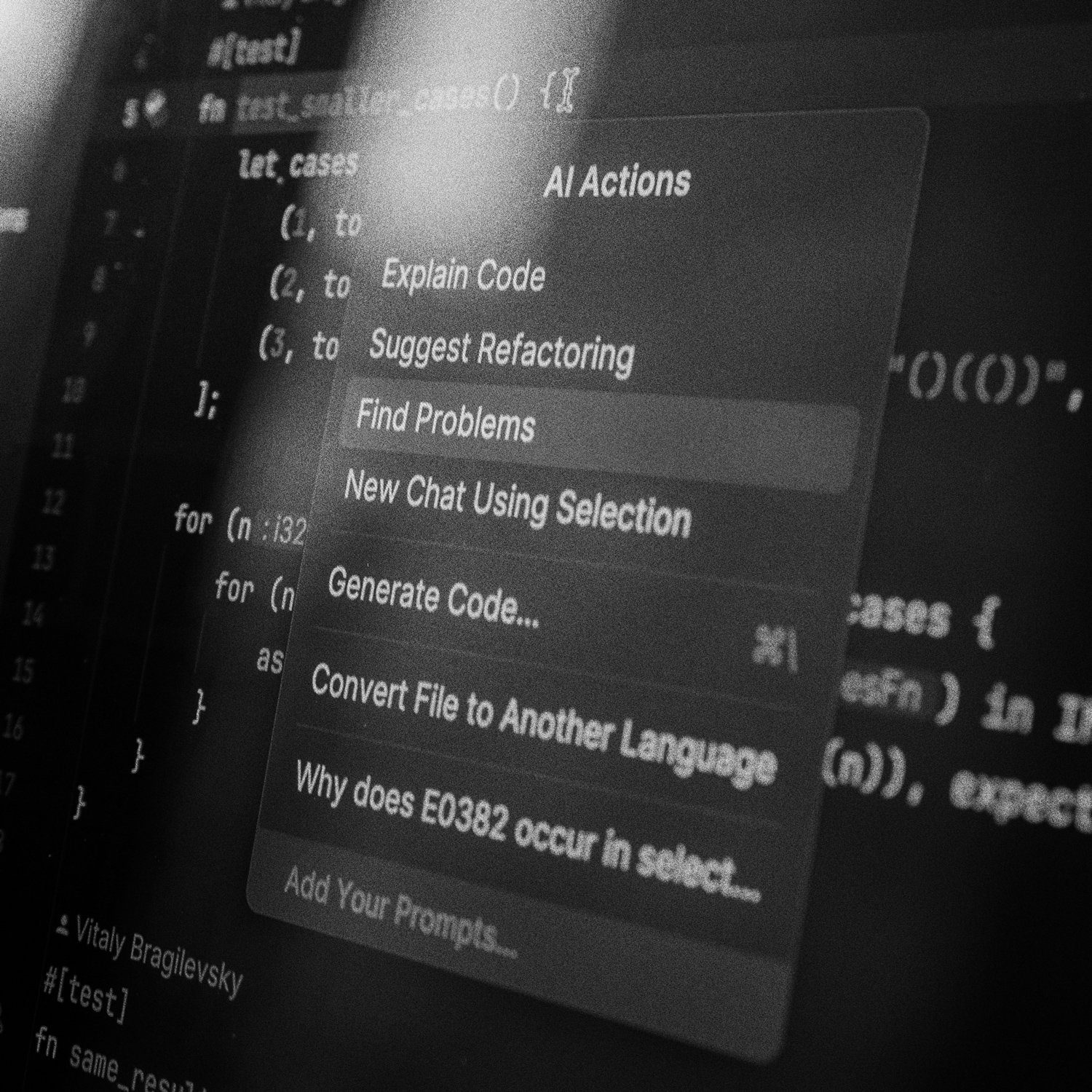
What AI Doesn't Help With
(And What 2025 Research Confirms)
Adapting to API Changes
When a tool you use updates their schema, your AI-built integration breaks the same way as any other. You're back to square one, debugging.
Security Reviews
AI-generated code contains 2.74x more security vulnerabilities (CodeRabbit, 2025). Production integrations handling customer data can't skip this step.
Knowledge Transfer
The developer who leaves takes context with them. AI-generated code is often harder for the next person to understand, making maintenance even more difficult.
what the data shows
"92.6% of developers use AI coding assistants. Team-level productivity gains haven't moved past 10%."
DX Research, 2026 (121,000 developers across 450+ companies)
In a 2025 randomized controlled trial, experienced developers were 19% slower with AI tools on mature codebases, while believing they were 20% faster
(METR, 2025)
"With the advent of AI and other technologies, we recognized that our in-house integration would soon become obsolete."
EBU integration team
The math hasn't fundamentally changed. The hidden costs of building have just gotten harder to see.
exalate's approach to ai
Exalate uses AI to support faster production
You can build integrations and troubleshoot much faster with the help of Aida, our AI assistant inside the product.
We handle the maintenance, security, API change management, and documentation forever. You get the AI productivity gains without owning the long tail of integration work.
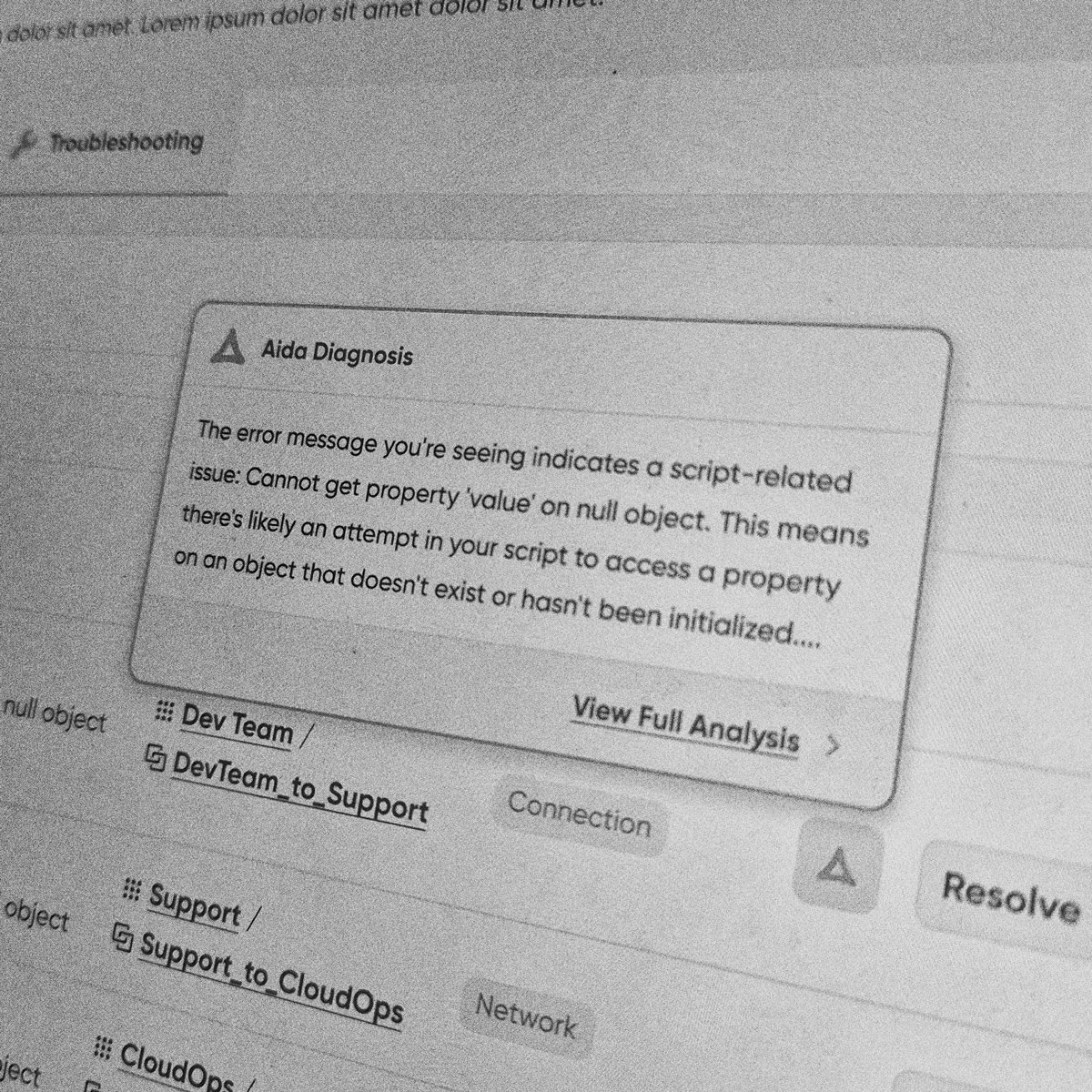
What If Integration Actually Scaled With Your Business?
Exalate gives you the flexibility of a custom integration solution. Without the maintenance nightmare
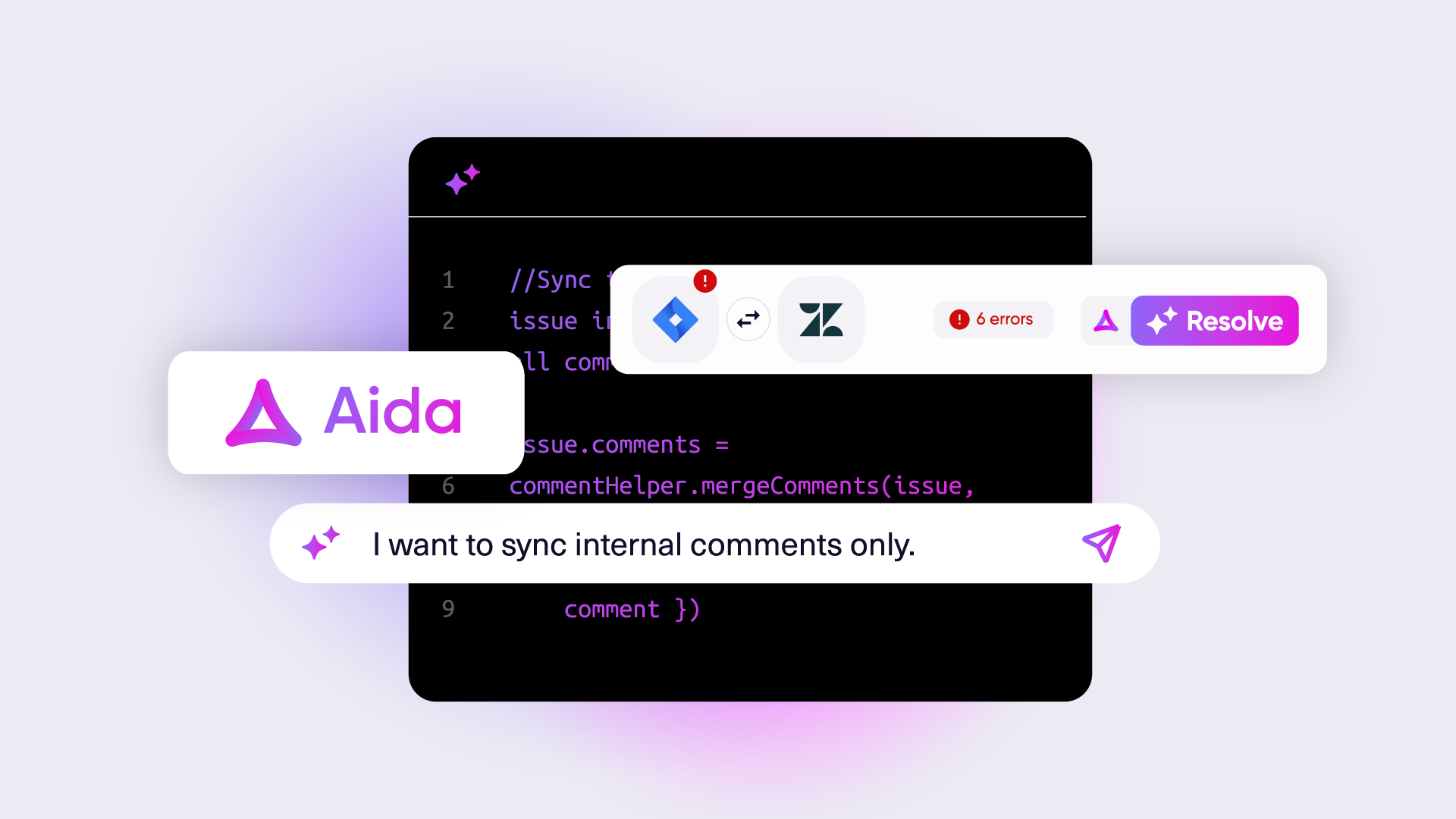
Deploy in Hours, Not Months
Aida generates sync scripts from your prompts, cutting initial setup time by ~40%.
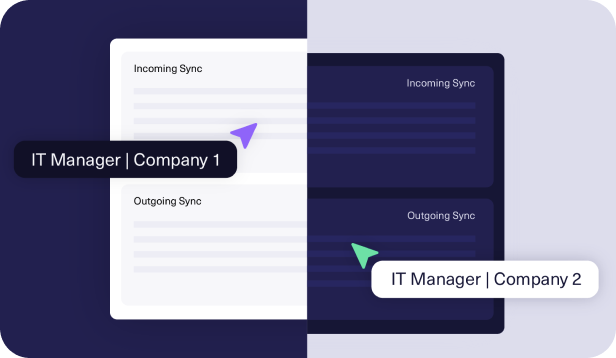
Let Teams Own Their Side
Have complete control of your own integration settings, even when working with external partners.
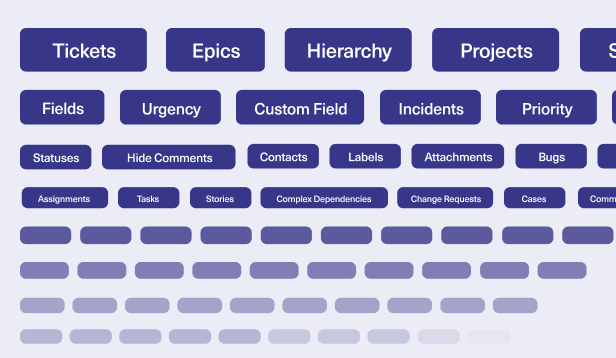
Scale Without Rebuilding
Connect 2 systems or 10. Add new partners with a few clicks. No architectural limits.
Build vs Buy: A Realistic Look at the Trade-offs
If you Build
- 3-6 months initial development
- Dedicate 2-3 devs full time
- Every new integration = start over
- You own the bugs and maintance
- Once dev leaves = knowledge gone
- Custom code breaks with API changes
- You manage all aspects of security
- Scalability depends on your team capacity
With Exalate
- 5-10h setup with AI
- Minimal dev resources after setup
- Replicate integrations in minutes
- We handle updates and bug fixes
- Documentation, support and community
- We adapt to API changes automatically
- Meets industry security standards
- Scalable to grow with your business
The Integration Checklist Exalate Handles For You
- Bidirectional and automatic sync
- Fully customizable data mappings
- Error handling and automatic retries
- Field-level permission controls
- Multi-level dependencies
- Audit trails and compliance logging
- API change management
- Cross-company security


Real Companies Who Chose to Buy (Instead of Building)
You're not alone in considering custom development. Here's what happened when these teams ran the numbers.

NVISO's team successfully built their own integration. It functioned exactly as intended. The code worked. Data synced properly.But then, reality hit: maintenance costs were too high.

EBU's team was already stretched thin. Building an integration from scratch would pull developers away from core product work.They recognized that with the advent of AI and other technologies, their in-house integration would soon become obsolete
Every Day You Wait, Your Team Loses Hours to Manual Workarounds
Tickets manually copied across tools
Updates that don't sync automatically
Important data living in 3 places, all different
You didn't hire a team to be copy-paste machines. Start connecting your teams today.
Build vs Buy Integration Cost Calculator
See the true cost of building integrations in-house
Basic Information
Development Resources
How AI affects this calculation (2025 reality)
Despite 75-93% of developers using AI tools in 2025, team-level productivity gains have plateaued around 10%. AI primarily reduces initial coding time – it does not reduce design, review, testing, security validation, or maintenance. We apply the AI discount to the coding portion of build effort (~35% of total) only.
What the data shows: AI users write more code but PR review time grows 91% (Faros AI, 2025). Experienced devs on mature codebases were 19% slower with AI in METR's randomized trial (2025) – while believing they were 20% faster.
Buy Solution Details
Optional: Productivity & Risk Factors
Cost Comparison Over Time
Build In-House
Buy Solution
Build Costs
Ongoing Annual Costs
Buy Costs
Cost Analysis
Calculation Methodology
- Initial Development: 240 hours per integration (industry average for enterprise integrations)
- Maintenance: for custom build integration – 10 hours/month – includes bug fixes, monitoring, and minor updates; for ready-solution – 2 hours/month – includes minor changes to sync configs and updates
- Security Reviews: 40 hours/year – quarterly security audits and compliance checks (doubled when AI-generated code is used, per CodeRabbit 2025)
- API Changes: 60 hours/year – adapting to third-party API updates and deprecations
- Documentation: 20% of development time – keeping technical docs current
- AI Coding Tools (build side): Standard usage reduces coding time by ~20%; Advanced usage by ~35%. Applied to the coding portion of build effort only (~35% of total). AI does not reduce maintenance, security reviews, or API change costs – and may increase security review burden.
- Aida AI Assist (buy side): Reduces implementation hours by ~40%. Conservative estimate based on 2025 research showing real-world AI productivity gains are well below vendor claims; Aida benefits from being purpose-built for the narrow task of sync script generation.
Sources: Stack Overflow Developer Survey 2024, Gartner Integration Research, IEEE Software Engineering Reports, plus 2025 AI productivity research (see detailed sources below).
2025 research on AI coding productivity – the reality vs. the hype:
- Faros AI Productivity Paradox Report (2025) – Analyzed telemetry from 10,000+ developers across 1,255 teams. Finding: AI users complete 21% more tasks and merge 98% more pull requests, but PR review time grows 91%. Most organizations see no measurable performance gains. faros.ai/blog/ai-software-engineering
- METR Randomized Controlled Trial (July 2025) – 16 experienced open-source developers, 246 tasks in mature projects. Developers forecast AI would reduce time by 24%, believed afterwards it reduced time by 20% – but AI actually increased completion time by 19%. arxiv.org/abs/2507.09089
- DX / Laura Tacho Research (presented 2026) – 121,000 developers across 450+ companies. 92.6% use AI coding assistants at least monthly, yet productivity gains haven't moved past 10%.
- JetBrains State of Developer Ecosystem 2025 – 24,534 developers across 194 countries. 85% regularly use AI coding tools.
- CodeRabbit (2025) – AI-generated code contains 2.74x more security vulnerabilities than human-written code. (Note: CodeRabbit is an AI code review vendor – the data is real but the source has commercial interest.)
- Google DORA Report 2024 → 2025 – 2024 report found AI adoption correlated with slight decreases in delivery throughput and stability. The 2025 report (Sept 2025) showed a reversal, with AI now linked to higher throughput. The direction is genuinely contested.
The 2025-2026 research landscape is mixed but consistent on one point: individual developer speedups (often claimed at 20-55%) do not translate proportionally to team or organization-level delivery gains. The "AI makes building integrations easy" claim is not supported by current rigorous research.
See the New Exalate in Action
Let us show you how Exalate can fit your unique business needs.
trusted by clients worldwide