
Two-way Jira Salesforce Integration
Stop wasting hours on manual updates. Sync cases, accounts, work itens and more between Salesforce and Jira. Automatically and in real-time.
Let Sales, Support, and Engineering stay perfectly aligned.
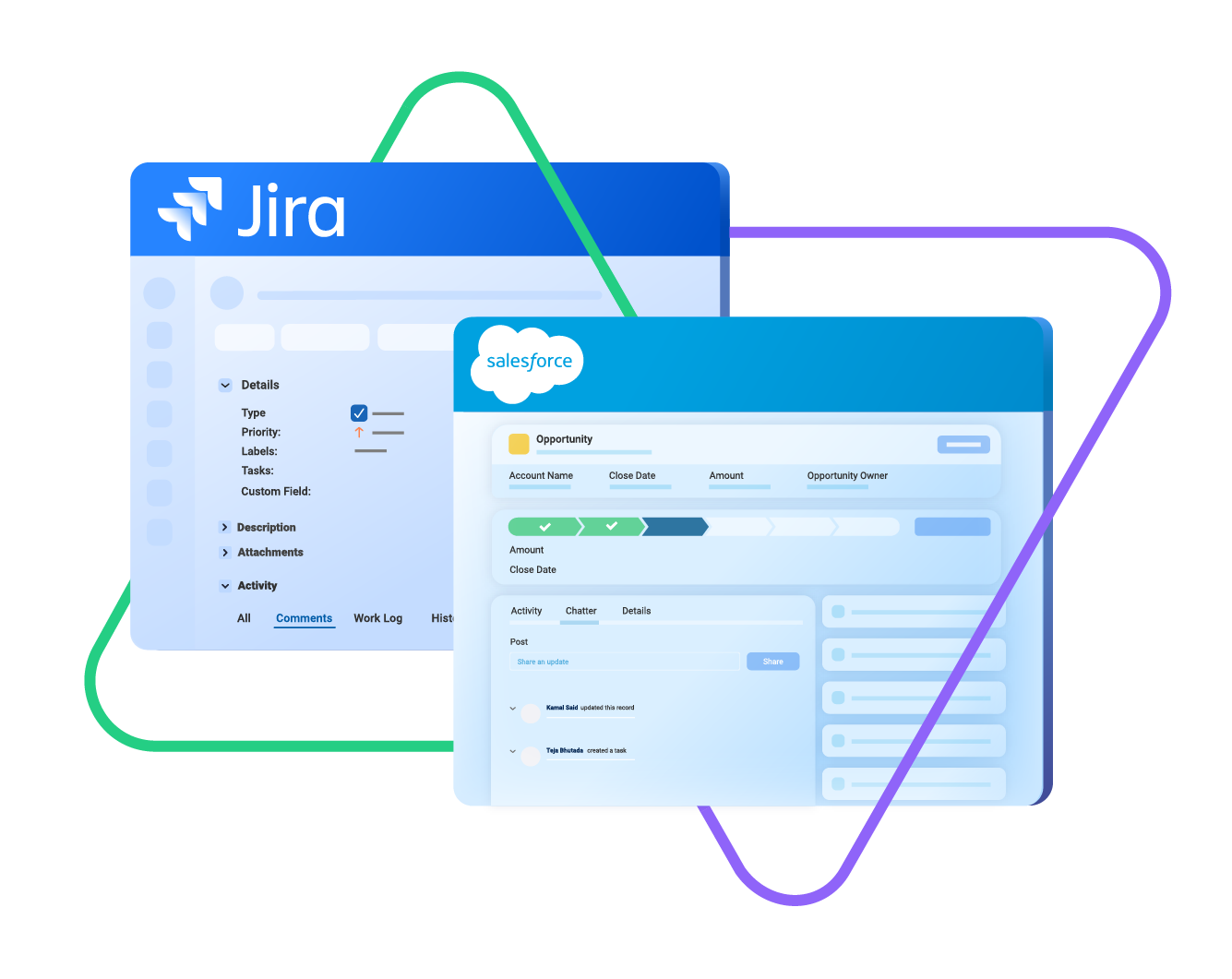
sync issue types, labels, priority, status...
sync any custom fields, attachments...
sync comments, worklogs, history...
sync opportunity, case, taks, account, product...
sync owner, status, number, priority...
sync contact details, internal comments...
4.3/5
Highest Rated Integration App on the Atlassian Marketplace







Sync Exactly What Your Teams Need
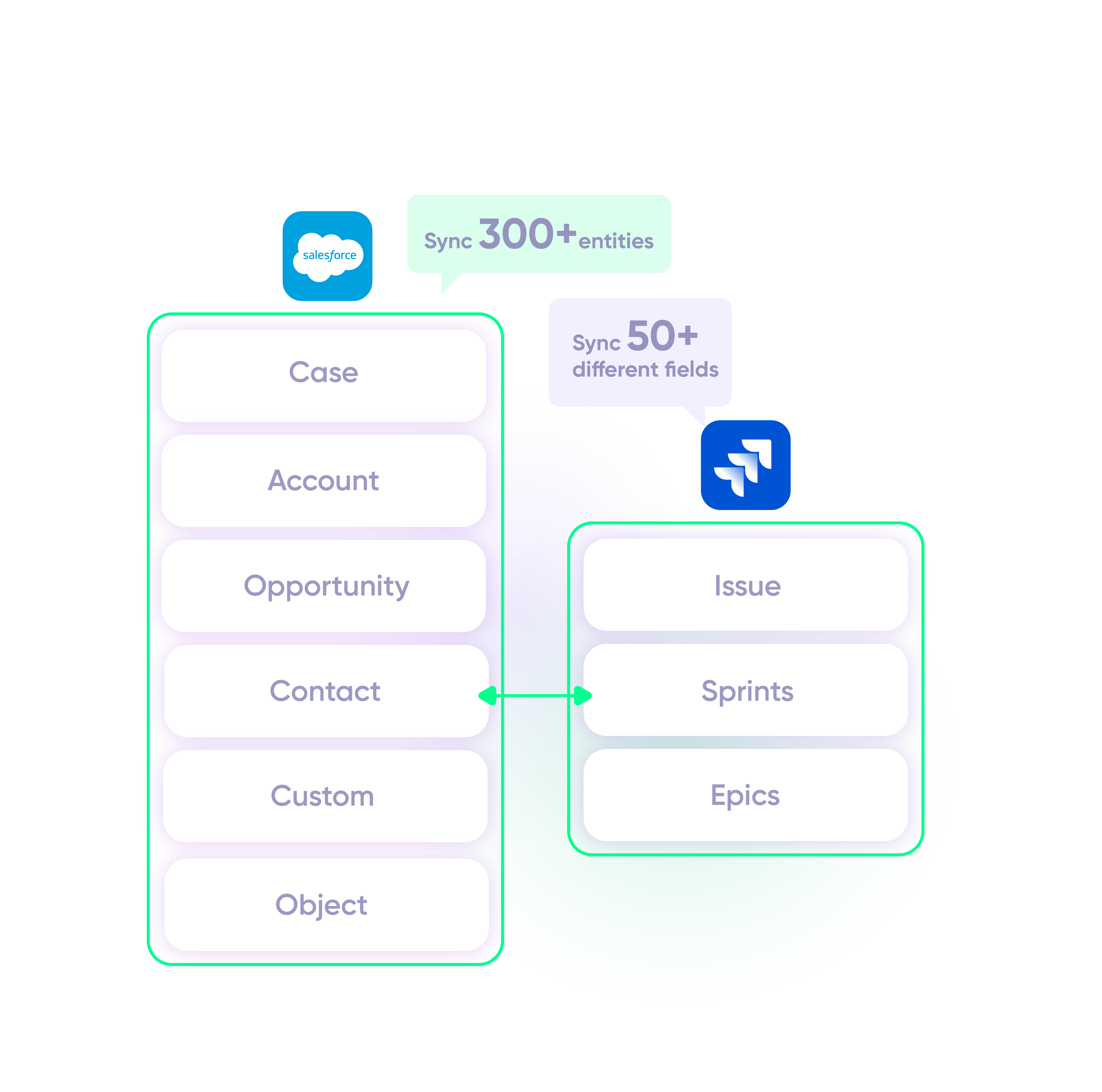
Sync any entity using a one or two-way mapping. Configure and map the entities precisely as you require them.

Salesforce
Case
All fields are supported, including:
- Custom fields
- Account Name
- Asset
- Business Hours
- Case Owner
- Contact Email
- Escalated
- Priority
- Product
- SLA Violantion
- Type
Problems
All fields are supported, including:
- Close Date
- Contract
- Delivery/Installation Status
- Description
- Lead Source
- Order Number
- Opportunity Score
- Price Book
- Probability
- Tracking Number
Change Requests
All fields are supported, incuding:
- Account Owner
- Annual Revenue
- Billing Address
- Customer Priority
- Parent Account
- SIC Code
- Tradestyle
- Upsell
- Year Started
Sync any Salesforce entity
Exalate for Salesforce allows syncing all the available objects and their fields within the Script connection. This page only shows the most popular and widely used objects and their fields.

Jira
Jira Software (Cloud and Data Center)
Jira Service Management
Work Items (Issues)
(Bugs, Tasks, Stories…)
+40 fields are supported, including:
- Custom fields
- Summary
- Status
- Description
- Key
- Comment
- Attachment
- Priority
- Third-party plugin fields (e.g Insights)
Sprints
All fields are supported, incuding:
- Name
- State
- Start date
- End date
- Complete goal
- Origin board ID
- Goal
“
Exalate is stable, flexible, customizable, and pretty easy to set up and use.
ALEXANDER SINNO

How it Works
Connect
Easily connect multiple projects, instances, and platforms. With local, or external partners.
Customize
Set your sync rules to make sure the right data is shared.
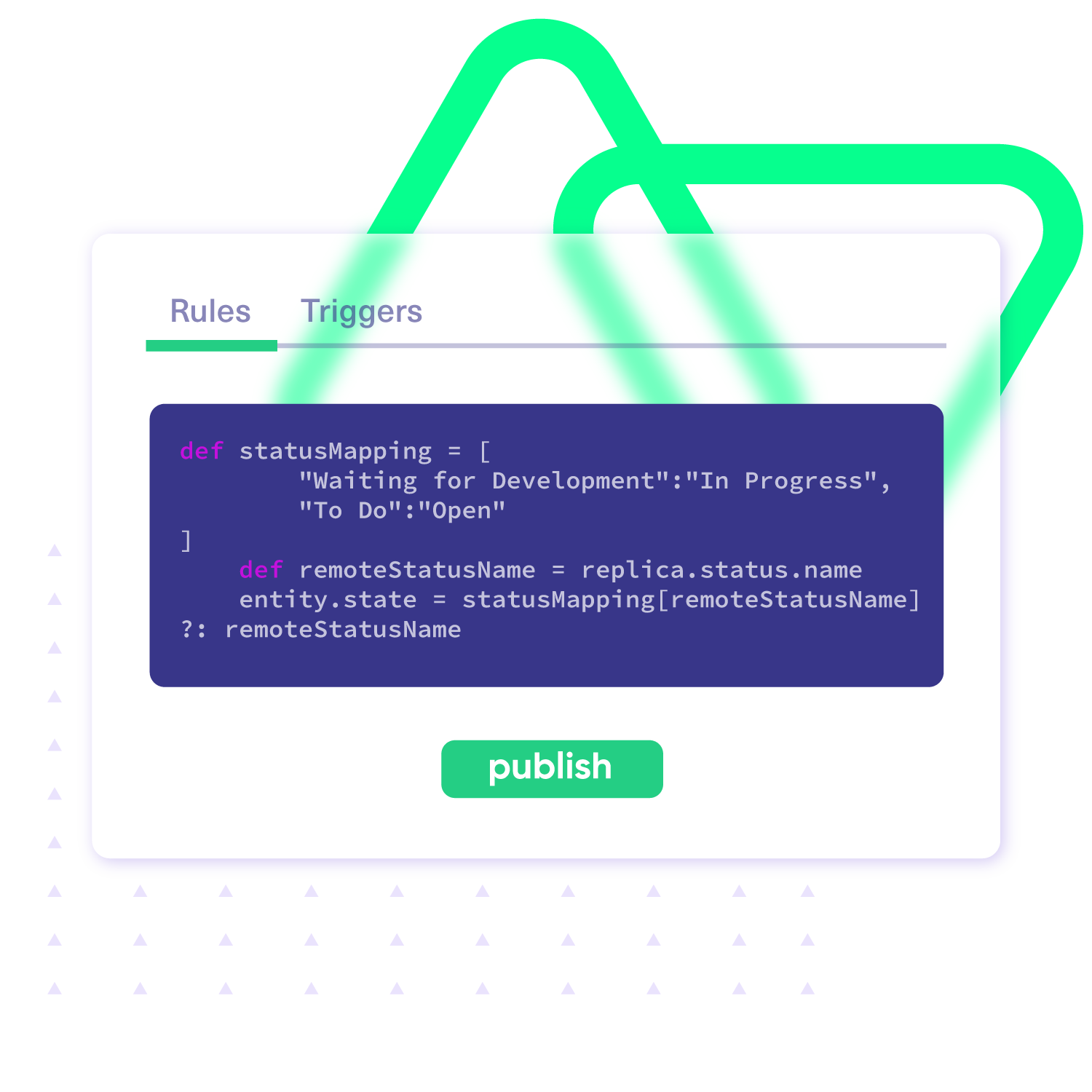
Prompt Exalate’s AI to generate rules, or fine-tune with Groovy-based custom mappings and logic for complete control.
Automate
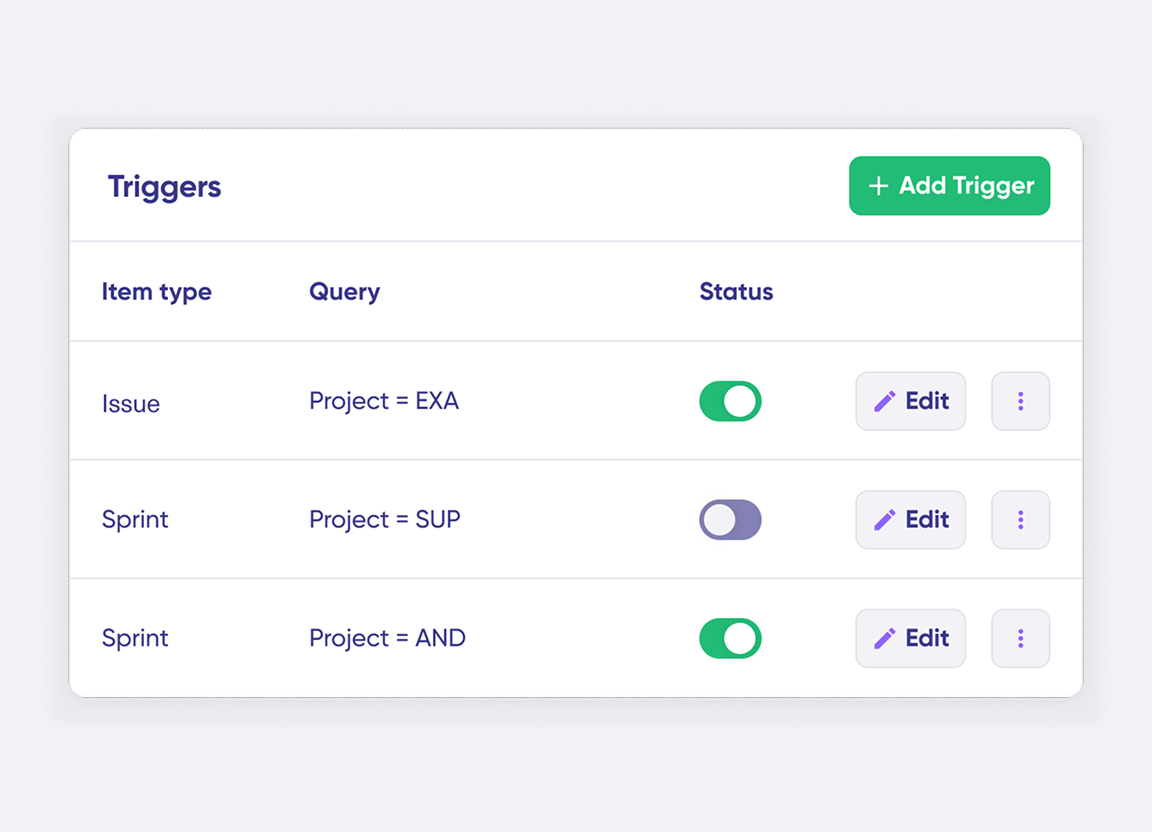
Set triggers to automate your sync based on specific conditions.
Synchronize
Now your connected instances will exchange information automatically. Happy syncing!
Get the Most Out of Your Integration
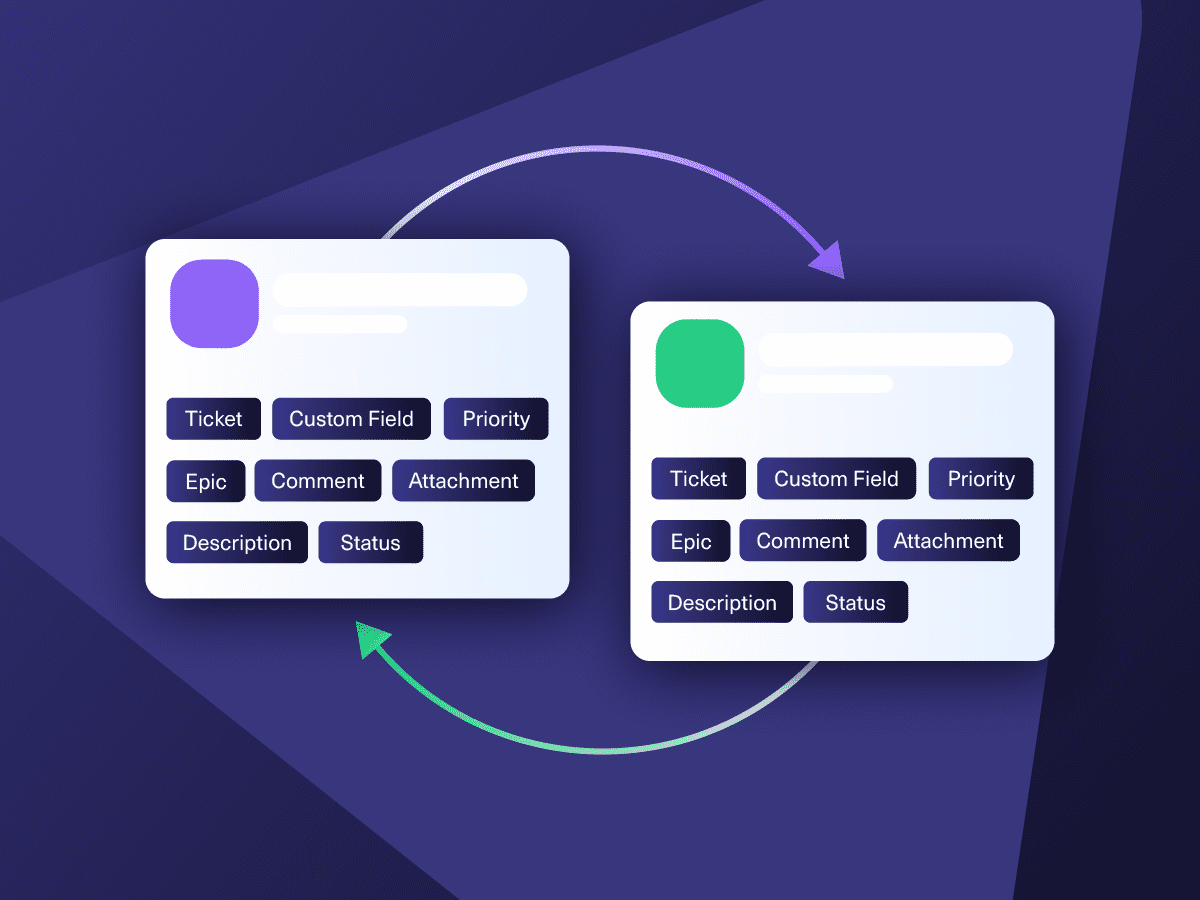
Sync in Real-Time
Two-way, real-time sync between platforms. Updates flow automatically. No manual exports, no delays.
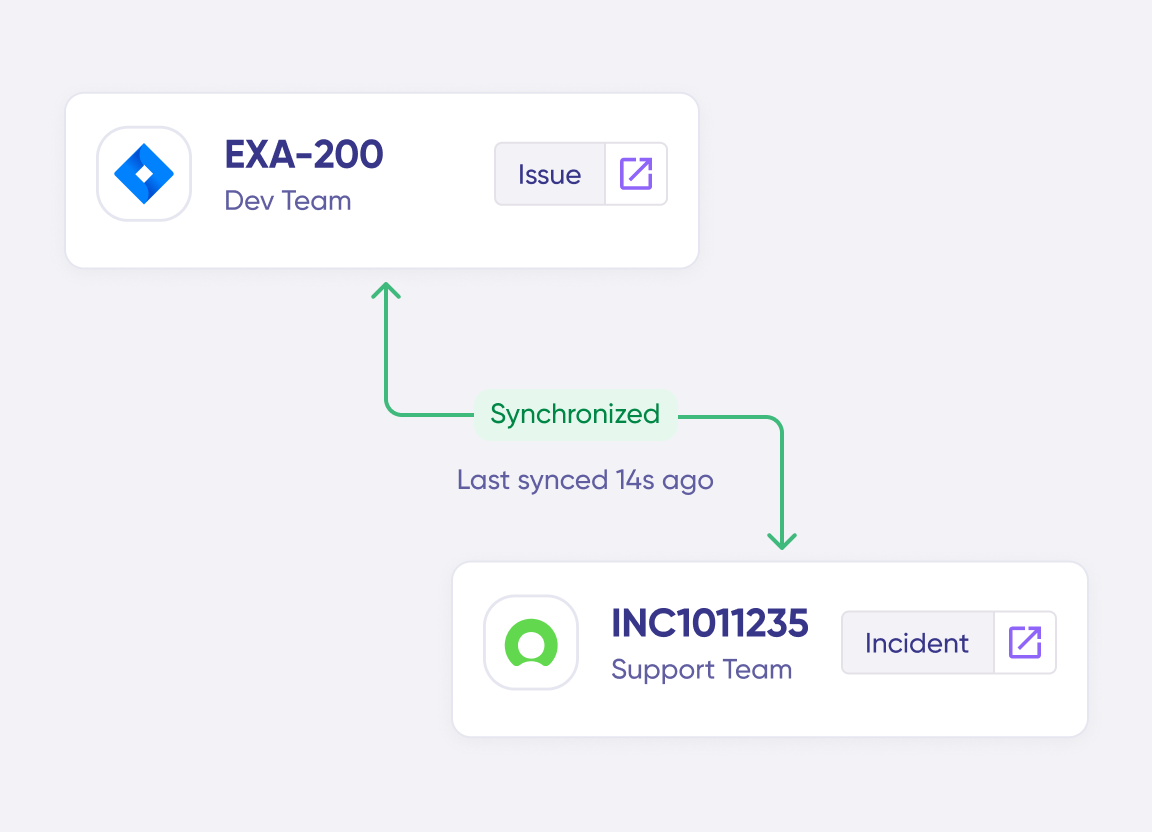
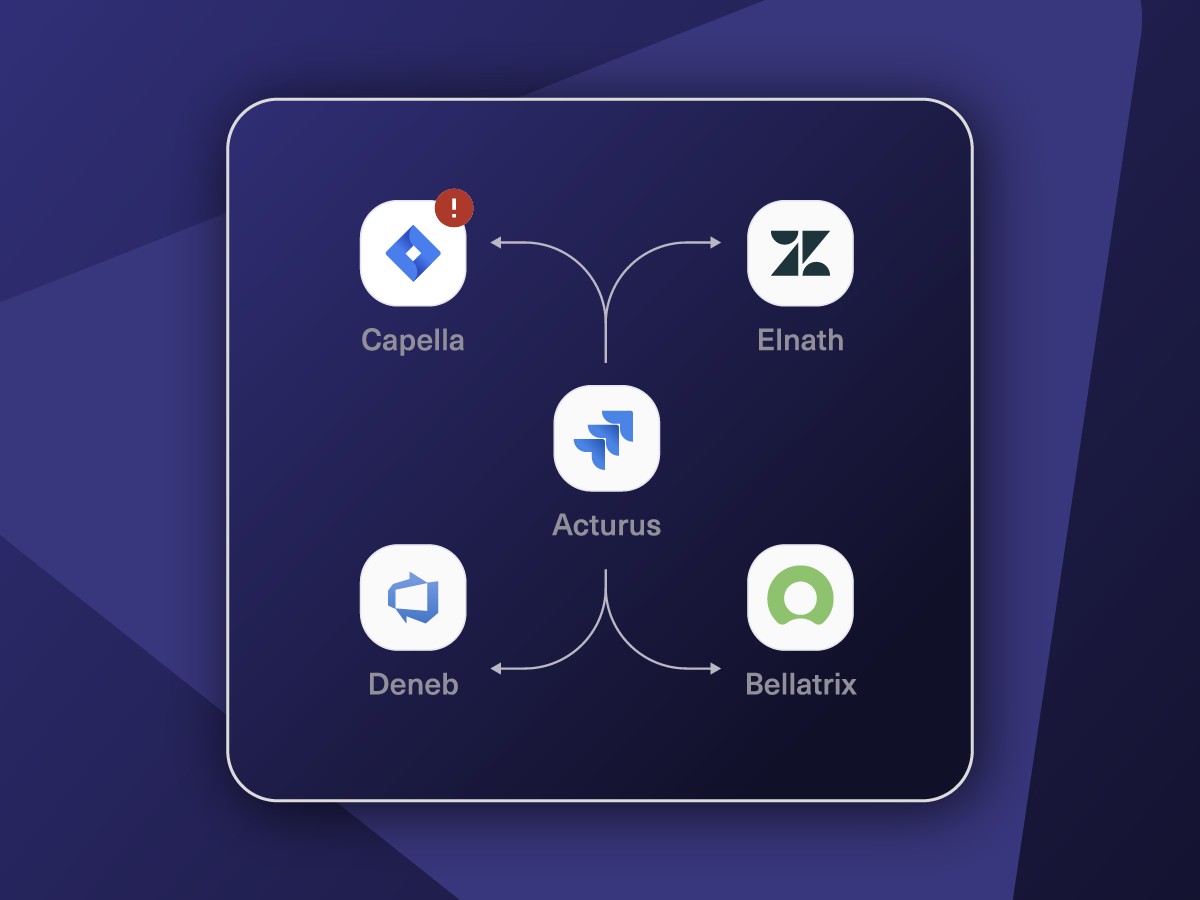
Connect Any Number of Instances
Connect multiple projects, instances, and platforms. Use different rules for each connection.
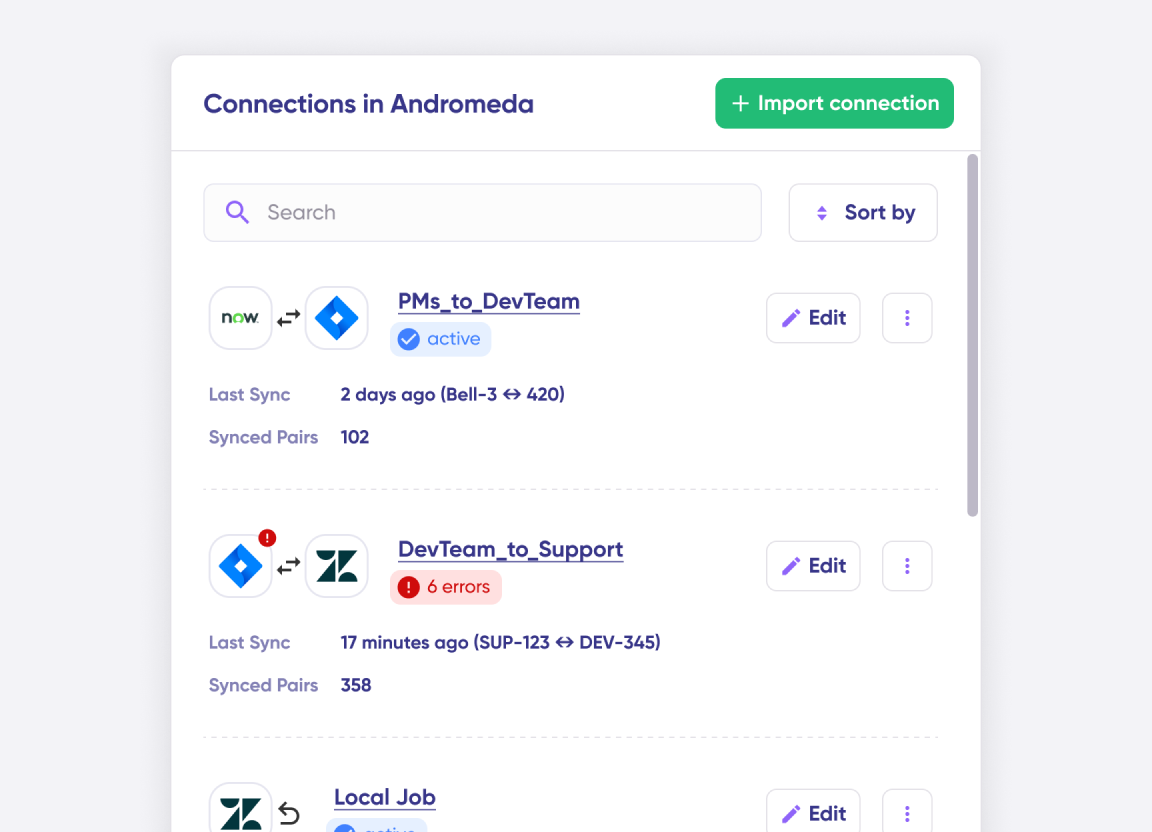
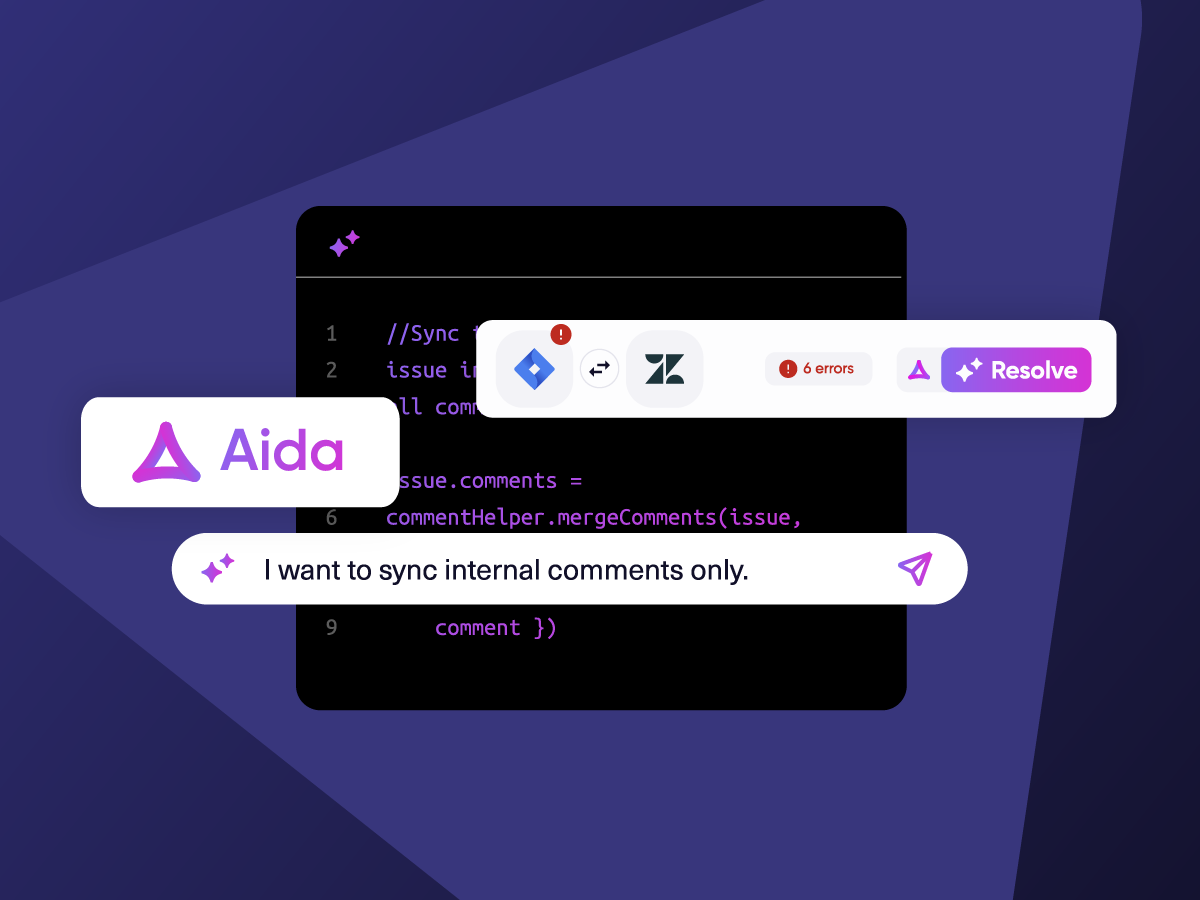
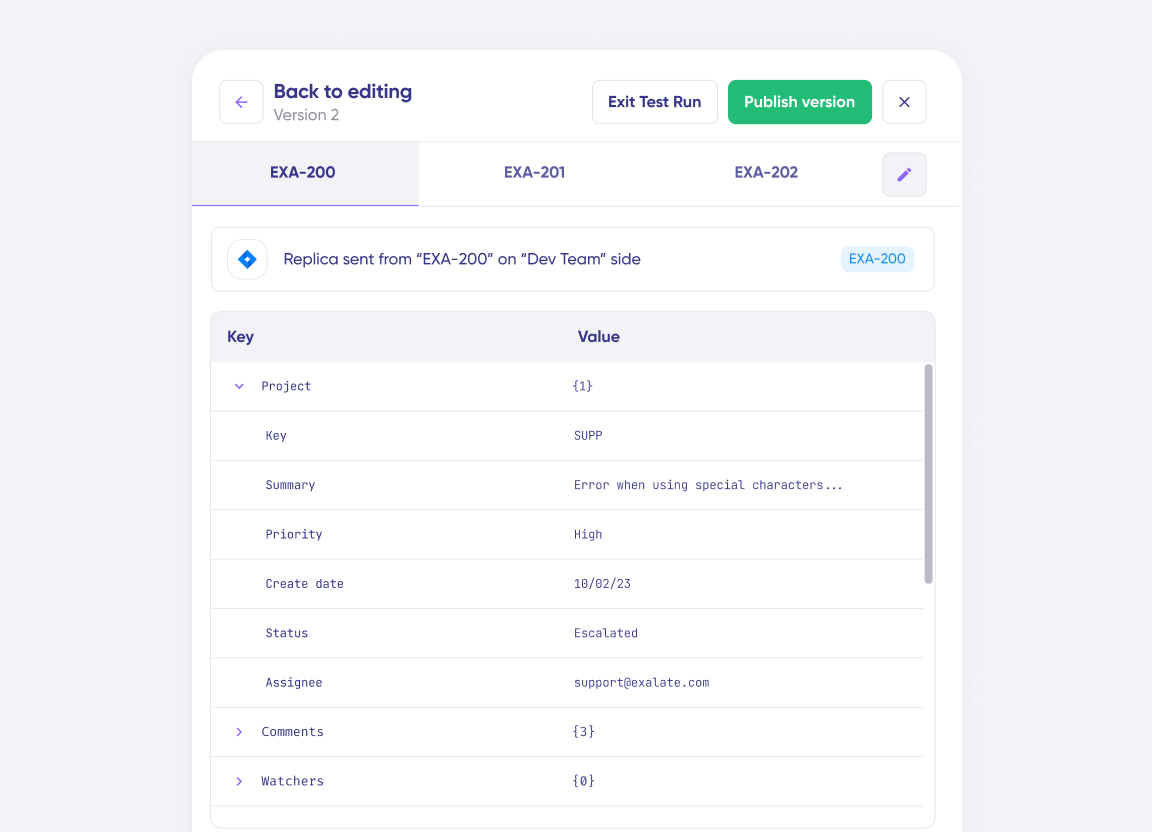
Know What Failed and Why
Get AI-powered recommendations for resolving the issue, including possible fixes and next steps.
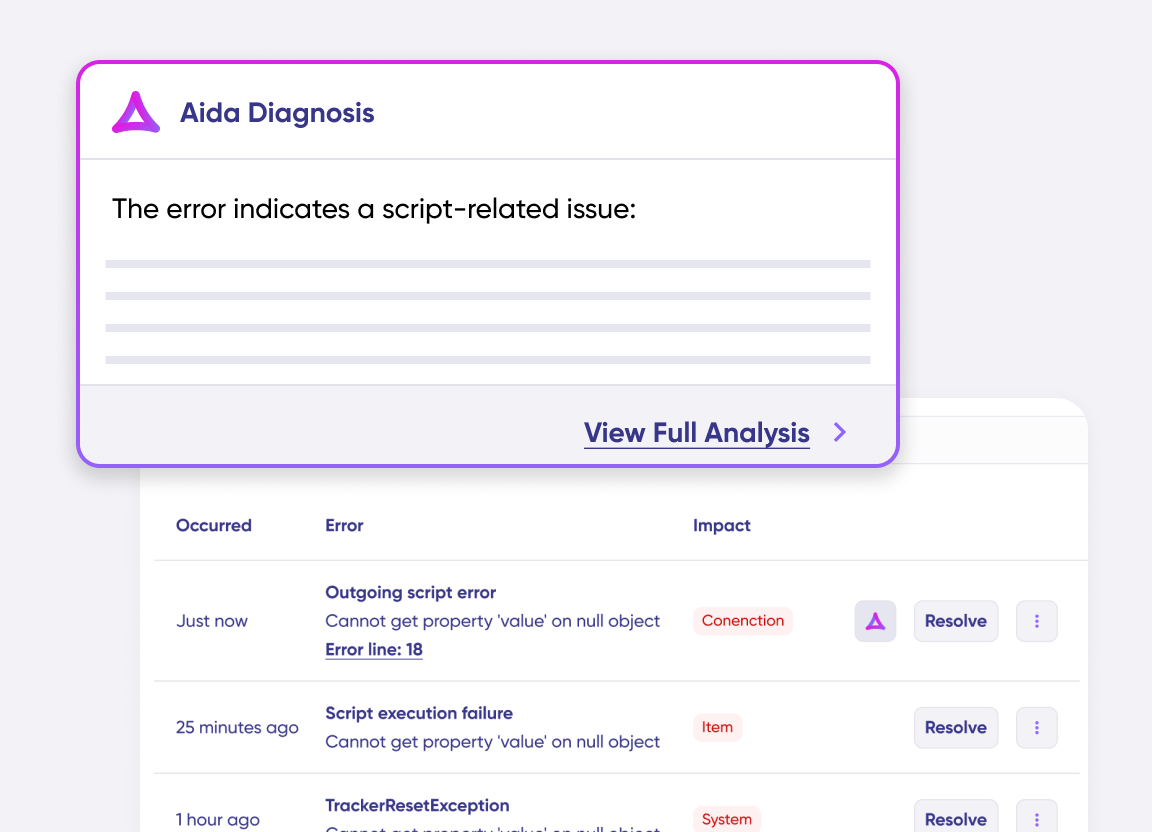
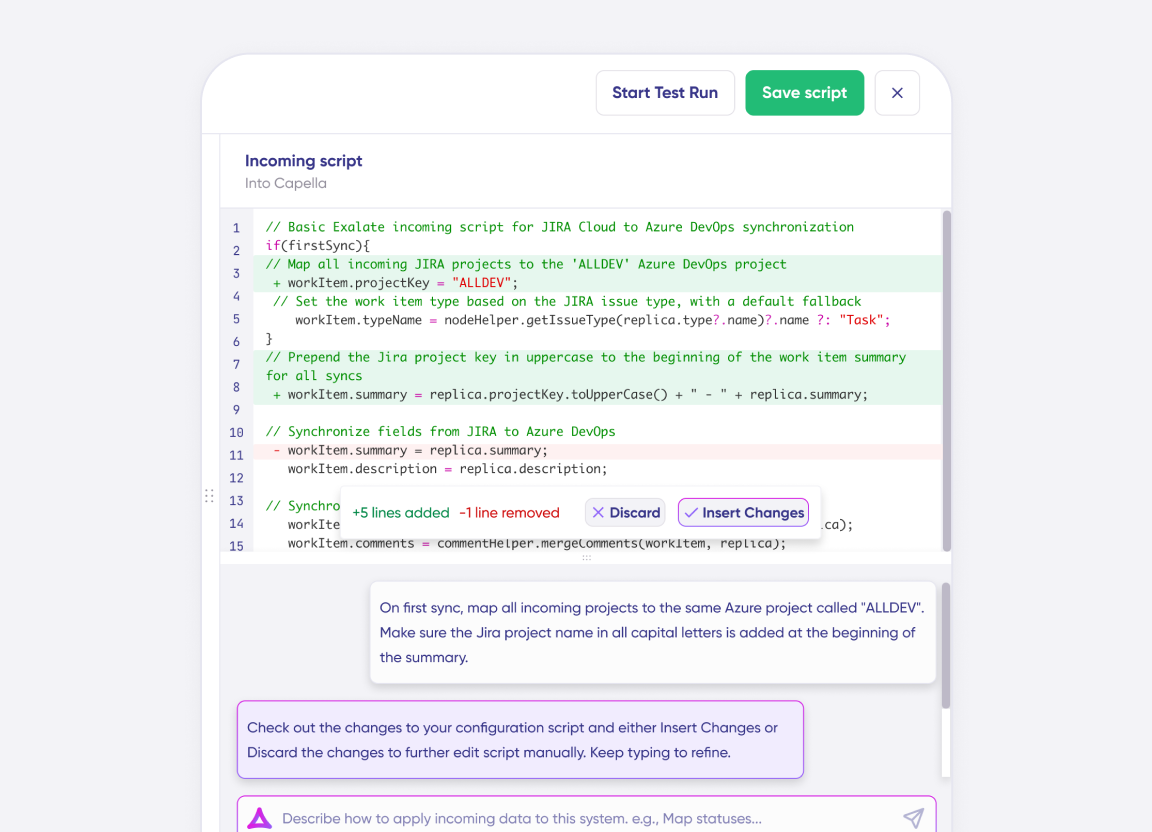
AI Assisted SetUp
Describe your integration goal. Aida reviews your sync rules and connector type, then suggests script changes
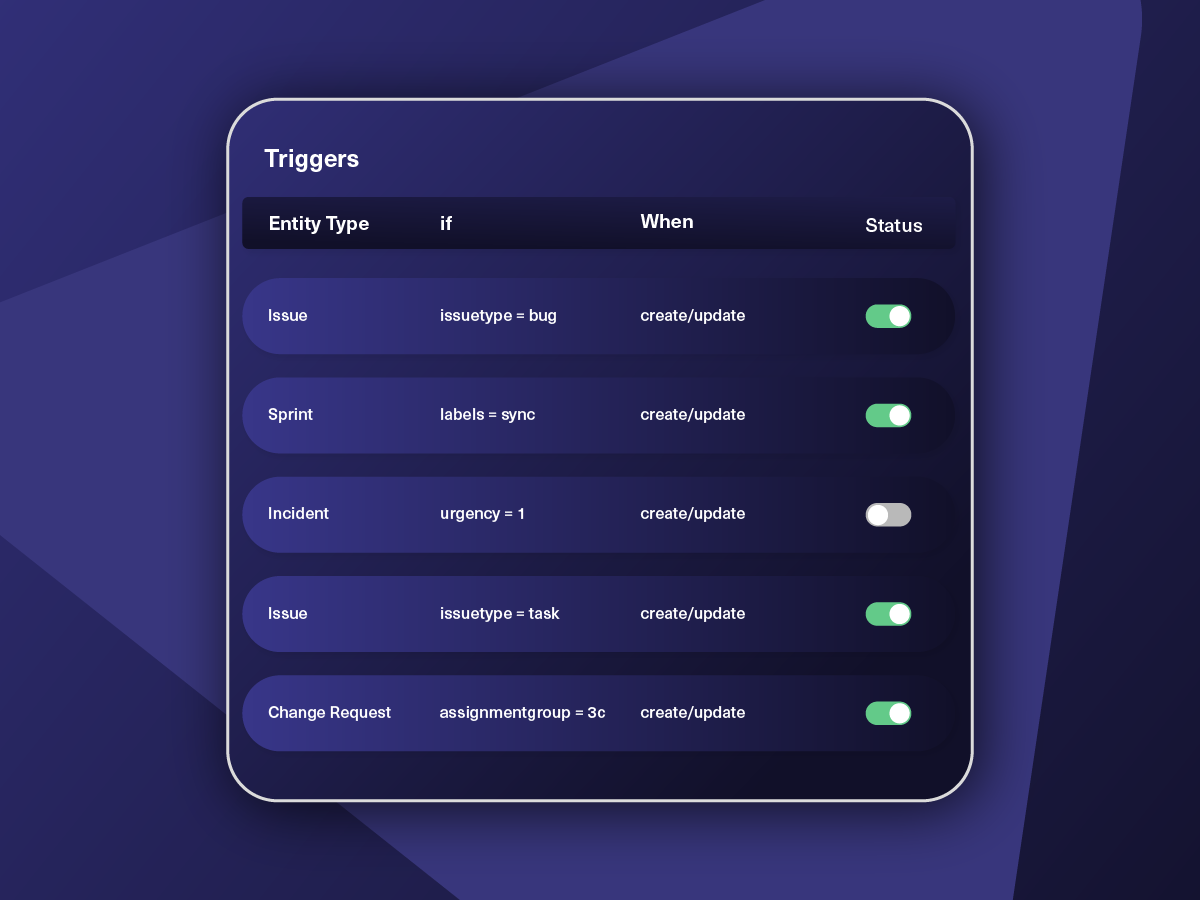
Only Sync What Matches
Set various conditions for automatic synchronization.
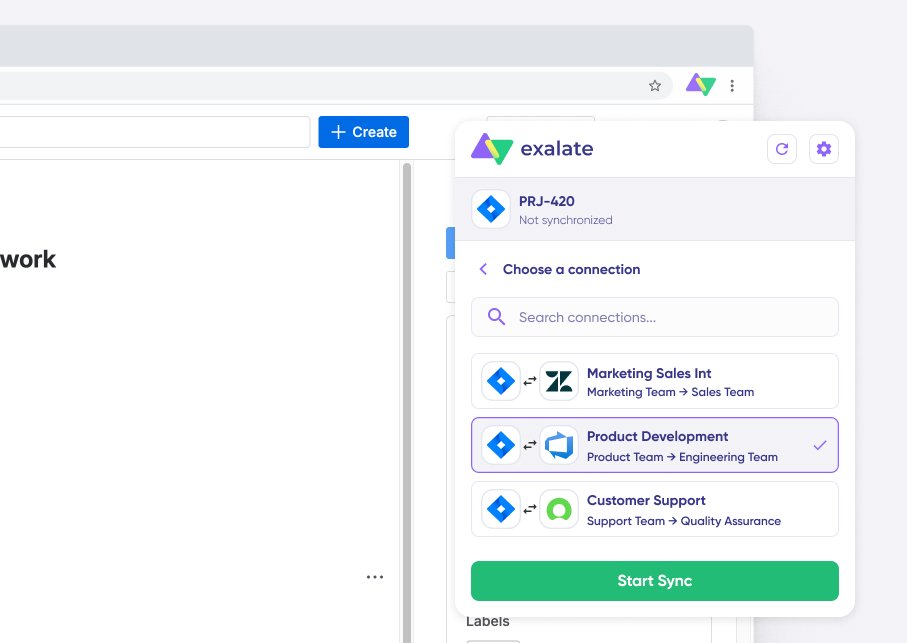
Sync Visibility, Right Where You Work

Check the real-time status of your active syncs, spot failures, and trigger a manual push. All from a browser extension, without opening the Exalate console.
ai assisted script
Your Integration, Your Rules
Full Control, Boosted by Aida AI
Exalate comes with default sync rules, that can be adapted to your specific needs.
Build your unique integration rules with just a few lines of Groovy Script – or a few prompts.
- Deepen, change, adjust sync rules easily
- Control outgoing and incoming data on each side
- Simply mirror or customize mappings
- Track changes with version history
- Move confidently with draft mode
“
We can do almost anything we want with the sync thanks to its groovy script.
I can say I haven’t seen any other apps as flexible as Exalate.
Daniel Miks


Why Exalate is
Secure by Design
- Single-tenant architecture – no shared infrastructure
- Encryption in transit and at rest
- Automatic recovery from outages
- ISO 27001:2022 certified
- 24/7 threat monitoring with SentinelOne


Simple or Advanced, We Got you Covered
Work with simple integration templates. Or, completely customize your sync.
Sync Any Data
Set up one-way or two-way syncs between new or existing Jira and Salesforce entities. Sync issues, epics, sprints, etc in Jira. Sync any Salesforce entity such as cases, accounts, opportunities, contacts, custom objects, etc. Map fields by configuring the sync rules. Start automatic sync with triggers.
Control your Jira Salesforce sync at a granular level.
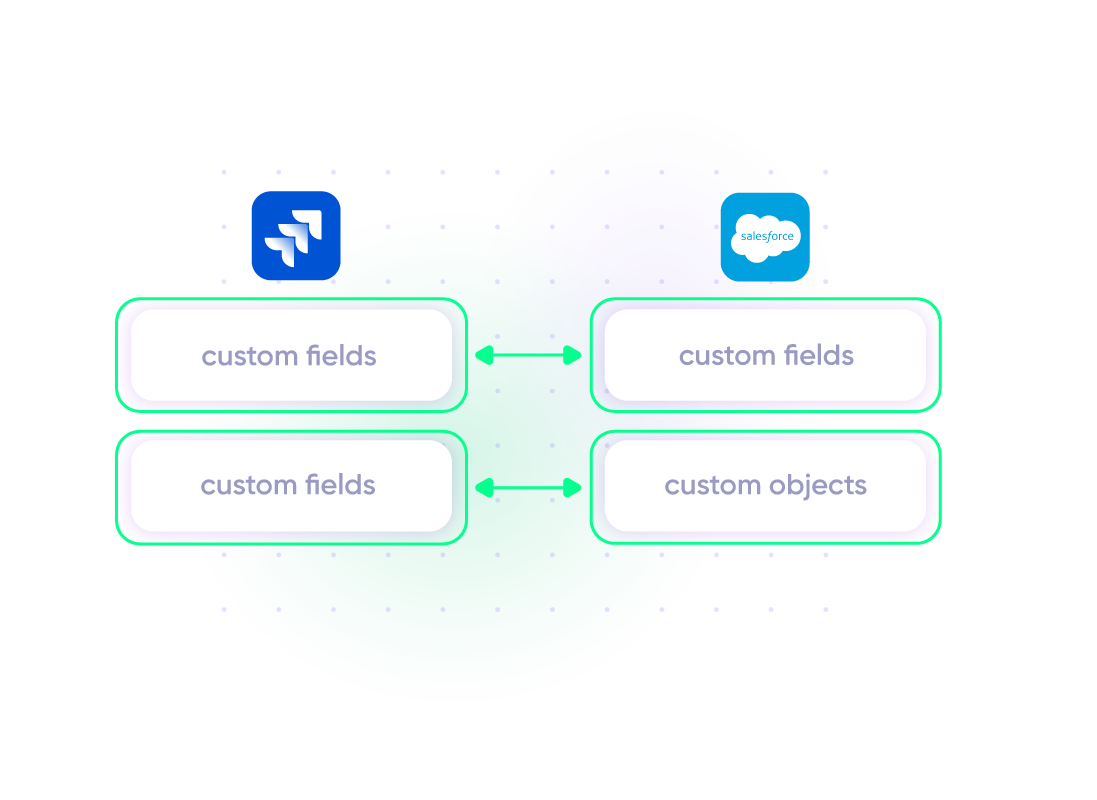
Sync Custom Objects and Fields
Sync standard and custom Salesforce objects with custom Jira fields. Update the connected Salesforce Account details from the corresponding custom field in Jira.
In practice:

...Or simply write a few lines of code
entity.entityType == “Custom Object Name”
replica.customFields.”CF Name” = issue.customFields.”CF Name”
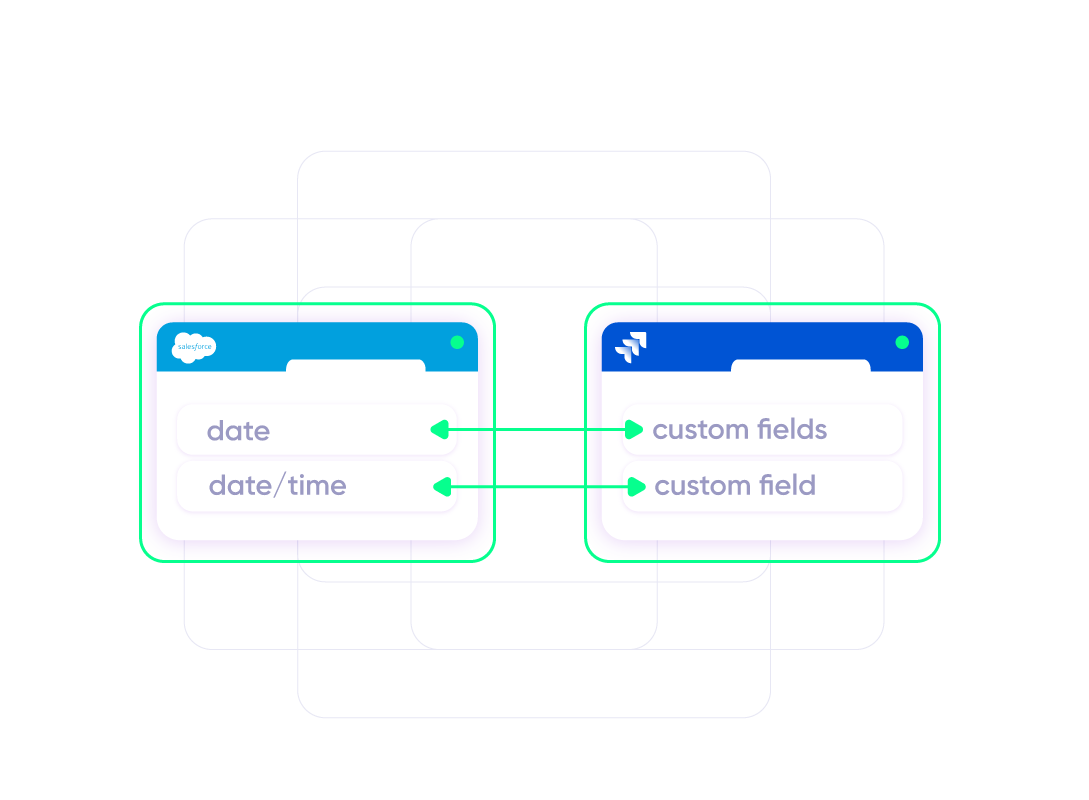
Sync Date or Date/Time Fields
Sync custom fields in Salesforce like Date or Date/Time by converting them into a common format for Jira.
In practice:
...Or simply write a few lines of code
import java.text.SimpleDateFormat;
import java.text.DateFormat;
def dateCustomFieldValue(replicaCustomField) {
def datePattern = “yyyy-MM-dd HH:mm:ss.S”; // define the desired date/time format
String dateString = replicaCustomField.value;
if (dateString) {
dateString = dateString.replaceAll(“\””,“”).trim();
DateFormat formatter = new SimpleDateFormat(datePattern);
date = formatter.parse(dateString);
return date.time;
}
}
entity.date__c = (Long) dateCustomFieldValue(replica.customFields.“DateCf”)
entity.datetime__c = (Long) dateCustomFieldValue(replica.customFields.“Date
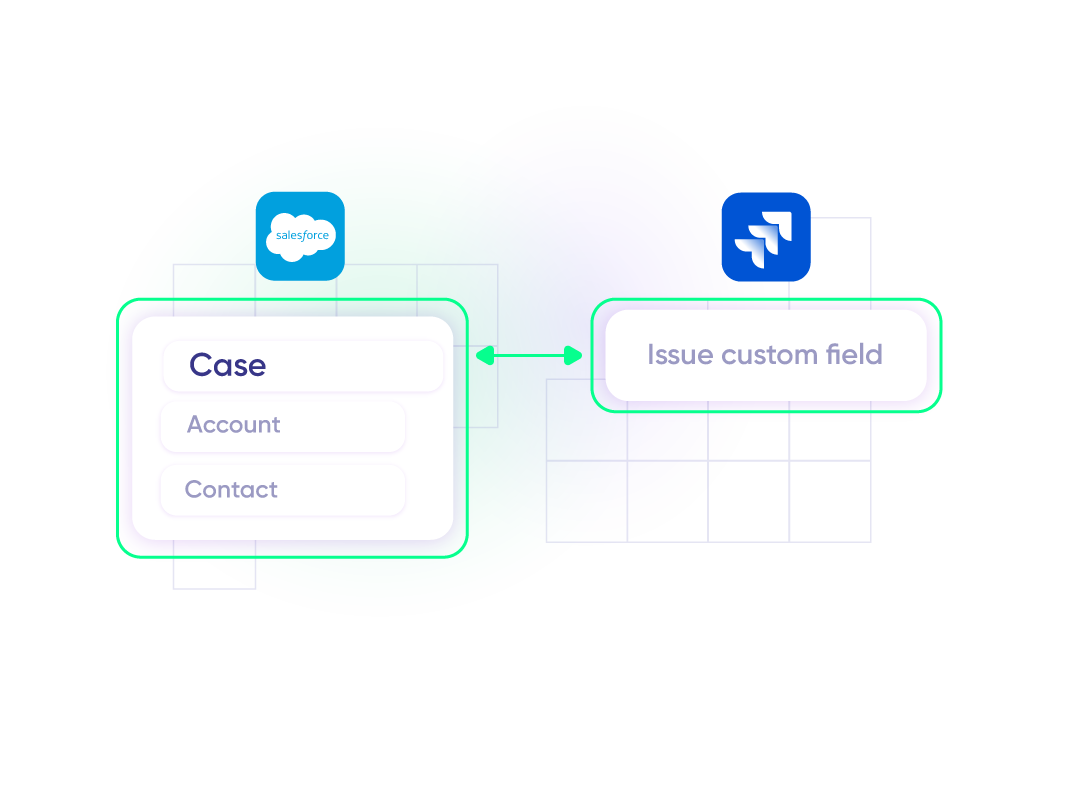
Sync Multiple Related Salesforce Objects to Jira
Present a Salesforce case object containing a contact and a linked account on the Jira side.
In practice:
...Or simply write a few lines of code
if (replica.”TYPE” == “Case”) {
if(firstSync){
issue.projectKey = “UD”
issue.typeName = “Task”
syncHelper.syncBackAfterProcessing()
}
issue.summary = replica.summary
issue.description = replica.description
issue.comments = commentHelper.mergeComments(issue, replica)
issue.attachments = attachmentHelper.mergeAttachments(issue, replica)
}
else if (replica.”TYPE” == “Contact”) {
def contact = issue.”SF Contact”
if (contact == null || contact.trim() == “”) {
contact = “””||Name:| ||Title:| |||Email:| || | |”””
}
def name = replica.”Name”
def title = replica.”Title”
def email = replica.”Email”
issue.”SF Contact” = “””|| Name | $name |
|| Title | $title |
|| Email | $email|”””
}
else if (replica.”TYPE” == “Account”) {
def name = replica.”Name”
def description = replica.”Description”
issue.”SF Account” = “””|| Name | $name |
|| Description | $description|”””
}
Elevate Comment Sync Capabilities
Sync comment threads and user mentions between Jira and Salesforce. Also, personalize the comment sync based on use case.
In practice:
...Or simply write a few lines of code
replica.comments = issue.comments.collect {
comment ->
def matcher = comment.body =~ /\[~accountid:([\w:-]+)\]/
def newCommentBody = comment.body
matcher.each {
target = nodeHelper.getUser(it[1])?.email
newCommentBody = newCommentBody.replace(it[0],target)
}
comment.body = newCommentBody
comment
}
Sync Incoming Cases as Different Work Types
Cases coming in from Salesforce need to be forwarded to three different work types based on status, urgency, assignee, etc. So the incoming case will appear as a support ticket, bug, or feature request.
In practice:
No need to code, simply add a trigger.

Sync Jira Insights to Salesforce Opportunities
Insights in Jira will prompt our Jira to Salesforce integration REST API to sync work items/tickets to Salesforce opportunities.
If you add an insight to a Jira ticket, it will automatically populate a field in the Salesforce opportunity with the number and status of that Jira ticket.
In practice:

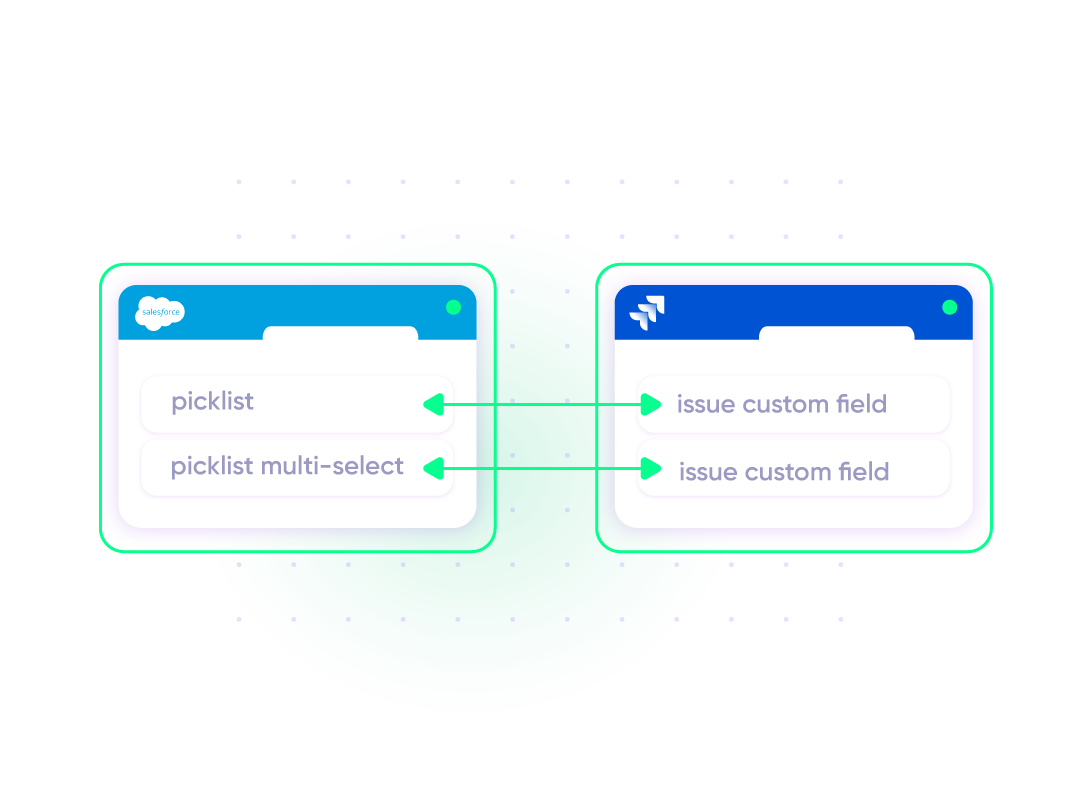
Sync Picklist and Picklist Multi-select Fields
Select an item from a picklist field in the Salesforce case and sync it to a Jira work item’s custom field.
In practice:
...Or simply write a few lines of code
//Jira outgoing sync
issue.customFields.“Hobby”.value = replica.priority?.value ?: “Running”
//Running will be set as a default option if Priority has no selected option
//Salesforce incoming sync
entity.SuppliedCompany = replica.customFields.“text”.value
“
We can now handle around 500 customer incidents per week, thanks to Exalate, which is a very good result regarding the number of products we’re dealing with. It synchronizes 45x faster than our previous solution.
Christof Cuyper |

Pricing Built for Scale, Not Surprises
Exalate offers a 30-day Free Trial
Starter
Small teams with straightforward synchronization needs
Scale
Growing teams with moderate synchronization volume
Pro
Organizations needing enterprise systems
pricing per integration starts atThis is the entry price for the lowest-cost integration. Your price depends on which systems you connect, items in sync, environments, SLA/support, and add-ons. To get a tailored quote, contact sales.
$
550
/mo
Billed annually
Enterprise
Large-scale deployments with custom requirements
Let's talk
Get in touch for your custom pricing














& more
See the New Exalate in Action
Let us show you how Exalate can fit your unique business needs.
trusted by clients worldwide


Stay Ahead in the Game With Your Jira Salesforce Integration
Control Your Data Flow Direction (one-way or two-way)
Set up and configure connections between Jira and Salesforce, in any way you prefer. Control the direction of your data flow and choose between a one-way or a two-way sync.
Automated Real-time Integration
Streamline your business workflows with automated, real-time Jira Salesforce sync. Reduce the need for manual work. Enhance control over data flow using custom triggers in the platform’s native query language.
Bulk Operations
Sync historical data with bulk operations in Exalate. Connect multiple existing entities using Bulk Connect. Start syncing entities automatically with the same trigger specifications using Bulk Exalate.
Advanced Integration Capabilities
Let your developers implement various sync possibilities using the Groovy-based scripting engine. Create scripts that manage synchronization on your end without affecting the destination.
Integrated Exalate Interface
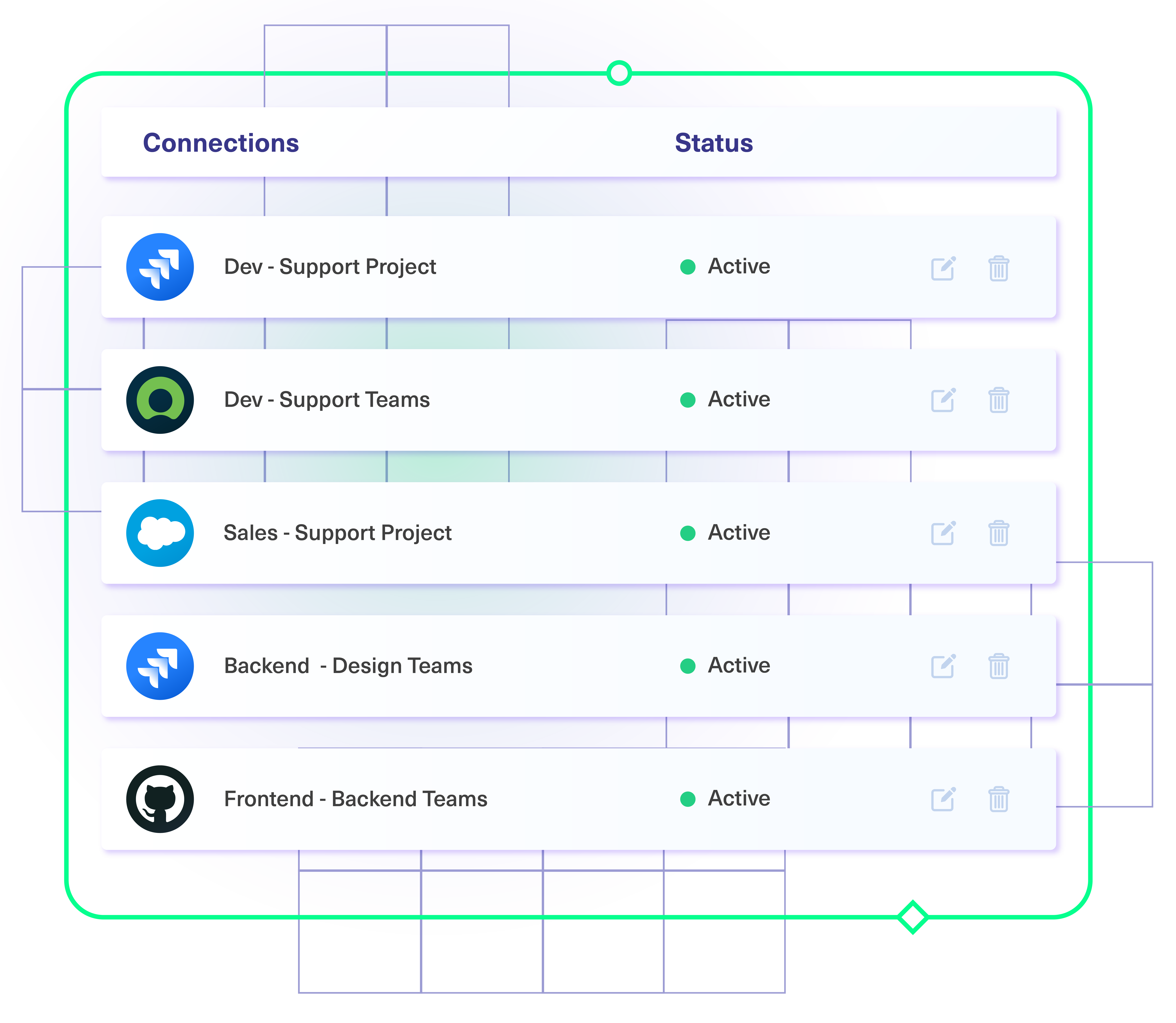
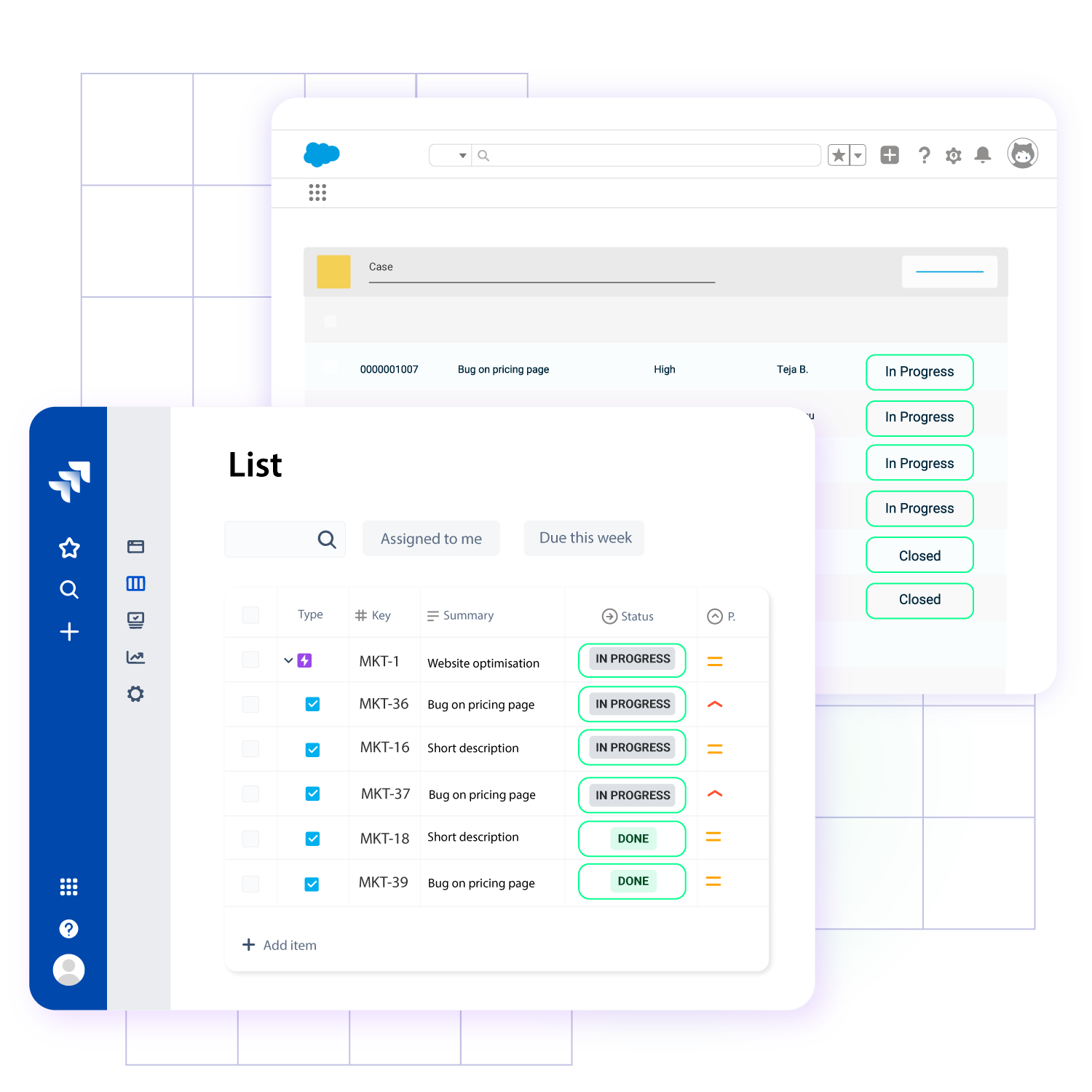
Test your connection, view sync status or connect existing entities with an integrated Exalate UI in Jira and Salesforce. Always stay up-to-date within the platform you use.
FAQ
Answers to the most frequently asked questions
Exalate syncs any Jira work item (bugs, tasks, stories, epics, sprints) with any Salesforce object (cases, opportunities, accounts, contacts, products, or custom objects). You can map and transform entity fields, including summaries, descriptions, comments, attachments, statuses, priorities, and custom fields. Third-party plugin fields like Elements Connect or Insight are also supported.
Exalate uses single-tenant architecture to isolate your data at the infrastructure level. Security features include JWT access tokens, role-based access controls, HTTPS with TLS 1.2/1.3 encryption, and more. Each side of your integration maintains independent control, so no need to share credentials or admin access with integration partners.
Visit Exalate’s Trust Center for more details.
Exalate uses outcome-based pricing where you pay for active items in sync, not per user or transaction. All plans start with a 30-day free trial. Pricing scales with actual business value: you’re charged for items currently syncing, not historical volume or API calls.
Check out the pricing models or estimate the costs here.
Yes, Exalate supports multi-node setups connecting multiple Jira instances, multiple Salesforce orgs, or combinations of both. From a unified console, you can manage all your connections and integrations in one place. Exalate also connects to Azure DevOps, ServiceNow, Zendesk, GitHub, and more, enabling company-wide and cross-company integration networks.
MuleSoft is Salesforce’s native iPaaS solution designed for enterprise API management across many systems. Exalate specializes in real-time, bidirectional sync between work management platforms like Jira and Salesforce. Key differences: Exalate offers granular field mapping with Groovy scripting, requires no API expertise to configure, and supports cross-company integrations where each party maintains independent control of their data and rules.
Yes, Exalate supports full bidirectional synchronization between Jira and Salesforce. Changes made in either system automatically reflect in the other in real time. You control the sync direction for each field: sync comments both ways, sync status one way, or any combination. Each side maintains independent rules, so adjustments on one side don’t affect the other’s configuration.
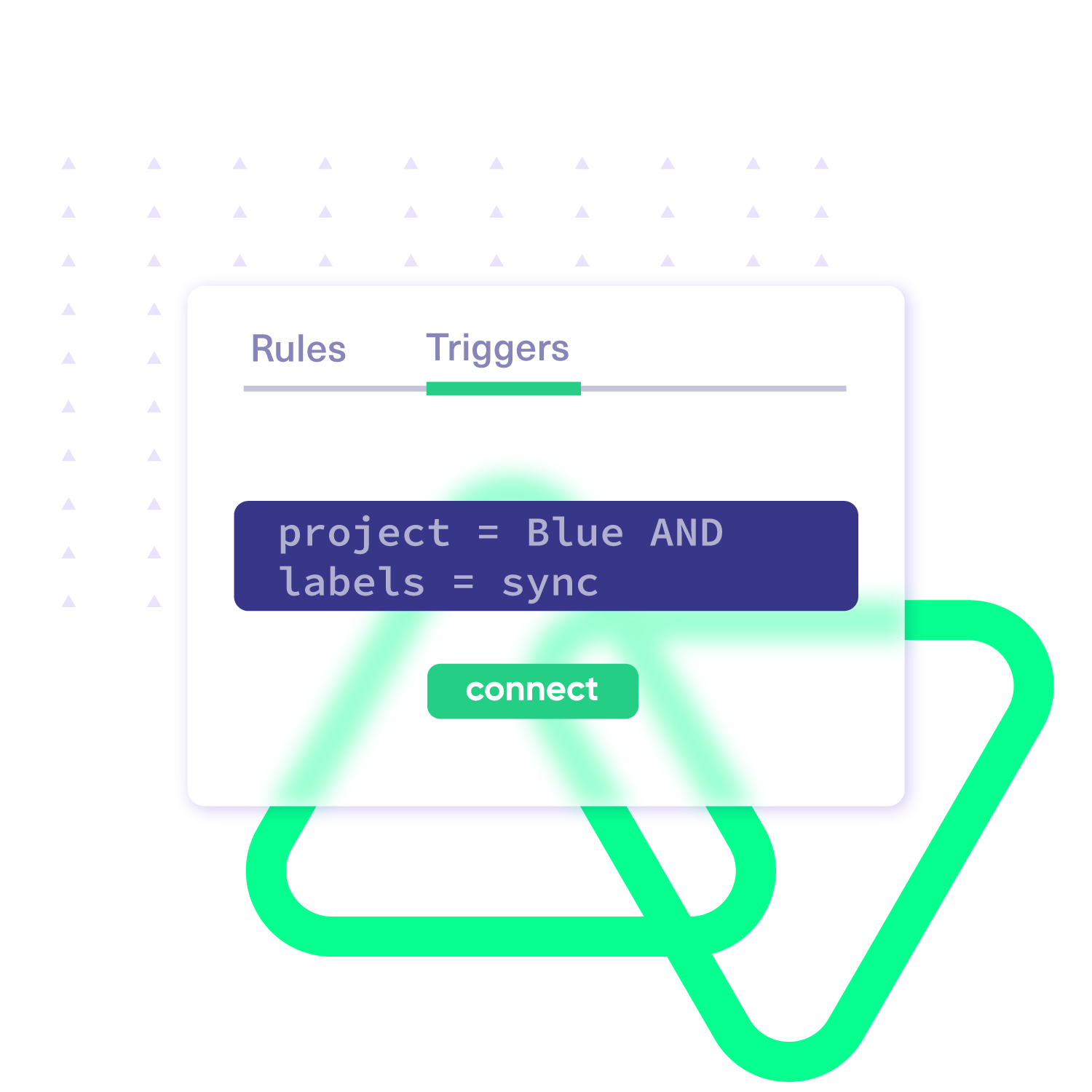
Exalate uses each platform’s native query language for triggers. In Jira, you write JQL queries (e.g., project = "Support" AND priority = High). In Salesforce, you use SOQL queries. Triggers can be based on any field conditions, like issue type, status, priority, custom field values, or any combination. This gives you precise control over which items sync and when.
Yes, Exalate fully supports Jira Service Management (JSM) alongside Jira Software and Jira Work Management. You can sync Salesforce Cases to JSM service requests, incidents, or problems. Field mappings include case number, priority, SLA status, customer details, and any custom fields. Status updates flow both ways, so support teams stay aligned without switching between platforms.
Yes, Exalate syncs both standard and custom fields. You can map Jira custom fields (checkboxes, dropdowns, user pickers, date fields, etc.) to Salesforce custom fields and vice versa. Sync scripts let you transform values between different field types, for example, mapping a Jira dropdown to a Salesforce picklist with different option names.
Set up a trigger using SOQL in Salesforce, for example, when an Opportunity reaches “Closed Won” stage. Exalate automatically creates a Jira issue with mapped fields like account name, deal value, and expected close date. Configure field mappings in your sync rules to determine which Salesforce fields populate which Jira fields. Updates flow back to Salesforce as the Jira work progresses.